
We design and install solar off-grid-solar Lacombe alberta systems for cabins, acreages, and remote sites where a utility connection costs more than independence. Every system pairs LONGi panels with a hybrid inverter and lithium battery storage, and every one is sized to the loads on your property rather than a catalogue average. On most acreages, the core build is an array, either ground-mounted or on a roof, feeding a hybrid inverter that runs the house and outbuildings directly. The inverter moves power between panels, batteries, and loads, so the lights stay on at night without you managing a switch. Array size comes out of the site design, usually somewhere in the 5-15 kW range, with 8 kW the common starting point for a home that also has a shop. Cabins are a different job. Use swings hard between a long weekend and a month with nobody around, so we size the battery bank for the nights you're actually there and set the array so it recovers that storage on the days you're away. Acreages with well pumps and outbuildings need something else: enough inverter capacity to handle the start-up surge of a pump or a welder without tripping, even when the average daily draw looks modest. We show you the load list, the array layout, and the battery sizing in writing before you commit. That way you can see what the system will do and where its limits are. If the site is better suited to a grid connection, we'll tell you that too.
Solar Planning for Lacombe Properties
Lacombe carries its history in its buildings, from the Flatiron Building (Merchant's Bank of Canada), built 1903-04, to the Lacombe Blacksmith Shop Museum and the Flatiron Museum and Interpretive Centre. Off-grid planning starts with the same thing: the property, not a template. A cabin on a few quiet acres, a shop with a welder and a workbench, or a pump house at the far end of a quarter section each put different demands on a system, and no two sites use power the same way. We start with a site design and your most recent power bill, then look at shading, orientation, and where the array and battery bank can sit without getting in the way of daily work. Going off-grid only makes sense when the numbers and the site agree, so we'll tell you plainly if a utility connection is the better path for your land. Either way, you'll know what the design requires before any equipment gets ordered.
Electrical Site Review for Lacombe Properties
Voltage Rise
Voltage rise is the increase in voltage at the connection point when a system pushes power back onto the line, and how much room a rural line has depends on its length and the load along it. When voltage climbs too high, an inverter may reduce its output to stay within range, which shows up as clipping, so the array is sized with that behaviour in mind. We check line conditions during the site review so the design reflects what the property actually sees.
Single-Phase vs Three-Phase
Rural properties may have single-phase or three-phase service, and the difference changes what inverter and array size the site can carry. Three-phase service supports larger motors and more loads running at once, while single-phase limits how much can run simultaneously. We confirm the service type during the site review so the inverter selection matches the property.
Panel Infrastructure
Older electrical panels on rural properties often have breaker capacity set for a much smaller load than a shop with a welder and a pump. We check the panel's age, rated capacity, and how the existing breakers are loaded before we design around it. If the panel can't carry the system, the upgrade usually means a larger panel and new breakers, and we spell out the scope before any work starts.
Service Entrance Review
We review the service entrance and meter base for corrosion, loose connections, and the rating of the equipment they feed. The meter base condition matters because the micro-generation application to FortisAlberta depends on equipment that's sound and correctly rated. If the entrance needs an upgrade, we tell you what it involves before anything is submitted, so you're not surprised mid-project.
Right-Sizing Solar for Lacombe Properties
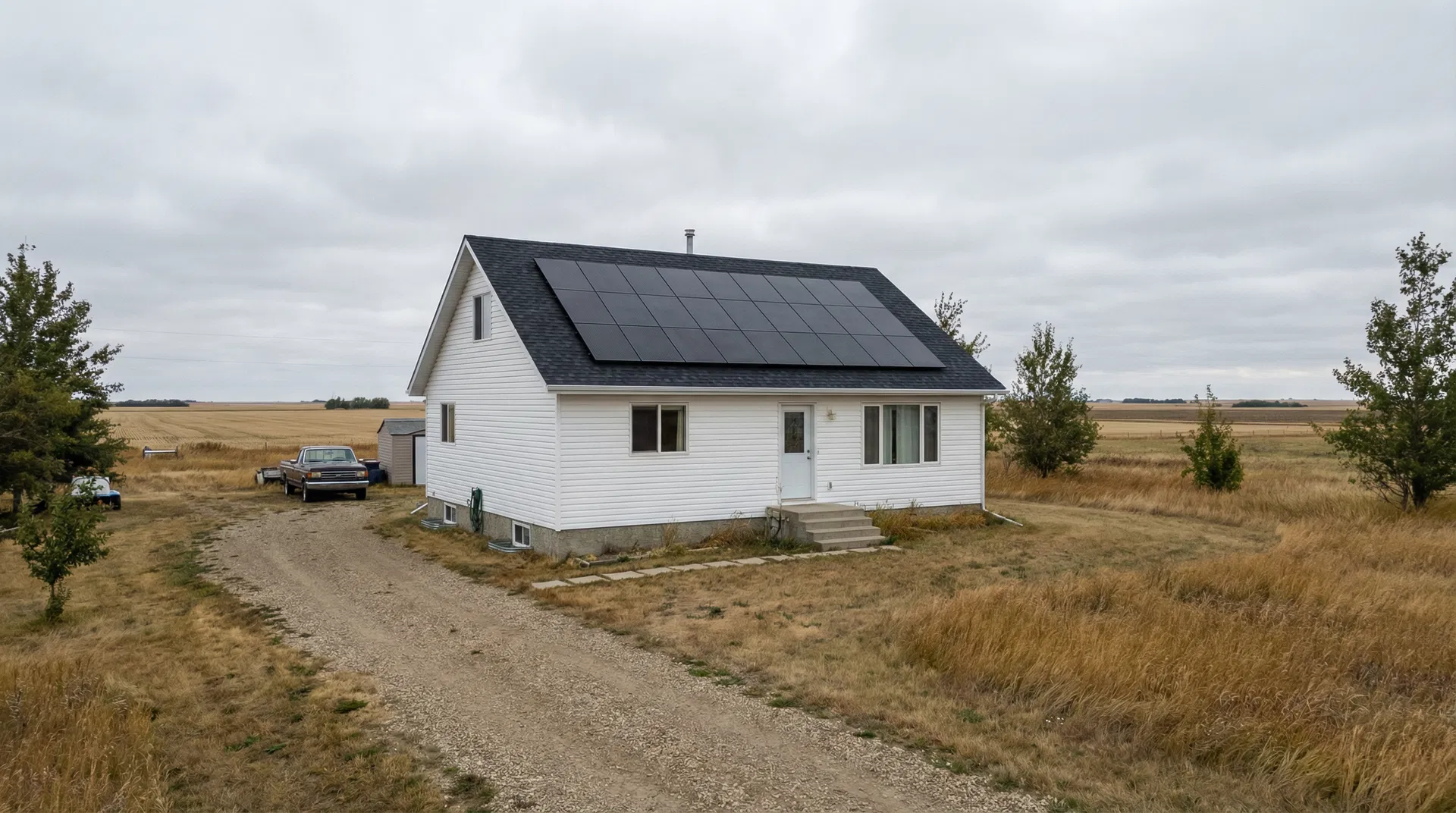
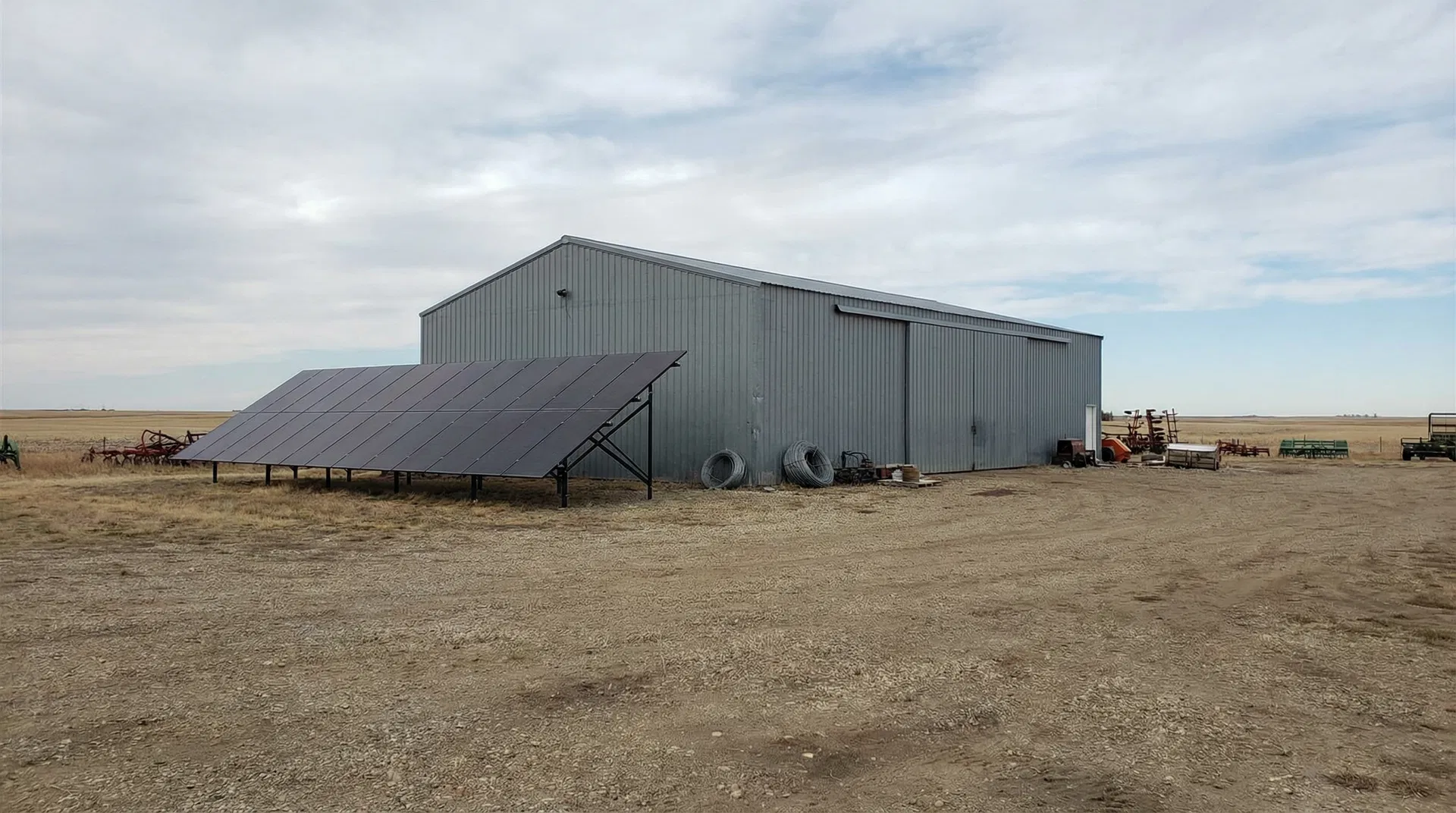
Rural Alberta systems are usually bigger than urban ones, and the reason is the number of loads. A house is one load. Add a shop with a heater and compressor, a well pump, outbuildings on their own circuits, and maybe an irrigation pivot or a grain dryer, and the daily load changes shape completely. We size for all of it, not just the kitchen. Roof or ground mount depends on the site. A roof works well when the pitch and orientation are reasonable and nothing like trees or neighbouring buildings is casting shade on it. Ground mount makes more sense when shade from trees or outbuildings hits the roof, the pitch is poor, or the yard is spread out with land to spare. On an acreage, a ground array also keeps the work off a roof you'd otherwise have to climb to maintain. We size the system from the 12-month usage graph on your most recent power bill, not from a rule of thumb. That graph shows when the property actually draws power, from the busy months to the quiet ones, and it's the best starting point we have. Site design then confirms how much array and battery the property can physically carry. Your current power bill and a site visit together tell us more than any square footage estimate could.
Typical Load Profiles We Design For Near Lacombe
Home + Heated Shop
A home with a heated shop runs a steady base load in the house, then spikes when the shop heater or compressor kicks on. We usually land this profile in the 6 kW to 8 kW range, with battery storage that carries the house overnight. Your most recent power bill and the site design confirm which tools and heaters need priority circuits.
Acreage with Well Pump and Outbuildings
A well pump draws short, hard bursts, so the inverter has to handle the start-up surge even when average use is low. We design this profile around an 8 kW array when outbuildings add lighting or heat, and a 5 kW array when they don't. The 12-month usage graph on your most recent power bill shows how often the pump cycles.
Remote Cabin with Seasonal Use
A cabin used on weekends has long idle stretches and short bursts of load, so the battery bank matters more than the array size. We usually start this profile at a 5 kW array with a battery sized to the nights the cabin is occupied. If the cabin already has a power account, the 12-month usage graph on your most recent power bill tells us whether the array needs to grow.
FortisAlberta Interconnection in Lacombe
FortisAlberta is the wire service for Lacombe, Alberta, and that determines what paperwork a property needs if it connects to the grid at all. A fully off-grid system has no connection to apply for, so that's the first thing we confirm. If your property already has FortisAlberta service, or you want to keep a connection for backup, the design has to account for it from the start. The meter base, the service entrance, and the panel all need to match the system, and we review each one before anything gets submitted. Range Road Solar handles the application for you. We prepare the design package, including the single-line diagram, equipment details, and site information the utility asks for, so you're not stuck translating technical forms on your own. We keep you posted on what's submitted and what still needs your input. Every property is different, so we won't promise a particular path. We'll explain what your design requires from FortisAlberta during the site review, and we'll flag any dependency before you commit money to it.
Project Economics and Design Review
| System Size | Annual Production | Year 1 Savings | Payback Period |
|---|---|---|---|
| 5-15 kW range, 8 kW typical |
Production, savings, and payback all require a property-specific design and your most recent power bill, so none of them are estimated on this page.
How We Work in Lacombe
Bill and Load Review
We review your power bill to understand your energy use in Lacombe and size the system to your actual consumption, not a generic estimate.
Site Assessment
We assess your roof or ground area, south-facing exposure, electrical service, and utility interconnection requirements specific to your property.
Design and Utility Application
We produce a system layout, production estimate, and cost summary, then submit your micro-generation application to your utility on your behalf.
Installation and Commissioning
Our crew installs racking, panels, inverter, and electrical connections. All work is performed by licensed electricians. We commission and test before handoff.
Current Program and Interconnection Review
Utility connection review
FortisAlberta, the wire service for Lacombe, Alberta, reviews grid connection applications for properties that require one. Range Road Solar prepares the design package and handles the application on your behalf. We confirm the current utility requirements for your property during the design review.
Current program review
Commercial, farm, and residential eligibility is reviewed against current rules at design time, so the answer reflects what applies when your design is built. Our team checks property type and use before the design package goes out. Nothing is assumed from the property's location alone.
Frequently Asked Questions
Get a Solar Assessment for Lacombe
Submit a recent power bill and we will review your consumption and provide an honest assessment for your Lacombe property. No obligation.
(587) 330-7502 Book a CallMore Solar Services in Lacombe