Solar financing in Lacombe, Alberta pairs a fixed monthly payment with an 8 to 15 kW system built from LONGi panels and APsystems microinverters, sized so the payment lines up against the power bill the system is replacing. Most residential financing conversations here start with a 10 kW system, the middle of the range we typically design for properties in the area, though the final number depends on your roof, your shading, and what's on your most recent bill. LONGi panels are the standard we install across every financed system, and APsystems microinverters let us lay out panels on roofs with more than one orientation, which comes up often on character homes in older parts of the area and on newer two-story builds with dormers and multiple roof planes. Microinverters also mean that partial shading on one panel, from a tree or a neighboring roofline, doesn't drag down the output of the whole array. For acreage and shop properties on the edge of the area, the same financing structure applies, but the system often sits at the higher end of the 8 to 15 kW range to cover a home plus a detached shop. We build the payment schedule around what the system is designed to offset, not a flat rate pulled from a brochure. That means the financing quote you get is tied to an actual site design and your actual bill, confirmed before you sign anything, not a rough estimate based on square footage or guesswork.
Solar Planning for Lacombe Properties
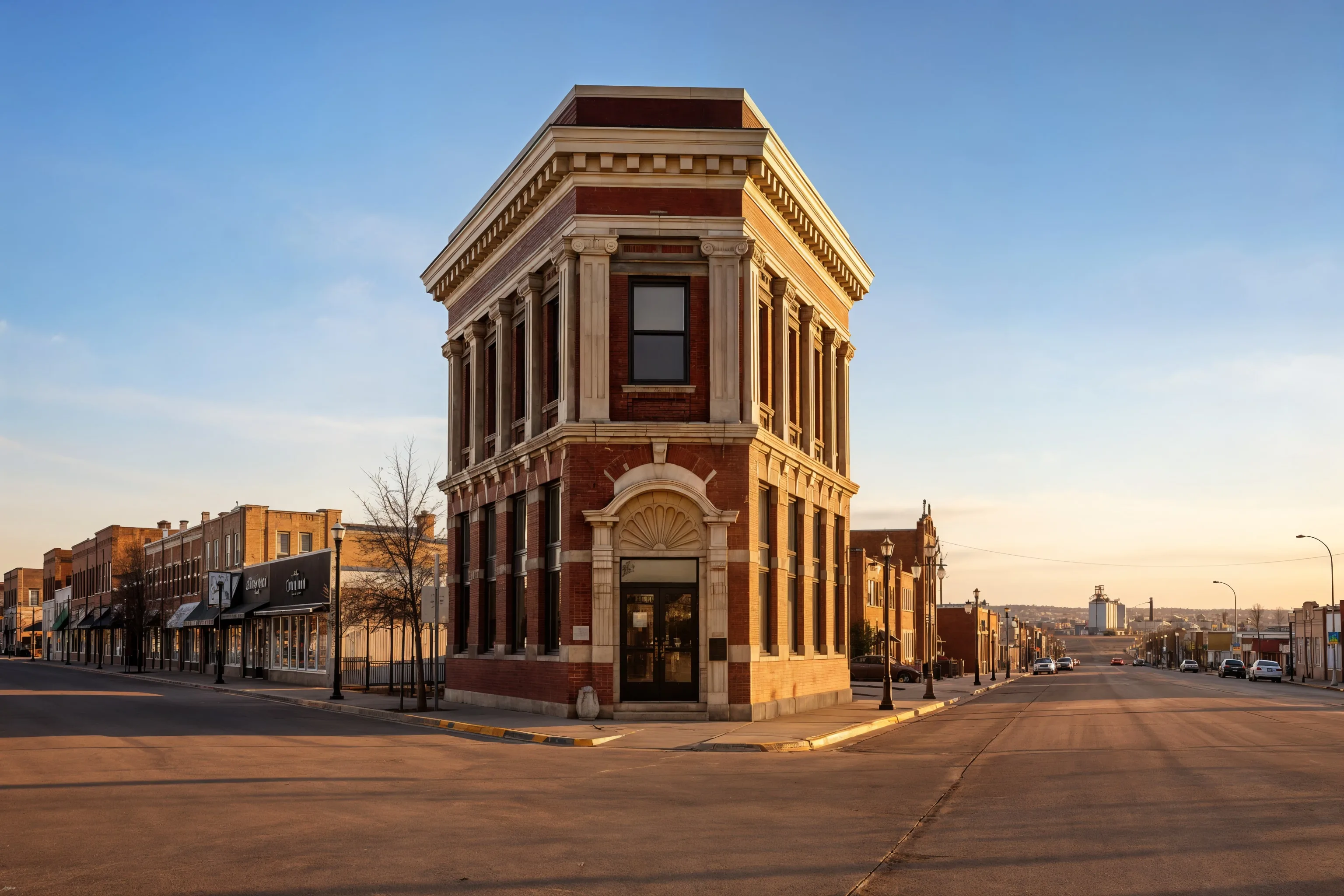
Lacombe, Alberta grew from 13,057 to 13,396 residents between the last two census counts, and that growth shows up in the mix of properties we design solar systems for: in-town bungalows on standard lots, newer subdivisions on the edges of the area, and acreages just outside the limits with shops and outbuildings. The area achieved city status on September 5, 2010, after being a town starting May 5, 1902, and a village dating back to July 28, 1896. That history is part of what gives the downtown core its character, anchored by landmarks like the Flatiron Building (originally the Merchant's Bank of Canada), built 1903-04, near the Flatiron Museum and Interpretive Centre. For solar planning purposes, what matters most isn't that history, it's the roof or ground conditions on your specific property. A steep-pitched character home downtown has different shading and mounting considerations than a shop roof on an acreage further out. Range Road Solar starts every project here with a site visit and a look at your most recent power bill, not a generic estimate. We confirm your roof or ground-mount conditions, check what FortisAlberta requires for the interconnection application, and size the system from there. Whether you're financing a residential rooftop array or a larger system for a property with a shop and outbuildings, the design process is the same: measure what's actually there, then build the numbers around it.

Electrical Site Review for Rural and In-Town Properties
Voltage Rise
Voltage rise happens when power pushed back onto the grid from your solar system raises the voltage at your point of connection, and it tends to be more noticeable the farther a property sits from a transformer. On rural and edge-of-area feeders, distribution conditions can make this more of a factor than on a tightly clustered grid. We check for it during design because too much voltage rise can trigger inverter clipping, which affects how we size the system and lay out the array.
Single-Phase vs Three-Phase
Properties in this area can have either single-phase or three-phase electrical service, depending on the age of the property and what FortisAlberta ran to the site. This matters for financing because the inverter equipment and the maximum system capacity we can design around differ between the two. We confirm which service type your property has before finalizing equipment selection, since it changes which APsystems configuration fits.
Panel Infrastructure
Older electrical panels, common on properties built before current code, often don't have the breaker capacity to support a new solar system without changes. We check the panel's age, its rated capacity, and how much room is left for new breakers as part of every site review. If the panel can't support the system as designed, an upgrade is scoped into the project before we finalize the install.
Service Entrance Review
We review the service entrance and meter base condition on every property, since the meter base has to support the micro-generation equipment FortisAlberta requires for the interconnection application. A corroded, undersized, or outdated meter base can hold up that application. When an upgrade is needed, we scope it into the project plan so it doesn't surface as a surprise after the application is already in.
Right-Sizing Solar for Rural and In-Town Properties
Rural and edge-of-area Alberta properties typically need larger systems than a standard in-town rooftop, because there's more than one load to cover. A property with a home plus a detached shop, or a home plus irrigation or grain-handling equipment, draws differently across the year than a house alone, and the system has to be sized to all of it, not just the house. That's part of why our range for this service runs 8 to 15 kW rather than a single fixed number. Roof mount versus ground mount is a real decision, not a default. If a roof has good southern exposure and isn't shaded by trees or a neighboring structure, it's usually the simpler and more cost-efficient option. But if the roof pitch is poor, mature trees shade most of the day, or the property has open yard space that isn't doing anything else, ground mount can be the better call, especially on acreages with room to place an array away from buildings entirely. Either way, we don't size a system off a rule of thumb like watts per square foot of house. We pull the 12-month usage graph off your most recent power bill and design against your actual consumption pattern, including seasonal swings from heating, shop use, or equipment that only runs part of the year. Your most recent bill and a site visit are what turn a size range into an actual number.
Typical Load Profiles We Design For Near Lacombe
Home Plus Detached Shop
This is one of the most common profiles we design for in the area: a house plus a heated or powered shop used for equipment, a workshop, or storage. The shop often has its own electrical draw separate from the house, especially if it's heated through winter. We size the system from the usage graph on your most recent power bill so the shop's draw is accounted for, not treated as an afterthought.
In-Town Residential
A standard in-town home on a standard lot, without a shop or outbuildings, is usually the simplest profile to design for. The main variables are roof orientation, shading from nearby trees or houses, and how much of the home's usage shows up in the evening versus during the day. We size these systems from your actual bill, which tells us more than a generic per-square-foot estimate ever could.
Acreage with Multiple Outbuildings
Acreage properties in this area sometimes have a home, a shop, and additional outbuildings like a barn or equipment shed, each pulling power. These properties often land at the higher end of the 8 to 15 kW range we design within, and ground mount comes up more often here since there's usually open land available. We confirm the full load picture from your most recent power bill before settling on a final system size.
FortisAlberta Interconnection in Lacombe
FortisAlberta is the wire service here, and any grid-tied solar system in the area goes through their micro-generation interconnection process. Range Road Solar prepares and submits that application as part of every install we finance, so you're not the one deciphering FortisAlberta's paperwork or chasing down technical requirements. The application covers the technical details of your system, including inverter specifications for the APsystems equipment we install and the single-line diagram your electrician needs for the connection. Because financing ties your monthly payment to a specific system design, we handle the FortisAlberta application early, as part of the design and proposal stage, not after the fact. Timelines, approval conditions, and billing treatment for grid-tied systems are set by FortisAlberta and can change, so we confirm current requirements directly with them at the time of your application rather than relying on what applied to a different project last year. If you're financing a system for your property, this interconnection work is included, not an add-on.
Project Economics and Design Review
| System Size | Annual Production | Year 1 Savings | Payback Period |
|---|---|---|---|
| 8-15 kW range, 10 kW typical |
Production, savings, and payback figures require a property-specific design review and your most recent power bill before we can quote them.
How We Work in Lacombe
Bill and Load Review
We review your power bill to understand your energy use in Lacombe and size the system to your actual consumption, not a generic estimate.
Site Assessment
We assess your roof or ground area, south-facing exposure, electrical service, and utility interconnection requirements specific to your property.
Design and Utility Application
We produce a system layout, production estimate, and cost summary, then submit your micro-generation application to your utility on your behalf.
Installation and Commissioning
Our crew installs racking, panels, inverter, and electrical connections. All work is performed by licensed electricians. We commission and test before handoff.
Current Program and Interconnection Review
Utility connection review
FortisAlberta reviews every grid-tied solar application that comes through their micro-generation interconnection process, including the technical details of your specific system. Range Road Solar prepares that design package, including inverter specifications and the single-line diagram, as part of your financed install.
Current program review
Eligibility for any commercial, farm, or residential program tied to your solar install is reviewed against the rules in place at the time of your design, since those rules can change. We check this during the design review rather than assuming last year's eligibility still applies.

Frequently Asked Questions
Get a Solar Assessment for Lacombe
Submit a recent power bill and we will review your consumption and provide an honest assessment for your Lacombe property. No obligation.
(587) 330-7502 Book a CallMore Solar Services in Lacombe