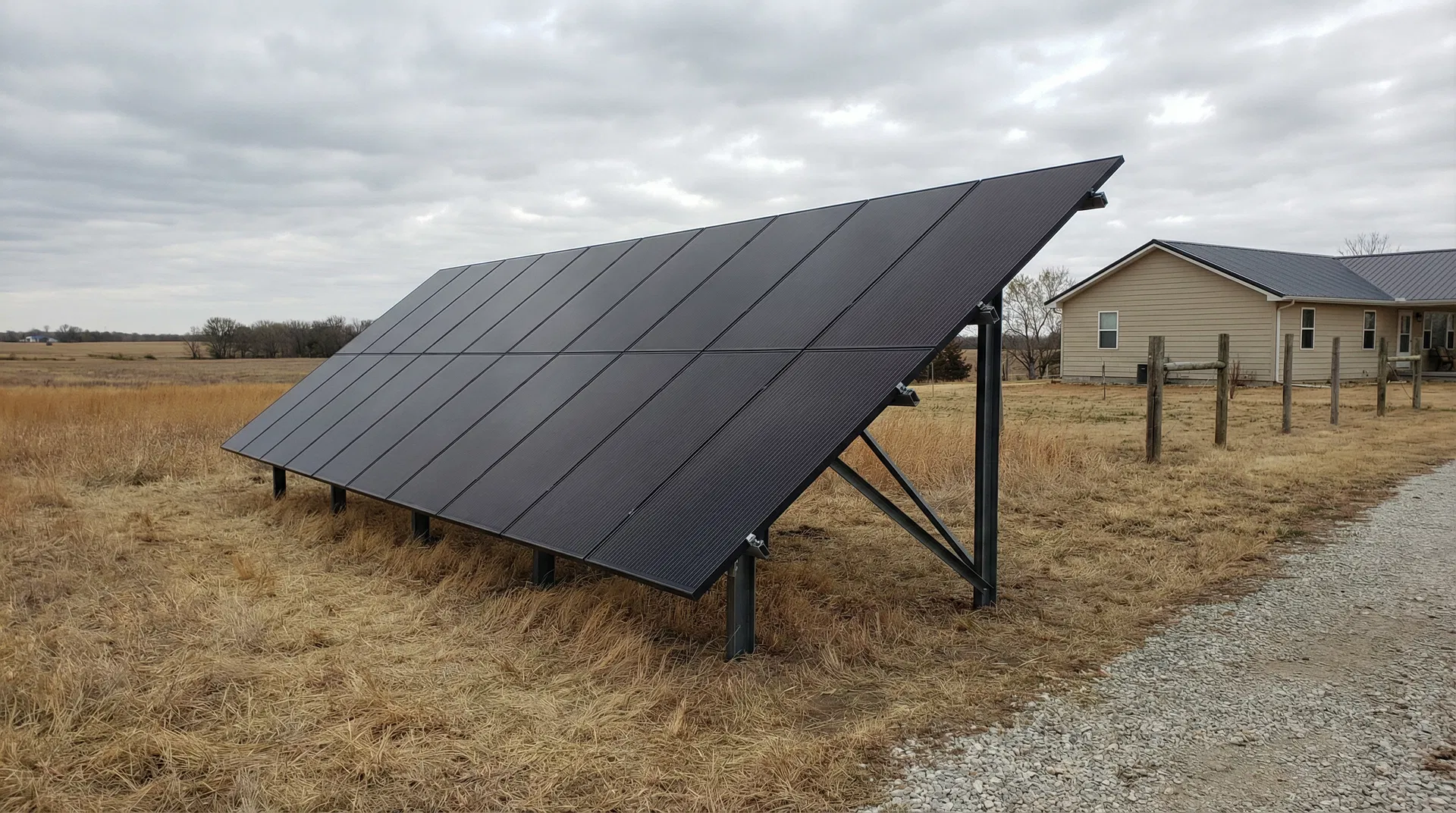
Solar battery storage in Lacombe, Alberta starts with understanding what you're actually trying to protect or offset. Those are two different design goals, and they affect everything from battery capacity to inverter selection. For backup power, we identify your critical loads, the circuits that matter most during an outage, and size the battery to cover them for a meaningful duration. For self-consumption, we look at when your panels produce versus when you draw power, and we size the battery to bridge that gap overnight or during cloudy stretches. We install LONGi solar panels paired with hybrid inverters and lithium battery storage. Hybrid inverters are the key piece here. Unlike a standard grid-tied inverter that shuts down when the grid fails, a hybrid inverter manages the relationship between your panels, your battery, and your loads directly. That's what makes backup power possible. Lithium battery chemistry gives you a deep, reliable cycle count and a compact footprint compared to older battery types, which matters on properties where mechanical room space is limited. Systems in this service range typically run between 8 and 20 kW of solar capacity paired with battery storage sized to the property's specific load profile. A 12 kW system is common for a home with a shop, but the right size depends on your actual usage data, your roof or ground-mount layout, and what you want the battery to do. We don't guess. We design.
Solar Planning for Lacombe Properties
Properties in and around Lacombe run a wide range of electrical loads. A heated shop, well pump, chest freezers, and a home all on the same meter add up fast. When the grid goes down, that meter doesn't protect you. Battery storage does. Adding a battery to your solar system means you're not fully dependent on the grid when conditions change, whether that's a storm, a line fault, or a scheduled outage for utility maintenance. FortisAlberta serves this area, and like any rural distribution network, the lines covering farm and acreage properties can be exposed to weather and equipment failures that cause outages. A solar and battery system sized correctly for your property gives you a backup source that's already on-site. It also changes how you consume what your panels produce. Instead of pushing surplus generation back to the grid during the day and pulling from the grid at night, a battery lets you hold that energy and use it when you actually need it. We design every system from your most recent power bill and a site assessment, not from generic assumptions about what properties in this area look like.
Electrical Site Review for Lacombe Properties
Voltage Rise
Voltage rise happens when solar generation pushes power back toward the grid and the local distribution line can't absorb it without the voltage climbing above acceptable limits. On longer rural spans, this is more common than in dense urban grids. When voltage rise is a constraint, the inverter clips output to stay within limits, which affects how much energy the system actually delivers and influences how we size it.
Single-Phase vs Three-Phase
Rural properties in Alberta can be served by either single-phase or three-phase service, and it's not always obvious which one you have until we look at the panel. Three-phase service supports higher inverter capacity and more flexibility in how a larger system is configured. Single-phase service works fine for most residential and small farm systems, but it shapes the inverter selection and places a practical ceiling on how large the system can go without additional work.
Panel Infrastructure
Older electrical panels on acreages and farm properties don't always have the breaker capacity to support a solar and battery system without modifications. We assess the panel age, the main breaker rating, and the available space for the interconnection breaker during the site review. If the panel can't support the system safely, we'll identify what an upgrade involves before any design is finalized.
Service Entrance Review
The meter base and service entrance are reviewed as part of every FortisAlberta micro-generation application. FortisAlberta checks the meter base condition as part of their connection review, and a meter base that doesn't meet current standards can trigger a required upgrade before the application is approved. We inspect the service entrance during the site visit and flag any concerns early so they don't surface as surprises during the utility review process.
Right-Sizing Solar for Lacombe Properties
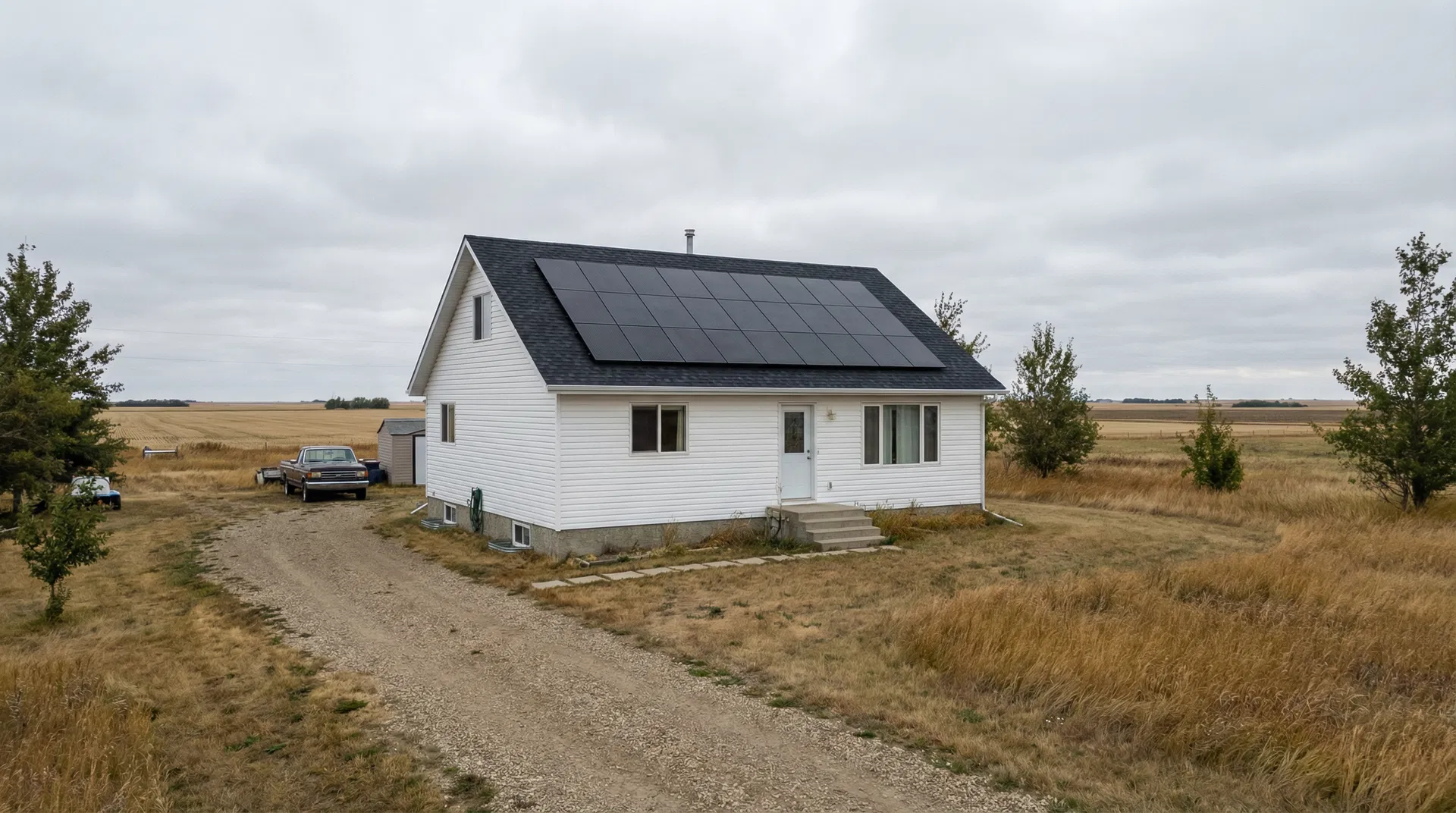
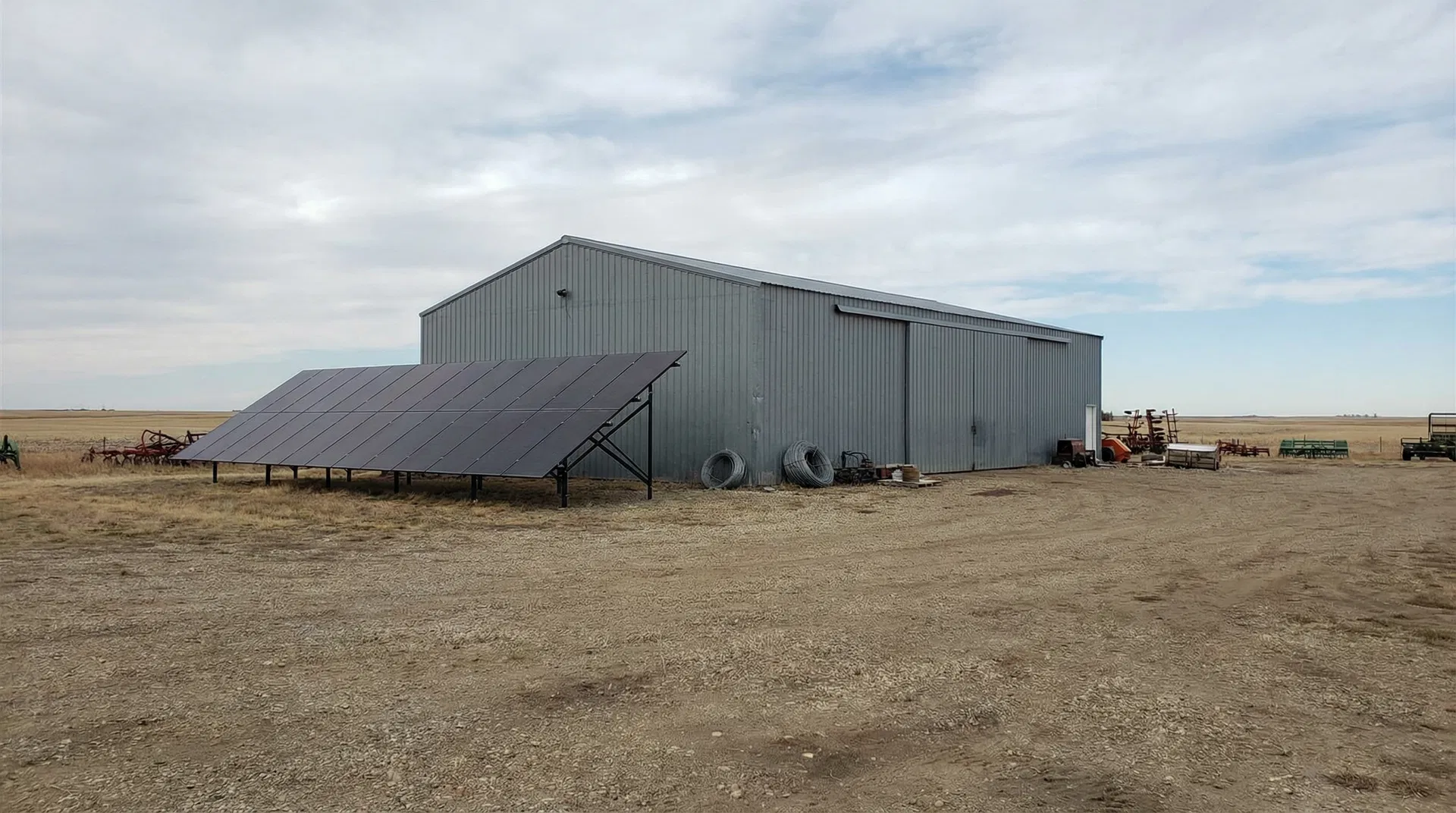
Properties near Lacombe often carry more electrical load than a typical urban home. It's not just the house. It's the heated shop, the outbuildings, the well pump, chest freezers running year-round, and sometimes irrigation or grain handling equipment on top of that. All of those loads show up on the same meter, and they all have to be accounted for when we design a system. That's why rural systems in this area tend to sit at the higher end of the 8-20 kW range rather than the low end. The roof versus ground-mount question comes up on almost every acreage or farm property. Rooftop works well when you've got a large, unshaded south-facing surface with reasonable pitch and no obstructions from trees or adjacent buildings. But on a yard with a low-slope shop roof, mature spruce along the south side, or a layout where the buildings are spread out across a big lot, a ground-mounted array often delivers more production and more flexibility in how it's oriented. We don't default to one or the other. We look at the site. The starting point for sizing is always your most recent power bill. Alberta utility bills include a 12-month usage graph, and that graph tells us what your property actually consumes across all four seasons, including the heavy load months. We build the system design from that data, not from rule-of-thumb estimates based on what other properties in the area use. We provide honest production estimates based on your actual power bills and site conditions, not inflated projections.
Typical Load Profiles We Design For Near Lacombe
Home Plus Heated Shop
A house and a heated shop on the same meter is one of the most common setups we see. The shop's electric heat or in-floor system can drive winter consumption significantly higher than the home alone, and that usage pattern shapes both the solar array size and the battery capacity required to cover critical loads during an outage. We size the battery to prioritize the circuits that matter most so that a grid outage doesn't take the shop heater offline in January.
Acreage With Well and Outbuildings
An acreage with a well pump, garage, and secondary outbuildings presents a load profile where the priority during an outage is usually water. A well pump drops off the grid the moment power fails, and without a battery, a solar array can't run it either because standard grid-tied inverters shut down when the grid does. A hybrid inverter and battery system can keep the well pump running on a backed-up circuit, which is one of the most practical reasons acreage owners in this area add storage to their systems.
Farm Operation With Grain Handling Equipment
Farm properties with grain dryers, augers, or other three-phase equipment have a more complex electrical picture. Battery storage in this context is usually less about backup power for the heavy equipment, which draws more than a standard battery bank can practically supply, and more about reducing consumption from the grid during the periods when the house and shop are drawing power independently of the operation. We design around the actual load breakdown on your bill rather than assuming which circuits are the priority.
FortisAlberta Interconnection in Lacombe
FortisAlberta is the wire service for Lacombe. Any solar system connected to the grid here goes through FortisAlberta's micro-generation application process, and adding battery storage doesn't remove that requirement. The battery is on your side of the meter, but the solar array feeding it is still a grid-connected generation source and needs to be properly interconnected. Range Road Solar handles the interconnection application package. That includes the single-line diagram, equipment specifications, and the site documentation FortisAlberta requires to review the connection. We prepare the package, submit it, and coordinate with FortisAlberta on your behalf. You don't have to navigate that process yourself. What we can't control is FortisAlberta's review queue or any conditions they place on the connection based on the local distribution infrastructure serving your property. We'll keep you informed throughout and flag anything that affects the design. The goal is a clean application that doesn't come back with avoidable revision requests.
Project Economics and Design Review
| System Size | Annual Production | Year 1 Savings | Payback Period |
|---|---|---|---|
| 8-20 kW range, 12 kW typical |
Production, savings, and payback figures require a property-specific design and the 12-month usage graph on your most recent power bill.
How We Work in Lacombe
Bill and Load Review
We review your power bill to understand your energy use in Lacombe and size the system to your actual consumption, not a generic estimate.
Site Assessment
We assess your roof or ground area, south-facing exposure, electrical service, and utility interconnection requirements specific to your property.
Design and Utility Application
We produce a system layout, production estimate, and cost summary, then submit your micro-generation application to your utility on your behalf.
Installation and Commissioning
Our crew installs racking, panels, inverter, and electrical connections. All work is performed by licensed electricians. We commission and test before handoff.
Current Program and Interconnection Review
Utility connection review
FortisAlberta reviews micro-generation connection applications for all grid-tied solar systems in the Lacombe area, including systems with battery storage. Range Road Solar prepares and submits the full design package required for that review. We handle the documentation so you're not coordinating directly with the utility on technical submissions.
Current program review
Eligibility for commercial, farm, and residential solar programs changes, and what applied to a system installed two years ago may not apply today. We review current rules at the time of design so you're working from accurate information, not outdated assumptions about what's available.
Frequently Asked Questions
Get a Solar Assessment for Lacombe
Submit a recent power bill and we will review your consumption and provide an honest assessment for your Lacombe property. No obligation.
(587) 330-7502 Book a CallMore Solar Services in Lacombe