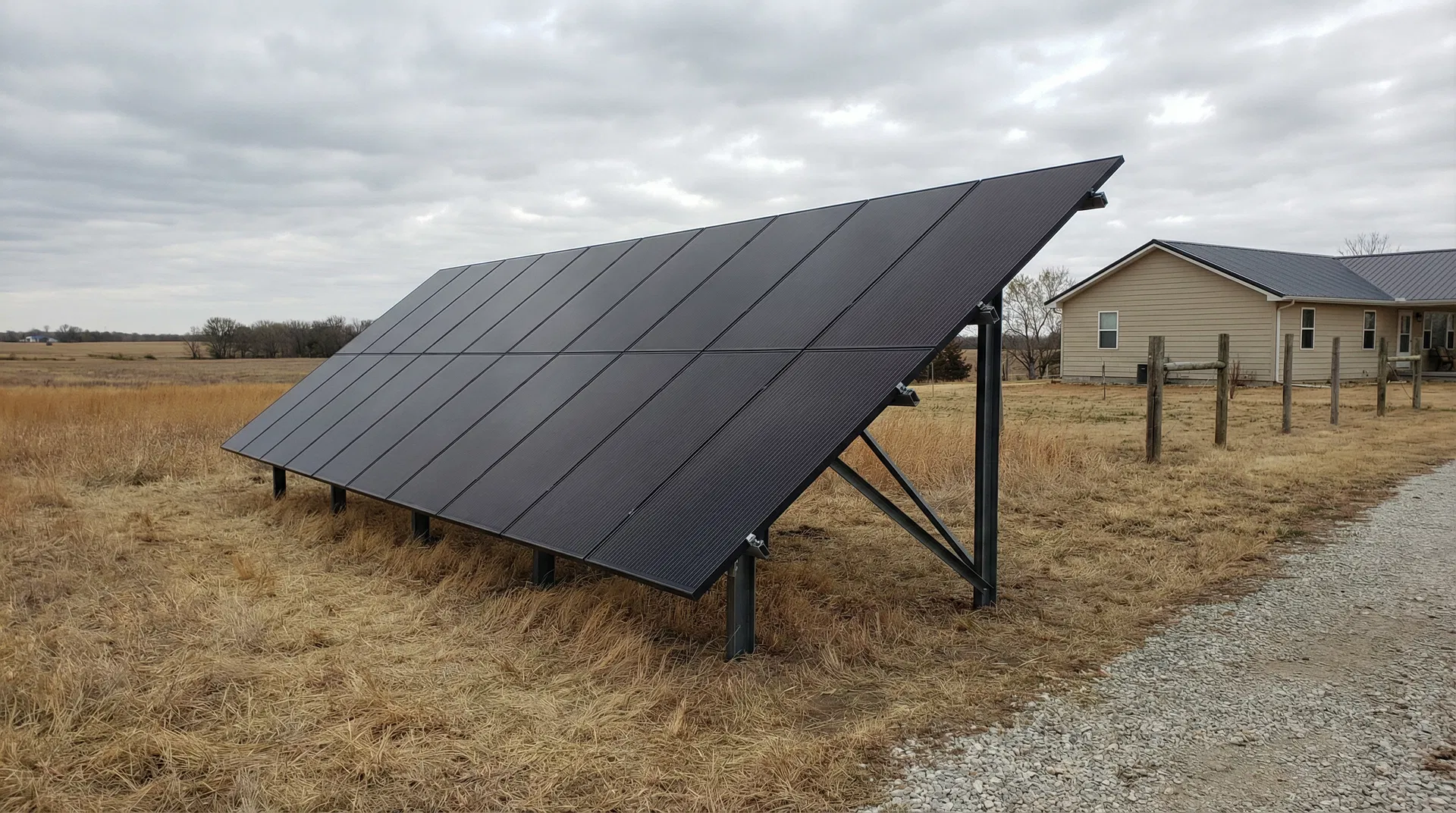
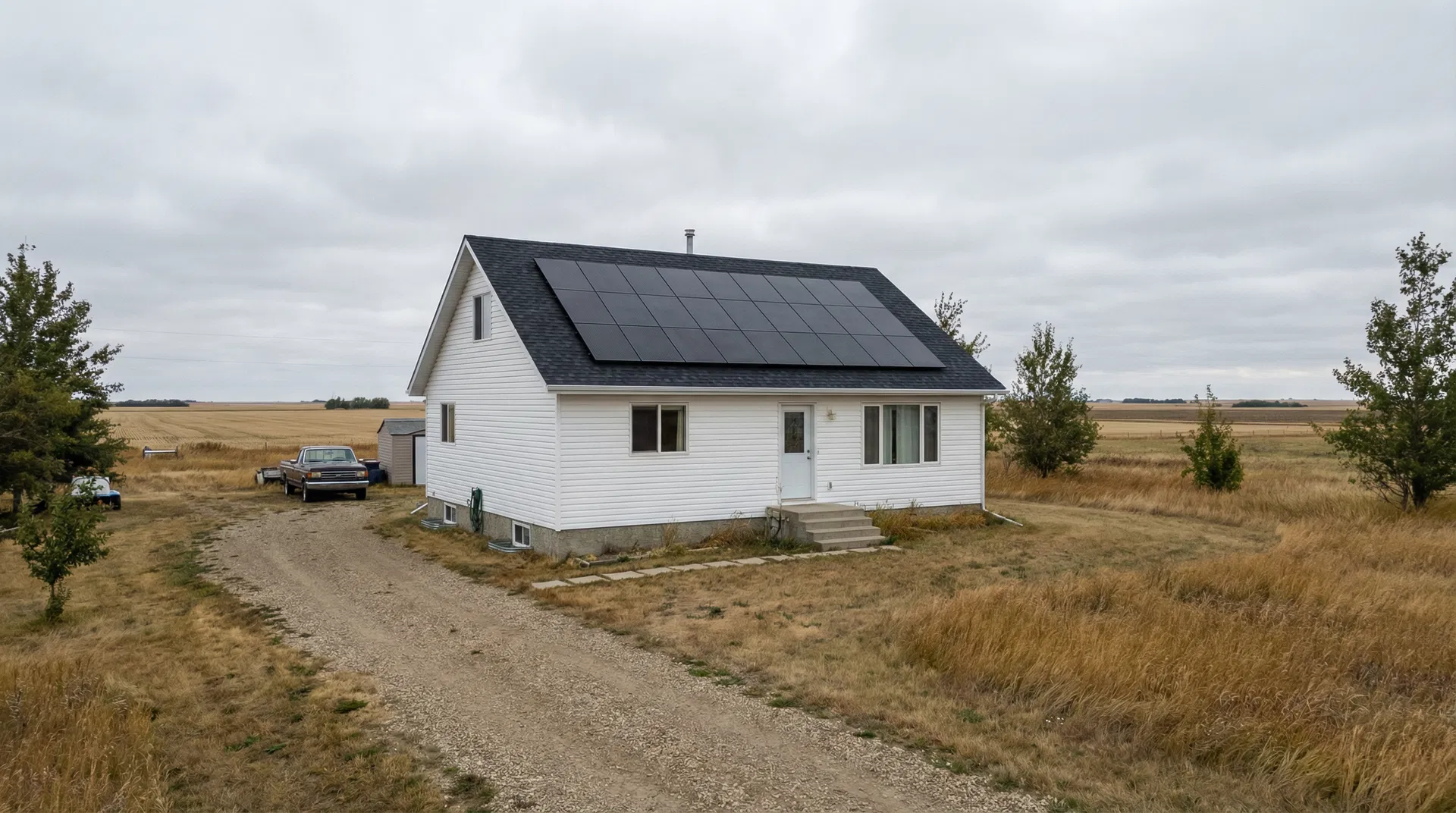
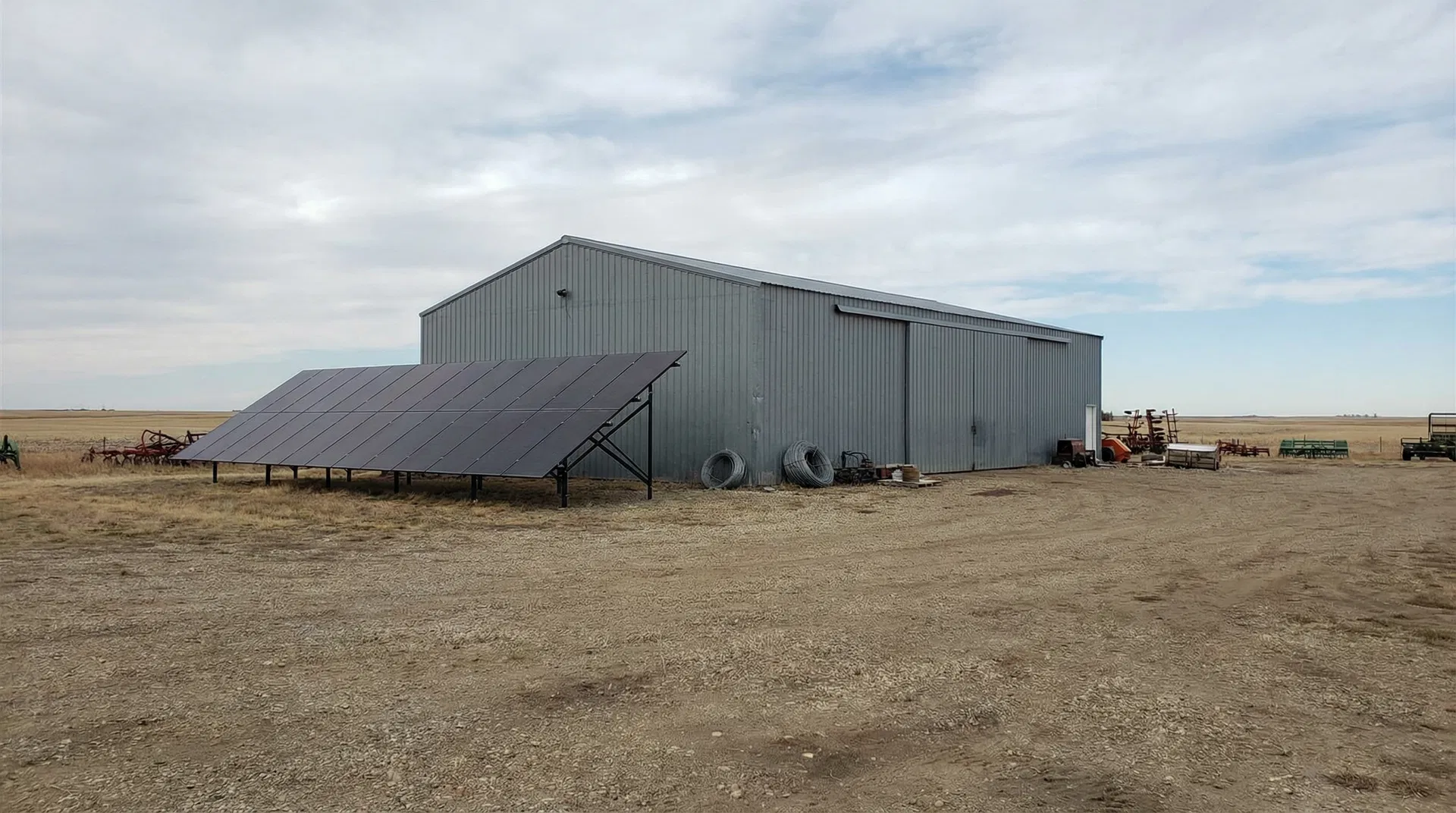
Farm solar lacombe inquiries usually come from operators who've watched their power bills climb and want a fixed-cost offset on a portion of their consumption. We design and install ground-mount and rooftop systems for farms, grain operations, and mixed agricultural properties in the area. Systems in this range run between 20 and 50 kW. A 25 kW system is a reasonable midpoint for a property with a home and a moderately active shop, but the right number comes from your actual usage, not a rule of thumb. We use LONGi panels as our standard module. They're a proven workhorse in commercial and agricultural applications, not a boutique product with an inflated price tag. For most farm systems, we pair them with APsystems microinverters, which allow each panel to operate independently. On a ground-mount array, that means partial shading from a grain bin or a tree line doesn't drag down the whole system. For larger three-phase properties or specific load configurations, we'll specify the right inverter architecture during design. Ground mount is the preferred layout for most farm systems. Roofs on older machine shops or grain storage buildings often have structural limitations, poor pitch, or orientation problems that make ground mount the cleaner option. When a yard has open land with good southern exposure away from obstructions, ground mount also makes it easier to size the array without rooftop constraints. We confirm all of that during the site review.
Solar Planning for Lacombe Properties
Farms around Lacombe carry electrical loads that residential solar installers aren't used to seeing. A home, a heated shop, grain handling equipment, and yard lighting can stack up on the same meter. Sometimes they're on separate meters. Either way, sizing a system without looking at the full load picture produces a result that doesn't actually move the needle on your bill. We start every project by pulling the 12-month usage graph from your most recent power bill. That graph tells us how your consumption shifts through seeding, harvest, and winter heating. A system sized only against summer usage won't cover a February shop load. One sized only against winter usage wastes money on capacity you don't need in July. There's no shortcut to that analysis. The properties we design for near Lacombe tend to run 20 to 50 kW, with 25 kW being a common starting point once we account for home and shop loads together. But we don't confirm a number until we've seen your actual usage and walked the site. That's how we avoid overselling and undersizing in equal measure.
Electrical Site Review for Lacombe Properties
Voltage Rise
Voltage rise happens when a solar system pushes current back through a distribution line and raises the voltage at the point of connection. On rural distribution lines, which are often long and serve few customers, the baseline voltage can already run higher than it does in town. When a solar system adds to that, the voltage at the inverter can exceed the inverter's operating range, causing it to clip or curtail output. We assess the line conditions at your service point during design and size the system to stay within allowable limits.
Single-Phase vs Three-Phase
Rural properties in Alberta can be served by either single-phase or three-phase electrical service, and the distinction matters for how a solar system is designed. Single-phase service is common on smaller farmsteads and residential acreages, while larger grain operations or properties with three-phase motors often have three-phase service at the yard. The service type determines which inverter configurations are eligible and how the system's capacity is structured to balance load across phases.
Panel Infrastructure
Older electrical panels on farm properties often weren't built with the breaker capacity needed to backfeed a 25 to 50 kW solar system. We assess the panel's main breaker rating, the available bus capacity, and the age of the equipment during the site review. If the panel can't safely support the solar connection, we'll identify that before the design is finalized so an upgrade can be planned and priced as part of the project.
Service Entrance Review
The meter base and service entrance are reviewed as part of every farm solar project because FortisAlberta's micro-generation application requires the connection point to meet current standards. We check the meter base condition, the service entrance wiring, and whether the existing setup is compatible with a bi-directional meter. If the meter base requires an upgrade before the application can proceed, we identify that early so it doesn't become a surprise at the interconnection stage.
Right-Sizing Solar for Lacombe Properties
Farm and agricultural properties carry a lot more electrical load than a typical house in town. You're not just offsetting a home. You're looking at a heated shop with a welder and compressor, outbuildings with ventilation or lighting, grain handling equipment that runs hard during harvest, and sometimes irrigation or livestock systems that draw current at entirely different times of year. All of that needs to be in the picture before anyone quotes you a system size. The roof-versus-ground-mount decision matters too. A machine shop roof built in the 1980s might not support the structural loading of a panel array. The pitch and orientation might point the wrong direction. Trees, grain bins, or adjacent buildings can shade a rooftop array for hours each day, which cuts into output in ways that don't show up until you're running the numbers. When there's open yard space with clear southern exposure, ground mount is usually the better call. It's easier to orient correctly, easier to expand later, and doesn't depend on the structural condition of a building. We size every system from the 12-month usage graph on your most recent power bill. That graph shows us how your consumption peaks and drops through the year, which lets us design for your actual load pattern rather than an assumed one. We don't ask for a stack of old bills. One current bill is enough because Alberta utilities include the full 12-month history on a single statement. We provide honest production estimates based on your actual power bills and site conditions, not inflated projections.
Typical Load Profiles We Design For Near Lacombe
Home + Heated Shop
A farmstead with a residence and a heated shop running 240V equipment is one of the most common configurations we see. The shop load during winter months can equal or exceed the home, which means the system needs to be sized against combined usage across both. We pull the full 12-month graph from your most recent power bill to understand how the shop and home loads interact before we set a system size.
Grain Farm with Handling Equipment
Grain operations running augers, dryers, or bin aeration fans carry load spikes during harvest that a home-only solar estimate won't capture. A system designed without accounting for that seasonal peak can underdeliver when it matters most. We design for the full annual consumption cycle, including those harvest months, so the offset reflects how the property actually runs.
Mixed Property with Multiple Meters
Some farm properties have separate meters for the house, the shop, and a grain facility. A solar system can be designed to offset the largest or highest-cost meter, or multiple systems can address different service points. We identify which configuration makes the most sense financially by reviewing the usage history on each meter before committing to a design direction.
FortisAlberta Interconnection in Lacombe
FortisAlberta is the wire service for Lacombe and the surrounding agricultural area. Any solar system connected to the grid here goes through a FortisAlberta micro-generation application. That application requires a design package that meets their technical standards, including single-line diagrams, equipment specifications, and site documentation. We prepare and submit that package on your behalf. You don't need to coordinate with FortisAlberta directly. The application process involves a technical review on their end. We track that review and respond to any information requests they issue. What we don't do is promise a specific approval timeline, because that's determined by FortisAlberta's queue and their internal review process. We can tell you what's required from your side and what to expect in general terms, but we won't overcommit on timing. Once interconnection approval is granted, we complete the installation and commissioning in coordination with their requirements. We've handled this process for rural properties throughout FortisAlberta territory and we know what their reviewers look for.
Project Economics and Design Review
| System Size | Annual Production | Year 1 Savings | Payback Period |
|---|---|---|---|
| 20-50 kW range, 25 kW typical |
Production, savings, and payback estimates require a property-specific design and the 12-month usage graph from your most recent power bill.
How We Work in Lacombe
Bill and Load Review
We review your power bill to understand your energy use in Lacombe and size the system to your actual consumption, not a generic estimate.
Site Assessment
We assess your roof or ground area, south-facing exposure, electrical service, and utility interconnection requirements specific to your property.
Design and Utility Application
We produce a system layout, production estimate, and cost summary, then submit your micro-generation application to your utility on your behalf.
Installation and Commissioning
Our crew installs racking, panels, inverter, and electrical connections. All work is performed by licensed electricians. We commission and test before handoff.
Current Program and Interconnection Review
Utility connection review
FortisAlberta reviews all micro-generation connection applications for properties in Lacombe and the surrounding area. Range Road Solar prepares the full design package required for that application and submits it on your behalf. We handle the back-and-forth with FortisAlberta so you don't have to manage the technical documentation yourself.
Current program review
Commercial and agricultural solar installations may be eligible for programs or incentives that affect project economics. Eligibility rules and available programs change, so we review what applies to your property type and system size at the time of design. We don't promise eligibility before we've confirmed it against current rules.
Frequently Asked Questions
Get a Solar Assessment for Lacombe
Submit a recent power bill and we will review your consumption and provide an honest assessment for your Lacombe property. No obligation.
(587) 330-7502 Book a CallRelated Resources
More Solar Services in Lacombe