Commercial solar in Lacombe is built around the building's real electrical profile, sized in the 15 to 100 kW range depending on load and available roof or ground space. We use LONGi panels on every install, paired with APsystems microinverters on smaller commercial arrays and string inverters once a system moves toward the upper end of that range, where central inverters are typically the more practical, lower-maintenance choice for the array size and maintenance access. Roof-mount is common on flat-roofed commercial and light industrial buildings, where we assess membrane condition, penetration points, and structural load before committing to a layout. Ground mount comes into play on properties with more available land than usable roof, or where roof orientation and shading rule out a strong roof layout. Either way, we design the array to match your electrical service, whether that's single-phase or three-phase, and we size the inverter configuration so the system fits your panel's existing capacity or we scope the upgrade up front. Every commercial design starts with your most recent power bill and its 12-month usage graph, plus a site walk to confirm shading, structural condition, and interconnection point. We handle the FortisAlberta application as part of the project, and we review current commercial program eligibility, including CT ITC criteria, against your specific business at design time rather than assuming it applies. The result is a system sized for what your business actually uses, not a generic commercial package.
Solar Planning for Lacombe Properties
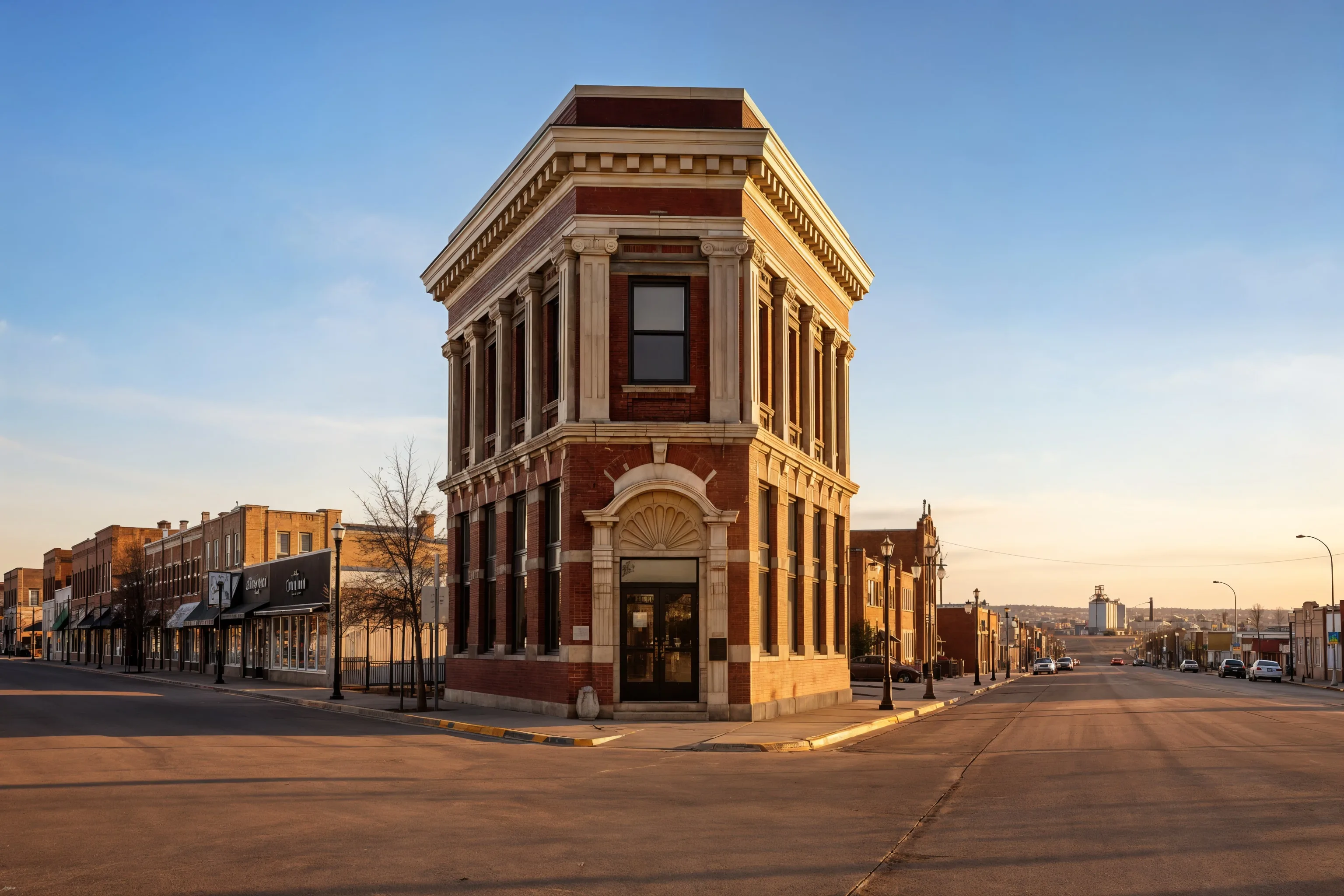
Lacombe, Alberta is home to about 13,396 people, and that mix of retail, agri-business, and light industrial operations means no two commercial roofs or yards look alike. A grain handling facility on the edge of town has a different load shape than a downtown storefront a few blocks from the Flatiron Building, the former Merchant's Bank of Canada built in 1903-04 and now one of the area's best-known landmarks. We don't quote a system off a square-footage guess. We start with your most recent power bill, which shows a 12-month usage graph, and we walk the property to check roof condition, orientation, shading, and electrical service before we size anything. If your building sits near the Flatiron Museum and Interpretive Centre or out past the edge of the developed core, the review process is the same: real numbers first, design second. Commercial buildings in this area often run multiple loads at once, coolers, compressors, shop equipment, so we size to what the meter actually sees, not a rule of thumb. That's the approach we use whether the property is a single-tenant building or a working yard with several structures on it.

Electrical Site Review for Lacombe Properties
Voltage Rise
Voltage rise happens when the voltage at the inverter's connection point climbs above the level at the transformer, usually because of conductor length, wire gauge, or how far the array sits from the service entrance. On a commercial property with a longer run between the meter and the array location, we check this during design so the inverter isn't clipping output or tripping on over-voltage. It's one of the reasons two buildings with the same size roof can end up with different equipment recommendations.
Single-Phase vs Three-Phase
Commercial buildings in this area can have either single-phase or three-phase electrical service, and that distinction drives which inverter configuration and system capacity actually work at the site. Three-phase service generally opens up a wider range of commercial inverter options and supports larger arrays more cleanly. We confirm which service type your building has early in the design process, since it shapes the equipment list before we finalize anything.
Panel Infrastructure
Older commercial electrical panels weren't built with solar backfeed in mind, so we check breaker capacity, panel age, and busbar rating before finalizing a system size. We're looking for whether the existing panel can accept the added breaker without exceeding its rated capacity. If it can't, an upgrade gets scoped and quoted as part of the project rather than discovered after installation.
Service Entrance Review
We inspect the service entrance and meter base condition as part of every commercial site visit, since FortisAlberta's micro-generation application requires that equipment to meet current standards before it will approve the interconnection. Corroded, outdated, or undersized meter base equipment can hold up an application even when the rest of the system design is solid. If an upgrade is needed, we scope it up front so it's part of the project timeline instead of a surprise mid-install.
Right-Sizing Commercial Solar for Lacombe Properties
Commercial and rural-adjacent properties in this area often run more electrical load than a typical single-tenant building: a main structure plus a shop, coolers, compressors, or process equipment running on the same service. That's part of why commercial systems here land in the 15 to 100 kW range rather than a flat number. We don't size off square footage or a rule of thumb. We size off the 12-month usage graph on your most recent power bill, which shows exactly how your load moves through the year, paired with a site walk to check roof condition, shading, and available ground space. Roof mount makes sense when the roof structure is sound, orientation is workable, and shading from nearby trees or buildings isn't a problem. Ground mount becomes the better call when the roof is heavily shaded, poorly pitched, already near capacity, or when the property has open yard space that's easier and cheaper to work with than a complicated roof layout. Some commercial sites end up with a mix, a partial roof array plus a ground-mounted section, once we've walked the property and reviewed the bill together. The system size we recommend always traces back to those two inputs: your actual usage pattern and what the site physically supports.
Typical Load Profiles We Design For Near Lacombe
Retail or Office Storefront
A single-tenant storefront typically runs lighting, HVAC, and point-of-sale equipment on a fairly steady daytime schedule. We size these systems off the 12-month usage graph on the most recent power bill, which usually shows a flatter load curve than an industrial or agri-business property. Roof condition and orientation tend to be the deciding factors here more than raw load size.
Light Industrial or Shop Building
Shop buildings often carry compressors, welding equipment, or process machinery that create load spikes on top of a steady baseline. That combination changes how we size the inverter configuration, since the system needs to handle both the average draw and the peaks shown on the power bill's usage graph. These properties are also more likely to have three-phase service, which opens up additional equipment options.
Agri-Business or Grain Handling Site
Properties tied to grain handling or agricultural processing can see seasonal load swings tied to drying and handling equipment rather than a flat year-round pattern. We look closely at the shape of that seasonal curve on the most recent power bill before recommending a system size, since a flat average would misrepresent what the property actually needs. Ground mount is common here when yard space is available and roof layouts are limited by outbuildings.
FortisAlberta Interconnection in Lacombe
Lacombe is served by FortisAlberta, the wire service that reviews and approves micro-generation connection applications in this area. Any commercial solar system tied to the grid here goes through that same FortisAlberta application and technical review process before it's allowed to operate in parallel with the distribution system. Range Road Solar prepares and submits that application package as part of the project, including the single-line diagrams and equipment specifications FortisAlberta requires for a commercial-scale array. We don't quote an approval timeline or promise a specific credit or payout structure, because those are set by FortisAlberta and the current retailer or rate arrangement your business is on, not by us. What we can commit to is handling the paperwork correctly the first time and keeping you informed as the application moves through FortisAlberta's process. If your building already has three-phase service or a larger existing panel, that gets factored into the interconnection package from the start.
Project Economics and Design Review
| System Size | Annual Production | Year 1 Savings | Payback Period |
|---|---|---|---|
| 15-100 kW range, 30 kW typical |
Production, savings, and payback figures are provided only after a property-specific design review that includes your most recent power bill.
How We Work in Lacombe
Bill and Load Review
We review your power bill to understand your energy use in Lacombe and size the system to your actual consumption, not a generic estimate.
Site Assessment
We assess your roof or ground area, south-facing exposure, electrical service, and utility interconnection requirements specific to your property.
Design and Utility Application
We produce a system layout, production estimate, and cost summary, then submit your micro-generation application to your utility on your behalf.
Installation and Commissioning
Our crew installs racking, panels, inverter, and electrical connections. All work is performed by licensed electricians. We commission and test before handoff.
Current Program and Interconnection Review
Utility connection review
FortisAlberta reviews every micro-generation grid connection application in this area before a commercial system can operate in parallel with the distribution network. Range Road Solar prepares the full design package, including single-line diagrams and equipment specifications, and submits it on your behalf. We keep you updated as the application moves through FortisAlberta's process.
Current program review
Commercial, farm, and residential eligibility for programs like the CT ITC is reviewed against the rules in effect at the time of your design, since criteria and qualifying equipment can change. We check this as part of the design review rather than assuming a past program still applies. This keeps your project quote grounded in what's actually available when you sign off.

Frequently Asked Questions
Get a Solar Assessment for Lacombe
Submit a recent power bill and we will review your consumption and provide an honest assessment for your Lacombe property. No obligation.
(587) 330-7502 Book a CallMore Solar Services in Lacombe