Rocky View County · Ground mount solar
Ground Mount Solar for Rocky View County, AB
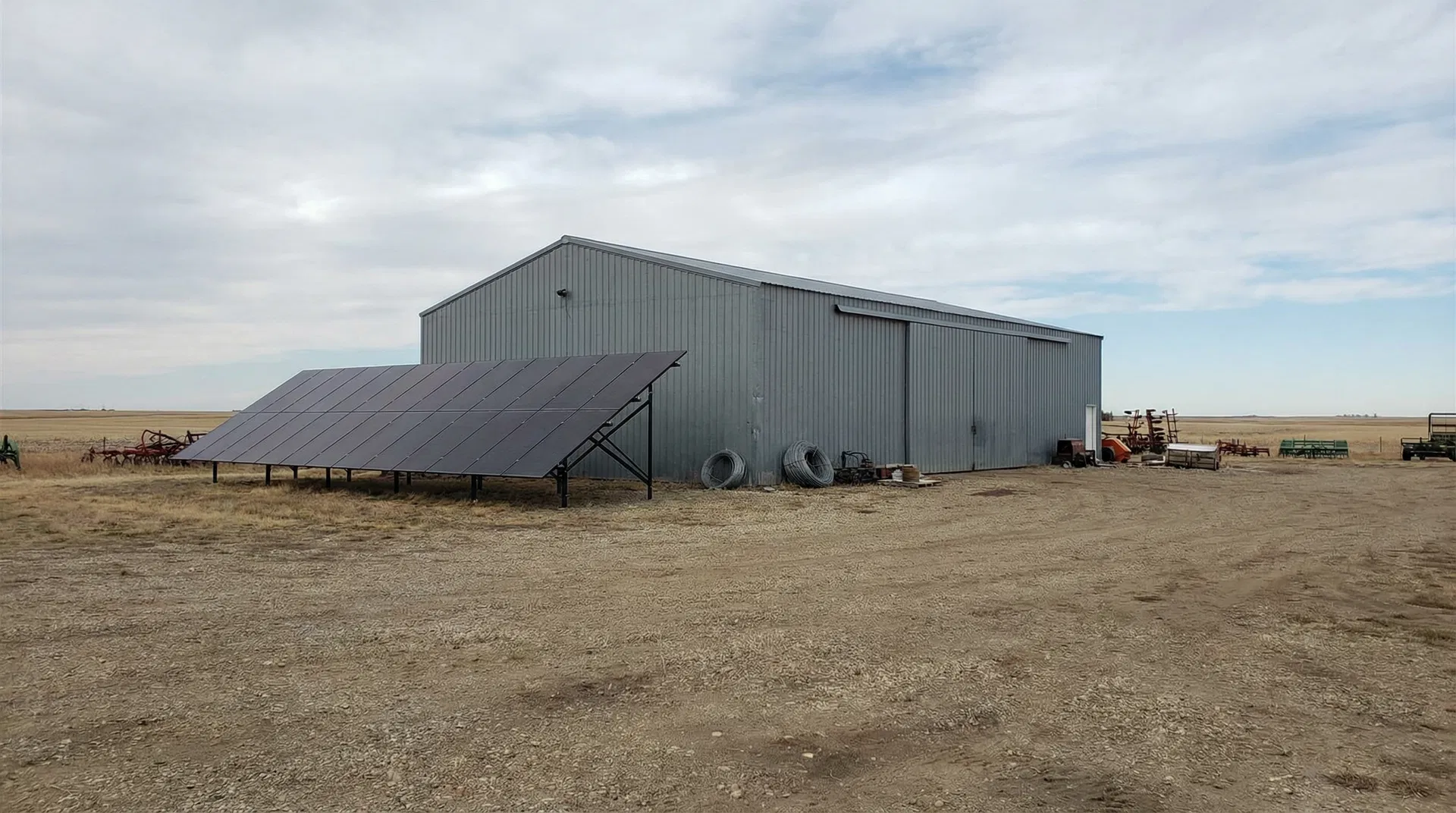
Farm and acreage properties across Rocky View County are well suited to ground mount systems sized from 10 to 30 kW. We handle design, permits, and FortisAlberta interconnection from start to finish.
Solar ground mount solar in Rocky View County starts with a site assessment, not a sales call. We're looking at your available land, how the array will orient, what's casting shade across the site at different times of year, and how far the system will run from your main panel or service entrance. Every one of those factors shapes the final design before a single panel gets quoted. We use LONGi solar panels and APsystems microinverters across our ground mount installs. LONGi panels are well proven in Alberta's freeze-thaw conditions and carry the kind of long-term warranty documentation that matters when a system is expected to run for 25 years on a working property. APsystems microinverters give us panel-level monitoring and mean that shading on one section of the array doesn't pull down production from the rest of it. On a ground mount where rows of panels may be affected differently by nearby structures or tree lines, that matters. The racking itself is engineered to Alberta wind and snow load requirements. Ground mount systems in this area aren't a simple product-off-the-shelf install. The racking design goes through an engineering review because the load conditions on a free-standing structure in a rural setting are different from a roof-attached system. We size systems from 10 kW on the smaller end up to 30 kW for larger farm operations, with 15 kW being a common starting point for a home-plus-shop property. The right size for your property comes from your most recent power bill and the site design, not from what we think looks reasonable on paper.
Solar Planning for Rocky View County Properties
Rural acreage and farm properties in Rocky View County tend to have two things that work in favour of ground mount solar: available land and electrical loads that most urban rooftop systems aren't built to handle. When a property runs a home, a heated shop, an outbuilding, or irrigation equipment, the total consumption often pushes well past what a standard residential system covers. That's where a properly sized ground mount earns its place. The properties here sit on FortisAlberta distribution, which means micro-generation interconnection goes through FortisAlberta's application process. We handle that paperwork on your behalf. What we need from you is straightforward: your most recent power bill. Alberta utility bills include a 12-month usage graph, and that graph tells us far more about what your property actually uses than any rule-of-thumb estimate could. Ground mount racking also gives us placement flexibility that a rooftop never does. We can orient the array for optimal production regardless of which direction your house faces, avoid shading from trees or buildings, and size the system to match your actual loads rather than whatever fits on a given roof pitch. If you're on acreage or a working farm, that flexibility usually matters.
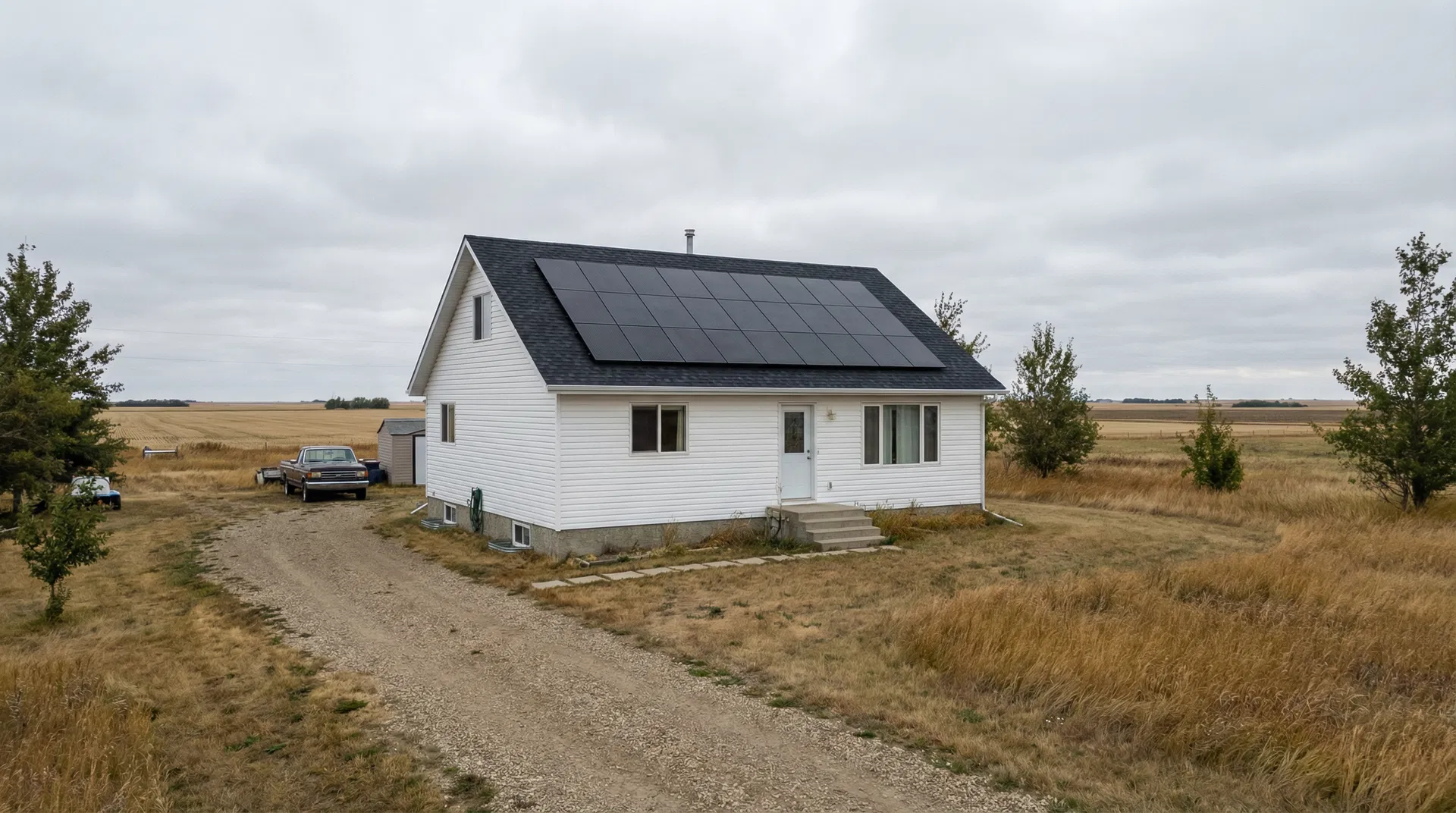
Electrical Site Review for Rocky View County Properties
Voltage Rise
Voltage rise happens when a solar system pushes power back toward the grid and raises the local line voltage above acceptable limits. On rural FortisAlberta distribution lines that serve a small number of properties over longer distances, the line impedance can make this more pronounced than it would be in a dense urban network. If voltage rise limits are reached, the inverters will clip output or shut down to stay within the allowed voltage band, which affects system performance and has to be accounted for in the design.
Single-Phase vs Three-Phase
Rural properties in Alberta can be served by either single-phase or three-phase electrical service, and it's not always obvious which one a property has until we look at the service entrance. Three-phase service allows for larger system capacities and gives more inverter configuration options, while single-phase service has different capacity limits that factor into how a system can be sized and wired. We confirm the service type during the site review because inverter selection and system layout decisions follow from it.
Panel Infrastructure
Older electrical panels on rural properties sometimes don't have the breaker capacity or the physical space to support a solar interconnection without an upgrade. We assess the panel age, main breaker rating, available breaker slots, and whether the bus bar rating supports the addition of a solar feed. If the existing panel can't accommodate the system without exceeding its rated capacity, we scope the panel upgrade as part of the project so there are no cost surprises after the install is underway.
Service Entrance Review
The meter base and service entrance are reviewed as part of every ground mount project we design for FortisAlberta territory. FortisAlberta's interconnection application process includes a meter base review, and if the existing meter base doesn't meet current standards, an upgrade will be required before the application can be approved. We identify this early in the design process so the scope is clear upfront rather than becoming a delay once the application is already submitted.
Right-Sizing Solar for Rocky View County Properties
Rural properties don't size like urban houses, and the difference usually shows up fast once you look at a 12-month usage graph. A house in a subdivision has one primary load: the home itself. A property in this area might run a house, a heated and lit shop, a grain handling setup, a water pump, or some combination of all of those. Each one adds to the annual consumption number, and a system that ignores half your loads isn't going to do much for your bill. The roof-versus-ground-mount decision usually comes down to a few practical questions. Does the roof face the right direction? Is it shaded by trees, a grain bin, or another building during the best production hours? Is the pitch reasonable for racking, and is the structure sound enough to carry a 25-year load? If any of those answers is no, a ground mount is worth looking at seriously. On a farm or acreage with available land, you don't have to accept the constraints a rooftop imposes. We size systems from the 12-month usage graph on your most recent power bill. That graph shows us seasonal swings, whether you're running heavier loads in winter, and where your annual consumption actually sits. A rule-of-thumb number based on the number of bedrooms or square footage won't account for a heated shop that runs all winter. Your power bill will. We build the system size from that, not from assumptions. We provide honest production estimates based on your actual power bills and site conditions, not inflated projections.
Typical Load Profiles We Design For Near Rocky View County
Home + Heated Shop
A home with a heated and lit detached shop is one of the most common load profiles we see on acreage properties. The shop can add substantially to winter consumption depending on how it's heated and how often it runs, which means the combined load often justifies a system in the 15 to 20 kW range. We pull both loads into the usage analysis from the power bill and design the system to address total site consumption, not just the house.
Hobby Farm with Multiple Outbuildings
Properties running a home alongside a barn, a tack room, arena lighting, or water heating for livestock have spread-out consumption across structures that aren't always on the same circuit. A 20 to 25 kW ground mount gives us the capacity to cover those distributed loads without undersizing the system to fit a single building. The site layout review tells us where to place the array so the feed run to the main panel stays practical and efficient.
Grain Operation with Seasonal Peak Loads
Grain handling and drying equipment creates sharp seasonal consumption peaks that inflate annual usage significantly compared to a home-only property. A system sized only for average monthly consumption will leave most of the peak-season load uncovered. We design for the full 12-month usage profile, including those seasonal spikes, which often points to a system in the 25 to 30 kW range for an active grain operation.
FortisAlberta Interconnection in Rocky View County
Rocky View County properties on FortisAlberta distribution connect through FortisAlberta's micro-generation interconnection process. That process involves an application package that includes your system design, single-line diagram, equipment specifications, and site information. Range Road Solar prepares and submits that complete package on your behalf. FortisAlberta reviews the application and determines whether any upgrades to the distribution connection or meter base are required before approval can be granted. We don't speak for FortisAlberta's timeline or decisions, but we can tell you that submitting a complete, accurate application package is the single biggest factor in avoiding back-and-forth delays. That's why we build the interconnection documentation as part of the design process rather than treating it as an afterthought. Once interconnection is approved and the system is commissioned, your meter tracks generation and consumption under the applicable micro-generation rules. If you're not familiar with how FortisAlberta accounts for solar generation on your bill, we walk through that during the design review so there aren't any surprises after the system turns on.
Project Economics and Design Review
| System Size | Annual Production | Year 1 Savings | Payback Period |
|---|---|---|---|
| 10-30 kW range, 15 kW typical |
Production, savings, and payback estimates require a property-specific design and your most recent power bill.
How We Work in Rocky View County
Bill and Load Review
We review your power bill to understand your energy use in Rocky View County and size the system to your actual consumption — not a generic estimate.
Site Assessment
We assess your roof or ground area, south-facing exposure, electrical service, and utility interconnection requirements specific to your property.
Design and Utility Application
We produce a system layout, production estimate, and cost summary, then submit your micro-generation application to your utility on your behalf.
Installation and Commissioning
Our crew installs racking, panels, inverter, and electrical connections. All work is performed by licensed electricians. We commission and test before handoff.
Current Program and Interconnection Review
Utility connection review
FortisAlberta reviews all micro-generation interconnection applications for properties on their distribution system in Rocky View County. Range Road Solar prepares the complete application package, including the system design, equipment documentation, and site information, and submits it directly to FortisAlberta on your behalf. We don't charge separately for that work. It's part of the project.
Current program review
Eligibility for commercial, farm, and residential programs and incentives changes, and what was available last year isn't always available today. We review current federal and provincial program rules at the time of your design review so you're working with accurate information, not what someone read online six months ago. We don't commit you to a program we haven't confirmed is currently available and applicable to your property type.
Frequently Asked Questions
Get a Solar Assessment for Rocky View County
Submit a recent power bill and we will review your consumption and provide an honest assessment for your Rocky View County property. No obligation.
(587) 330-7502 Book a CallRelated Resources
More Solar Services in Rocky View County