Is solar worth it in Rocky View County?
For most properties around Rocky View County, the math works. A typical 10 kW acreage ground mount system here produces about 11,600 kWh a year and trims roughly $2,670 off your first-year power bill, which puts payback at about 14.2 years. We size every system to your actual power bills and site conditions, not an inflated projection.
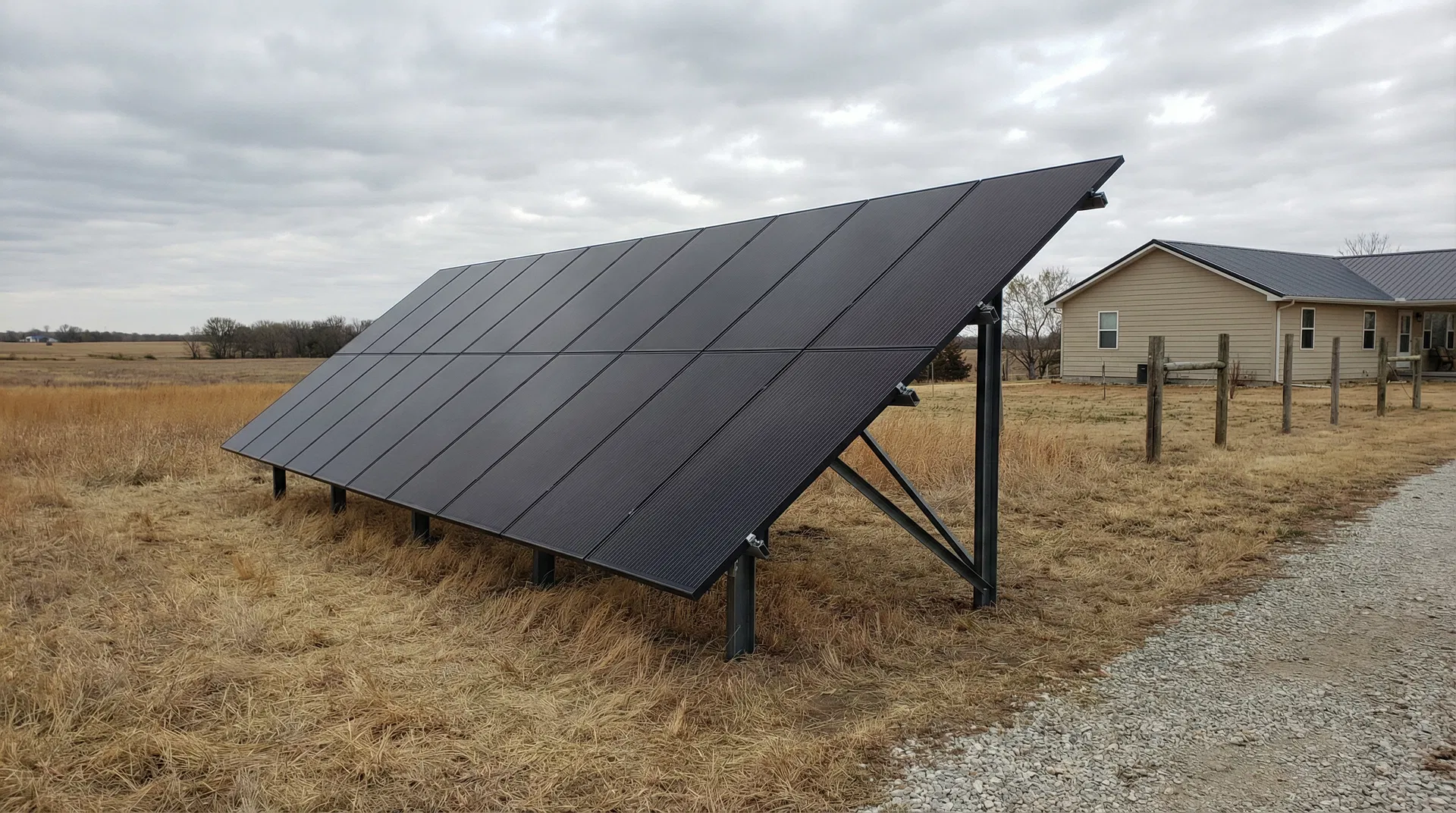
Rocky View County wraps around Calgary from Cochrane through Airdrie to Chestermere and out east past Langdon, and it holds one of the highest concentrations of acreage properties in Canada. That is exactly the property type our company was built around. The name Range Road Solar is not an accident: we install where the addresses are range roads and township roads, where the lot is measured in acres, and where the best place for solar panels is very often not the roof at all. Acreage properties change the solar conversation in your favour. In the city, you take whatever orientation and pitch your roof happens to have. On a Rocky View County acreage, a steel-pile ground mount lets us aim the array due south at the mathematically optimal tilt for this latitude, which typically produces 5 to 8 percent more energy per year than a good roof and dramatically more than a compromised one. Ground mounts also sidestep roof penetrations entirely, shed snow faster at their steeper tilt, and are easy to expand later if you add a shop or an EV. The county's consumption profile fits solar too. Acreage living runs electric-heavy: well pumps, septic systems, heated shops and garages, barn loads, long yard lighting runs. Annual consumption of 12,000 to 25,000 kWh is routine out here, roughly double a city household, which means larger systems, larger annual savings, and payback math that benefits from scale. We size every system from the 12-month usage history on your most recent bill, and FortisAlberta, the wire owner throughout Rocky View County, approves the interconnection through a micro-generation process we handle end to end.
Why Rocky View County Is Strong Solar Country
The county sits in one of the sunniest regions of Canada, with roughly 2,400 peak sun hours per year on the open prairie between Calgary and the foothills. A 10 kW array here produces around 11,300 to 11,700 kWh annually when properly sited, and a ground mount at optimal tilt lands at the top of that range. Chinooks and cold both help. Panels are more efficient in cold air, so bright winter days are productive despite short daylight, and chinook winds clear snow off arrays quickly. Ground mounts at a steep winter-friendly tilt shed snow better still. Economically, Rocky View County properties pay FortisAlberta delivery charges on top of energy costs, and rural delivery is not cheap. Every kilowatt-hour you generate and use on site avoids that entire stack. Surplus exports earn micro-generation credits through your retailer that roll forward on the bill, so long summer days pay for dark December ones. Combine high consumption, strong sun, and room for an optimally sited array, and the county is about as good as residential-scale solar gets in Alberta.
Acreage and Farm Design Questions We Answer Before Quoting
Roof or Ground Mount
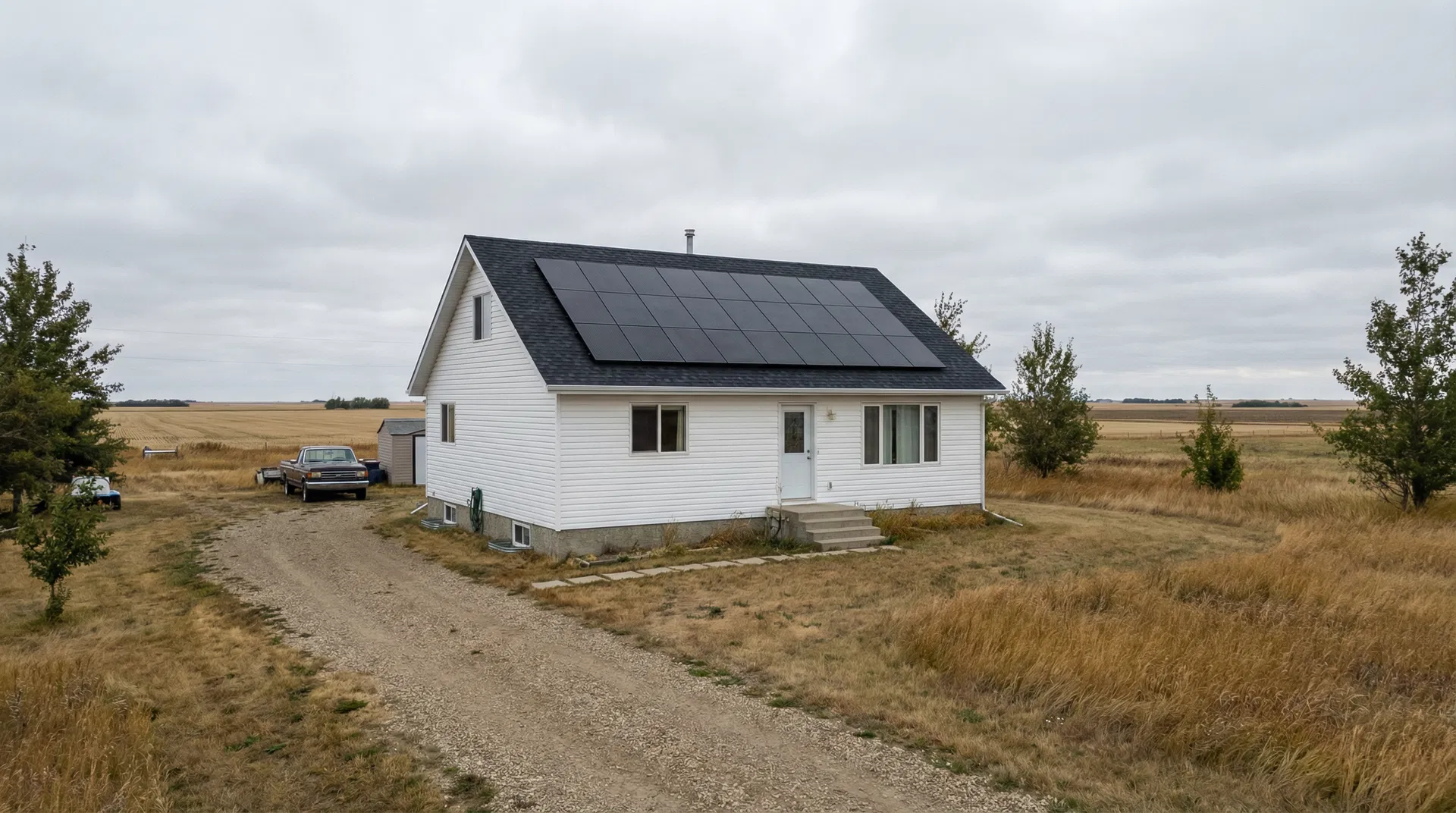
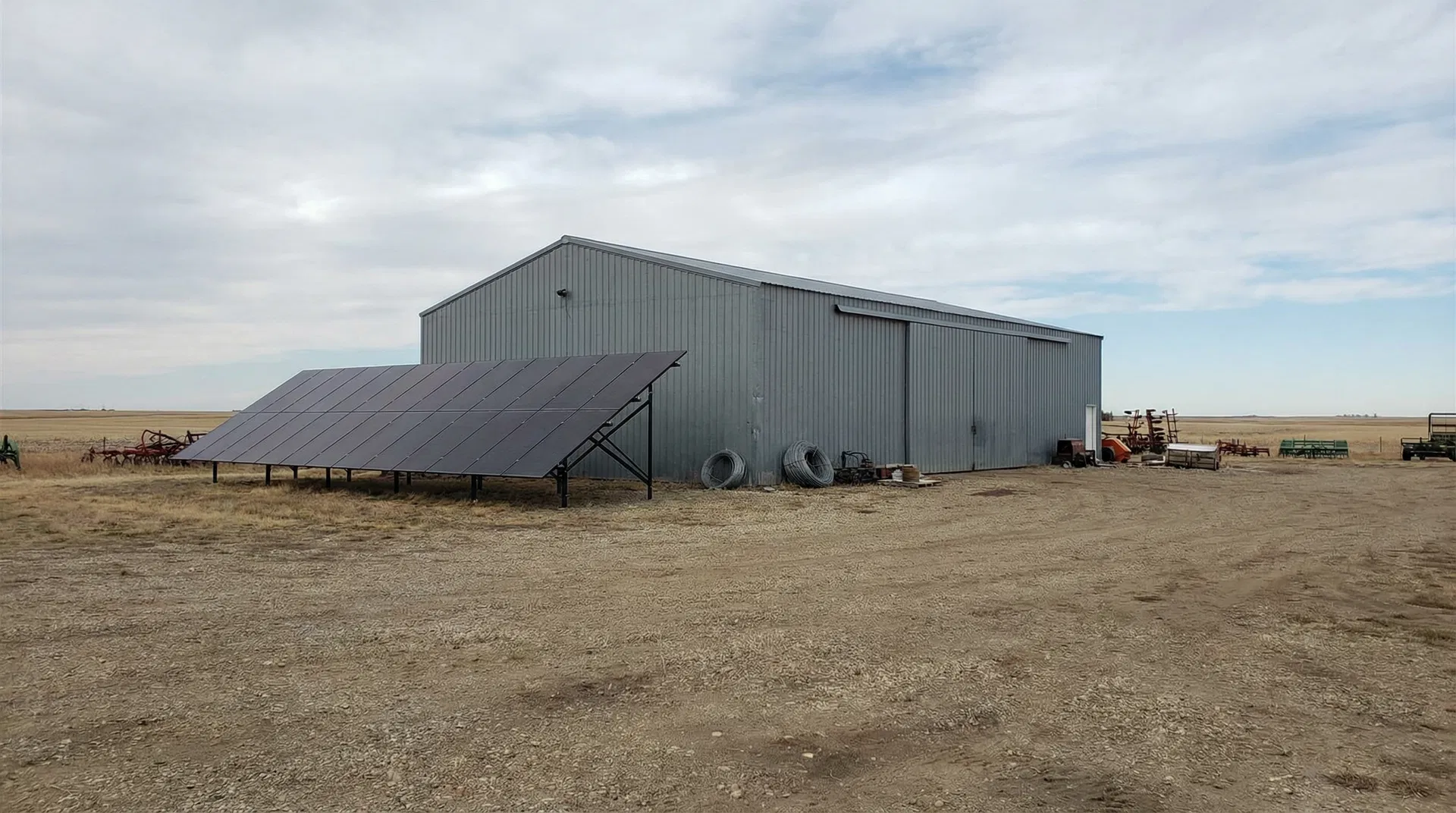
If your yard has open south exposure, a ground mount usually wins: optimal tilt and azimuth, no roof penetrations, better snow shedding, and easy expansion. Roofs win when yard space is tight or the house happens to have a big, clean south-facing plane. We model both where it is a close call and show you the production difference in numbers.
Trenching and the Run to the Array
A ground mount needs a trenched conductor run from the array back to your service, and on county lots that run can be long. Conductor sizing for voltage drop, locates before digging, and reasonable routing are part of our scope and priced up front, not discovered on install day.
Transformer and Feeder Capacity
The pole transformer serving your yard and the length of the FortisAlberta feeder behind it set real limits on export capacity. We check both during design. When a property's ambitions exceed its transformer, we tell you before you spend money, along with what an upgrade conversation with FortisAlberta looks like.
Shops, Barns, and Three-Phase
Heated shops, welders, grain systems, and barn loads are why county consumption runs high, and some of those sites carry three-phase service. Phase determines inverter architecture and practical system ceiling, so we confirm it at the first site visit and design accordingly.
FortisAlberta Interconnection in Rocky View County
FortisAlberta owns the distribution wires throughout Rocky View County, so every solar interconnection in the county runs through FortisAlberta's micro-generation process under Alberta's province-wide regulation. We have taken a long line of county projects through that process, and it is predictable when the application is done right. The sequence: we finalize your design, then submit the micro-generation application to FortisAlberta with the single-line diagram and equipment specifications. Their review confirms grid compatibility and that your meter base suits a bi-directional meter. Complete residential applications typically come back in 2 to 6 weeks. After the install and electrical inspection, FortisAlberta exchanges the meter and your exports start earning credits. Rural Rocky View County sites add design questions that city installers rarely see, and this is where county experience earns its keep. Long feeder runs from the substation raise voltage rise considerations that can limit export if ignored, and the transformer serving your yard caps how much the system can push back to the grid. Larger shops and farm operations may be on three-phase service, which changes inverter selection. We assess feeder, transformer, and service phase during design, before the application goes in, so FortisAlberta's review approves rather than bounces, and so the system performs the way the model said it would.
Estimated Savings and Payback in Rocky View County
| System Size | Annual Production | Year 1 Savings | Payback Period |
|---|---|---|---|
| 10 kW acreage ground mount | 11,600 kWh | $2,670 CAD | 14.2 years (based on $38,000 installed) |
Estimates based on a 10 kW ground mount at optimal tilt, Rocky View County irradiance, and current all-in electricity costs. Rooftop systems cost somewhat less and produce somewhat less; your numbers come from your site and your bills.
How We Work in Rocky View County
Bill and Load Review
We review your power bill to understand your energy use in Rocky View County and size the system to your actual consumption, not a generic estimate.
Site Assessment
We assess your roof or ground area, south-facing exposure, electrical service, and utility interconnection requirements specific to your property.
Design and Utility Application
We produce a system layout, production estimate, and cost summary, then submit your micro-generation application to your utility on your behalf.
Installation and Commissioning
Our crew installs racking, panels, inverter, and electrical connections. All work is performed by licensed electricians. We commission and test before handoff.
Frequently Asked Questions
Get a Solar Assessment for Rocky View County
Submit a recent power bill and we will review your consumption and provide an honest assessment for your Rocky View County property. No obligation.
(587) 330-7502 Book a CallRelated Resources