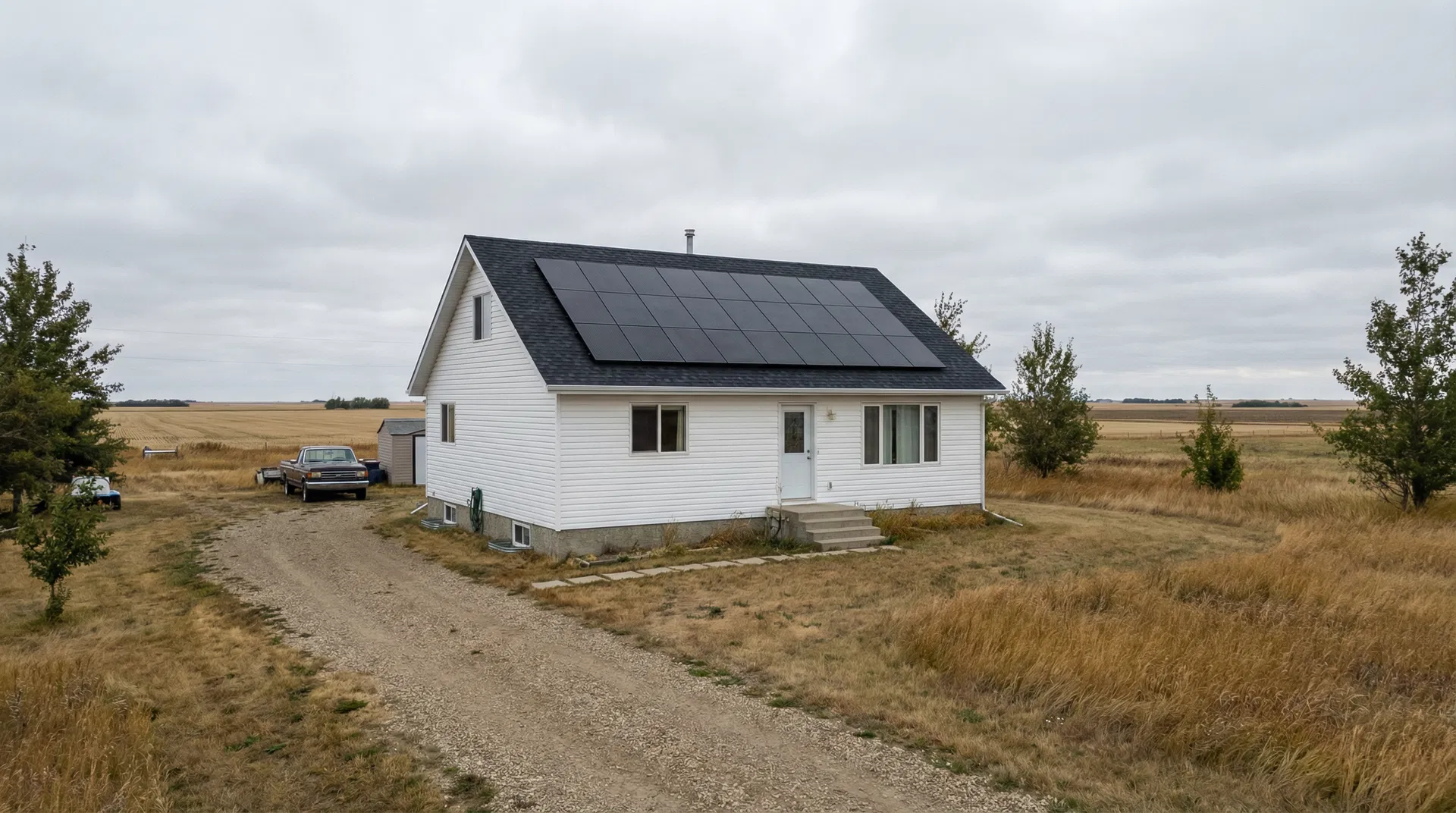
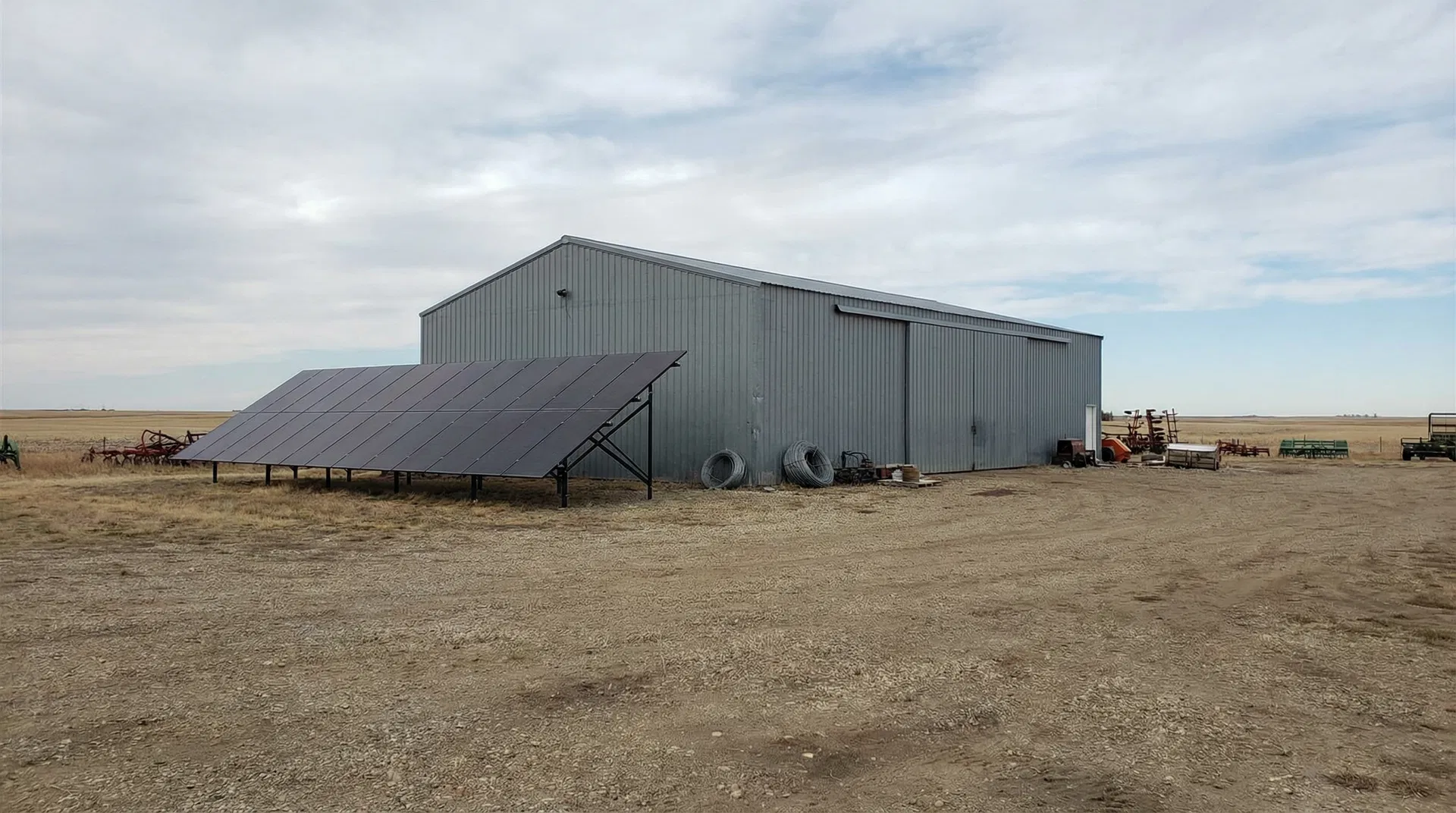
Acreage solar in Rocky View County means rooftop and ground-mount systems built for rural residential properties carrying more than a typical home's load: a house, a heated shop, maybe a well pump or grain bin fed off the same service. LONGi panels are our standard module here, paired with APsystems microinverters so a partially shaded outbuilding roof or a tree line along a shelterbelt doesn't drag down the whole array's output. That per-panel independence matters on acreages more than it does in a subdivision, since one roof plane rarely gets the same sun as another once you've got a barn, machine shed, or grove of poplars in the mix. For ground-mount installs, common on properties with open pasture or cropland, we set the array on fixed racking angled for the site and run conduit back to the main panel or a dedicated subpanel if the shop and house are metered separately. Roof-mount stays the default when the roof faces well and isn't shaded, since it keeps land in production and avoids extra trenching. Either way, we walk the property in person before finalizing a design: soil conditions for footings, clearance under the APsystems inverters, and conduit routing all get decided on-site, not off a satellite photo.
Solar Planning for Rocky View County Properties
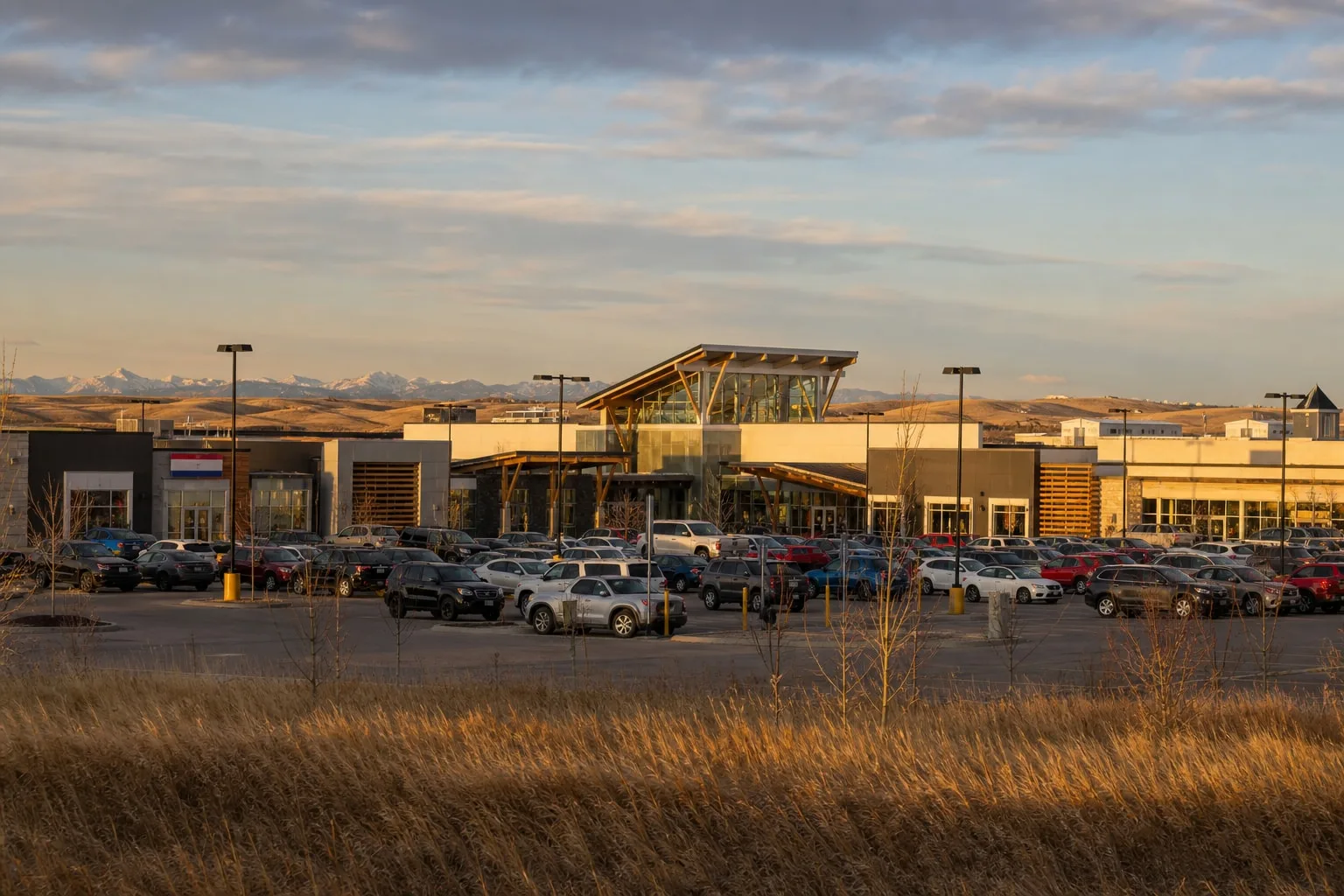
Acreages here range from properties near Balzac to others tucked further from Calgary's edge, each with its own mix of trees, outbuildings, and roof lines. Statistics Canada counted 41,028 residents in the 2021 census, and a lot of that growth sits on rural residential parcels with well water, septic systems, and outbuildings that pull more power than a standard subdivision lot. A home near CrossIron Mills faces a different design problem than one further out past the Balzac Industrial Area: different tree cover, different roof lines, different shop and barn loads. Natural Resources Canada rates this part of Alberta at 1,292 kWh per kWp of installed capacity in its photovoltaic potential maps, a baseline we use as a starting reference point, not a promise, because shading, orientation, and roof pitch on your specific property change the real number. We don't hand out a generic system size for every acreage that comes through the door. We start with your most recent power bill, walk the property, and size the array to what your home, shop, and any outbuildings actually draw. That's the only way a design holds up once FortisAlberta signs off on the interconnection.
Electrical Site Review for Rocky View County Properties
Voltage Rise
On long stretches of overhead distribution line, voltage can drift higher at the point a solar system connects, especially near the end of a rural feeder. That rise affects how much headroom an inverter has before it hits its upper voltage limit and starts clipping output. We check line conditions during the site visit and size the array and inverter selection to work within what the local feeder can actually support.
Single-Phase vs Three-Phase
Rural properties can run single-phase or three-phase service depending on when the property was built and what's connected to it. Shops and irrigation pumps often push a property toward three-phase, and the service type limits which inverters we can use and how much total capacity the system can carry. We confirm phase configuration off the panel and meter base before finalizing equipment, since getting this right at the start avoids a change order mid-install.
Panel Infrastructure
A lot of acreage properties still run on panels installed decades before rooftop solar was common, sometimes with breaker capacity that's already tight. We check panel age, brand, and available breaker space to see if it can take a solar backfeed breaker without exceeding busbar rating. If it can't, the fix is a panel upgrade or a supply-side tap, and we scope that as part of the design instead of finding out mid-install.
Service Entrance Review
We inspect the service entrance and meter base condition as part of every site visit, since a worn or outdated meter base can hold up the micro-generation application FortisAlberta reviews. Corrosion, undersized lugs, or an aging meter socket all get flagged before we submit paperwork. If an upgrade is needed, we scope it into the project so the interconnection application isn't stalled waiting on infrastructure that was going to need replacing anyway.
Right-Sizing Solar for Rocky View County Properties
A house on an acreage rarely runs on one load. Add a heated shop, a well pump, maybe a grain bin auger or irrigation pump, and total draw climbs well past what a subdivision system is built for, which is part of why acreage arrays here tend to land in the 12 to 18 kW range instead of a typical urban 6 to 8 kW system. Roof or ground mount comes down to the property itself. A roof that's shaded by mature trees, faces the wrong direction, or sits at a poor pitch for solar is a straightforward case for ground mount, especially on a yard with open land to spare. So is a metal quonset or shop roof that can't structurally carry the array. Where the roof is clear and well-oriented, mounting there keeps land in production and cuts down on trenching and conduit runs. We don't size a system off a rule of thumb like watts per square foot of house. We size it off the 12-month usage graph on your most recent power bill, which shows exactly how your load shifts through the year, shop heating in winter, irrigation or grain drying in fall, whatever your specific pattern looks like. That graph, combined with a walk of the property to confirm roof or ground conditions, orientation, and shading, is what turns into an actual system size. Everything else is a guess.
Typical Load Profiles We Design For Near Rocky View County
Home + Heated Shop
This is the most common profile we see on acreages: a house plus a detached shop with electric or propane-assisted heat, sometimes a welder or compressor running intermittently. We pull the 12-month usage graph off your most recent power bill to see how much of that load shifts seasonally, then size the array and confirm whether the shop needs its own subpanel or runs off the main service.
Home + Irrigation or Grain Handling
Properties running irrigation pumps, grain augers, or dryers add a load that spikes hard for a few weeks a year rather than running steady. We look at how that seasonal spike shows up on your bill's usage graph and design around it, rather than sizing for an average month that doesn't reflect what the equipment actually pulls when it's running.
Home + Livestock or Outbuilding Power
Barns, heated waterers, and outbuilding lighting add a smaller but constant background load on top of the house. We confirm whether outbuildings are metered separately or run off the same service, then work that combined draw into the design using your most recent bill and a walk of the property.
FortisAlberta Interconnection in Rocky View County
FortisAlberta is the wire service for acreages across this area, and every grid-tied system needs a micro-generation interconnection application approved before it's turned on. Range Road Solar prepares that application as part of your design package: single-line diagrams, equipment specs for the LONGi panels and APsystems microinverters, and the paperwork FortisAlberta needs to review the connection. We handle the submission and stay on it until it's approved, so you're not the one chasing down a utility department. What we won't do is promise a specific approval window or tell you how credits settle on your account. Those are FortisAlberta's rules to set, and they can change, so we confirm current requirements at the time we submit your application rather than quoting something that might be out of date by the time your system goes in.
Project Economics and Design Review
| System Size | Annual Production | Year 1 Savings | Payback Period |
|---|---|---|---|
| 12-18 kW range, 15 kW typical |
Production, savings, and payback figures are only meaningful once they're based on a property-specific design and your most recent power bill.
How We Work in Rocky View County
Bill and Load Review
We review your power bill to understand your energy use in Rocky View County and size the system to your actual consumption, not a generic estimate.
Site Assessment
We assess your roof or ground area, south-facing exposure, electrical service, and utility interconnection requirements specific to your property.
Design and Utility Application
We produce a system layout, production estimate, and cost summary, then submit your micro-generation application to your utility on your behalf.
Installation and Commissioning
Our crew installs racking, panels, inverter, and electrical connections. All work is performed by licensed electricians. We commission and test before handoff.
Current Program and Interconnection Review
Utility connection review
FortisAlberta reviews every micro-generation interconnection application before a system is allowed to connect to the grid. Range Road Solar prepares the full design package, including single-line diagrams and equipment specs, and manages the submission on your behalf.
Current program review
Eligibility for any current commercial, farm, or residential program is reviewed against the rules in place at the time of your design, whether the property is a private residence, a working farm, or a commercial operation. We check this during the design review rather than assuming last year's rules still apply.
Frequently Asked Questions
Get a Solar Assessment for Rocky View County
Submit a recent power bill and we will review your consumption and provide an honest assessment for your Rocky View County property. No obligation.
(587) 330-7502 Book a CallRelated Resources
More Solar Services in Rocky View County