
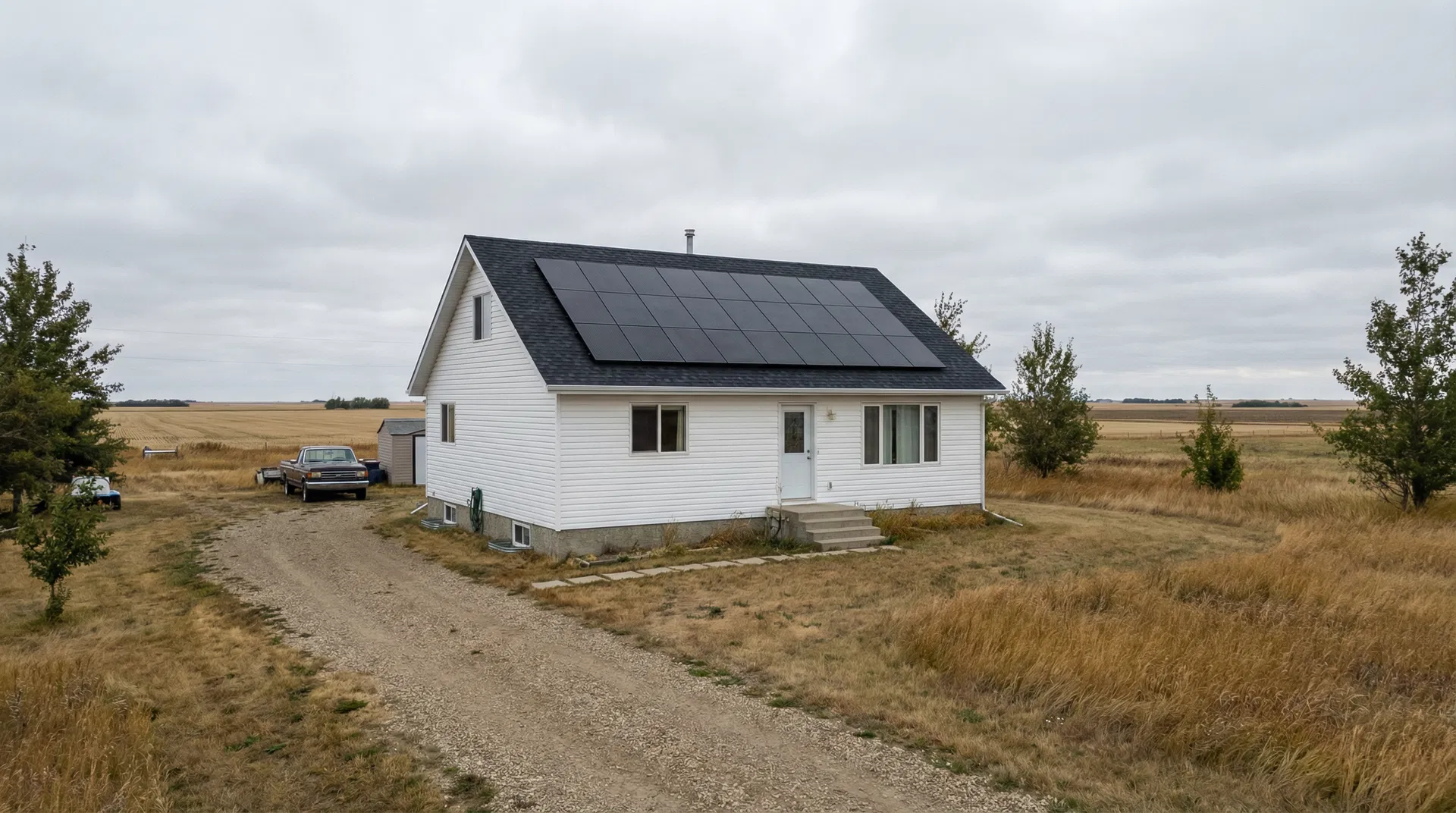
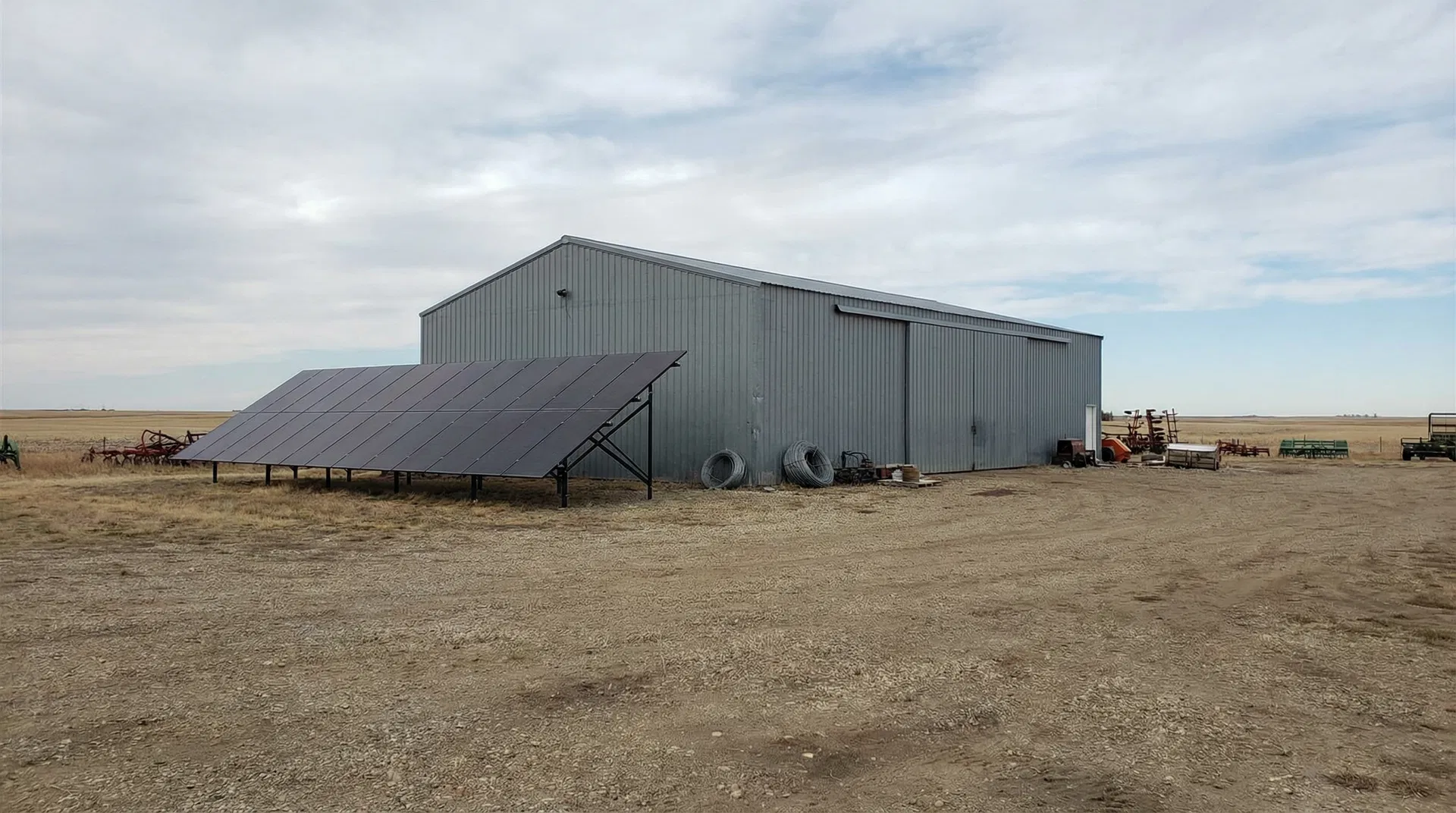
Solar panels Cochrane property owners install through Range Road Solar are built for acreages, not subdivision roofs. We size acreage systems in the area in the 12-18 kW range, with 15 kW as the typical build, using LONGi panels paired with APsystems microinverters. That combination matters on a property with a shop, a barn, or a well pump on its own circuit: APsystems microinverters let each panel operate independently, so partial shading from a tree line, a grain bin, or an outbuilding on one string doesn't drag down the output of the whole array. LONGi panels give us a durable, well-tested module to build that array on, whether it ends up on a house roof, a shop roof, or a ground-mount rack. Acreages in the area come in a lot of shapes. Some have a steep, shaded roof that's a poor fit for solar and a wide open yard that isn't; others have a shop roof with better orientation than the house. We assess both roof-mount and ground-mount options on every site visit, because the right layout depends on shading, roof pitch, and how much of the property's load runs through outbuildings versus the main house. A ground-mount array also means the racking and wiring have to be engineered for ground-level conditions, which we account for in the mounting design. Every acreage system we quote starts with a look at your property's layout and your most recent power bill, so the array we design actually matches how the property uses power, not a rule-of-thumb per-square-foot number.
Solar Planning for Cochrane Properties
Cochrane's population sits at 32,199, up from 25,853 at the last census, and a good share of that growth has spread out onto acreages and larger parcels beyond the older, in-town lots. Local history here stretches back to 1,881, passed through incorporation milestones in 1903 and 1,971, and a lot of the acreages that ring the older part of the area sit on former ranch land, with big, open yards that usually give us more flexibility on where a system can go. Properties out here look different from a standard subdivision lot: many carry a home plus a shop, a barn, or outbuildings, which changes both the electrical load and the roof or yard layout compared to a house on a small in-town lot. Before we talk about system size, we look at how the property is actually used: what runs off the main panel, what's fed from a sub-panel at a shop or barn, and whether the site has room for a ground-mount array instead of stacking everything on the roof. Range Road Solar confirms system size and layout through a site design and your most recent power bill, not a generic per-acre formula. That's the only way to size a system that actually matches how the property draws power.
Electrical Site Review for Cochrane Properties
Voltage Rise
Voltage rise happens when a solar system pushes power back onto a long or lightly loaded distribution line, and the further a property sits from its transformer, the more it can matter. On acreages with long service runs, elevated voltage rise can cause an inverter to briefly curtail or clip its output rather than trip offline. We check the distribution conditions feeding the property as part of the design so we size the inverter and array to hold steady output instead of clipping unnecessarily.
Single-Phase vs Three-Phase
Rural Alberta properties can have either single-phase or three-phase electrical service, depending on when the property was connected and what kind of equipment it runs. A shop with three-phase motors calls for different inverter selection and system capacity planning than a house on single-phase service. We confirm which type of service a property has before finalizing inverter selection, since that decision affects both equipment compatibility and how the system interacts with the grid.
Panel Infrastructure
A lot of acreage properties still run on an older main electrical panel that was sized for the loads of decades ago, not a home plus a shop plus a solar interconnection. We check breaker capacity, panel age, and busbar rating during the site visit to confirm the panel can safely handle the new circuit. If it can't, an upgrade usually means a new panel or a supplemental sub-panel sized for both the existing loads and the solar connection.
Service Entrance Review
We inspect the service entrance and meter base on every acreage site visit, checking for wear, corrosion, and whether the equipment meets current code for a micro-generation connection. The condition of the meter base matters directly for the application to FortisAlberta, since a worn or non-compliant meter base can hold up approval. When an upgrade is needed, we scope and quote it as part of the overall install so there's no separate contractor to coordinate.
Right-Sizing Solar for Cochrane Properties
Rural systems in the area usually end up bigger than a typical in-town rooftop system, and it's because of what's running on the property. A house alone is one load, but add a heated shop, a well pump, a grain dryer, or livestock equipment, and the total draw on the property climbs fast. That's why acreage systems tend to land in the 12-18 kW range instead of the smaller systems common on standard residential lots. Roof versus ground-mount is a real decision on most acreages, not an afterthought. If the house roof is shaded by mature trees, faces the wrong direction, or has a steep or complicated pitch, we look at the roof on a shop or outbuilding instead, or at a ground-mount array if the yard has open space to work with. A spread-out yard with a clear, unshaded stretch of ground is often the simpler build, since it skips roof penetrations and lets us angle the array for the best orientation regardless of how the house or shop happens to sit. Either way, we size the system from the 12-month usage graph on your most recent power bill, not a rule-of-thumb per-acre or per-square-foot number. That graph shows us the property's actual monthly draw across a full year of seasonal swings, which combined with the site design tells us what size system actually offsets that load instead of over- or under-building it.
Typical Load Profiles We Design For Near Cochrane
Home + Heated Shop
This is one of the most common setups on acreages in the area: a house plus a heated detached shop used for equipment, a workshop, or vehicle storage. The shop's heat and power tools add a steady load on top of the house, which usually pushes system size toward the upper end of the 12-18 kW range. We size the array from the combined usage graph on your most recent power bill, not the house and shop treated as separate systems.
Home + Well Pump + Outbuildings
Properties running their own well pump alongside a scattering of outbuildings, a barn, a machine shed, a chicken coop, have a load profile with more short, sharp draws than a straightforward house. Well pumps in particular can pull a noticeable spike when they cycle on. We account for that pattern in the system design and inverter selection rather than sizing purely off average monthly usage.
Home + Grain Handling or Irrigation
Acreages with grain handling equipment, an auger, a dryer, or aeration fans, or with irrigation pumps running seasonally, see load patterns that spike hard during specific months and stay low the rest of the year. That kind of seasonal swing shows up clearly on the 12-month usage graph from your power bill, and it's a major factor in how we size the array and plan for months when the equipment isn't running at all.
FortisAlberta Interconnection in Cochrane
FortisAlberta is the wire service for properties in the area, and every grid-tied acreage system we install has to go through FortisAlberta's micro-generation interconnection process before it's energized. That application covers the technical specifications of the system: panel and inverter model numbers, system size, and the point of interconnection at your service entrance. Range Road Solar prepares and submits that full application package on your behalf, including the single-line diagram and equipment datasheets FortisAlberta asks for, so you're not the one tracking down utility paperwork. Because acreage systems in the 12-18 kW range often run closer to a property's service capacity than a small rooftop system in town, we also confirm your electrical service can support the interconnection point before we finalize a design. We don't quote approval timelines or credit terms here because those are set by FortisAlberta and current program rules, not by us, and they can change. What we can tell you is that we handle the application from start to finish and keep you posted as it moves through FortisAlberta's review.
Project Economics and Design Review
| System Size | Annual Production | Year 1 Savings | Payback Period |
|---|---|---|---|
| 12-18 kW range, 15 kW typical |
Production, savings, and payback figures are only accurate once we've completed a property-specific design using your most recent power bill and site conditions.
How We Work in Cochrane
Bill and Load Review
We review your power bill to understand your energy use in Cochrane and size the system to your actual consumption, not a generic estimate.
Site Assessment
We assess your roof or ground area, south-facing exposure, electrical service, and utility interconnection requirements specific to your property.
Design and Utility Application
We produce a system layout, production estimate, and cost summary, then submit your micro-generation application to your utility on your behalf.
Installation and Commissioning
Our crew installs racking, panels, inverter, and electrical connections. All work is performed by licensed electricians. We commission and test before handoff.
Current Program and Interconnection Review
Utility connection review
FortisAlberta reviews every grid-tied micro-generation application before a system is allowed to interconnect, and that review covers the system's technical specifications and its connection point on your property. Range Road Solar prepares the full design package, including single-line diagrams and equipment specs, and submits it on your behalf. We don't control FortisAlberta's review process, but we handle every piece of paperwork that goes into it.
Current program review
Eligibility rules for commercial, farm, and residential solar connections can differ and can change year to year, so we check current requirements against your property type at the time we prepare your design. That review happens before we finalize a quote, not after. It's part of making sure the system we propose is actually buildable under the rules in place when you sign off.
Frequently Asked Questions
Get a Solar Assessment for Cochrane
Submit a recent power bill and we will review your consumption and provide an honest assessment for your Cochrane property. No obligation.
(587) 330-7502 Book a CallRelated Resources
More Solar Services in Cochrane