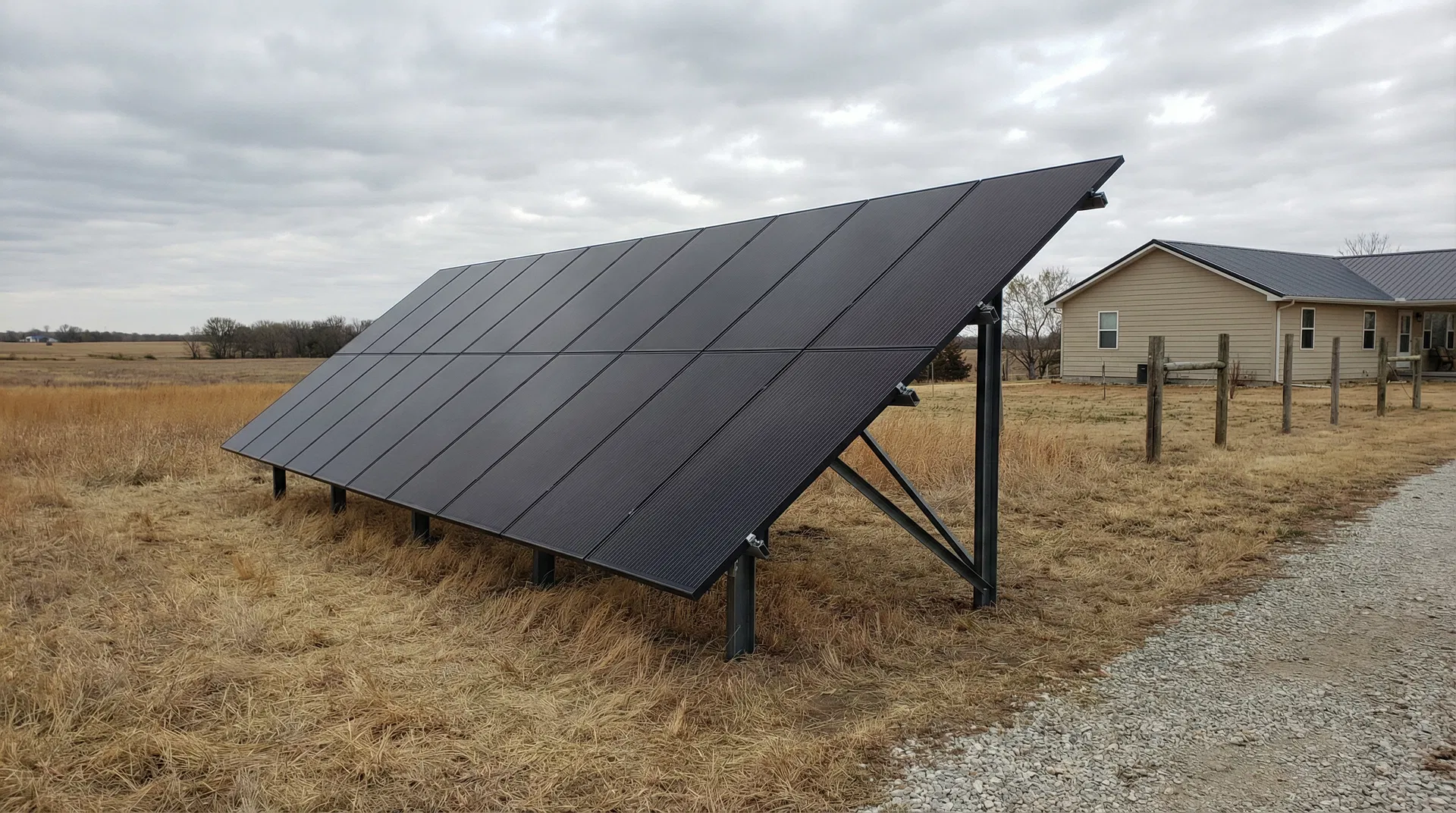
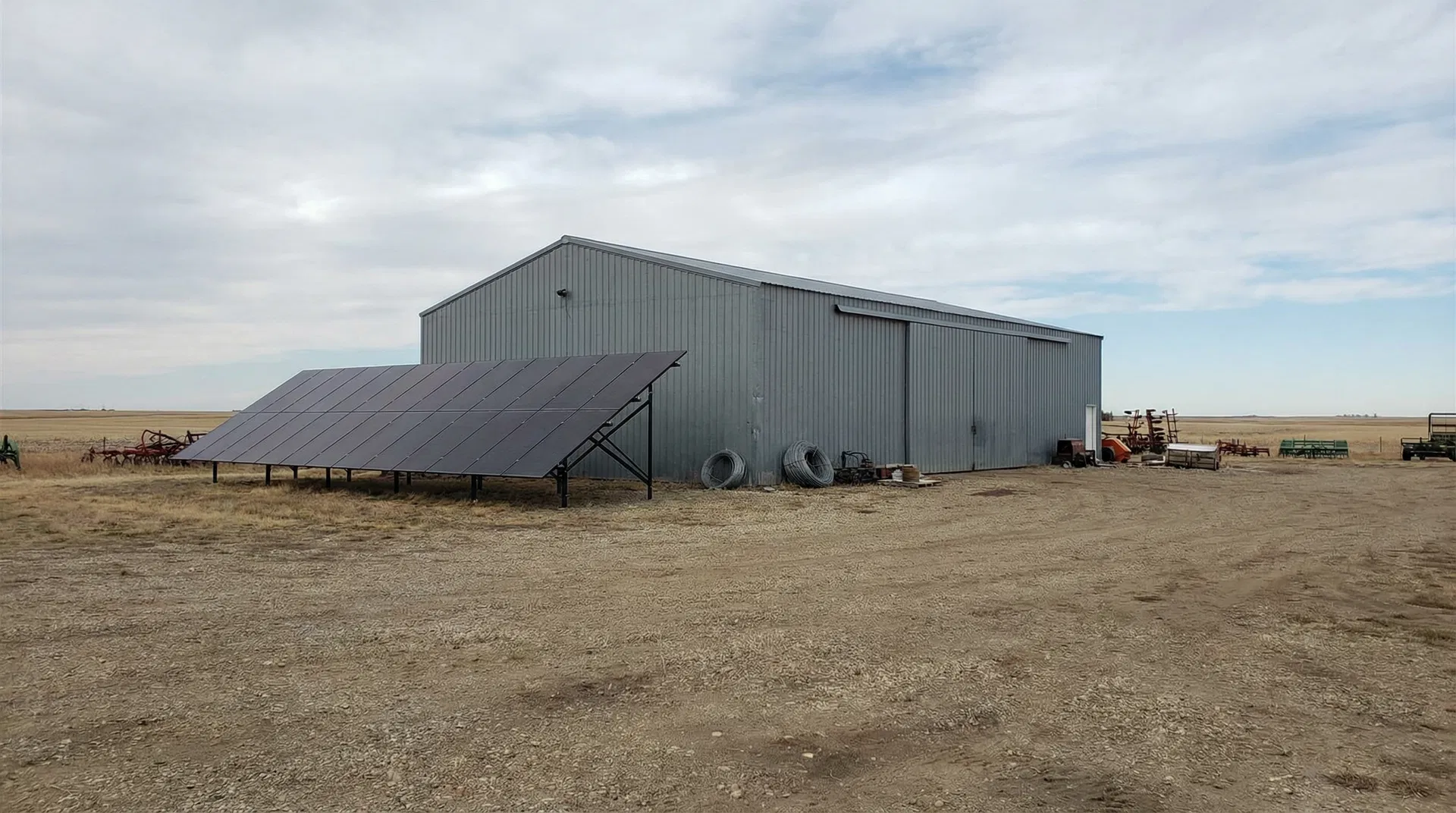
Farm solar Cochrane Alberta properties typically land in the 20 to 50 kW range, with 25 kW being a common starting point for operations running a home, a heated shop, and seasonal loads. We use LONGi panels across all agricultural installs. They're proven in rural conditions, carry solid output warranties, and hold up to the mechanical stress of large ground-mount frames. For most farm systems in this size range, APsystems microinverters are the preferred inverter solution. Unlike a string inverter tied to a single point of failure, microinverters let each panel perform independently. One panel in partial shade from a grain bin or outbuilding doesn't drag the rest of the array down. Ground-mount is the preferred configuration for most agricultural systems near Cochrane. Farm yards have room. Rooflines on older machine sheds are often steep, weathered, or oriented in ways that sacrifice output. A ground-mount array can be positioned and angled to match the site conditions, and it keeps the installation off a roof that may need maintenance in the next decade. That said, some operations are better served by a rooftop install on a newer shop or outbuilding, particularly when yard space is tight or fencing and equipment create shading conflicts at ground level. We assess both options at the site visit and recommend based on what the property actually supports, not what's easiest to install. Every system is designed from scratch using your power bill, a site walkthrough, and a shading analysis.
Solar Planning for Cochrane Properties
Farm properties near Cochrane carry loads that most residential solar installers aren't set up to handle. A heated shop running 240-volt equipment, a home on the same service, grain handling motors, and outdoor lighting don't behave like a suburban electricity profile. They stack, they cycle, and they shift by season. Designing a system that actually offsets meaningful usage means starting with what's on your bill and what's running on your land, not a generic kilowatt estimate pulled from a brochure. FortisAlberta is the wire service for the area. Every grid-tied solar system here goes through a micro-generation application with FortisAlberta, and the way your property connects to the distribution system affects how the system gets designed. Voltage conditions at the meter, service type, and panel capacity all feed into what we can install and how we size it. We work through all of that before we quote. Your most recent power bill gives us the 12-month usage graph we need to start the sizing conversation. Site conditions and an electrical assessment handle the rest. Nothing gets estimated from a distance.
Electrical Site Review for Cochrane Properties
Voltage Rise
Voltage rise occurs when a solar system pushes power back toward the grid and raises voltage at the point of connection beyond what the distribution line can tolerate. On rural distribution lines, which often serve fewer loads and run longer distances than urban feeders, the voltage conditions at the meter can already be close to the upper limit before a solar system is added. When voltage rise is a constraint, inverter settings may need to be adjusted or system capacity may need to be reduced, which affects how we size the array from the start.
Single-Phase vs Three-Phase
Rural properties in Alberta can be served by either single-phase or three-phase electrical service, and it isn't always obvious which one a property has until we check. Three-phase service can support a larger solar system capacity and pairs differently with inverter configurations than single-phase service does. Knowing your service type before we design the system is essential, because the inverter selection and total system size both depend on it.
Panel Infrastructure
Older electrical panels on farm properties are common, and they don't always have the breaker capacity to support a solar interconnection without upgrades. We assess the panel age, the available breaker space, and whether the bus bar rating can accommodate the additional back-fed current a solar system introduces. If the panel isn't up to it, an upgrade gets scoped into the project before installation begins rather than discovered partway through.
Service Entrance Review
The meter base and service entrance are the physical connection point between your property and FortisAlberta's distribution system, and their condition directly affects whether the micro-generation application can proceed as submitted. We inspect the meter base for weathering, connector condition, and compatibility with current FortisAlberta requirements during the site review. If the meter base needs to be replaced or upgraded before the application can be approved, we identify that early so it doesn't delay the project.
Right-Sizing Solar for Cochrane Properties
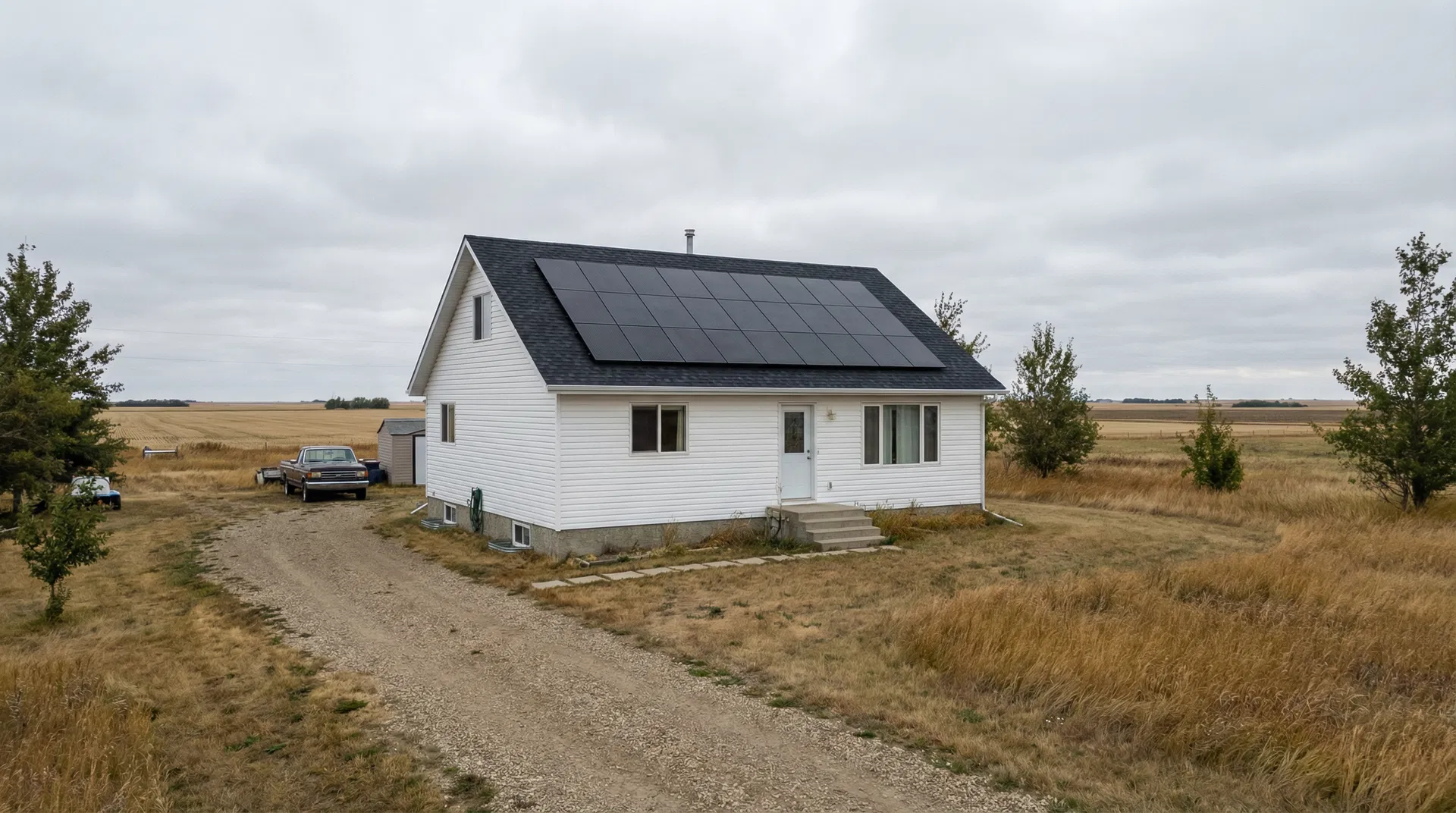
Agricultural properties near Cochrane don't run like a house in town. The electrical load is layered: a home pulling power for lighting, appliances, and heat, a shop running welders, compressors, and heating units on 240-volt circuits, and then whatever seasonal loads the operation adds on top. That might be irrigation pumps, grain aeration fans, or the occasional large motor for handling equipment. When all of those loads sit on the same account, the 12-month usage graph on your most recent power bill tells a very different story than a standard residential profile. Roof versus ground-mount is a real decision on most farm properties, not a default. A rooftop install works well on a newer shop with a clean south-facing pitch and no shading from adjacent bins or buildings. But a lot of farm buildings near Cochrane weren't built with solar in mind, and a roof that's awkward in pitch, partially shaded by grain storage, or due for resheeting in the next few years isn't where you want to anchor a 20 to 50 kW system. Ground-mount gives us full control over orientation and tilt, and it keeps the installation off infrastructure that may need attention down the road. We don't size systems from rules of thumb. We start with the 12-month usage graph on your most recent power bill. Alberta utility bills include that graph, and it shows us how your load shifts by month across a full year. Combined with a site walkthrough and shading assessment, that's what drives the system design. We provide honest production estimates based on your actual power bills and site conditions, not inflated projections.
Typical Load Profiles We Design For Near Cochrane
Home Plus Heated Shop
This is one of the most common profiles we see on properties near Cochrane: a residence and a heated shop sharing the same meter, with the shop drawing heavily through the winter months for heat and power tools. A system in this scenario needs to be sized against the combined annual load, not just the house, and the winter-heavy usage pattern shapes how we evaluate ground-mount orientation and system capacity. Your most recent power bill gives us the 12-month graph we need to understand the seasonal swing.
Grain Operation With Aeration and Handling
Grain farms running aeration fans and auger motors through harvest season carry sharp, short-duration load spikes that show up clearly on a 12-month usage graph. A 25 kW or larger system is often appropriate for these operations, but the exact size depends on how much of the total annual load is clustered in harvest months versus spread across the year. We design for the actual usage pattern, not a flat average, so the system offsets the loads that are costing the most.
Acreage With Shop, Home Office, and EV Charging
Larger acreage properties near Cochrane are increasingly running home offices, EV chargers, and heated shops alongside the main residence, which pushes the load profile well above a typical suburban home. A 20 to 30 kW system is often the starting point for this configuration, though the right size depends on the actual usage history on the bill. We look at the full 12-month usage graph and assess whether the existing electrical panel and service entrance can support the system before we finalize the design.
FortisAlberta Interconnection in Cochrane
FortisAlberta is the wire service provider for Cochrane and the surrounding rural area. Any grid-tied solar system installed here requires a micro-generation application submitted to and approved by FortisAlberta before the system can be commissioned. We handle that application on your behalf. That includes preparing the single-line diagram, completing the technical documentation FortisAlberta requires, and coordinating with the utility through the review process. You don't need to navigate the interconnection paperwork yourself. What matters on your end is having a clear picture of your current electrical setup before the application goes in. The condition of your meter base, the capacity of your service entrance, and whether you're on single-phase or three-phase service all factor into how FortisAlberta reviews the connection. We assess all of that during the design review so there aren't surprises mid-application. If infrastructure upgrades are needed before the application can proceed, we'll identify them upfront and include them in the project scope.
Project Economics and Design Review
| System Size | Annual Production | Year 1 Savings | Payback Period |
|---|---|---|---|
| 20-50 kW range, 25 kW typical |
Production, savings, and payback estimates require a property-specific system design and review of your most recent power bill.
How We Work in Cochrane
Bill and Load Review
We review your power bill to understand your energy use in Cochrane and size the system to your actual consumption, not a generic estimate.
Site Assessment
We assess your roof or ground area, south-facing exposure, electrical service, and utility interconnection requirements specific to your property.
Design and Utility Application
We produce a system layout, production estimate, and cost summary, then submit your micro-generation application to your utility on your behalf.
Installation and Commissioning
Our crew installs racking, panels, inverter, and electrical connections. All work is performed by licensed electricians. We commission and test before handoff.
Current Program and Interconnection Review
Utility connection review
FortisAlberta reviews all micro-generation applications for properties in the Cochrane area before a grid-tied solar system can be commissioned. Range Road Solar prepares the full technical design package for the application and submits it on your behalf. We handle the documentation so you don't have to figure out what FortisAlberta needs or how to format it.
Current program review
Commercial and agricultural solar installations may be eligible for programs or incentives depending on operation type, system size, and current rules. Eligibility and program terms change, and we review what's available against your specific project at design time. We don't quote programs we can't confirm are still active.
Frequently Asked Questions
Get a Solar Assessment for Cochrane
Submit a recent power bill and we will review your consumption and provide an honest assessment for your Cochrane property. No obligation.
(587) 330-7502 Book a CallRelated Resources
More Solar Services in Cochrane