
Commercial solar in Cochrane, Alberta starts with sizing the system to your actual load, not a generic square-footage guess. We install systems from 15 kW up to 100 kW, with most commercial projects in the area landing around 30 kW once we've reviewed the building's usage. Every system uses LONGi panels, which we've standardized on for their output warranty and consistent performance through Alberta's temperature swings. On the inverter side, smaller commercial arrays typically run APsystems microinverters, which let us monitor production panel by panel and keep the system running even if one module is shaded or underperforming. Larger commercial installations, closer to the 100 kW end of the range, often move to string inverters instead, since that's a better fit for open roof arrays or ground-mount arrays with uniform sun exposure and fewer obstructions. Local commercial properties run the gamut: retail storefronts, light industrial and warehouse space, and office buildings with rooftop HVAC units competing for the same roof area. We design around what's actually there, not a template. That might mean splitting an array across two roof sections to clear a rooftop unit, or moving part of the system to a ground mount if the roof doesn't have enough clear area. Businesses that qualify may also be eligible for the federal Clean Technology Investment Tax Credit, and we review that eligibility as part of the design process rather than assuming it applies. Every proposal comes with a layout specific to your building, not a generic commercial package.
Solar Planning for Cochrane Properties
Cochrane, Alberta sits in the Calgary Metropolitan Region, and the numbers show why local businesses are paying closer attention to their power bills. Statistics Canada put the town's population at 32,199 in the most recent census, up from 25,853 the census before that. That kind of growth means more retail space, more warehouse capacity, and more equipment running through a given day. For any commercial property here, the wire service is FortisAlberta, and every grid-tied solar system goes through their interconnection process before it's energized. Environment Canada's climate normals for the region list 2,396.3 hours of bright sunshine a year, and Natural Resources Canada's solar resource maps put the specific yield for this part of Alberta at 1,292 kWh per kWp installed. Those are regional reference figures, not a promise about what your building will produce. Roof shading, pitch, orientation, and your electrical service all change the real number. Range Road Solar doesn't quote a commercial system off a spreadsheet formula built on those regional averages. We confirm sizing and expected output through a site design and a look at your most recent power bill, so the figure you get reflects your building, not a regional stat.
Electrical Site Review for Cochrane Properties
Voltage Rise
Voltage rise happens when the added current from a grid-tied solar system pushes voltage up along the distribution line, and it tends to be more noticeable the farther a property sits from the local transformer. On some feeders serving commercial and light industrial areas, that rise can affect how hard an inverter can push output before it has to throttle back, a process called clipping. We check your service point's distance and feeder conditions during the site review so the system we design accounts for it up front, instead of discovering the limit after installation.
Single-Phase vs Three-Phase
Commercial properties in the area can have either single-phase or three-phase electrical service, depending on the building's age, size, and what FortisAlberta has running to that site. Three-phase service generally opens up more inverter options and higher system capacity, since it can carry more load and balance output more evenly across the system. We confirm which type of service your building has early in the design process, because it directly affects which inverters we can spec and how large a system your service can support.
Panel Infrastructure
Older commercial buildings can have electrical panels sized for the equipment loads of decades ago, not for a modern solar system feeding back into them. We check the panel's age, its rated capacity, and how much of it is already committed to existing breakers before we finalize a design. If the existing panel can't support the added solar breaker or the required disconnects, an upgrade to a panel with more capacity becomes part of the project scope, and we price that out as part of the proposal.
Service Entrance Review
The service entrance and meter base are where FortisAlberta's grid meets your building's electrical system, and their condition matters because the micro-generation application depends on accurate documentation of what's already there. We inspect the meter base, the service conductors, and the disconnect equipment as part of every site visit. If any of that needs to be upgraded to support a commercial-scale system or to meet current interconnection requirements, we identify it before the application goes in, not after.
Right-Sizing Solar for Cochrane Properties
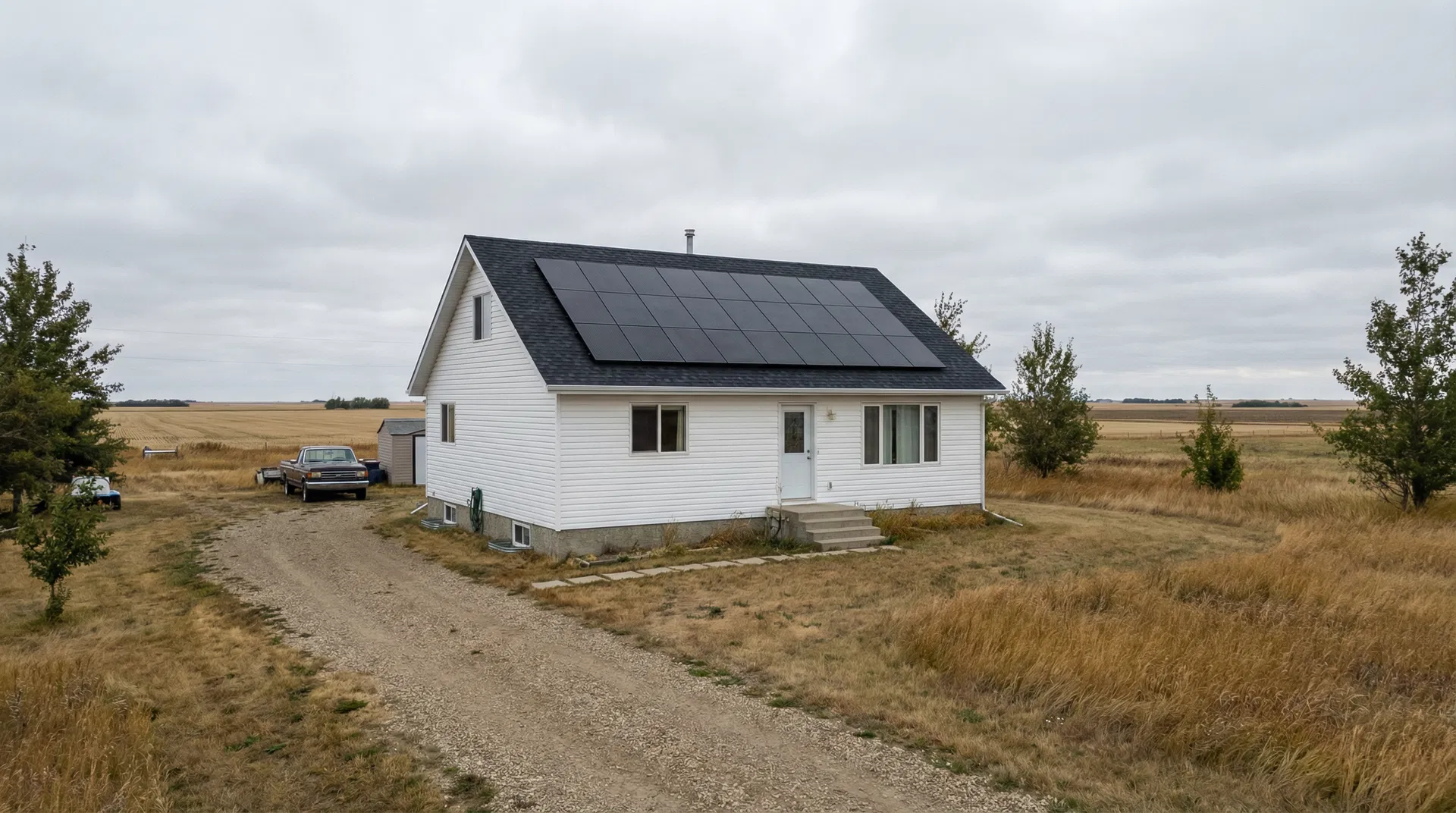
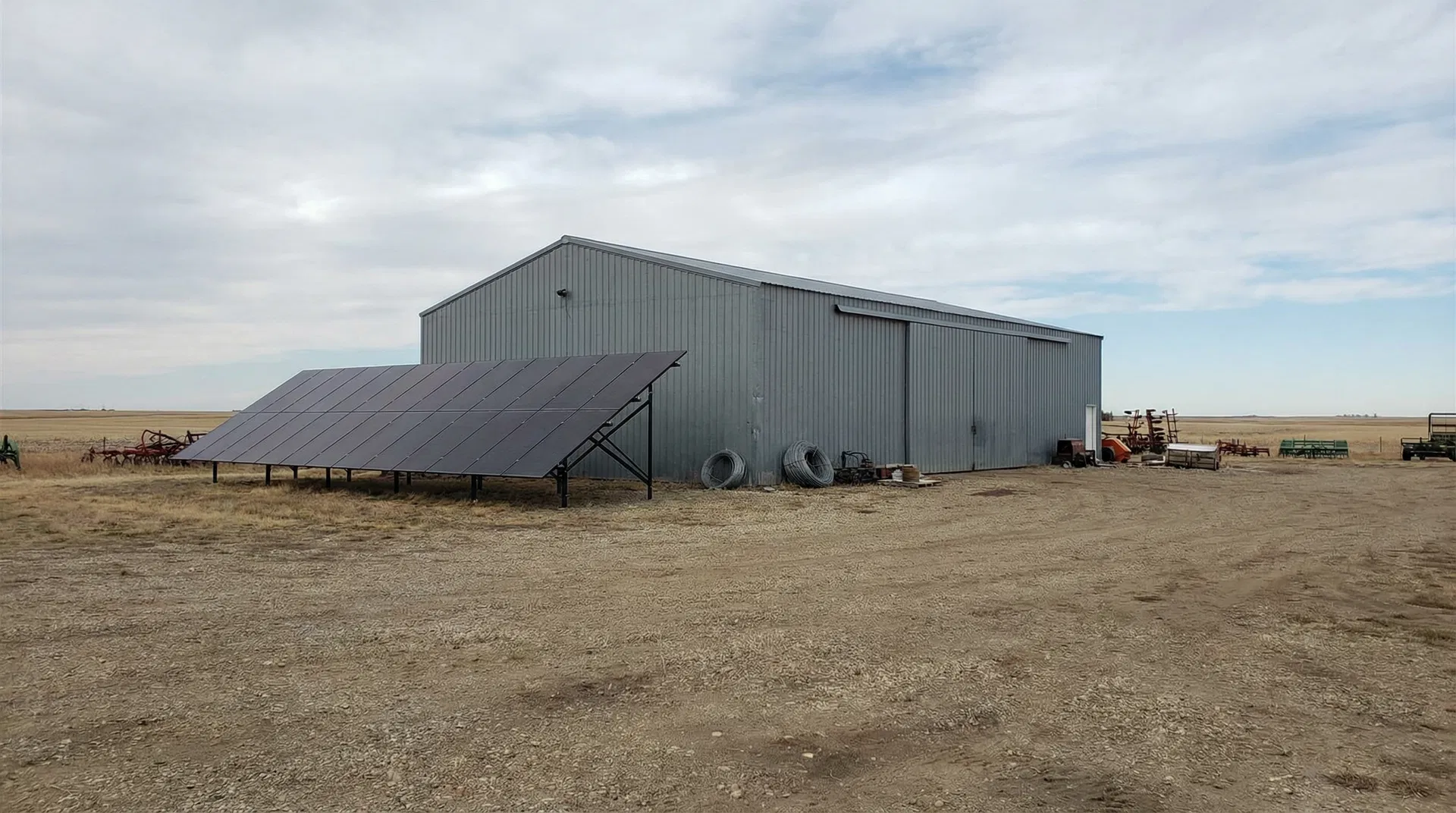
Commercial systems tend to run larger than a typical home installation because commercial properties usually carry more than one load at once: the main building, plus a warehouse bay, a workshop, refrigeration units, or outbuildings all pulling power through the same service. That's part of why our commercial range runs from 15 kW up to 100 kW rather than a single fixed size. Roof or ground mount is a site-by-site call. A roof mount makes sense when the roof has enough clear, unshaded area and a structure that can carry the added load. Ground mount becomes the better option when a roof is too shaded by trees or neighboring buildings, when the pitch or orientation works against solar production, or when the property has open land available and a roof that's already crowded with HVAC units or vents. Some sites end up with a mix of both, splitting the array to make use of what's actually available. We size every system from the 12-month usage graph on your most recent power bill, not a rule-of-thumb multiplier based on square footage or a rough estimate of what a similar business uses. That usage graph shows your building's actual demand pattern across the year, including seasonal swings, and it's the starting point for every design we put together. Combined with a site visit to confirm roof or ground conditions, that's what determines the system size we recommend, not a generic formula.
Typical Load Profiles We Design For Near Cochrane
Retail Storefront + HVAC
Downtown-style retail and service properties usually run steady daytime loads: lighting, point-of-sale systems, and HVAC that cycles hard during business hours. We size these systems around the demand pattern on your most recent power bill rather than square footage alone, since two similar-looking storefronts can carry very different equipment loads.
Warehouse + Refrigeration
Warehouse and light industrial properties often carry a heavier, more constant load from refrigeration units, compressors, or conveyor equipment running through most of the day. These properties frequently have more available roof or yard area for a larger array, and we look at both the usage graph and the physical site before recommending a system size.
Office + EV Charging
Office buildings and mixed-use commercial properties are increasingly adding EV charging for staff or fleet vehicles on top of standard office loads like lighting, HVAC, and equipment. That added charging load changes the sizing conversation, which is another reason we build every proposal around your building's actual bill and usage pattern instead of a standard package.
FortisAlberta Interconnection in Cochrane
FortisAlberta is the wire service for commercial properties in the area, and any system that ties into the grid here goes through their micro-generation interconnection process. Before a single panel goes on the roof, we complete FortisAlberta's application on your behalf: the electrical drawings, the site plan, and the equipment specifications for whatever inverter setup your system uses, whether that's APsystems microinverters or a string inverter for a larger array. We handle the back-and-forth with FortisAlberta directly, so you're not the one tracking down paperwork or chasing a status update. Interconnection requirements can vary depending on system size and your building's existing electrical service, particularly for larger commercial arrays closer to the top of the 15 to 100 kW range. We review your specific service configuration as part of the design process and build the application around what your property actually has, rather than a one-size-fits-all form. If your building needs an electrical upgrade to support the interconnection, we'll flag that during the site review, before the application goes in.
Project Economics and Design Review
| System Size | Annual Production | Year 1 Savings | Payback Period |
|---|---|---|---|
| 15-100 kW range, 30 kW typical |
Production, savings, and payback figures require a property-specific design review and your most recent power bill before we can provide them.
How We Work in Cochrane
Bill and Load Review
We review your power bill to understand your energy use in Cochrane and size the system to your actual consumption, not a generic estimate.
Site Assessment
We assess your roof or ground area, south-facing exposure, electrical service, and utility interconnection requirements specific to your property.
Design and Utility Application
We produce a system layout, production estimate, and cost summary, then submit your micro-generation application to your utility on your behalf.
Installation and Commissioning
Our crew installs racking, panels, inverter, and electrical connections. All work is performed by licensed electricians. We commission and test before handoff.
Current Program and Interconnection Review
Utility connection review
FortisAlberta reviews every grid-tied commercial solar application against their current micro-generation interconnection requirements before a system can be energized. Range Road Solar prepares the full design package, including the electrical drawings and equipment specifications, and submits it on your behalf.
Current program review
Commercial, farm, and residential solar projects each get checked against whatever federal and provincial rules are in effect at the time we design your system. We review eligibility as part of that design process rather than assuming a program applies, since rules can change between projects.
Frequently Asked Questions
Get a Solar Assessment for Cochrane
Submit a recent power bill and we will review your consumption and provide an honest assessment for your Cochrane property. No obligation.
(587) 330-7502 Book a CallRelated Resources
More Solar Services in Cochrane