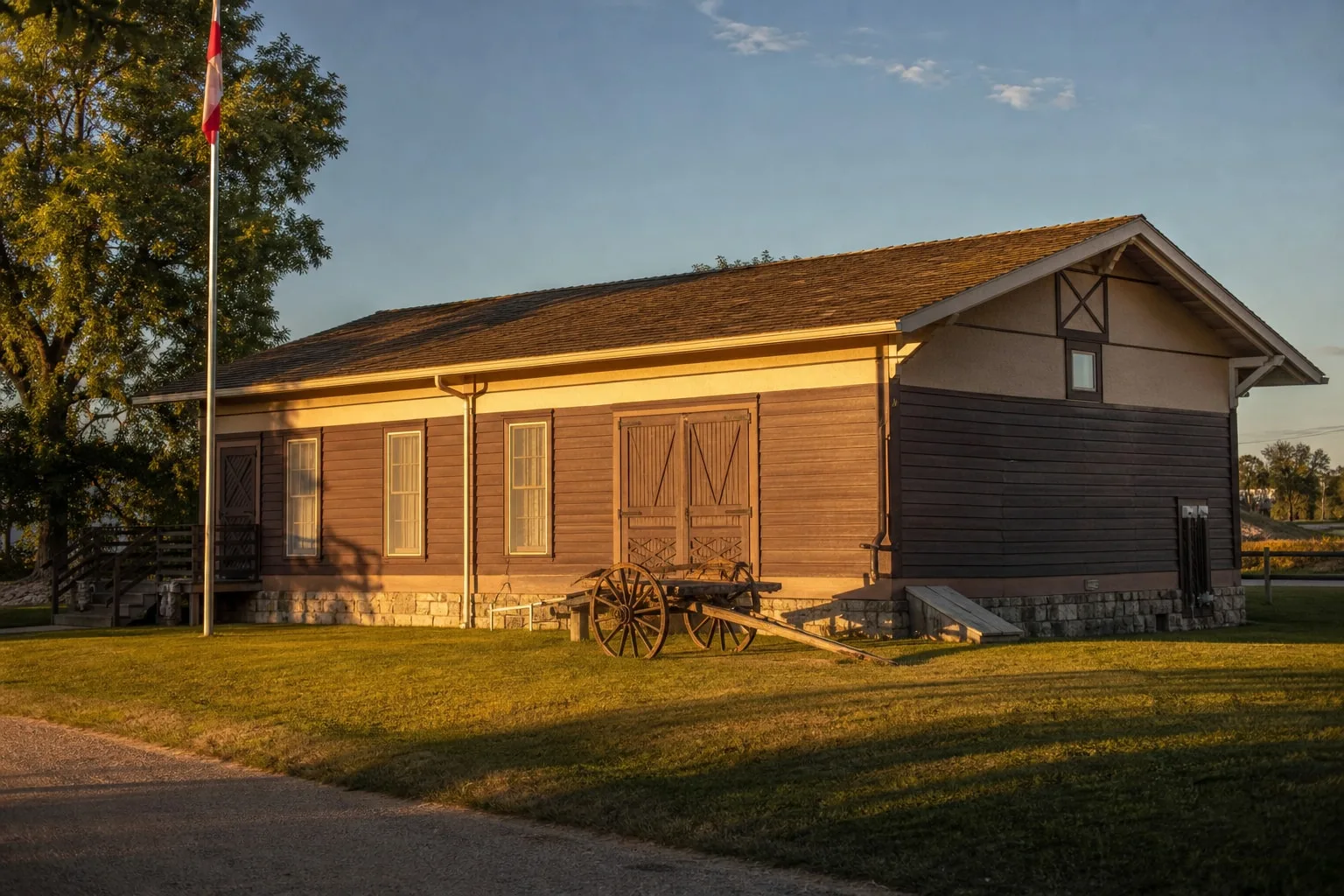
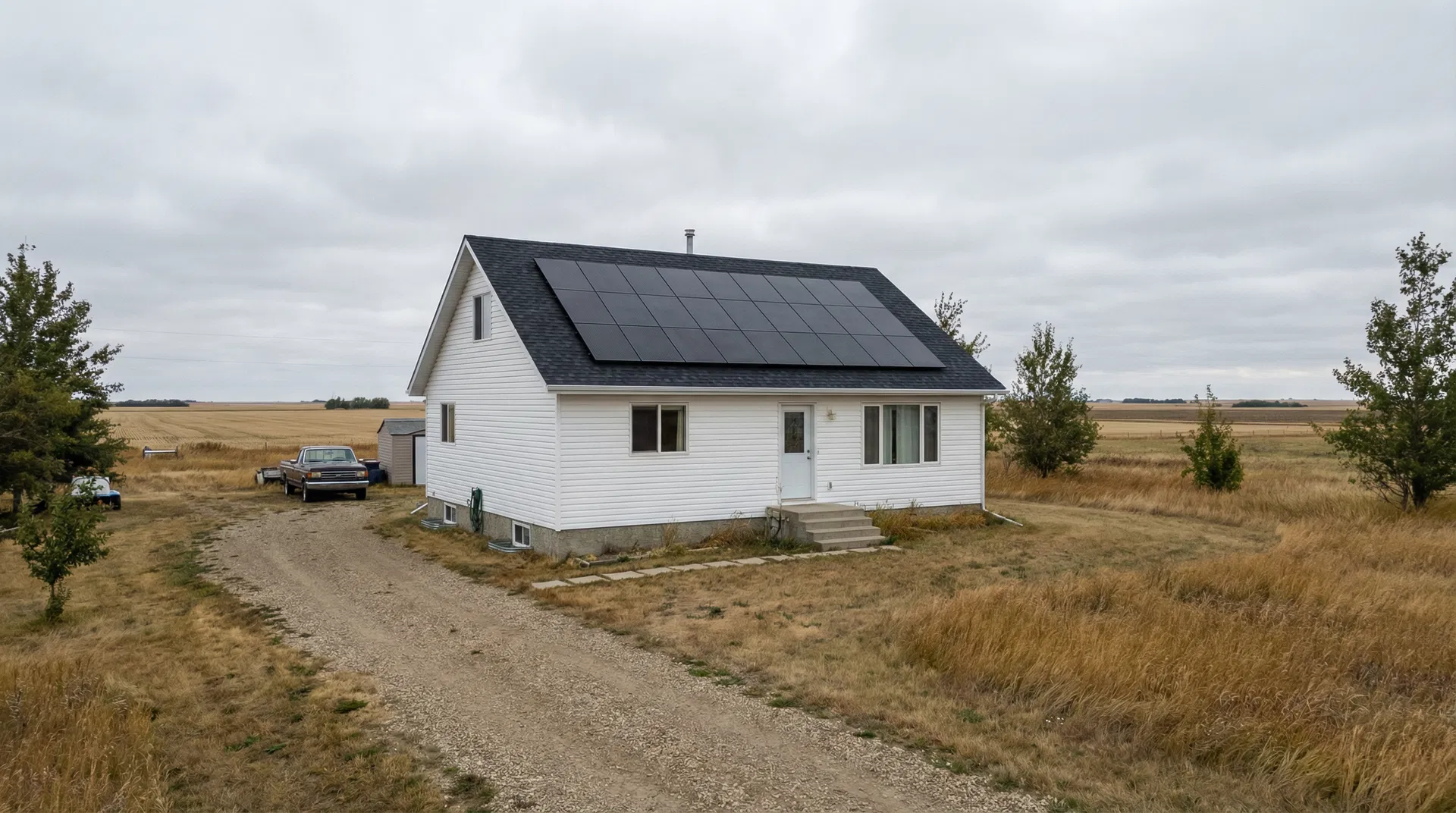
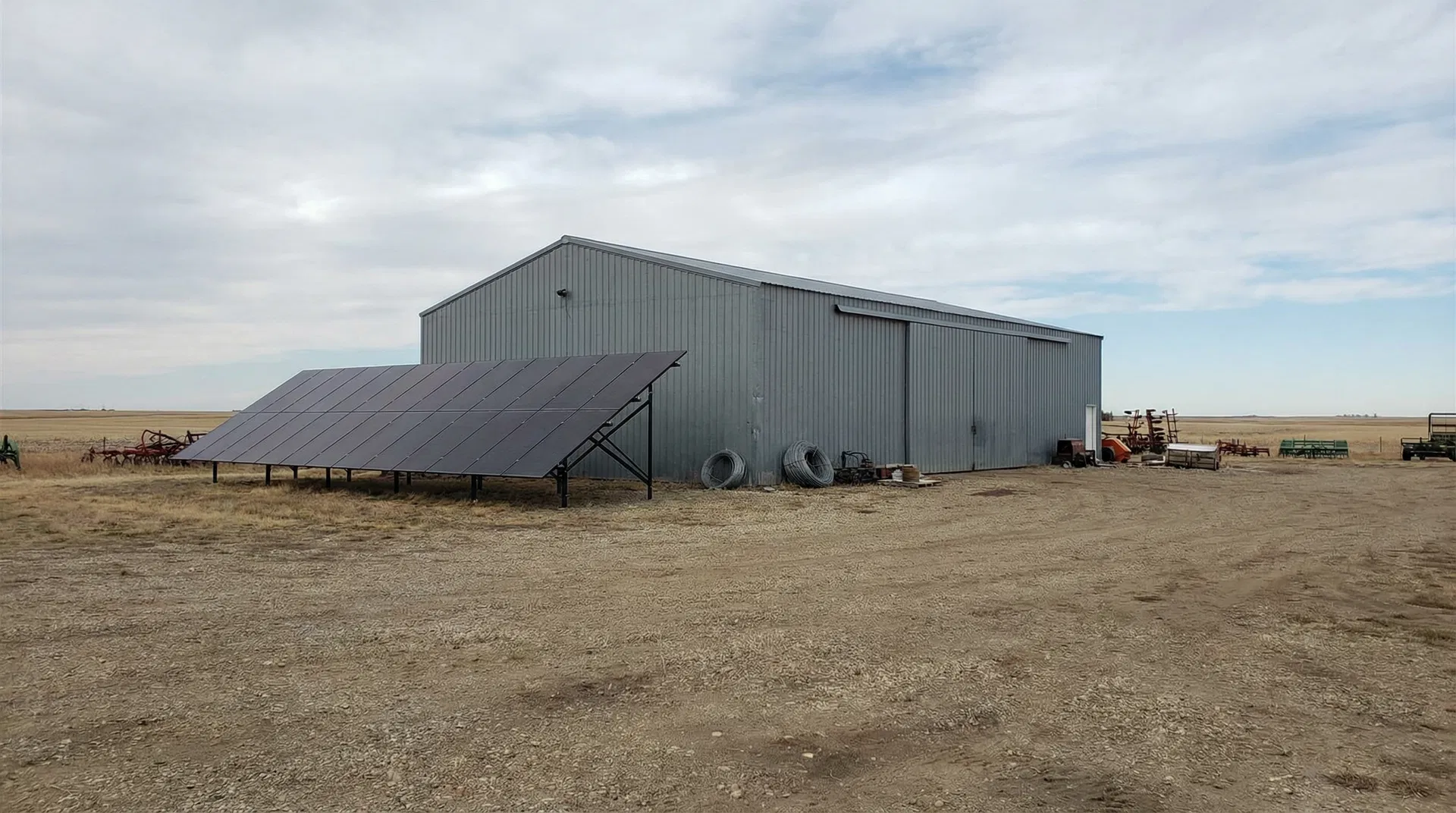
Commercial solar in Cremona ranges from 15 kW up to 100 kW, because no two commercial properties draw power the same way. A Main Street retail unit, a farm equipment dealer, and a grain handling operation all have different roof structures, different daytime load curves, and different service capacity, and the system has to match. We use LONGi panels across every install, paired with APsystems microinverters on smaller commercial arrays where module-level monitoring and partial-shade performance matter most. Larger systems, generally north of 30 to 40 kW, typically move to string inverters instead, since that architecture is more cost-effective and easier to service at commercial scale. Roof-mounted arrays work well on newer metal-clad shop and warehouse buildings common around here, where the roof pitch and orientation cooperate. Ground-mounted arrays make more sense on properties with open yard space, older roofs, or roof structures that can't carry the added load, which describes a fair number of the ag-adjacent buildings in the area. Before we spec anything, we review your electrical service, your breaker panel, and your most recent power bill together, since commercial accounts often have demand charges and rate structures that residential accounts don't. We handle the engineering package, the structural review, and the FortisAlberta interconnection application as part of the project, so you're not coordinating between four different contractors. Whether it's a shop building, a grain operation, or a commercial building on a standard business account, the equipment and the sizing come out of that site review, not a standard package.
Solar Planning for Cremona Properties
Cremona sits along the Cowboy Trail (Highway 22) in Mountain View County, a working landscape where farm operations and small commercial buildings often share the same distribution line. The town was incorporated on January 1, 1955, and it's stayed small by design: Statistics Canada counted 437 residents in the most recent census. That small population doesn't mean small power draws. It's known as an agricultural and oil/gas hub, and a welding shop, grain cleaning operation, or feed mill can pull more from the grid than the rest of a block combined. We don't start a commercial design with a generic template. We start with your most recent power bill, walk the site, and look at what's actually running: compressors, refrigeration, irrigation pumps, shop heat. Roof space, ground availability, and how your building ties into FortisAlberta's distribution system all factor into the design before we talk panel count. That process is the same whether you're a Main Street business or a farm-based operation running a commercial account. The goal is a system sized to your actual load, not a number pulled off a brochure.
Electrical Site Review for Cremona Properties
Voltage Rise
Voltage rise happens when the distance and wire size between a property and the nearest FortisAlberta transformer cause voltage to climb as solar power flows back onto the line. On rural distribution circuits, that rise can push voltage high enough to trip an inverter's safety limits and cause it to curtail output. We measure line conditions during the site review and factor voltage rise into inverter selection and system sizing so the system performs the way it's designed to, not clipped by a condition nobody checked for.
Single-Phase vs Three-Phase
Commercial and farm properties around here can have single-phase or three-phase electrical service, and that difference shapes which inverters and how much system capacity a property can support. Three-phase service generally opens up more commercial-scale inverter options and higher system capacity, while single-phase service can limit inverter selection and cap how large a system makes sense. We confirm which service type a property has early in the design process, since it affects nearly every other equipment decision that follows.
Panel Infrastructure
A lot of commercial buildings and farm-adjacent properties in the area run older electrical panels that were sized for the loads of decades ago, not for an added solar system. We check breaker capacity, panel age, and busbar rating during the site review, looking at whether the panel can accept a solar backfeed breaker without exceeding its rated capacity. If the panel can't support the system, an upgrade goes into the project plan up front, along with the added cost and scope, so it's never a surprise after the contract is signed.
Service Entrance Review
We review the service entrance and meter base as part of every site visit, checking wire condition, rating, and general condition, since that hardware has to support the added solar connection. The meter base condition matters directly for the micro-generation application we submit to FortisAlberta, because an entrance that's out of spec can hold up interconnection. When an upgrade is needed, we scope and price it as part of the project so the whole system, not just the panels, is ready to operate.
Right-Sizing Commercial Solar for Cremona Properties
Commercial and farm properties around here often carry more than one load on a single account: a shop building alongside the main structure, grain handling or irrigation equipment, outbuildings with their own heat and lighting. That's a different starting point than a single-building urban commercial account, and it's part of why systems out here tend to run larger, closer to the 30 to 100 kW end of the range rather than the entry point. Roof mount makes sense when the building has a usable pitch and orientation and the roof structure can carry the added weight. Ground mount becomes the better call when trees or neighboring buildings shade the roof, when the roof pitch or orientation works against the system, or when the property has open yard space that's easier and cheaper to build on than a roof retrofit. We don't size a system off a rule of thumb like dollars per square foot or watts per employee. We size it off the 12-month usage graph on your most recent power bill, which shows your actual monthly draw and lets us match production to the load you actually carry through the year. Combine that usage data with a site design, including roof or ground conditions, shading, and service capacity, and you get a system sized to your property, not a generic commercial package.
Typical Load Profiles We Design For Near Cremona
Shop + Main Building
Many commercial properties around here run a main building alongside a heated shop or equipment bay, and each pulls power differently through the day. We read the combined load off your most recent power bill and design the system around both structures rather than treating the shop as an afterthought.
Grain Handling and Ag Processing
Grain cleaning, drying, and handling equipment can create short, heavy power draws that look very different from a steady retail load. We account for that draw pattern in the design and size inverters that can handle the peaks without over-building the rest of the system.
Multi-Tenant or Main Street Commercial
A Main Street building with more than one tenant often has a shared service and a load profile that shifts depending on who's operating that day. We work from the building's most recent power bill and its service configuration to size a system that fits the combined draw, not just one unit's usage.
FortisAlberta Interconnection in Cremona
Properties here are on FortisAlberta's distribution system, and any commercial solar install connects through FortisAlberta's micro-generation process. We handle that application as part of your project: the technical drawings, the interconnection paperwork, and the coordination with FortisAlberta so you're not the one chasing forms. Every commercial system we design accounts for your service size and how your building's existing electrical infrastructure connects to FortisAlberta's grid, since that affects inverter selection and, in some cases, whether service upgrades are needed before the system goes in. We don't guess at FortisAlberta's current requirements. We confirm them at the time of your design, because interconnection rules and application details can change. If your property has an older service entrance or a panel that's not rated for the added capacity, we flag that during the site review so it's part of the plan from the start, not a surprise mid-install. The result is a system designed to actually connect and operate on FortisAlberta's system, not just one that looks good on paper.
Project Economics and Design Review
| System Size | Annual Production | Year 1 Savings | Payback Period |
|---|---|---|---|
| 15-100 kW range, 30 kW typical |
Production, savings, and payback figures are provided only after a property-specific design review using your most recent power bill.
How We Work in Cremona
Bill and Load Review
We review your power bill to understand your energy use in Cremona and size the system to your actual consumption, not a generic estimate.
Site Assessment
We assess your roof or ground area, south-facing exposure, electrical service, and utility interconnection requirements specific to your property.
Design and Utility Application
We produce a system layout, production estimate, and cost summary, then submit your micro-generation application to your utility on your behalf.
Installation and Commissioning
Our crew installs racking, panels, inverter, and electrical connections. All work is performed by licensed electricians. We commission and test before handoff.
Current Program and Interconnection Review
Utility connection review
FortisAlberta reviews every micro-generation grid connection application before a commercial solar system can operate, and that review is a required step, not a formality. Range Road Solar prepares and submits the full design package on your behalf, including the technical drawings FortisAlberta requires.
Current program review
Commercial, farm, and residential solar projects are sometimes eligible for federal or provincial programs, and eligibility rules change. We review your project against whatever rules are current at the time of your design, rather than assuming last year's terms still apply.
Frequently Asked Questions
Get a Solar Assessment for Cremona
Submit a recent power bill and we will review your consumption and provide an honest assessment for your Cremona property. No obligation.
(587) 330-7502 Book a CallRelated Resources