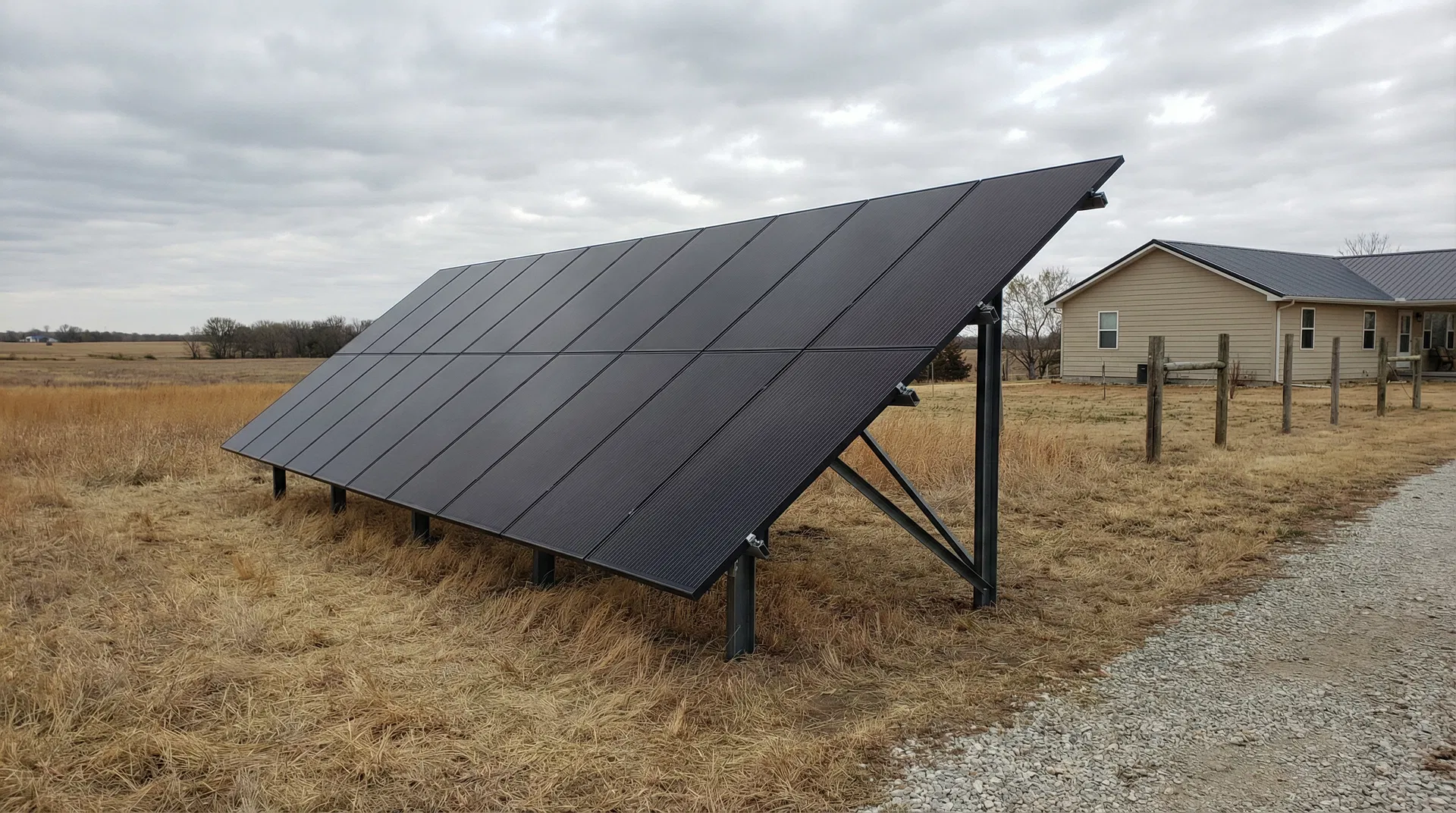
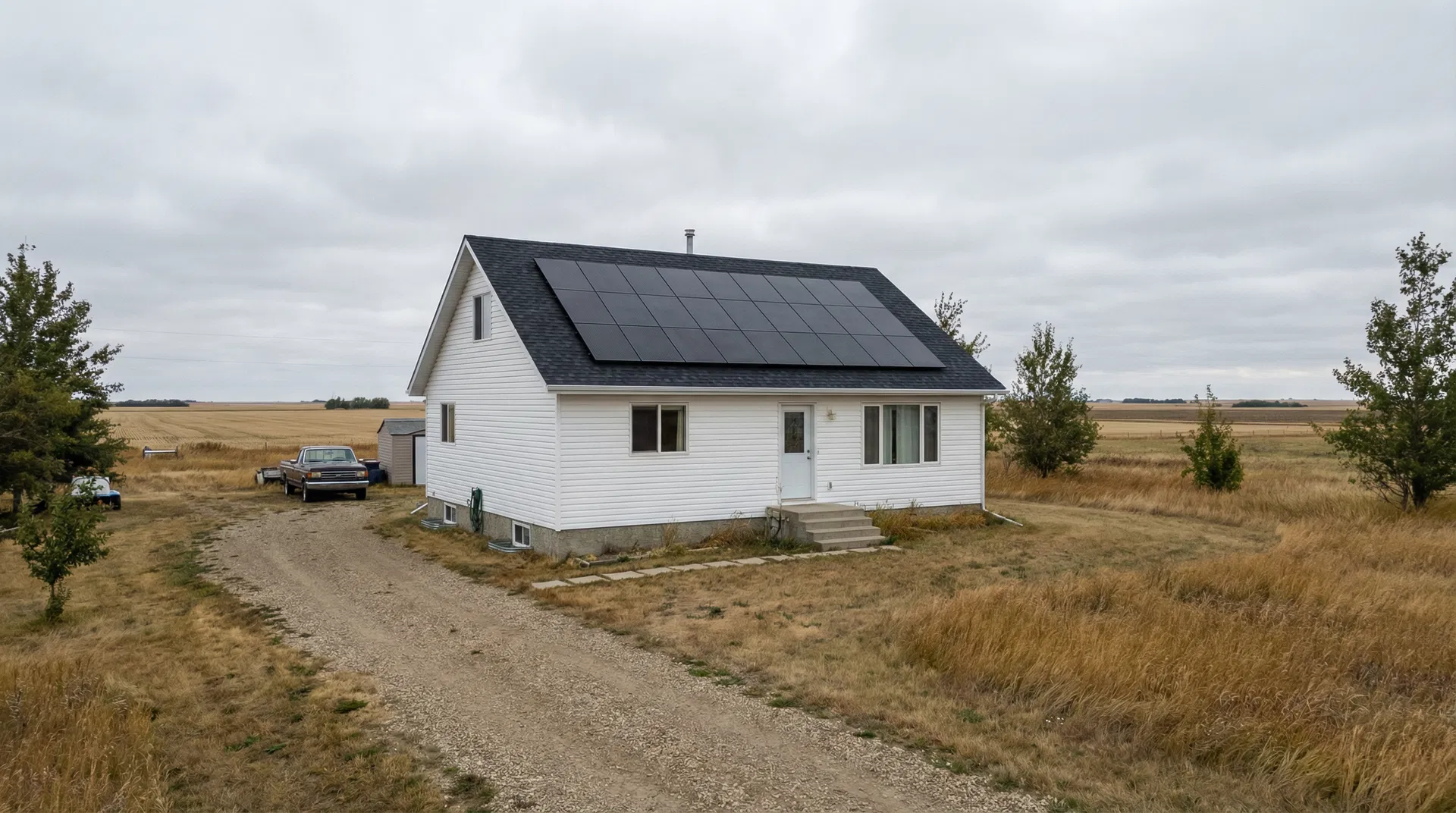
Acreage solar cremona inquiries we receive almost always come from property owners dealing with the same core challenge: higher loads, rural electrical infrastructure, and a lot of square footage to cover. Our systems in the 12-18 kW range are designed to address all three. We install LONGi panels throughout our acreage work. They hold up in rural conditions where dust, wind, and temperature swings are part of the deal, and they carry a manufacturer warranty built for long-term performance. For inverter technology, we use APsystems microinverters. On a larger acreage array, microinverters matter because each panel operates independently. If one panel is shaded by a tree or a roofline at certain times of day, the rest of the array keeps performing. That's a real advantage on properties where shading conditions change across the roof or across a ground-mount field. We install both rooftop and ground-mount systems depending on what your property calls for. A well-oriented south-facing roof with good pitch and minimal shade is often the most straightforward install. But if your buildings don't line up that way, a ground-mount array gives us full control over tilt and orientation. We run the numbers on both options and walk you through which approach makes more sense for your site before any equipment is ordered. Every install includes electrical assessment, panel and meter base review, and the full FortisAlberta interconnection package.
Solar Planning for Cremona Properties
Acreages around Cremona aren't running on the same load profile as a city house. You've got the main residence, maybe a heated shop, a well pump, outbuildings, and equipment that draws power through every season. That stacks up fast, and it's exactly why acreage solar systems in this area run larger than a typical residential install. FortisAlberta is the wire service here. Net metering through FortisAlberta means excess generation flows back to the grid, and we handle the interconnection application as part of your project. You don't have to figure out the utility paperwork on your own. We size every system from your most recent power bill. That bill includes a 12-month usage graph, and that's what drives the design, not a rule-of-thumb estimate. Cremona properties vary a lot in layout, orientation, and load, so a site-specific assessment matters more than a generic quote. We provide honest production estimates based on your actual power bills and site conditions, not inflated projections.
Electrical Site Review for Cremona Properties
Voltage Rise
Voltage rise occurs when a solar system pushes power back onto a distribution line and raises the line voltage above acceptable limits. In rural areas, longer distribution lines with fewer loads can make this more pronounced, and the conditions on your specific section of line affect how much voltage rise your system will create. If voltage rise is a concern at your site, it can influence how the system is sized and how inverters are configured to stay within FortisAlberta's interconnection limits.
Single-Phase vs Three-Phase
Rural properties in Alberta are served by either single-phase or three-phase electrical service, and which one you have affects inverter selection and how much capacity a solar system can practically deliver. Three-phase service, which is more common on properties running large motors or commercial equipment, allows for different inverter configurations than single-phase. We identify your service type during the site review and design the system accordingly.
Panel Infrastructure
Older electrical panels on rural properties often weren't built with a solar backfeed breaker in mind, and some don't have the breaker capacity to accommodate one without modifications. We assess your panel's age, bus rating, and available breaker space as part of the site review. If the panel can't support the system as-is, we'll outline what an upgrade involves so you have a clear picture of the full scope before the project moves forward.
Service Entrance Review
The meter base and service entrance are reviewed as part of every project because FortisAlberta's micro-generation interconnection requires the metering infrastructure to meet specific standards. If the meter base is outdated or not compatible with bi-directional metering, it needs to be upgraded before the application can be approved. We identify that condition early in the process so it's factored into the project plan, not discovered after the application is submitted.
Right-Sizing Solar for Cremona Properties
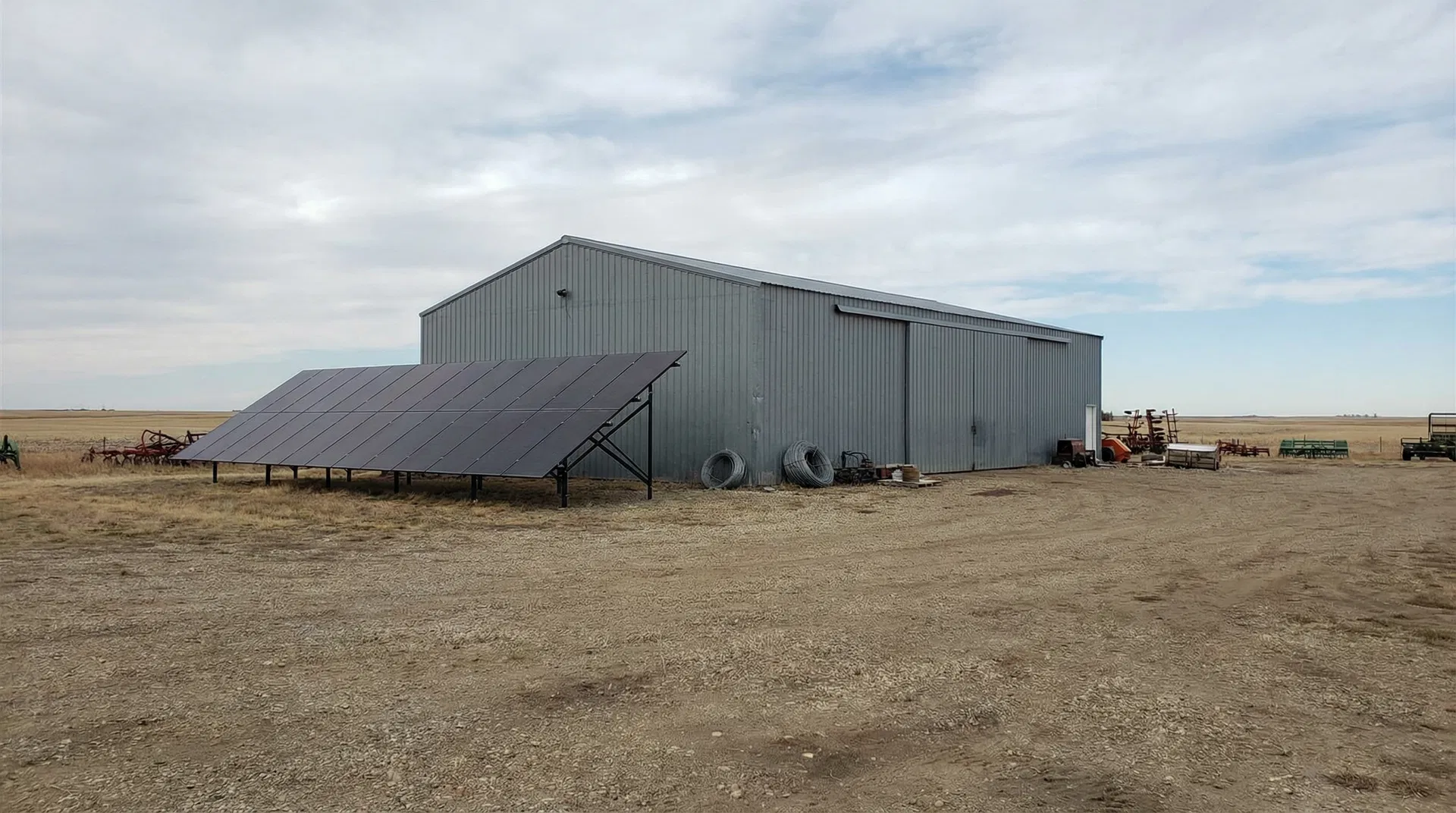
Acreage systems run larger than city installs for a straightforward reason: there's more to power. A property near Cremona might carry the main house, a heated shop with 240-volt equipment, a well pump, a grain auger, and outbuildings running lights and plug-ins year-round. Each of those loads contributes to a monthly draw that a 6 or 8 kW system simply won't offset in any meaningful way. That's why our acreage work lands in the 12-18 kW range. Whether that array goes on the roof or on the ground depends on what your property actually looks like. A south-facing roof with a solid pitch and minimal shading from trees or adjacent buildings is a natural starting point. But a lot of acreages have shops or barns that block parts of the roof at different times of day, or a main house with a north-facing ridge that won't produce well regardless of panel count. When the roof isn't the right fit, a ground-mount array lets us set the tilt and orientation exactly where we want them. We look at both options on every property and recommend whichever one gives you the better outcome. Sizing starts with your most recent power bill. That bill carries a 12-month usage graph that shows us how your consumption moves across seasons, and we use that curve to build the system design. We don't work from rule-of-thumb square-footage estimates. The actual usage data and the site layout together drive the number, and that process is what keeps the system honest.
Typical Load Profiles We Design For Near Cremona
Home Plus Heated Shop
A residence combined with a heated shop is one of the most common acreage profiles we see. The shop's heating system, lighting, and 240-volt tools can add substantially to the monthly draw, especially through the winter months when the heater runs continuously. We size the system from the 12-month usage graph on your most recent power bill so both the home and shop loads are captured in the design, not just the house.
Residence With Well Pump and Irrigation
Properties running a well pump alongside seasonal irrigation equipment carry a usage curve that shifts significantly between summer and winter. Irrigation loads in the growing season can spike consumption well above the winter baseline, and that pattern needs to show up in the system design. A 15 kW system is often a reasonable starting point for this profile, but we confirm the right size from your actual bill data and site assessment.
Multi-Building Property With Outbuildings
Some acreages run power to multiple detached structures: a shop, a barn, a bunkhouse, or a storage building with climate control. When each outbuilding contributes its own load, the total site consumption can push the system requirement toward the upper end of the 12-18 kW range. We map out which loads are on which meter and design accordingly, and in some cases a ground-mount array placed between buildings offers better coverage than any single rooftop install.
FortisAlberta Interconnection in Cremona
Cremona falls within FortisAlberta's distribution territory. That means your micro-generation application goes to FortisAlberta, and the interconnection approval process follows their requirements for system design, metering, and grid protection. We handle the full application package on your behalf. That includes the technical design documentation FortisAlberta requires, coordination with their engineering review process, and any follow-up correspondence during the application period. You don't need to be the one managing that back and forth. Before the application goes in, we review your meter base and service entrance to confirm they meet the utility's interconnection standards. If anything needs to be updated to satisfy FortisAlberta's requirements, we identify that early so it doesn't become a surprise partway through the project. Getting the site conditions right before submission is the most reliable way to keep the process moving.
Project Economics and Design Review
| System Size | Annual Production | Year 1 Savings | Payback Period |
|---|---|---|---|
| 12-18 kW range, 15 kW typical |
Production, savings, and payback estimates require a property-specific design and your most recent power bill, and cannot be reliably stated without both.
How We Work in Cremona
Bill and Load Review
We review your power bill to understand your energy use in Cremona and size the system to your actual consumption, not a generic estimate.
Site Assessment
We assess your roof or ground area, south-facing exposure, electrical service, and utility interconnection requirements specific to your property.
Design and Utility Application
We produce a system layout, production estimate, and cost summary, then submit your micro-generation application to your utility on your behalf.
Installation and Commissioning
Our crew installs racking, panels, inverter, and electrical connections. All work is performed by licensed electricians. We commission and test before handoff.
Current Program and Interconnection Review
Utility connection review
FortisAlberta reviews the micro-generation interconnection application for properties in Cremona's service area. Range Road Solar prepares and submits the full design package required by FortisAlberta, including all technical documentation and metering requirements. You don't need to manage the utility correspondence yourself.
Current program review
Residential, farm, and rural property eligibility for available programs and incentives changes over time, and the rules that apply depend on your specific property classification and the current program terms. We review what's available and applicable at the time of your design, so we're not quoting you on programs that have changed or expired.
Frequently Asked Questions
Get a Solar Assessment for Cremona
Submit a recent power bill and we will review your consumption and provide an honest assessment for your Cremona property. No obligation.
(587) 330-7502 Book a CallRelated Resources