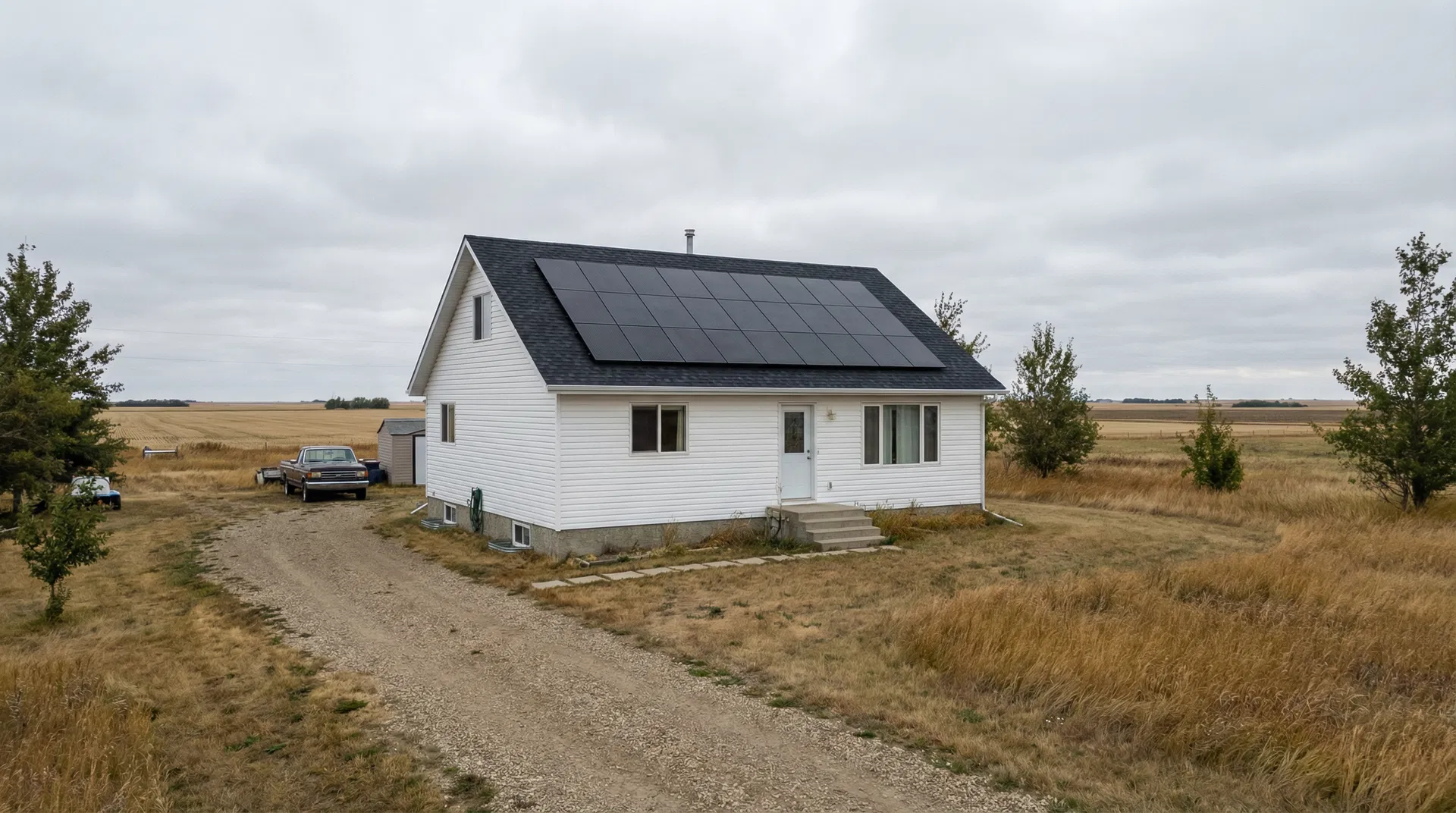
Searching for solar installation cremona residents can rely on usually leads to one question: what does this property actually need? For most of the homes and acreages we design here, the answer lands in an 8-12 kW range, with 10 kW as the typical starting point. The system is grid-tied, so it powers your home directly and connects to the grid through your FortisAlberta service. We build with LONGi panels and APsystems microinverters. Each microinverter works at the panel level, so one shaded module doesn't pull down the rest of the array. That matters on acreages where a yard tree or a shop roofline throws shadows across part of the layout. You also get panel-level monitoring, which means you can see how each module performs instead of guessing from one total on a screen. Cremona properties tend to fall into three types. There's the house on a residential lot with a standard roof. There's the acreage with a detached shop, a garage, and a few outbuildings. And there's the farm yard, where roofs are older, pitches are awkward, and open ground is available for a ground mount. Each one gets its own layout, and we'll tell you honestly when a ground mount beats a roof. Our part starts with the design package. We handle the engineering, the drawings, and the paperwork for the micro-generation application, so you don't have to coordinate a separate engineer or redraw the site plan yourself.
Solar Planning for Cremona Properties
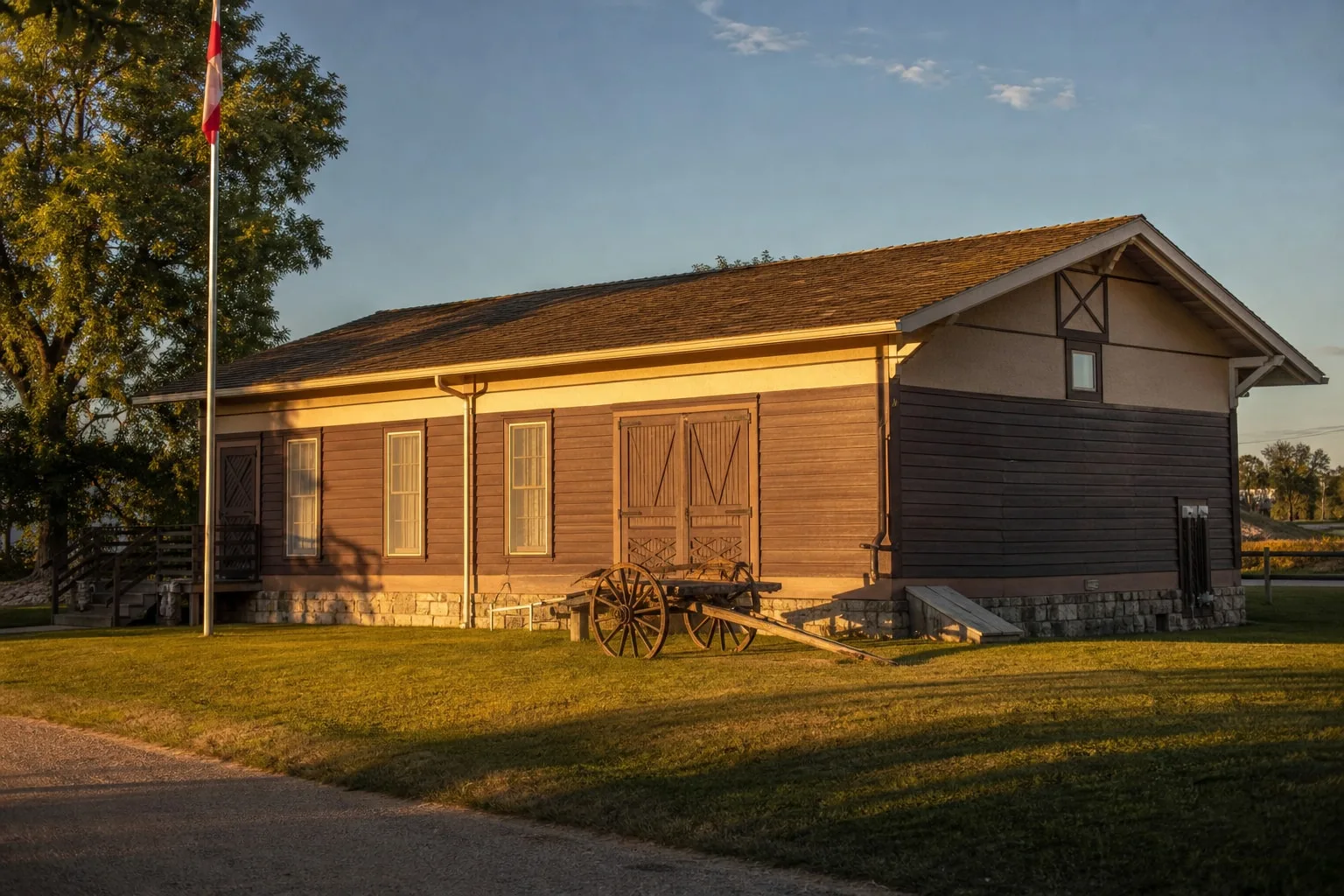
Cremona, Alberta has 437 residents in the 2021 Census, and the properties we see here are rarely a simple roof on a small lot. A house on a residential lot and a homestead with a shop, a grain bin, and a house on several acres need very different system plans. Most people find their way here by the Cowboy Trail (Highway 22), and the Cremona Museum is the local draw they mention first. Agriculture and oil and gas shape how a lot of households use power, and a heated shop or a farm dryer changes the load picture fast. The municipal profile dates the community to January 1, 1955, so plenty of these properties have older electrical panels and service entrances that need a close look before a system goes on. Your wire service is FortisAlberta, which means we design around the distribution system that serves your property and handle the interconnection application from start to finish. We don't hand you a generic quote and leave the paperwork to you. Every design starts with your roof or yard, the shading that's actually on the site, and your most recent power bill. That design review confirms how the system fits your property before anything gets built, and it gives you a clear picture of what goes into the application.
Electrical Site Review for Cremona Properties
Voltage Rise
Voltage rise happens when a local distribution line pushes voltage higher at the point where your system connects, and long rural runs can make it more noticeable. When voltage sits high, inverters may reduce output or clip power to protect equipment, so the array can make less than its rating on the sunniest days. That's why we factor the connection point into both the system size and the inverter setup.
Single-Phase vs Three-Phase
Rural Alberta properties can have single-phase or three-phase service, and the difference changes what a system can do. Single-phase service is common on houses and smaller outbuildings, while larger shops, irrigation pumps, and grain handling equipment often run on three-phase. The service type shapes inverter selection and how much system capacity the connection can carry.
Panel Infrastructure
Older electrical panels on rural properties often have less spare capacity than the homeowner expects. We check the panel's rating, breaker space, and age, along with what's already loaded on each circuit. If the panel can't support the added system, the upgrade usually means a new panel rated for the total load and the breakers the system needs.
Service Entrance Review
We review the service entrance and meter base as part of the design, since the utility looks at both during the micro-generation application. We check the meter base condition, the service conductors, and the grounding, and we note anything corroded, undersized, or out of date. If an upgrade is required, we explain what it involves and what it adds to the project before you commit.
Right-Sizing Solar for Cremona Properties
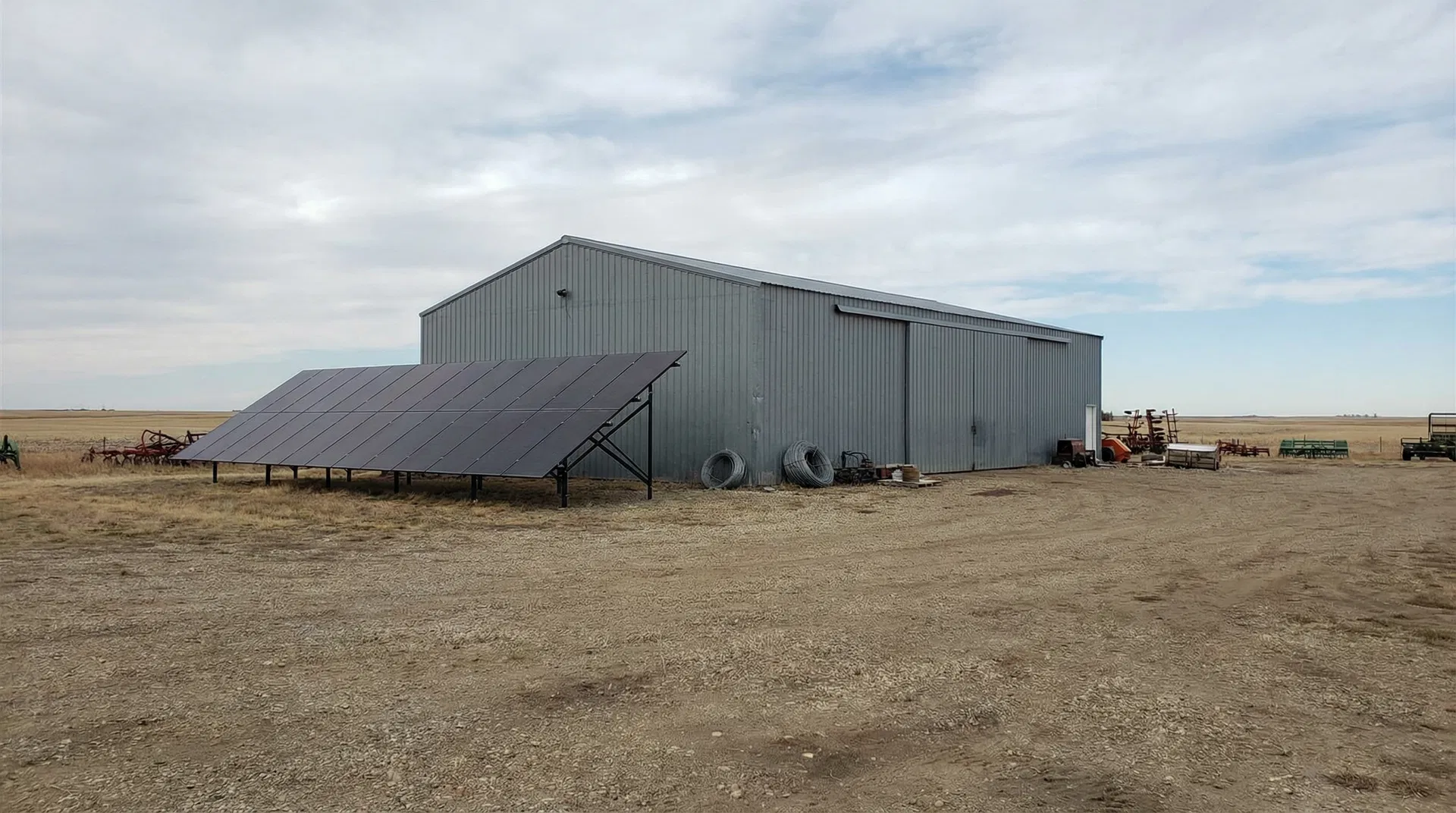
Rural Alberta systems tend to be larger than urban ones because the property carries more loads. A house might run a well pump, a chest freezer, and a heat pump, while the shop runs a welder, a compressor, and a block heater on the truck plug-in. Add outbuildings, a grain dryer, or an irrigation pump, and the daily load looks nothing like a standard residential lot. We size for all of it, not just the kitchen. Roof or ground mount is the first decision. A roof works well when the pitch faces a reasonable direction and nothing shades it for much of the day. A ground mount makes more sense when trees or buildings cast shade on the roof, when the pitch is poor, or when you have open yard and land you aren't using. On acreages and farm layouts, ground mounts come up more often than people expect. Sizing comes from your usage, not a rule of thumb. The 12-month usage graph on your most recent power bill shows how the property draws power through the year, including the seasonal peaks a rule of thumb misses. We pair that graph with the site design to choose a system in the 8-12 kW range, with 10 kW as a typical starting point. A property with a heated shop and an irrigation pump lands in a different place than a house with a detached garage, even on the same road. We only need one document to start: your most recent power bill. Bring it to the design review, and we'll check the sizing against your roof or yard layout and walk you through the result.
Typical Load Profiles We Design For Near Cremona
Home + Heated Shop
A house and a 30 by 40 foot heated shop share one service, so the shop's compressor, welder, and heater stack on top of the house's everyday base load. We size the array from the 12-month usage graph on your most recent power bill, which shows how the shop changes the seasonal curve. Once both buildings are in the design, the system often lands in the 8-12 kW range.
Acreage + Well Pump and Outbuildings
A 1.5 hp well pump has a short, hard startup surge, while the house, a detached garage, and two outbuildings keep a steady load running around the clock. We check that startup surge against the inverter and panel capacity before we settle on an array size. Properties like this usually land between 8-10 kW, with the final number set by the usage graph and the site design.
Farm Yard + Grain Handling
A grain dryer and auger motors on three-phase service run for hours at a stretch during harvest, which is a very different load pattern from a household. Those runs have to be counted in the sizing, not just the average day. Once they're in the design, the system often sits toward the upper end of the 8-12 kW range, and the site design confirms where it lands.
FortisAlberta Interconnection in Cremona
FortisAlberta is the wire service for Cremona, Alberta, so the interconnection application for your system goes through FortisAlberta's process. FortisAlberta owns the lines serving your property and reviews the connection before a grid-tied system is set to operate. Range Road Solar handles the application for you. We prepare the design package, submit the paperwork, and track the back-and-forth with FortisAlberta, so you aren't left figuring out which form comes next. The design package is the piece that matters most. It covers the 8-12 kW system layout, the LONGi panel and APsystems microinverter arrangement, the electrical diagram, and how the system ties in at your existing service. Your meter base and service entrance get reviewed as part of that package too, because the utility looks at them. If anything needs attention, we tell you what it involves before any work starts. You don't need to be an electrician to get through this. Your next step is a design review, where we confirm your service details, check the layout, and walk you through what goes into the application.
Project Economics and Design Review
| System Size | Annual Production | Year 1 Savings | Payback Period |
|---|---|---|---|
| 8-12 kW range, 10 kW typical |
Production, savings, and payback require a property-specific design and your most recent power bill.
How We Work in Cremona
Bill and Load Review
We review your power bill to understand your energy use in Cremona and size the system to your actual consumption, not a generic estimate.
Site Assessment
We assess your roof or ground area, south-facing exposure, electrical service, and utility interconnection requirements specific to your property.
Design and Utility Application
We produce a system layout, production estimate, and cost summary, then submit your micro-generation application to your utility on your behalf.
Installation and Commissioning
Our crew installs racking, panels, inverter, and electrical connections. All work is performed by licensed electricians. We commission and test before handoff.
Current Program and Interconnection Review
Utility connection review
FortisAlberta reviews grid connection applications for the properties it serves, including the Cremona, Alberta area. Range Road Solar prepares the design package and handles the application on your behalf. We don't speculate about the utility's review schedule or its outcome.
Current program review
Commercial, farm, and residential eligibility is reviewed against current rules at design time. We check your property type and project details during the design review, so you know which rules apply before you commit. Nothing is assumed from a previous project or an old rule set.
Frequently Asked Questions
Get a Solar Assessment for Cremona
Submit a recent power bill and we will review your consumption and provide an honest assessment for your Cremona property. No obligation.
(587) 330-7502 Book a CallRelated Resources