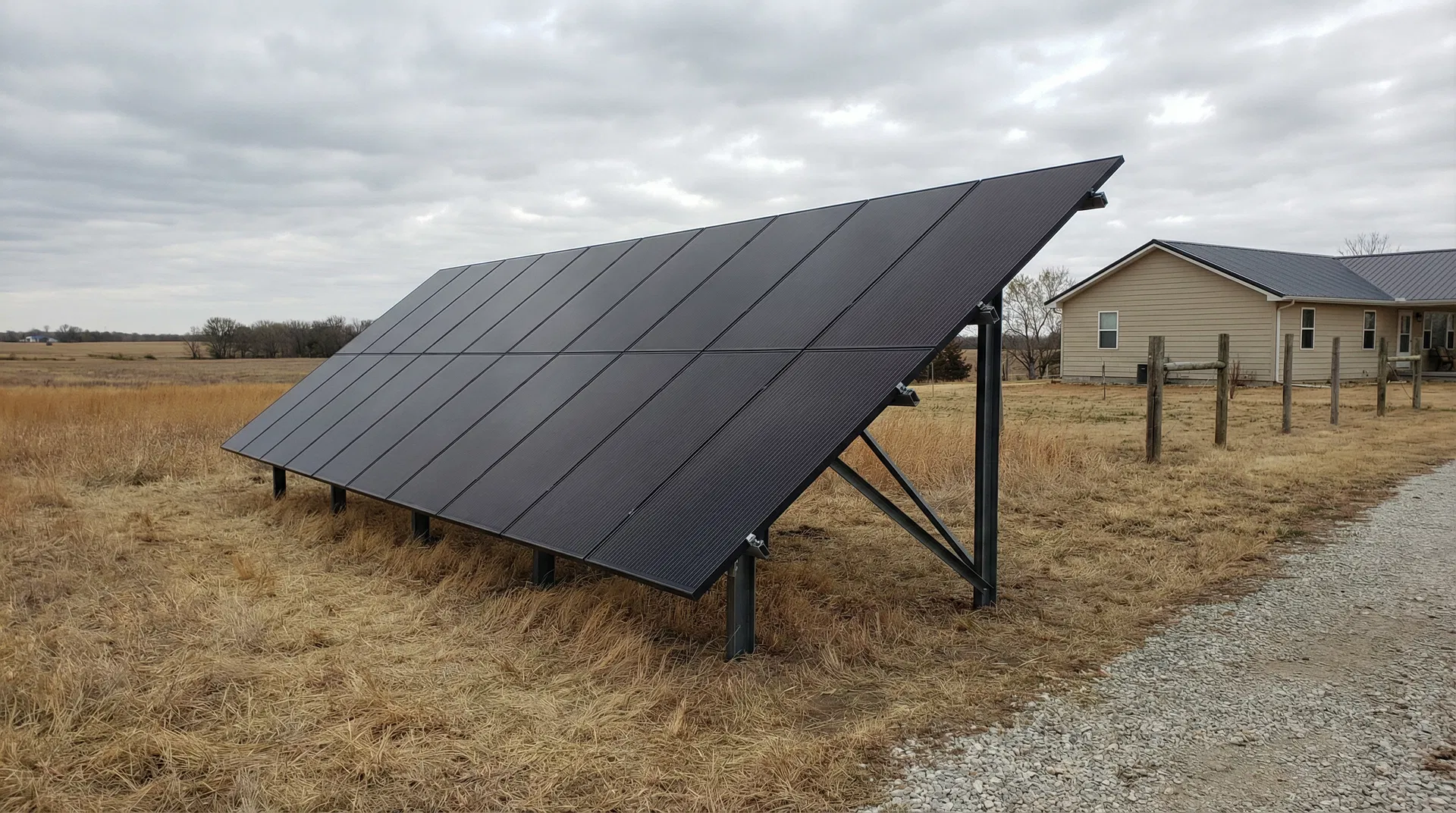
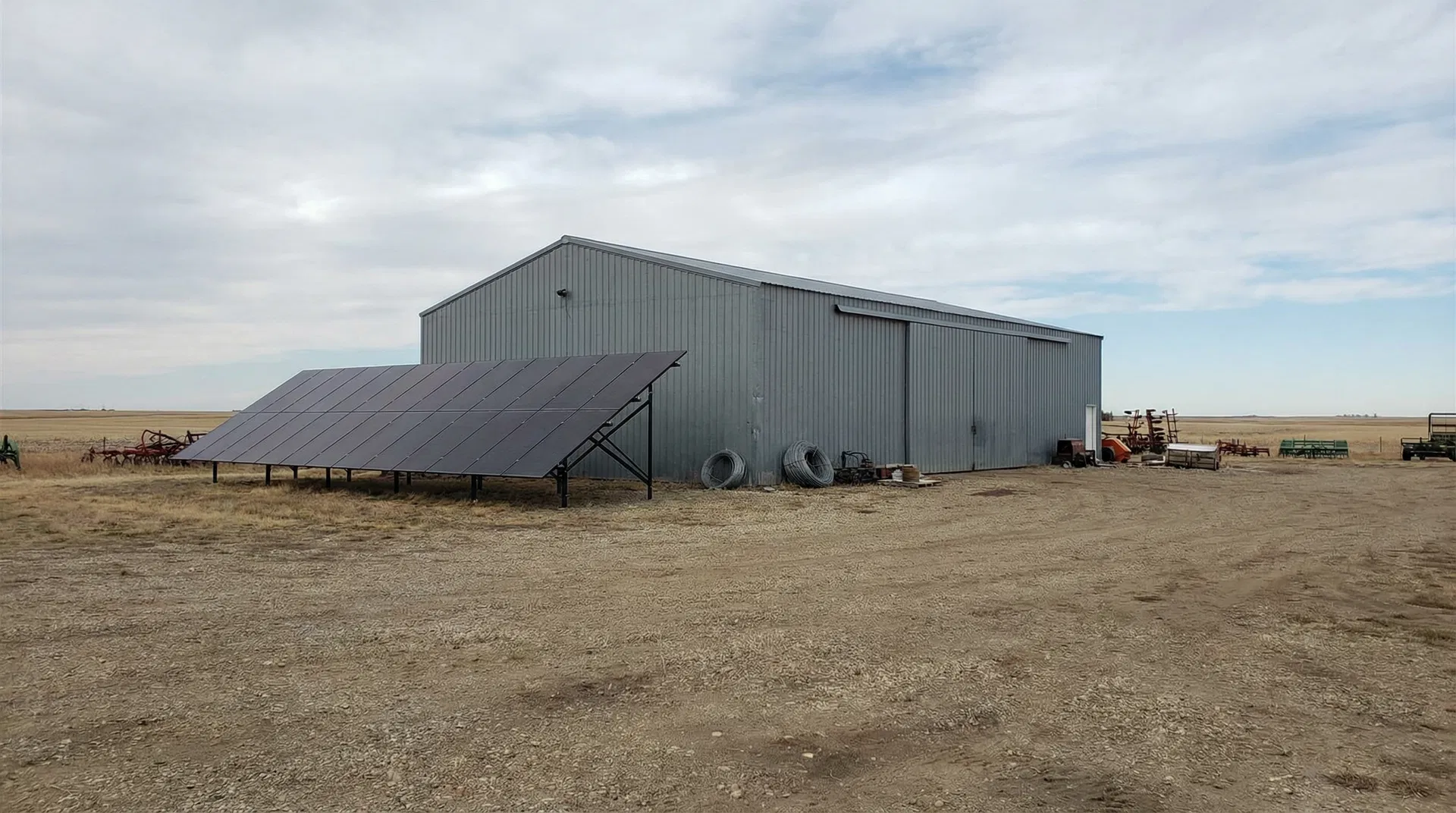
Commercial solar rocky view county projects in our portfolio range from 15 kW systems on smaller business operations up to 100 kW builds on large industrial properties, with 30 kW being a common target for mid-size commercial loads. We spec every system using LONGi panels, which carry strong performance ratings and long manufacturer warranties suited to Alberta's climate demands. For inverter selection, we use APsystems microinverters on commercial systems where panel-level monitoring, complex rooflines, or partial shading make string inverter performance a concern. On larger flat-roof or ground-mount commercial builds, we use string inverters sized to the system, which reduces component count and simplifies maintenance at scale. The right inverter depends on the roof layout, system size, and how the property is wired, not on a default preference. Roof-mount systems work well on the large flat or low-slope metal and membrane roofs common on warehouse and ag-service buildings throughout the area. Ground mount is the better call when the roof faces poorly, when rooftop access is complicated by equipment or skylights, or when there's open yard or field space that can carry a ballasted or driven-post array. We assess both options at every commercial site. We don't push one over the other without a reason backed by the design numbers. Commercial systems at this scale are also eligible for review under the federal Investment Tax Credit program for clean technology, which we confirm during the design process. We walk you through what's applicable before you commit to anything.
Solar Planning for Rocky View County Properties
Rocky View County sits at the edge of Alberta's deregulated electricity market, which means businesses here deal with the same volatile retail rates as anyone else in the province. The difference is that commercial and light-industrial operations tend to run higher loads, longer hours, and more equipment than a typical residence. That makes the economics of a well-designed solar system worth examining carefully. Properties in the area run the full range: industrial yards along major corridors, ag-related businesses with large flat roofs or open yard space, oilfield service operations, and light manufacturing. Each one has a different load shape, a different roof configuration, and a different set of infrastructure conditions that affect how a system gets designed. We don't apply a standard template to commercial builds. We start with your most recent power bill, which includes a 12-month usage graph, and we use that alongside a site assessment to determine what system size actually fits your operation. From there, we put together a design package that reflects real conditions, not optimistic averages. That's the only way to give you a production estimate you can actually plan around.
Electrical Site Review for Rocky View County Properties
Voltage Rise
Voltage rise occurs when a solar system pushes power back onto the distribution line and raises the local voltage above the inverter's acceptable operating threshold. On rural distribution infrastructure, where lines can be long and lightly loaded, voltage rise conditions can be more pronounced than in denser urban grids. If voltage rise limits aren't identified during design, the inverter will clip output to stay within range, reducing the system's effective production below what the panels are capable of generating.
Single-Phase vs Three-Phase
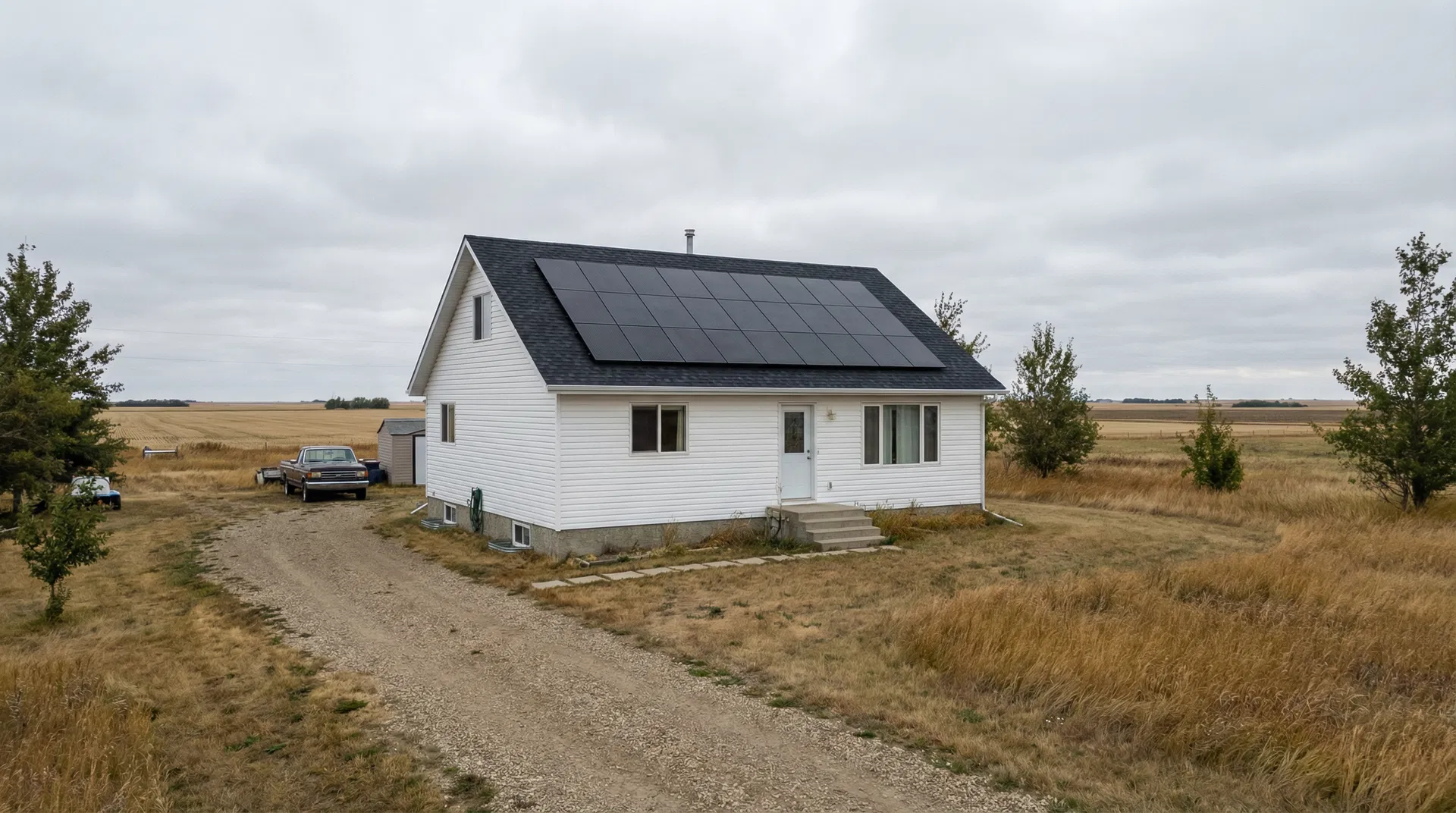
Commercial and light-industrial properties in Rocky View County may be served by either single-phase or three-phase electrical service, and the distinction matters significantly for inverter selection and total system capacity. Three-phase service allows for larger inverter configurations and more balanced load distribution across the array, while single-phase properties require inverter sizing that stays within the service's capacity limits. We confirm the service type during the site assessment before any system design work begins.
Panel Infrastructure
Older commercial and agricultural properties sometimes have electrical panels that weren't sized for a solar system feeding power back through the service. We assess breaker capacity, panel age, and available breaker space as part of every commercial site review. If the existing panel can't safely support the system, we'll include a panel upgrade in the project scope, which involves replacing the panel or adding a sub-panel, depending on what the service and system size require.
Service Entrance Review
The service entrance and meter base condition are reviewed as part of the FortisAlberta micro-generation application process, and we check both during our initial site assessment. FortisAlberta requires that the meter base meet current standards before a bi-directional meter can be installed for a grid-tied solar system. If the existing meter base needs upgrading, we include that in the project scope so there are no surprises after the interconnection application is submitted.
Right-Sizing Solar for Rocky View County Properties
Commercial properties in Rocky View County don't always fit a simple sizing formula. A business that runs office space, a heated shop, a yard with powered equipment, and outdoor lighting has a fundamentally different load profile than a light-industrial tenant with one main building and a single large piece of equipment running on a predictable schedule. We don't size systems to a rule of thumb. We start with the 12-month usage graph on your most recent power bill. That graph shows us your actual consumption by month, which tells us how your load changes across seasons, where your peaks are, and how much generation capacity makes sense given what you're actually using versus what you'd be exporting. Exporting power to the grid isn't always the priority for commercial operations, and over-sizing a system to produce more than you use doesn't always pencil out. Roof vs. ground mount is a genuine decision, not a default. A large flat metal roof on a shop or warehouse is often an efficient mounting surface. But if the roof is shaded by adjacent structures, has mechanical equipment scattered across it, or faces the wrong direction, a ground-mount array on available yard space may deliver a better result. We evaluate both at every commercial site and recommend based on the actual layout, not convenience. For properties with multiple buildings or multiple metered services, we also assess whether a single system or multiple smaller arrays is the right approach. It depends on how the utility connection is structured and what the load profile looks like across each service point.
Typical Load Profiles We Design For Near Rocky View County
Light Industrial with Heated Shop
Oilfield service yards, equipment dealers, and light manufacturing operations with 5,000 to 15,000 square feet of heated shop space typically run consistent daily loads from lighting, air compressors, welders, and HVAC. A system in the 30-50 kW range is a common starting point for these profiles, though the actual size depends on the 12-month usage graph from your most recent power bill and the roof or yard conditions available for mounting.
Agricultural Business or Feed Operation
Ag-related businesses, feed mills, and grain handling operations often run high intermittent loads tied to augers, conveyors, dryers, and refrigeration alongside consistent base loads from lighting and office equipment. These properties frequently have large south-facing roof surfaces on pole barns or storage buildings, which can support 40-100 kW of panel area. We size to the actual seasonal usage pattern, since demand in spring and fall often differs significantly from summer and winter months.
Commercial Office or Retail with Yard
Properties combining office or retail space with an attached or adjacent yard operation, such as a landscaping company, building supply outlet, or contractor's office, tend to have a split load profile: steady daytime draws from HVAC, lighting, and computers, plus variable demand from yard equipment and vehicle charging. Systems in the 15-30 kW range are common for this profile, with ground mount often being the more practical option if the building roof is small or shaded by surrounding trees or structures.
FortisAlberta Interconnection in Rocky View County
FortisAlberta is the wire service for Rocky View County, which means all micro-generation interconnection applications for systems in this area go through FortisAlberta's review process. That applies to commercial systems in the 15-100 kW range just as it does for smaller residential builds. The application process for a commercial system involves a grid connection review, a design package submission, and coordination between the installer, the utility, and Alberta's electricity rules. We handle all of it. You don't need to contact FortisAlberta separately or track down paperwork on your own. We prepare the full interconnection application package as part of every commercial install. For commercial systems, the utility's review process can involve additional engineering steps depending on system size and the condition of the local distribution infrastructure at your property. We account for that in our project timeline estimates. The most important thing we need from you upfront is your most recent power bill. Everything else we gather from the site assessment and our own design work.
Project Economics and Design Review
| System Size | Annual Production | Year 1 Savings | Payback Period |
|---|---|---|---|
| 15-100 kW range, 30 kW typical |
Production, savings, and payback figures require a property-specific design review and your most recent power bill before any estimates can be confirmed.
How We Work in Rocky View County
Bill and Load Review
We review your power bill to understand your energy use in Rocky View County and size the system to your actual consumption, not a generic estimate.
Site Assessment
We assess your roof or ground area, south-facing exposure, electrical service, and utility interconnection requirements specific to your property.
Design and Utility Application
We produce a system layout, production estimate, and cost summary, then submit your micro-generation application to your utility on your behalf.
Installation and Commissioning
Our crew installs racking, panels, inverter, and electrical connections. All work is performed by licensed electricians. We commission and test before handoff.
Current Program and Interconnection Review
Utility connection review
FortisAlberta reviews grid connection applications for all solar systems installed in Rocky View County. Range Road Solar prepares and submits the full interconnection design package on your behalf, covering all required technical documentation. You don't need to manage the utility relationship separately.
Current program review
Commercial and farm operations in Alberta may be eligible for federal investment tax credits or other programs depending on business structure and system configuration. We review current eligibility rules as part of the design process and flag what applies to your situation. Eligibility and program terms are confirmed at design time, not assumed in advance.
Frequently Asked Questions
Get a Solar Assessment for Rocky View County
Submit a recent power bill and we will review your consumption and provide an honest assessment for your Rocky View County property. No obligation.
(587) 330-7502 Book a CallRelated Resources
More Solar Services in Rocky View County