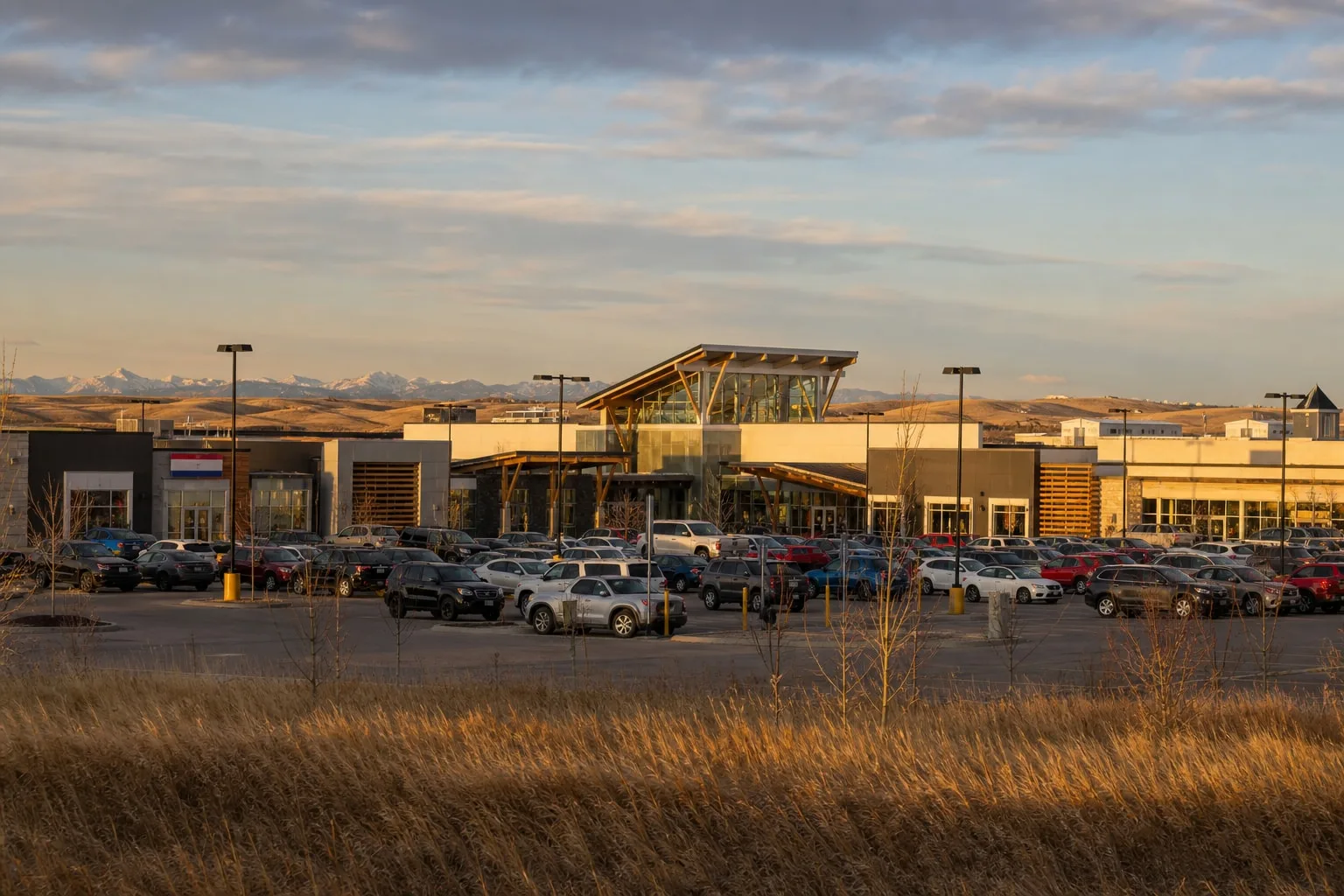
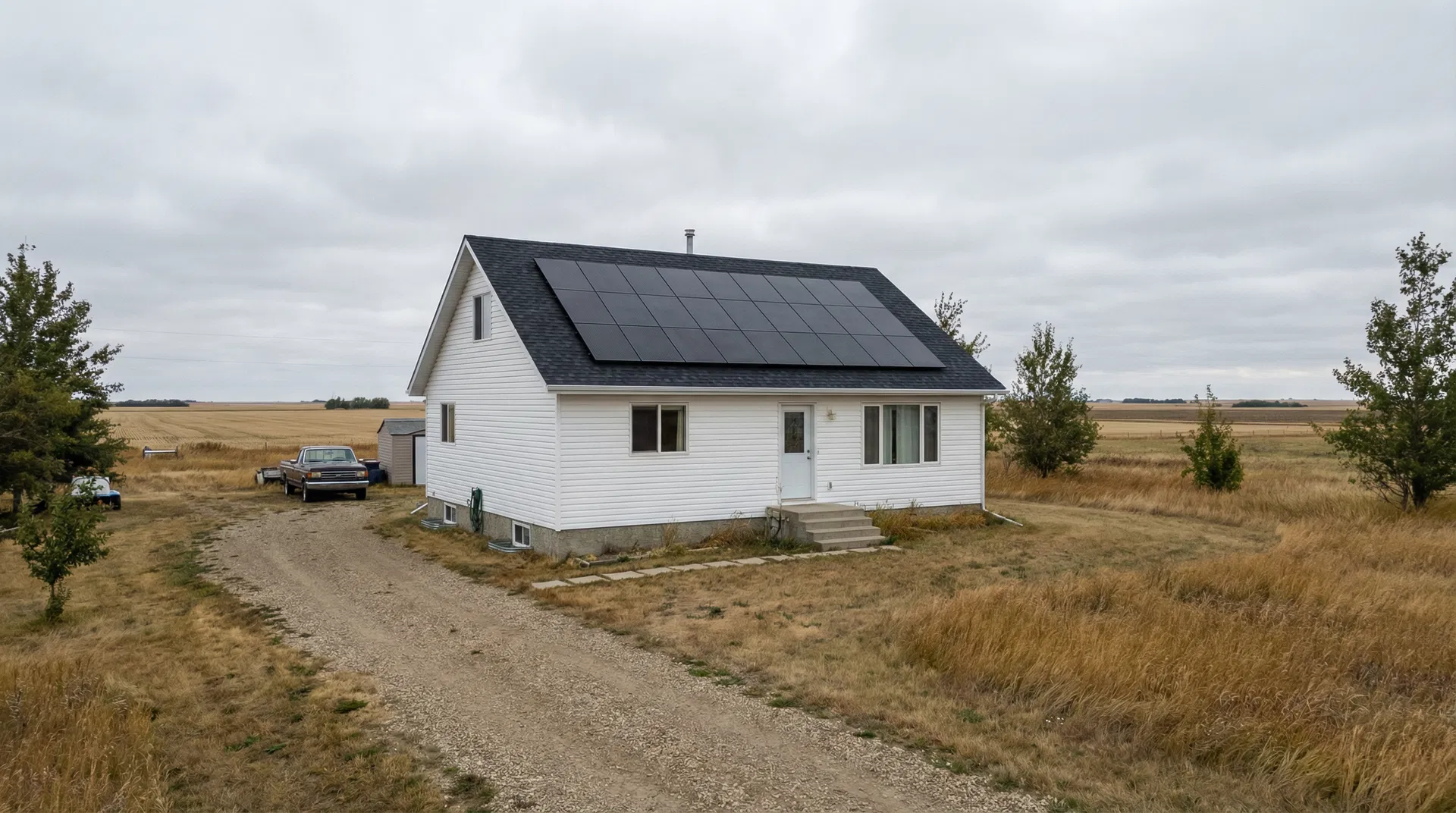
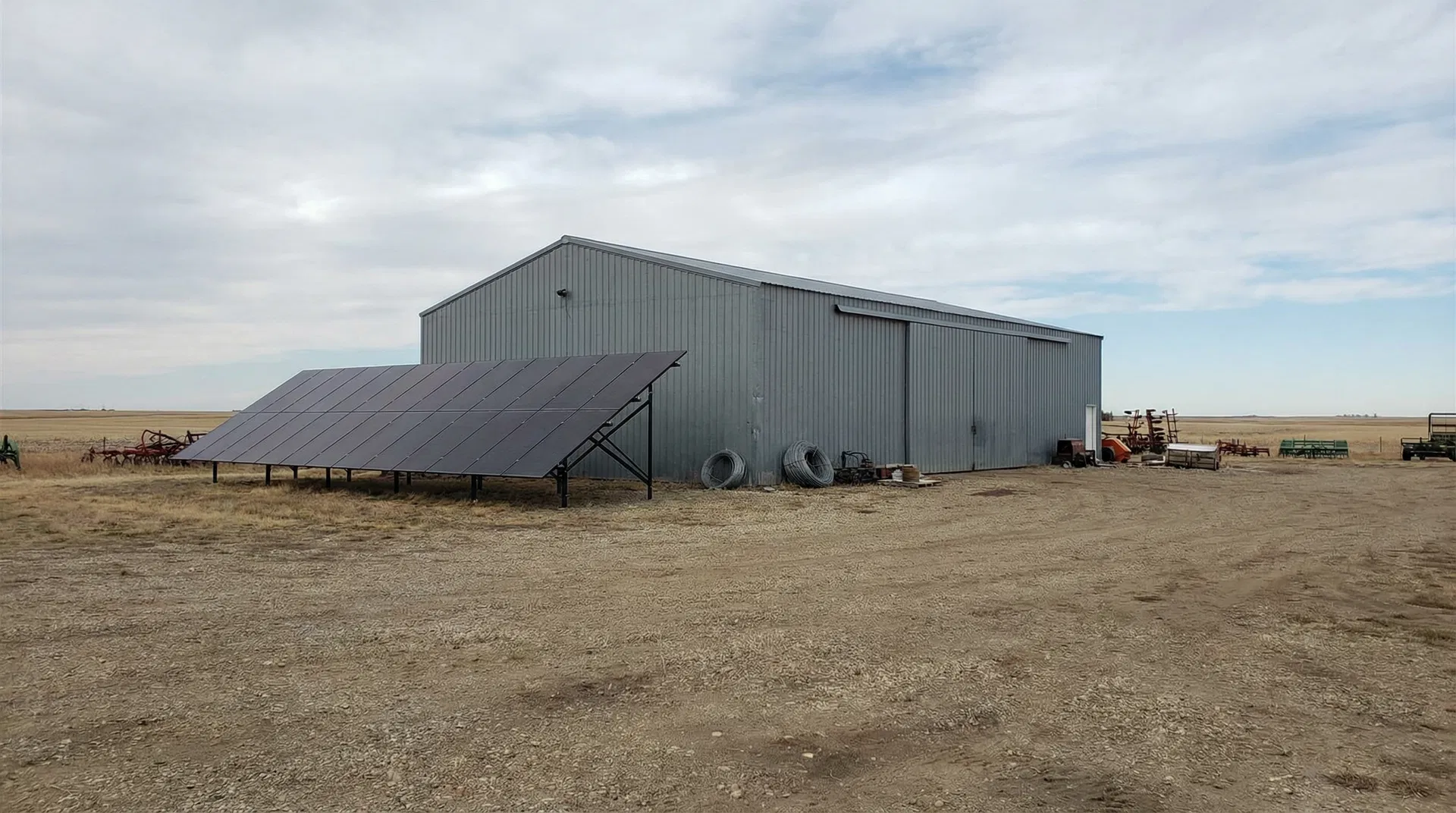
Solar panels for Rocky View County, Alberta properties start with a design built around your property, not a one-size package. We install LONGi panels paired with APsystems microinverters on most residential and acreage jobs in this area, because microinverters let us handle roofs with multiple orientations or partial shading from outbuildings and shelterbelts without dragging down the whole array's output. On a standard rooftop, that typically lands in the 8 to 12 kW range, with 10 kW being the size we see most often once a design review is done against a current power bill. Acreages and larger properties near Balzac Industrial Area or along the rural routes often have a home, a shop, and sometimes outbuildings all drawing off the same service, which changes how we lay out strings and where we recommend mounting. Roof mount works well when there's open, unshaded roof area facing a usable direction. Ground mount becomes the better call when trees, outbuildings, or roof pitch limit what a roof can carry, and when there's open yard space to work with instead. Either way, panel layout, inverter placement, and conduit runs get worked out on paper before anyone touches a ladder. We spec LONGi panels for their warranty terms and APsystems microinverters for the per-panel monitoring, so you can see which part of the array is pulling its weight and which isn't.
Solar Planning for Rocky View County Properties
Rocky View County is a municipal district in southern Alberta that surrounds the City of Calgary, and that geography shapes how we approach a solar project here. Properties range from acreages tucked along the grid roads to homes near landmarks like CrossIron Mills, and each one comes with its own roof pitch, shading pattern, and electrical service. With a population of 41,028 as of the last census, the area covers a lot of ground, and we don't treat a quarter-section near Balzac the same way we'd treat a half-acre lot closer in. Environment Canada's climate normals put the Calgary International Airport station, the closest long-term record to this area, at 2,396.3 hours of bright sunshine a year, and Natural Resources Canada's solar resource maps estimate a specific yield of 1,292 kWh/kWp for this part of the province. Those numbers describe the regional resource, not what a particular roof or ground mount will produce. We confirm actual output through site design, a shading assessment, and your most recent power bill before we size anything. That's the only way to give you a number you can trust instead of a regional average dressed up as a promise.
Electrical Site Review for Rural Alberta Properties
Voltage Rise
Voltage rise happens when a property sits far down a distribution line and the voltage at the point of connection drifts from what's at the substation. Rural distribution runs can be long, so we measure actual conditions at your service instead of assuming a textbook number. That reading affects how we size the system and where an inverter's clipping point ends up, since an inverter pushing against already-high line voltage won't deliver its full rated output.
Single-Phase vs Three-Phase
Properties in this area can have either single-phase or three-phase electrical service, and the two aren't interchangeable for solar equipment. Single-phase service limits which inverters and how much capacity we can connect, while three-phase service, more common on larger acreages and shops, opens up different equipment options and higher system capacity. We confirm which service type your property has before we finalize equipment selection, not after.
Panel Infrastructure
Older rural properties sometimes carry an electrical panel that predates the breaker capacity a solar system needs, so we check the panel's age, amperage, and available breaker space as part of every site visit. We're looking for whether there's room to add a solar breaker safely and whether the panel's rated bus capacity can handle the added backfeed. If it can't, an upgrade means a new panel sized for both your existing loads and the solar addition, done before the solar install goes in.
Service Entrance Review
The service entrance and meter base have to be in good condition before FortisAlberta will approve a micro-generation application, so we inspect both for wear, corrosion, and whether the meter base can accept the metering equipment the interconnection requires. A meter base that's outdated or damaged gets flagged during the site review, not discovered after the application is submitted. If an upgrade is required, we coordinate it as part of the project so the FortisAlberta application isn't held up.
Right-Sizing Solar for Rocky View County Properties
Rural systems tend to run bigger than a typical city rooftop install, and it's usually because there's more than just a house drawing power. A property might be running a home, a heated shop, a well pump, and maybe grain handling or irrigation equipment off the same service, and all of that shows up in the usage data we size against. That's one reason an acreage system often lands at the higher end of the 8 to 12 kW range instead of the lower end. Roof versus ground mount comes down to what the property actually offers. If there's open, unshaded roof facing a usable direction, roof mount keeps the footprint off the ground and is usually the simpler install. If trees or outbuildings shade most of the roof, the pitch is wrong, or the roof is small relative to the load, ground mount on open yard space is often the better call, especially on larger acreages where land isn't the constraint. Either way, we size the system from the 12-month usage graph on your most recent power bill, not a rule-of-thumb number per square foot or per occupant. That graph shows the actual seasonal pattern of what the property draws, and combined with a site design, it tells us what the system needs to offset rather than guessing.
Typical Load Profiles We Design For Near Rocky View County
Home + Heated Shop
This profile covers a primary residence plus a heated detached shop, which is common on acreages throughout the area. The shop's heating and any power tools or equipment inside add a load that's different from the house alone, so we look at how the two draw power together across the year. Your most recent power bill's usage graph and a site design tell us how to size for both under one system.
Acreage with Irrigation or Grain Handling
Some properties add seasonal equipment like irrigation pumps or grain handling gear on top of normal household use, and that equipment can spike demand during specific parts of the year. We account for that seasonal pattern using the usage graph on your most recent bill rather than sizing for an average month. A system built around peak months handles the rest of the year without being oversized for most of it.
Rural Residential, No Outbuildings
Not every property in the area has a shop or farm equipment attached to the service. For a straightforward rural home, the load profile looks closer to a standard residential pattern, though rural homes sometimes run things like a well pump or in-floor heat that a town lot wouldn't have. We still size from your specific usage graph rather than assuming a generic household number, since even a simple load profile has its own shape.
FortisAlberta Interconnection in Rocky View County
FortisAlberta is the wire service across Rocky View County, which means any grid-connected solar system here goes through FortisAlberta's micro-generation application process before it's allowed to operate in parallel with the grid. Range Road Solar handles that application as part of the project: we prepare the single-line diagram, the equipment specifications for the LONGi panels and APsystems microinverters, and the paperwork FortisAlberta requires to review the interconnection. We don't quote approval timelines, credit terms, or payout rates here, because those are set by FortisAlberta and the retailer on your account, not by us, and they can change. What we can tell you is that we've been through this process with FortisAlberta before, we know what they ask for, and we won't submit an application with gaps that bounce it back. If your property is on FortisAlberta's system, and here, it is, that's the process your project will go through.
Project Economics and Design Review
| System Size | Annual Production | Year 1 Savings | Payback Period |
|---|---|---|---|
| 8-12 kW range, 10 kW typical |
Actual production, savings, and payback figures are provided only after a property-specific design review using your most recent power bill.
How We Work in Rocky View County
Bill and Load Review
We review your power bill to understand your energy use in Rocky View County and size the system to your actual consumption, not a generic estimate.
Site Assessment
We assess your roof or ground area, south-facing exposure, electrical service, and utility interconnection requirements specific to your property.
Design and Utility Application
We produce a system layout, production estimate, and cost summary, then submit your micro-generation application to your utility on your behalf.
Installation and Commissioning
Our crew installs racking, panels, inverter, and electrical connections. All work is performed by licensed electricians. We commission and test before handoff.
Current Program and Interconnection Review
Utility connection review
FortisAlberta reviews grid-connection applications for solar systems here, and that review has to clear before a system can operate in parallel with the grid. Range Road Solar prepares the design package, equipment specifications, and single-line diagram that FortisAlberta requires. We don't skip steps or submit incomplete paperwork, since that's what causes applications to stall.
Current program review
Eligibility for commercial, farm, and residential solar varies by property type and changes as rules get updated, so we check current eligibility against your specific situation at the time of your design review rather than relying on what applied last year. That review covers residential acreages, farm operations, and commercial properties the same way: against the rules in effect right now.
Frequently Asked Questions
Get a Solar Assessment for Rocky View County
Submit a recent power bill and we will review your consumption and provide an honest assessment for your Rocky View County property. No obligation.
(587) 330-7502 Book a CallMore Solar Services in Rocky View County