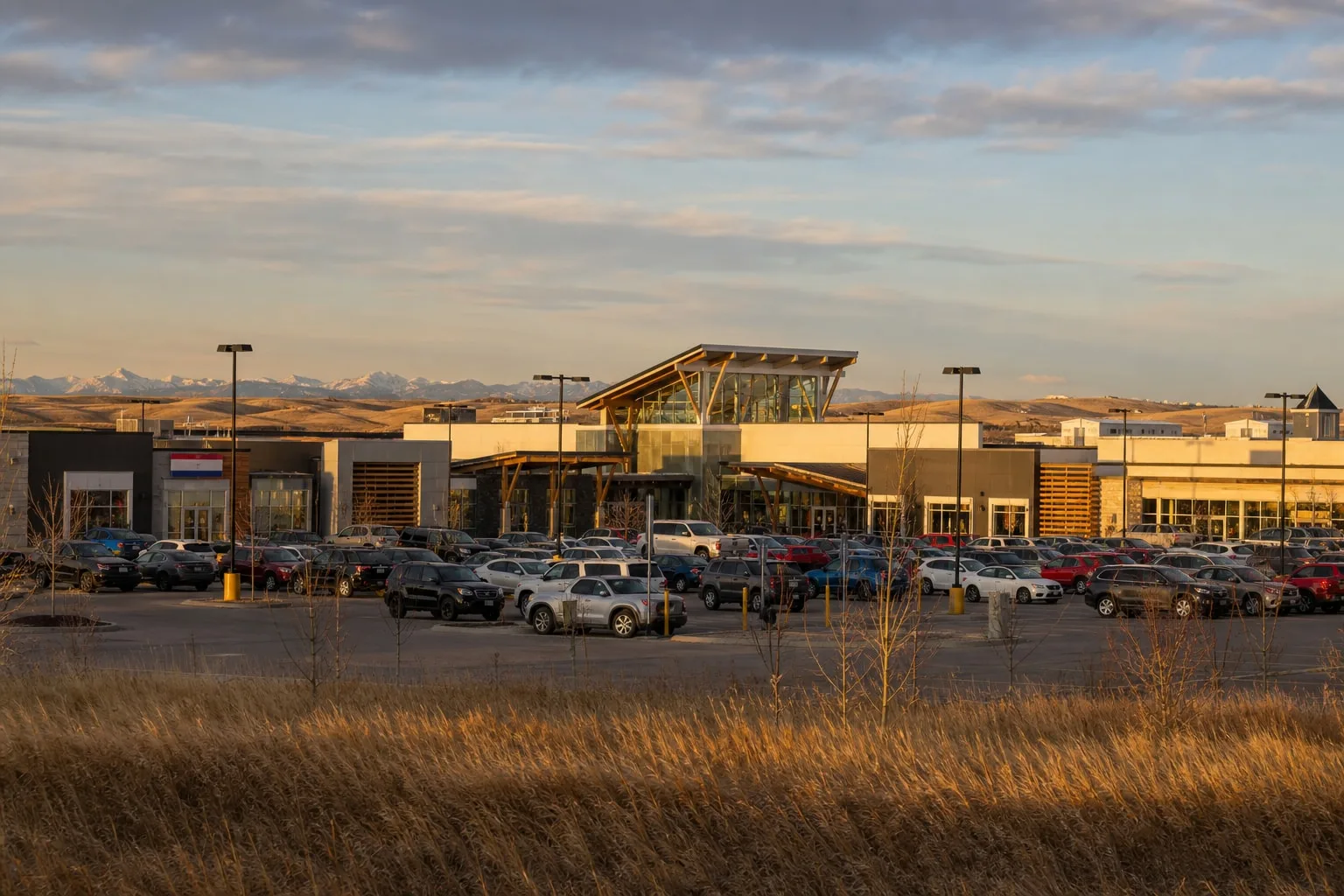
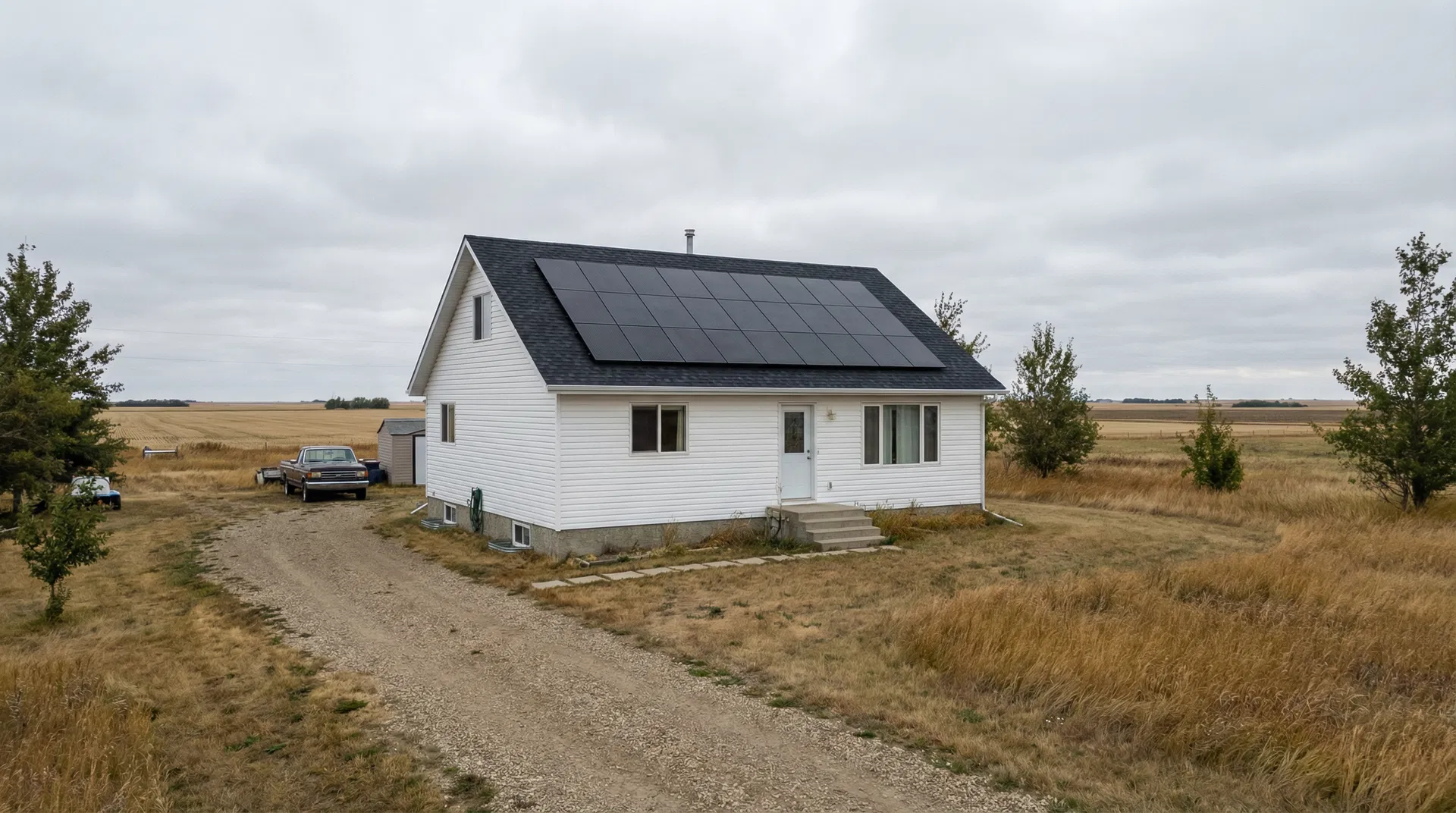
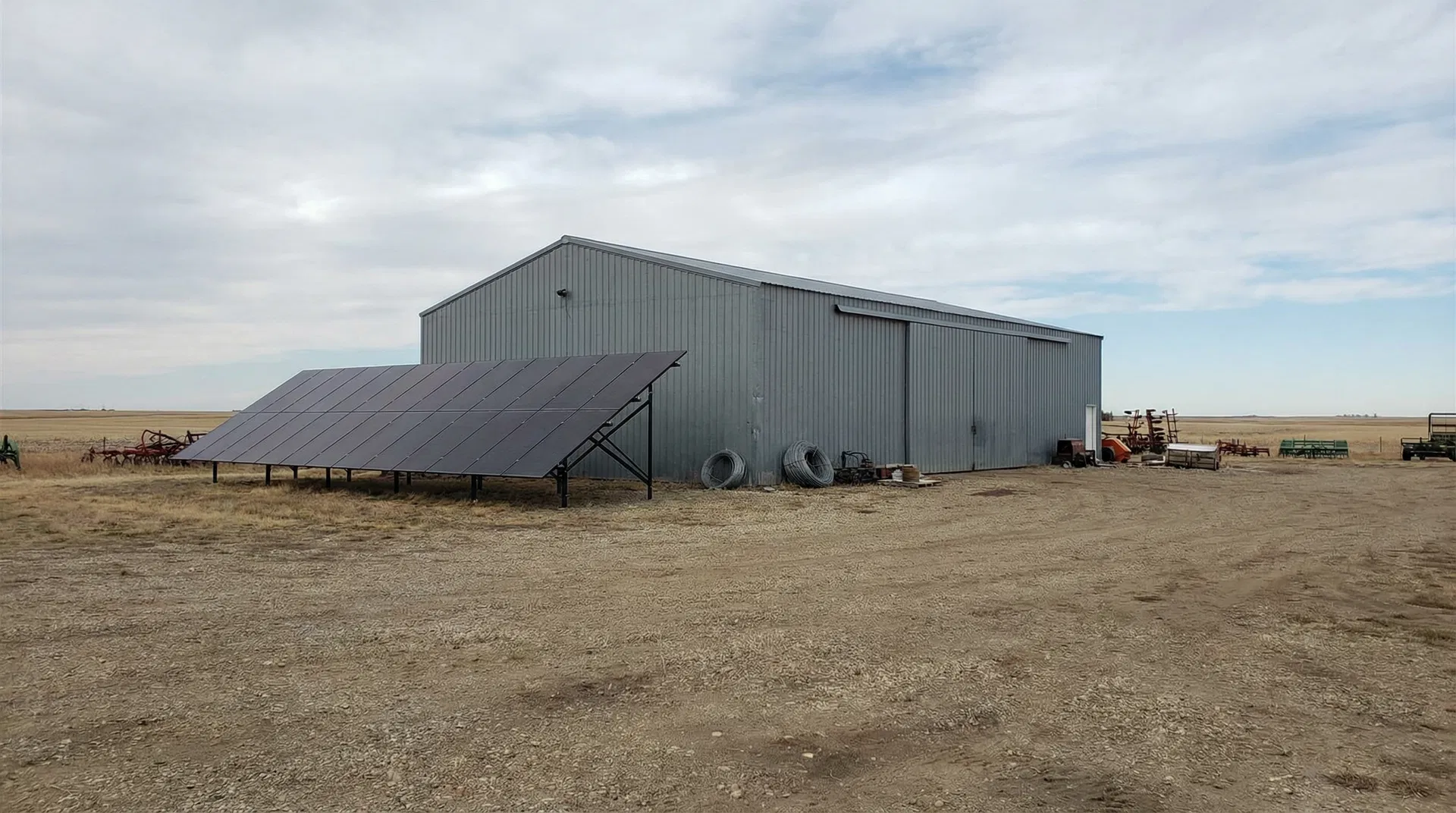
If you're comparing solar Rocky View County installers, here's exactly what goes on the roof or ground-mount array: LONGi monocrystalline panels paired with APsystems microinverters, sized to an 8 to 15 kW range depending on the property, with 10 kW typical for a residential build. We lean on APsystems microinverters because rural rooflines and outbuilding layouts around here rarely get uniform sun all day. A dormer, a grain bin, or a shelterbelt can shade part of an array while the rest sits clear, and module-level conversion means one shaded panel doesn't drag down the whole string's output the way a single central inverter would. LONGi panels give us a consistent, well-documented product to warranty and service across the acreages, hobby farms, and commercial properties we see from the edges of Calgary's growth out toward Balzac and CrossIron Mills. Some properties call for a straightforward roof-mount on a house or shop. Others, especially larger parcels with more open land than usable roof pitch, make more sense as a ground-mounted array set away from shelterbelts and outbuildings. We walk the property, check the electrical service, and look at roof orientation and shading before recommending either direction. Every install includes the paperwork for FortisAlberta interconnection, from the micro-generation application through final sign-off, so you're not the one chasing down forms. We size the system from the 12-month usage graph on your most recent power bill rather than a rule-of-thumb number, which is also how we land on whether 8 kW, 15 kW, or something in between actually fits your load.
Solar Planning for Rocky View County Properties
Rocky View County isn't one subdivision, it's a sprawling municipal district in southern Alberta surrounding the City of Calgary, home to 41,028 people as of the 2021 census, up from 39,407 in 2016. That growth shows up in the properties we quote here: acreages pushing out from Calgary's edge, working farms, and commercial sites near CrossIron Mills and the Balzac Industrial Area. The county was established March 15, 1955, renamed the Municipal District of Rocky View No. 44 on January 1, 1956, and renamed Rocky View County on July 7, 2009, a long history of adapting to whatever came next on the land. That variety means there's no single answer for what a solar system should look like on any given property. A shop beside a grain operation near Balzac has different roof geometry and load patterns than a walkout bungalow closer to Calgary. Before we quote anything, we confirm roof or ground-mount conditions, shading, orientation, and your most recent power bill, which carries the 12-month usage graph we size against. We don't guess at production numbers from a map. We build the design from your property and your actual electricity use, then review the outcome with you before you sign off on anything.
Electrical Site Review for Rocky View County Properties
Voltage Rise
Voltage rise happens when a property sits a long way down a distribution line, and the voltage measured at your service entrance runs higher than what's measured back at the transformer. On rural stretches of line like you'll find here, that rise can push inverters into clipping if a system is sized without checking it first. We measure voltage at the panel before finalizing system size, not after.
Single-Phase vs Three-Phase
Properties in this area run on either single-phase or three-phase electrical service, depending on when the property was built and what it was built to run. That distinction matters for solar because inverter selection and maximum system capacity both depend on which type of service is on site. We confirm phase configuration during the site visit, before we spec equipment.
Panel Infrastructure
A lot of rural properties here are still running the electrical panel that came with the original build, sometimes decades old, with limited breaker capacity. We check panel age, busbar rating, and available breaker space before adding solar, because an undersized or outdated panel can't safely carry the extra circuits. If the panel can't support the system, an upgrade happens as part of the install, not as a surprise afterward.
Service Entrance Review
We check the service entrance and meter base condition as part of every site visit, since both have to be in good shape to support a micro-generation application to FortisAlberta. A deteriorated meter base or an entrance that doesn't meet current code can hold up the interconnection application regardless of how the solar system itself is designed. If an upgrade is needed, we scope it and handle it as part of the project.
Right-Sizing Solar for Rocky View County Properties
Rural systems around here almost always carry more than a single-family home load. A property might run a house, a heated shop, a well pump, and grain-handling equipment, all on one service, which is a different sizing problem than a bungalow in a subdivision. That's part of why the service range for this area runs 8 to 15 kW instead of landing on one number: a home-only property sizes differently than a home-and-shop combination. Roof mount works when there's enough unshaded, well-oriented roof area and the structure can carry the array. Ground mount becomes the better call when roof space is limited, when trees or outbuildings cast shade across most of the usable roof, when the roof pitch or orientation isn't ideal, or when there's simply open land available and a ground array is easier to service and expand later. Acreages and farm layouts often favor ground mount for exactly that reason. Either way, we size the system from the 12-month usage graph on your most recent power bill rather than a generic per-square-foot or per-occupant guess. That usage graph shows us seasonal swings, baseline load, and peak months, which tells us far more about actual system size than a rule of thumb ever could. We pair that with a site visit before finalizing a design.
Typical Load Profiles We Design For Nearby Properties
Home Only
This is a single residence with no major secondary loads: lighting, appliances, HVAC, and standard household electronics. We size this load profile directly from the 12-month usage graph on your most recent power bill, looking at baseline draw and seasonal peaks rather than square footage alone.
Home + Heated Shop
This profile adds a detached shop with heating, lighting, and tools or equipment running alongside the house. The shop's heating load, especially if it's electric, often becomes the deciding factor in whether the system lands near the top or bottom of the 8 to 15 kW range. We review both structures' usage together before sizing anything.
Home + Irrigation or Grain Handling
Properties running irrigation pumps, grain dryers, or augers on top of a household load need a system sized around when those loads actually run, not just how big they are. Seasonal equipment like this can spike usage for part of the year and sit idle the rest, which the 12-month usage graph makes visible in a way a single month's bill wouldn't. We design around that full-year pattern.
FortisAlberta Interconnection in Rocky View County
FortisAlberta is the wire service here, and any grid-connected solar system needs to go through their micro-generation interconnection process before it's switched on, paperwork that's part of what we handle as your installer. We prepare the technical package, including single-line diagrams and equipment specifications for the LONGi panels and APsystems microinverters, and submit the micro-generation application to FortisAlberta on your behalf. We coordinate the site work and any inspections tied to the application, and we keep you in the loop as it moves through their review. We don't quote a specific approval timeline or promise a particular outcome on credits or billing, because those terms are set by FortisAlberta and your retailer, not by us. What we can tell you up front is that the application and the design work happen together, not as two separate projects, so your system is engineered to match what gets submitted.
Project Economics and Design Review
| System Size | Annual Production | Year 1 Savings | Payback Period |
|---|---|---|---|
| 8-15 kW range, 10 kW typical |
Production, savings, and payback figures are only accurate once we've reviewed your property and your most recent power bill, so we don't publish generic numbers here.
How We Work in Rocky View County
Bill and Load Review
We review your power bill to understand your energy use in Rocky View County and size the system to your actual consumption, not a generic estimate.
Site Assessment
We assess your roof or ground area, south-facing exposure, electrical service, and utility interconnection requirements specific to your property.
Design and Utility Application
We produce a system layout, production estimate, and cost summary, then submit your micro-generation application to your utility on your behalf.
Installation and Commissioning
Our crew installs racking, panels, inverter, and electrical connections. All work is performed by licensed electricians. We commission and test before handoff.
Current Program and Interconnection Review
Utility connection review
FortisAlberta reviews every grid-connected micro-generation application before a system is switched on, and that review is part of the process for installs in this area. Range Road Solar prepares and submits the design package, including equipment specs for the LONGi panels and APsystems microinverters, so the application matches what's actually installed.
Current program review
Eligibility for commercial, farm, and residential solar programs changes, and what applies to a property depends on its use, size, and current rules at the time of design. We check that eligibility during the design review rather than assuming a program that applied last year still applies today.
Frequently Asked Questions
Get a Solar Assessment for Rocky View County
Submit a recent power bill and we will review your consumption and provide an honest assessment for your Rocky View County property. No obligation.
(587) 330-7502 Book a CallRelated Resources
More Solar Services in Rocky View County