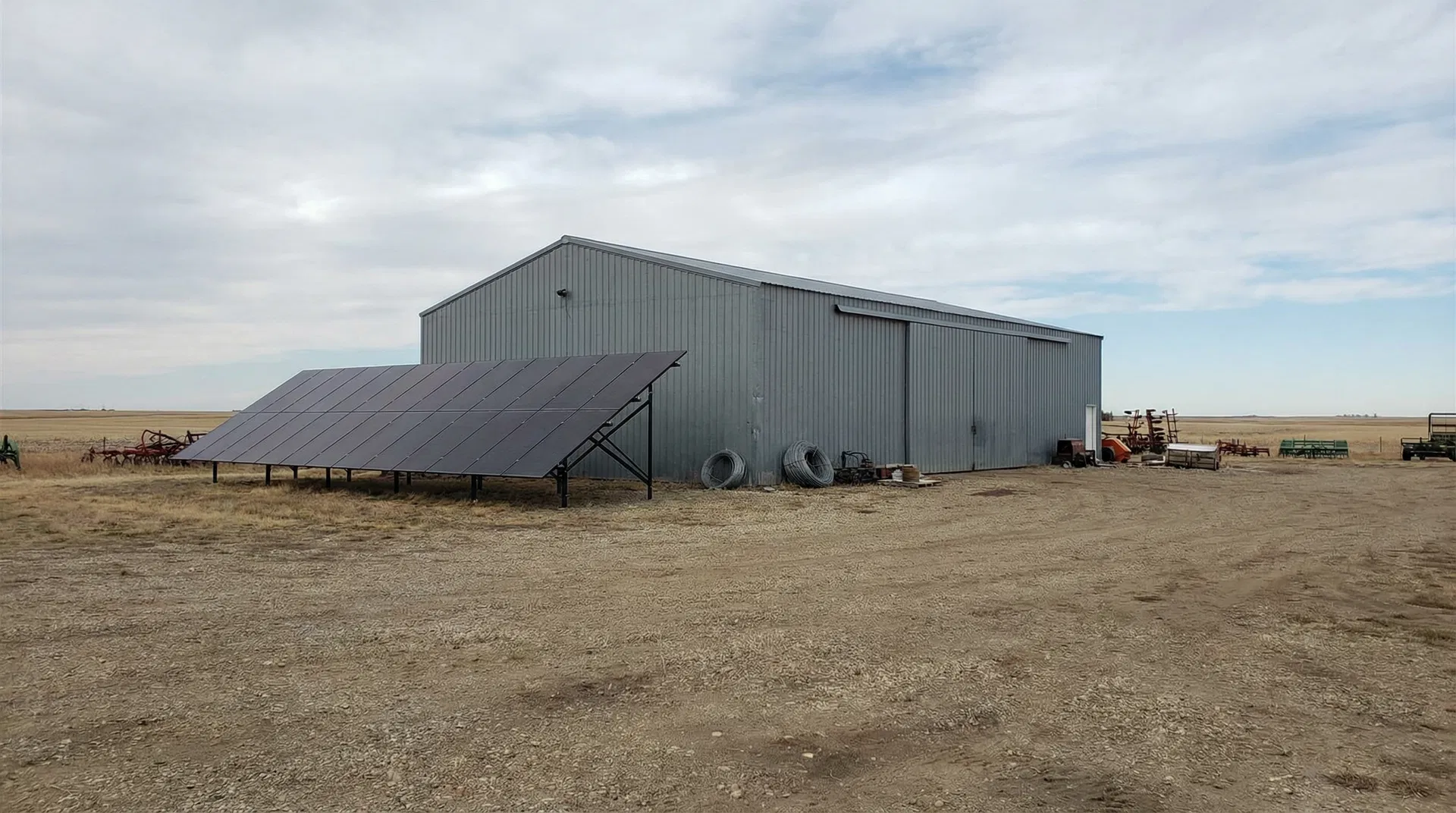
Shop and outbuilding solar for Rocky View County starts with the building, not a brochure spec sheet. A detached shop with three-phase power and a grain-handling setup needs a different inverter strategy than a single-phase outbuilding running lights, a water pump, and a stock tank heater. We install both ground-mount and rooftop configurations depending on what the yard and the roof give us to work with: a shop roof with clean southern exposure and decent structure is often the simplest option, while a shaded roof or a roof already crowded with equipment usually points us toward a ground-mount array on open yard instead. Every system we design for shops and outbuildings here uses LONGi panels and APsystems microinverters. Microinverters make sense on ag buildings because they isolate each panel's output, so if one string gets shaded by a grain bin, a vent stack, or a tree line, the rest of the array keeps producing instead of dragging the whole string down. That matters more on working buildings than it does on a clean suburban roof, because shop roofs tend to collect stuff: vents, lightning rods, antennas, the occasional satellite dish. System size for this service runs 8 to 20 kW, with 12 kW the typical build for a single shop or outbuilding setup. Where a yard has a shop and a second outbuilding both drawing power, we size the array against the combined load shown on your most recent power bill, not against either building in isolation.
Solar Planning for Rocky View County Properties
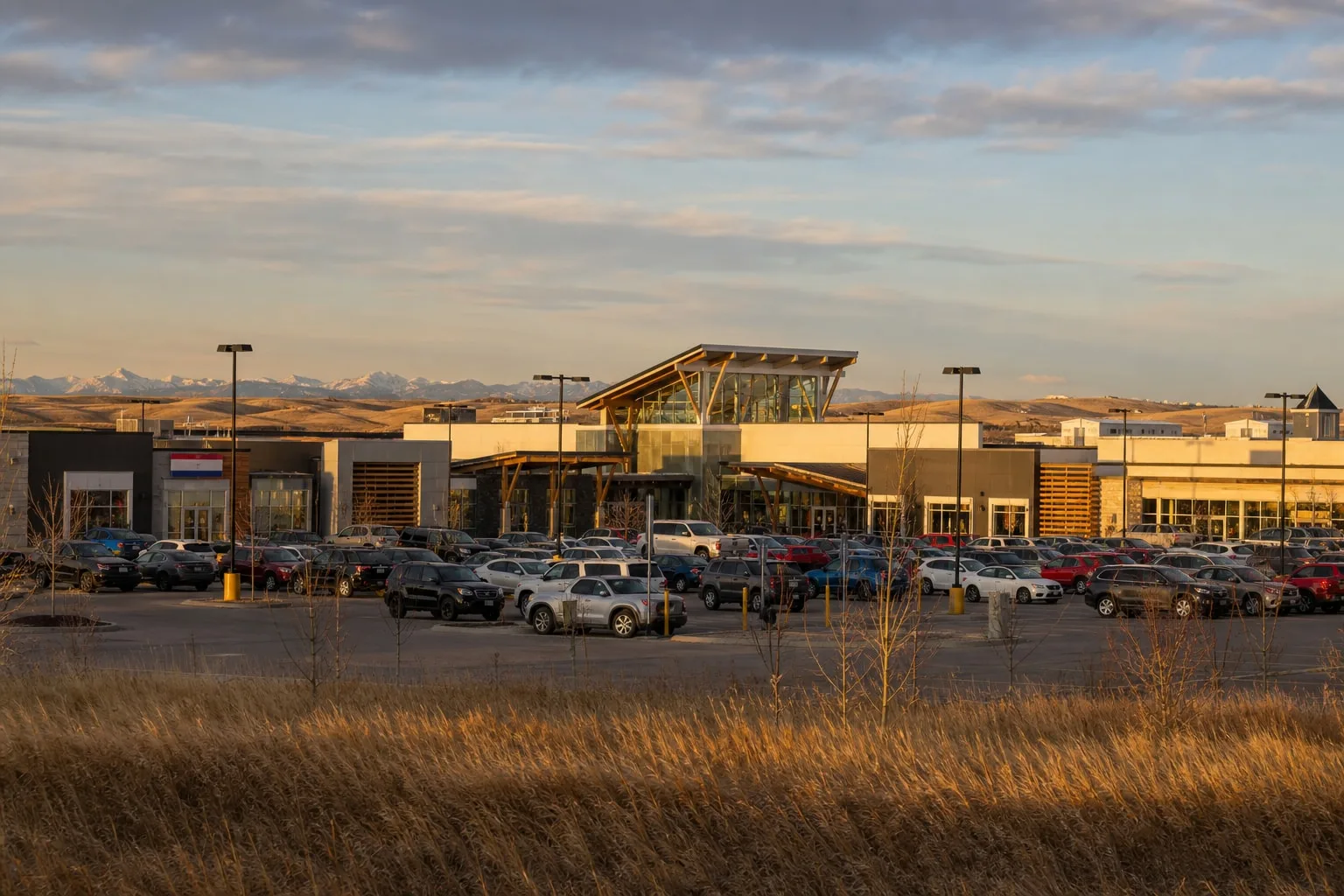
This part of southern Alberta surrounds the City of Calgary, and that geography shapes a lot of what we see on site visits: acreages and shops that sit minutes from big commercial anchors like CrossIron Mills and the Balzac Industrial Area, but still run on the same rural electrical setup as a quarter section further out. The population here sits at 41,028 as of the 2021 census, and the growth shows up as more shops, more outbuildings, and more properties running a house and a business off one yard. FortisAlberta is the wire service across the area, so every grid-tied system we design here goes through FortisAlberta's micro-generation process, and we handle that application as part of the project. What doesn't change from property to property is the need for an honest look at the building itself before we talk numbers. A heated shop with a compressor and a welder draws differently than an unheated hay shed, and a ground-mount array laid out on open yard faces different shading and access questions than a rooftop array squeezed behind a shelterbelt. We don't size a system off a rule of thumb or a guess at your usage. We look at the shop, the house, and any other loads on the yard, then build the design around your most recent power bill and the 12-month usage graph printed on it.
Electrical Site Review for Rocky View County Properties
Voltage Rise
Voltage rise happens when power pushes out along a long rural distribution line and the voltage at the end of that line drifts from what it is at the source. On properties farther out on a feeder, that drift can affect how an inverter responds, since inverters are built to throttle or shut down outside a set voltage window. We check for voltage rise conditions on site and factor it into inverter selection and system sizing, rather than assuming every property sees the same supply voltage.
Single-Phase vs Three-Phase
Rural Alberta properties run on either single-phase or three-phase service, and which one you have changes what equipment fits. A shop running a grain dryer, bin cleaner, or large compressor often has three-phase service, while a smaller outbuilding running lights and a water pump is more commonly single-phase. We confirm which service type a property has before we spec inverters, since that determines both the equipment we can use and how much capacity the system can carry.
Panel Infrastructure
A lot of shops and outbuildings on established yards are still running on an older electrical panel, and we check both the panel's age and its breaker capacity before we finalize a design. We're looking for available breaker space, the panel's rated capacity, and whether the existing panel can safely carry the added circuit a solar system needs. If it can't, an upgrade means a new panel sized for the combined load, which we scope and quote as part of the project rather than leaving it as a surprise.
Service Entrance Review
The service entrance and meter base are the physical connection point between your property and FortisAlberta's grid, and we check the condition of both before submitting a micro-generation application. An aging or damaged meter base can hold up that application, since FortisAlberta needs a sound connection point to approve a grid-tied system. If an upgrade is needed, we identify that early in the design review so it's part of the project plan rather than something that stalls the install later.
Right-Sizing Solar for Rocky View County Properties
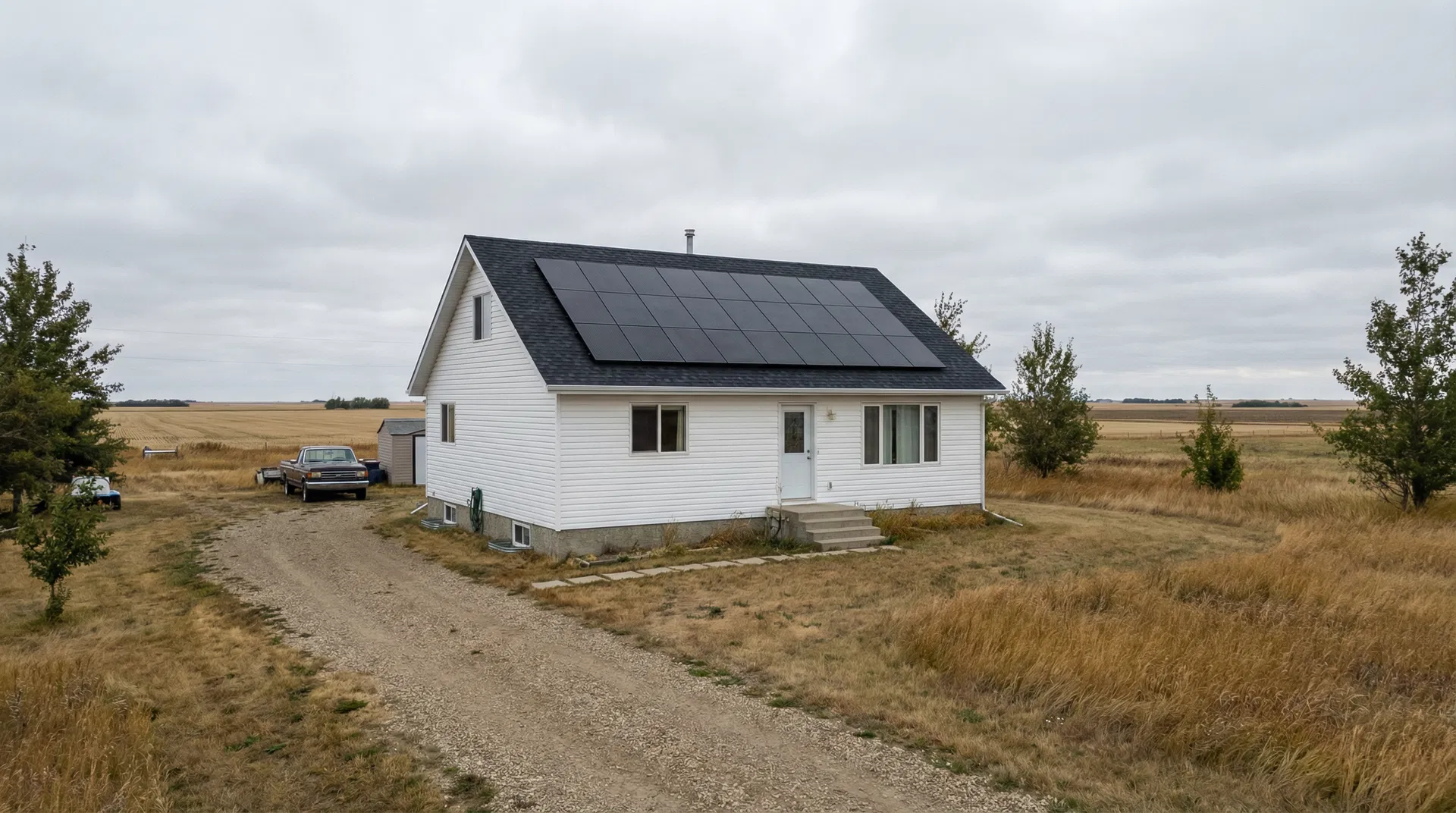
Rural properties here almost always carry more than one load: a house, plus a shop, plus sometimes a second outbuilding, a well pump, or irrigation equipment, all drawing off the same yard. That's one reason systems on acreages and farm properties tend to run larger than a typical in-town rooftop system: there's simply more going on behind the meter. Roof versus ground mount comes down to what the property actually offers. A shop roof with clean southern exposure, decent structure, and no major shading is often the straightforward choice. But a lot of yards don't give us that: trees along a shelterbelt, a grain bin or second building casting shade, a roof pitch that doesn't favor solar, or a roof that's simply too small for the load. On a spread-out yard with open land available, a ground-mount array sidesteps all of that and lets us orient the panels for the best exposure regardless of what the roof is doing. Either way, we size the system from the 12-month usage graph on your most recent power bill, not a rule-of-thumb number like watts per square foot or a flat multiplier based on square footage. That graph shows your actual monthly draw across a full year, including seasonal swings from things like a shop heater or well pump, and that's what the design gets built around.
Typical Load Profiles We Design For Near Rocky View County
Home + Heated Shop
This is the most common setup we see: a house and a heated shop sharing one service, with the shop running a compressor, a welder, and maybe a heater through the colder months. We size these systems against the combined draw of both buildings shown on your most recent power bill, since the shop's heating load often outweighs what the house itself is using.
Shop + Grain Handling
Properties with grain handling equipment, augers, a bin cleaner, or a grain dryer, see sharp seasonal spikes in power use that don't show up the rest of the year. We look at the 12-month usage graph on your bill specifically to catch that harvest-season spike, then size the array and inverter setup so the system still makes sense across the slower months too.
Acreage with Multiple Outbuildings
Some yards run a house, a shop, and a second outbuilding like a barn or cold-storage shed, each with its own panel or sub-panel. We map out how those buildings are wired together and where the loads actually sit, then design a system, sometimes combining ground-mount and rooftop arrays, that covers the yard as a whole rather than one building at a time.
FortisAlberta Interconnection in Rocky View County
FortisAlberta is the wire service across the area, which means any grid-tied shop or outbuilding system here connects through FortisAlberta's distribution network. Before a system goes live, the project needs a micro-generation interconnection application filed with FortisAlberta, covering the system size, the equipment being installed, and how it ties into your existing service. We handle that application as part of the project, start to finish. That includes putting together the technical package FortisAlberta asks for, LONGi panel specs, APsystems microinverter specs, and single-line diagrams for the installation, so you're not the one chasing paperwork or translating electrical terms over the phone. We don't quote approval timelines, credit terms, or payout rules here, because those are set by FortisAlberta and the retailer you're on, and they can change. What we can tell you is that the application process is a normal, expected step for a grid-tied system on FortisAlberta's network, and it's one we've been through before.
Project Economics and Design Review
| System Size | Annual Production | Year 1 Savings | Payback Period |
|---|---|---|---|
| 8-20 kW range, 12 kW typical |
Production, savings, and payback figures are specific to your property and depend on a design review and your most recent power bill, so we don't publish generic numbers here.
How We Work in Rocky View County
Bill and Load Review
We review your power bill to understand your energy use in Rocky View County and size the system to your actual consumption, not a generic estimate.
Site Assessment
We assess your roof or ground area, south-facing exposure, electrical service, and utility interconnection requirements specific to your property.
Design and Utility Application
We produce a system layout, production estimate, and cost summary, then submit your micro-generation application to your utility on your behalf.
Installation and Commissioning
Our crew installs racking, panels, inverter, and electrical connections. All work is performed by licensed electricians. We commission and test before handoff.
Current Program and Interconnection Review
Utility connection review
FortisAlberta reviews every grid-tied micro-generation application against its current technical requirements before a system can connect. Range Road Solar puts together and submits that application as part of your project, including the equipment specs and single-line diagram FortisAlberta asks for.
Current program review
Commercial, farm, and residential eligibility rules change, and what applies to a shop or outbuilding can differ from what applies to a house. We check current program and eligibility rules against your specific property and equipment at the time we design your system, rather than assuming last year's rules still apply.
Frequently Asked Questions
Get a Solar Assessment for Rocky View County
Submit a recent power bill and we will review your consumption and provide an honest assessment for your Rocky View County property. No obligation.
(587) 330-7502 Book a CallRelated Resources
More Solar Services in Rocky View County