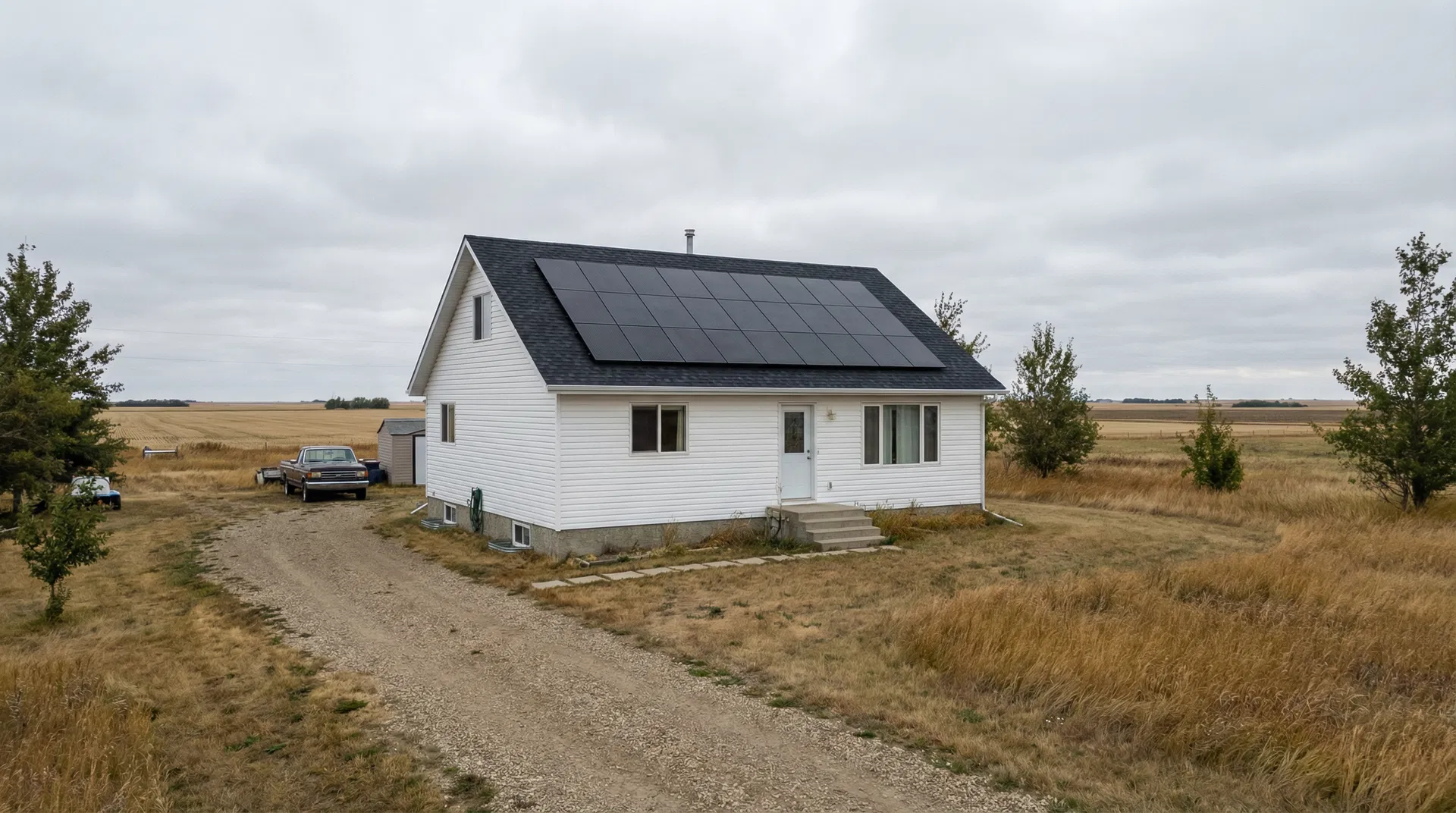
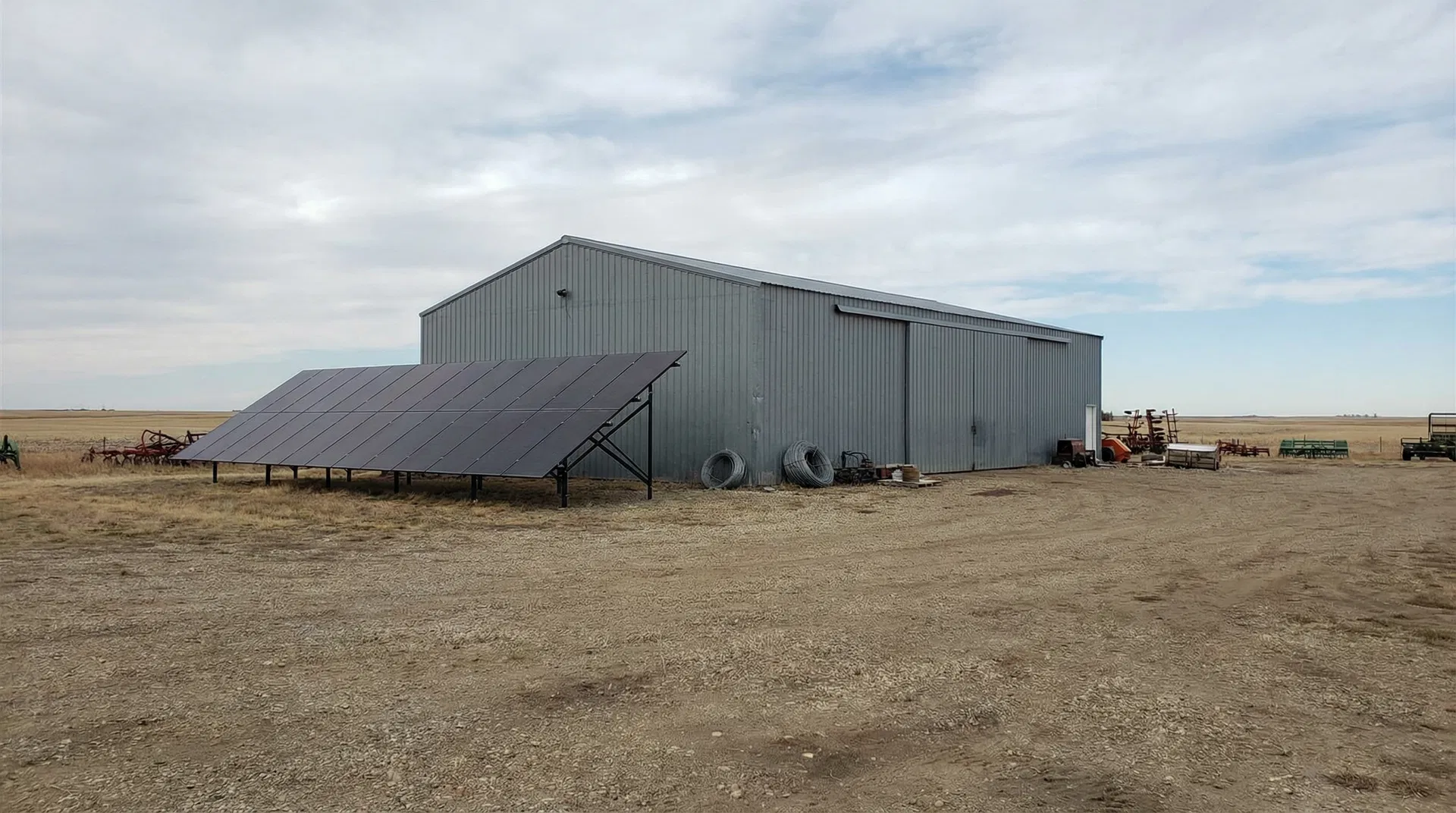
Shop solar in Cochrane, Alberta starts with the building itself: a standalone pole shed, an attached garage-shop combo, or a bank of outbuildings spread across the yard, each one changing how we lay out the array. We install LONGi panels paired with APsystems microinverters on most projects, whether the array goes on a metal shop roof, a barn roof, or a ground-mount rack out in the yard. Microinverters make sense for outbuildings because each panel operates independently. If a panel gets shaded by a tree line or another structure part of the day, the rest of the array keeps producing instead of the whole string dropping with it. For shops and barns with steep or complicated rooflines, that per-panel independence also simplifies the layout. On properties with tree cover, poor roof orientation, or a shop roof that's already spoken for, we design a ground-mount system instead, angled and oriented for the site rather than forced onto a roof that doesn't work. System sizes for shop and outbuilding projects run 8 to 20 kW, with most landing around 12 kW, depending on what's being powered, whether that's a workshop with a welder and compressor, a barn with heated waterers, or a standalone building with its own subpanel. We handle the structural and electrical review as part of design: roof or truss capacity for a rooftop mount, footing requirements for ground-mount racking, and whether the outbuilding's existing panel can support the added circuit or needs an upgrade first.
Solar Planning for Cochrane Properties
Cochrane's population grew from 25,853 to 32,199 between the last two census counts, and a lot of that growth sits on acreages and hobby farms ringing the historic downtown near Cochrane Ranche Historic Site. Properties out here often carry a shop, a barn, or a mix of outbuildings alongside the house, each with its own load. The community was founded in 1881, became a village in 1903, and incorporated as a town in 1971, and the building stock reflects that span: century-old barns sit next to newer pole sheds, and electrical service varies property to property. That mix matters for solar. A ground-mounted array on open acreage behaves differently than a rooftop system on a shop with limited south-facing roof. Range Road Solar starts with a site walk: roof pitch and orientation, shading from trees or neighboring structures, the condition of the electrical panel and service entrance, and what FortisAlberta requires for interconnection. We don't hand out a generic system size off a phone call. We look at your most recent power bill, walk the property, and design around what's actually there, whether that's a single shop, a home-plus-barn combination, or a full yard with irrigation and grain handling on top.
Electrical Site Review for Rural Properties
Voltage Rise
Voltage rise happens when power pushes back onto a long or lightly loaded distribution line, and rural feeders can see more of it than tighter urban circuits. On a shop or outbuilding system, higher voltage rise can push inverters into clipping mode earlier than expected, which caps output during peak production. We check line conditions and distance from the transformer during design so the system is sized and configured to avoid unnecessary clipping.
Single-Phase vs Three-Phase
Rural properties around here run a mix of single-phase and three-phase service, and a shop or barn built for heavier equipment, like a welder, compressor, or grain auger, may already have three-phase power. The service type available at the building determines which microinverters and system configuration we can use and caps how much capacity the connection can carry. We confirm phase type and available capacity on-site before finalizing the design, not after.
Panel Infrastructure
Older rural properties sometimes still run 100-amp panels or breaker boxes installed decades before anyone was thinking about solar. We check breaker capacity, panel age, and available slots on every project, since an outbuilding's subpanel or the main service panel both need enough room and rating for the new circuit. If the existing panel can't support the addition, an upgrade happens before the solar installation, not as an afterthought.
Service Entrance Review
We check the condition of the service entrance and meter base on every project, since FortisAlberta's micro-generation application requires that equipment to meet current standards before they'll approve the connection. An older or deteriorated meter base can hold up an application even if the solar design itself is sound. Where an upgrade is needed, we identify it during the site review and fold it into the project scope rather than discovering it partway through installation.
Right-Sizing Solar for Shops and Outbuildings
Rural systems typically run bigger than a standard urban rooftop install, and it's usually because there's more than one load to cover. A property might have the house, a heated shop, a barn with waterers or fans, and maybe an irrigation pump or grain-handling equipment on top of that. Each one adds to the total draw, and sizing for just the house while ignoring the shop leaves the rest running on full-price grid power. Roof versus ground-mount is a real decision, not a default. A shop or barn roof with good south-facing exposure and no shade problems is often the simplest mount. But if trees line the yard, the roof pitch is wrong, or the best-facing roof belongs to a building that's inconvenient to wire, ground-mount on open acreage is usually the better call, especially on properties with land to spare. We size every system off the 12-month usage graph on your most recent power bill, not a rule-of-thumb watts-per-square-foot number. That graph shows seasonal swings, whether there's a grain dryer running hard in the fall or a heated shop pulling more in winter, and it tells us far more than a single month's number would. Combine that usage pattern with a site walk covering roof condition, shading, and available ground space, and we land on a system sized for what the property actually uses, not a generic estimate.
Typical Load Profiles We Design For
Home + Heated Shop
This is the most common profile we see: a house plus a detached shop with heat, lighting, and power tools or a welder running at least part of the year. We pull the usage pattern off your most recent power bill to see how much the shop adds on top of household load, then size the array to cover both rather than just the home.
Barn + Livestock Operation
Barns with heated waterers, fans, lighting, and sometimes a tack room or wash bay draw steadily through the day, and that load often doesn't line up neatly with daytime solar production. We look at when those loads run, not just how much they use, and design the system and any load management around that pattern rather than assuming it matches a typical daytime curve.
Standalone Outbuilding or Shop Only
Some properties just want a single shop or outbuilding covered, separate from the house, often because it's got its own meter or subpanel already. These systems tend to be smaller and simpler to permit, but we still size them off the building's actual usage pulled from the power bill rather than guessing based on square footage.
FortisAlberta Interconnection for Shops and Outbuildings
FortisAlberta is the wire service for properties here, and any grid-tied shop or outbuilding system needs to go through their micro-generation interconnection process before it's energized. Range Road Solar prepares and submits that application as part of your project: the single-line diagram, equipment specifications for the LONGi panels and APsystems microinverters, and the site details FortisAlberta requires to review the connection. For properties with multiple buildings, meters, or subpanel arrangements, we work out how the system ties into the existing service before the application goes in, so there aren't surprises partway through the review. We don't quote approval timelines or promise a specific turnaround, because that's set by FortisAlberta's own review queue and the complexity of the property, not by us. What we can tell you is that we handle the paperwork end to end: you're not the one filling out interconnection forms or chasing down equipment spec sheets. If your shop or outbuilding already has three-phase service, or if the property has an older service entrance, we flag that during the site review so it's accounted for before the application is submitted.
Project Economics and Design Review
| System Size | Annual Production | Year 1 Savings | Payback Period |
|---|---|---|---|
| 8-20 kW range, 12 kW typical |
Production, savings, and payback figures are provided only after a property-specific design and a review of your most recent power bill.
How We Work in Cochrane
Bill and Load Review
We review your power bill to understand your energy use in Cochrane and size the system to your actual consumption, not a generic estimate.
Site Assessment
We assess your roof or ground area, south-facing exposure, electrical service, and utility interconnection requirements specific to your property.
Design and Utility Application
We produce a system layout, production estimate, and cost summary, then submit your micro-generation application to your utility on your behalf.
Installation and Commissioning
Our crew installs racking, panels, inverter, and electrical connections. All work is performed by licensed electricians. We commission and test before handoff.
Current Program and Interconnection Review
Utility connection review
FortisAlberta reviews every micro-generation interconnection application before a system can be connected to the grid. Range Road Solar prepares the full design package, including equipment specifications and the single-line diagram, and submits it on your behalf so the application meets what FortisAlberta requires.
Current program review
Eligibility for commercial, farm, and residential solar varies by property type and changes over time. We review your project against whatever current rules apply at the time of design, rather than relying on outdated program information.
Frequently Asked Questions
Get a Solar Assessment for Cochrane
Submit a recent power bill and we will review your consumption and provide an honest assessment for your Cochrane property. No obligation.
(587) 330-7502 Book a CallRelated Resources
More Solar Services in Cochrane