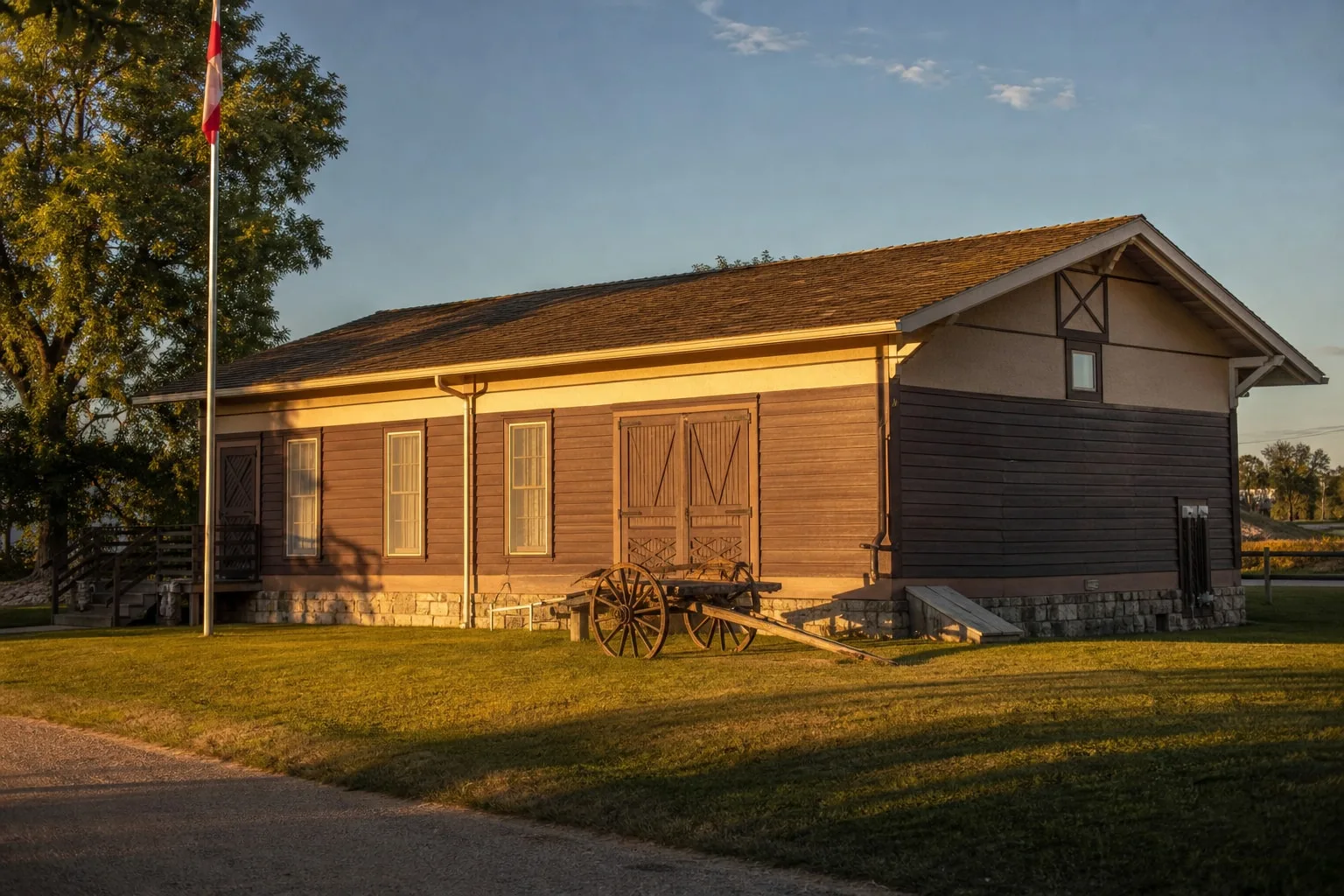
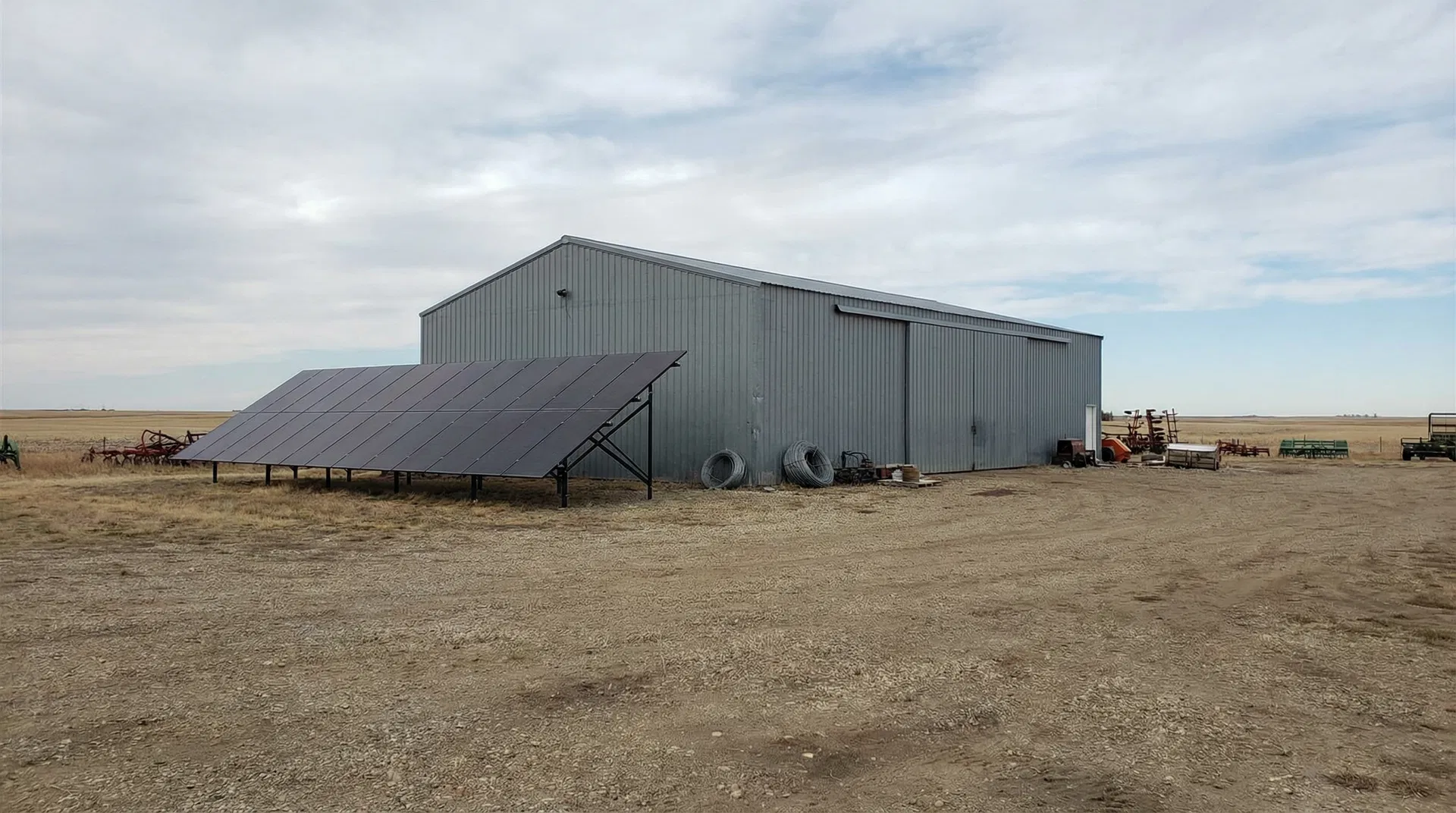
Solar Cremona property owners ask about most often for shops and outbuildings is a grid-tied or standalone system sized between 8 and 20 kW, built around LONGi panels and APsystems microinverters, with most installs landing close to 12 kW once we've reviewed the site. Outbuildings around here come in a lot of shapes: detached shops with their own panel, machine sheds, workshops with welding circuits, and barns that share service with the house. Each one changes the math. A ground-mount array makes sense on a lot of these properties simply because the shop roof pitch, orientation, or nearby trees don't give us a clean, unshaded surface to work with, and there's often open yard space to use instead. Where the roof does work, rooftop mounting on the shop or outbuilding keeps the footprint out of the way of equipment and yard traffic. We use LONGi panels because they hold up under the mechanical and thermal stress rural installs see, and APsystems microinverters because they let us wire around partial shading from a tree line or an adjacent building without the whole array's output tied to one weak link. For bigger outbuilding loads, that per-panel independence matters more than it does on a simple house roof. Every shop and outbuilding system we design starts with the same two inputs: your most recent power bill and a walk-through of how the building is wired. That tells us whether 8 kW covers a small workshop or whether a welder, compressor, and heater on one circuit pushes the design toward the top of the 20 kW range.
Solar Planning for Cremona Properties
Cremona, Alberta sits within Mountain View County and was incorporated as a village on January 1, 1955. The most recent census put the population at 437. Properties here rarely run on a single house load. Most carry a house plus a shop, barn, or outbuilding on the same electrical service, and the local economy reflects that: this area functions as an agricultural and oil/gas hub, with equipment and seasonal demands that a basic residential system was never built to handle. Some properties sit along Cowboy Trail (Highway 22). Others sit further back on a quarter section. Either way, the electrical picture asks the same question every time: what does this specific shop or outbuilding actually draw, and when? We don't start with a generic number. We start with your most recent power bill and a walk-through of the yard: how the shop is wired, whether there's a grain dryer or welder on the circuit, and where a roof or ground-mount array would actually get clean exposure. That site-specific review is what tells us whether an 8 kW system covers it or whether you're looking at closer to 20 kW. Nothing about sizing gets decided before that.
Electrical Site Review for Cremona Properties
Voltage Rise
Voltage rise happens when the distance and load on a distribution line cause voltage to climb higher than normal at the point your system connects, which is more common on rural feeders serving spread-out properties. If voltage at your service is already running high, it can cause a microinverter to clip output or shut down to protect itself before the panel's full capacity gets used. We measure voltage at your service entrance as part of the site review so the system gets sized and configured around what your line is actually doing, not a textbook assumption.
Single-Phase vs Three-Phase
Rural Alberta properties can have single-phase or three-phase electrical service, and shops or outbuildings with heavier equipment are more likely to run three-phase than a typical house. The phase configuration at your service determines which inverter and system capacity options are actually available to us, since equipment is built for one or the other. We confirm which type of service you have before we spec out a system, because designing around the wrong assumption means ordering the wrong equipment.
Panel Infrastructure
Older rural properties often have an electrical panel that predates the breaker capacity a modern solar system, plus a shop and other outbuildings, actually needs. We check the panel's age, its rated capacity, and how much breaker space is already used before adding a solar connection. If the panel can't support the added capacity, an upgrade means a new panel sized to the combined house, shop, and outbuilding load, done before the solar system goes in.
Service Entrance Review
The service entrance and meter base are part of what FortisAlberta reviews when we submit a micro-generation interconnection application, so their condition matters before we file. We check for corrosion, outdated equipment, and whether the meter base can physically accommodate the interconnection equipment a solar system needs. If the meter base doesn't meet current requirements, it gets upgraded as part of the project so the FortisAlberta application doesn't stall on equipment that was already due for replacement.
Right-Sizing Solar for Cremona Properties
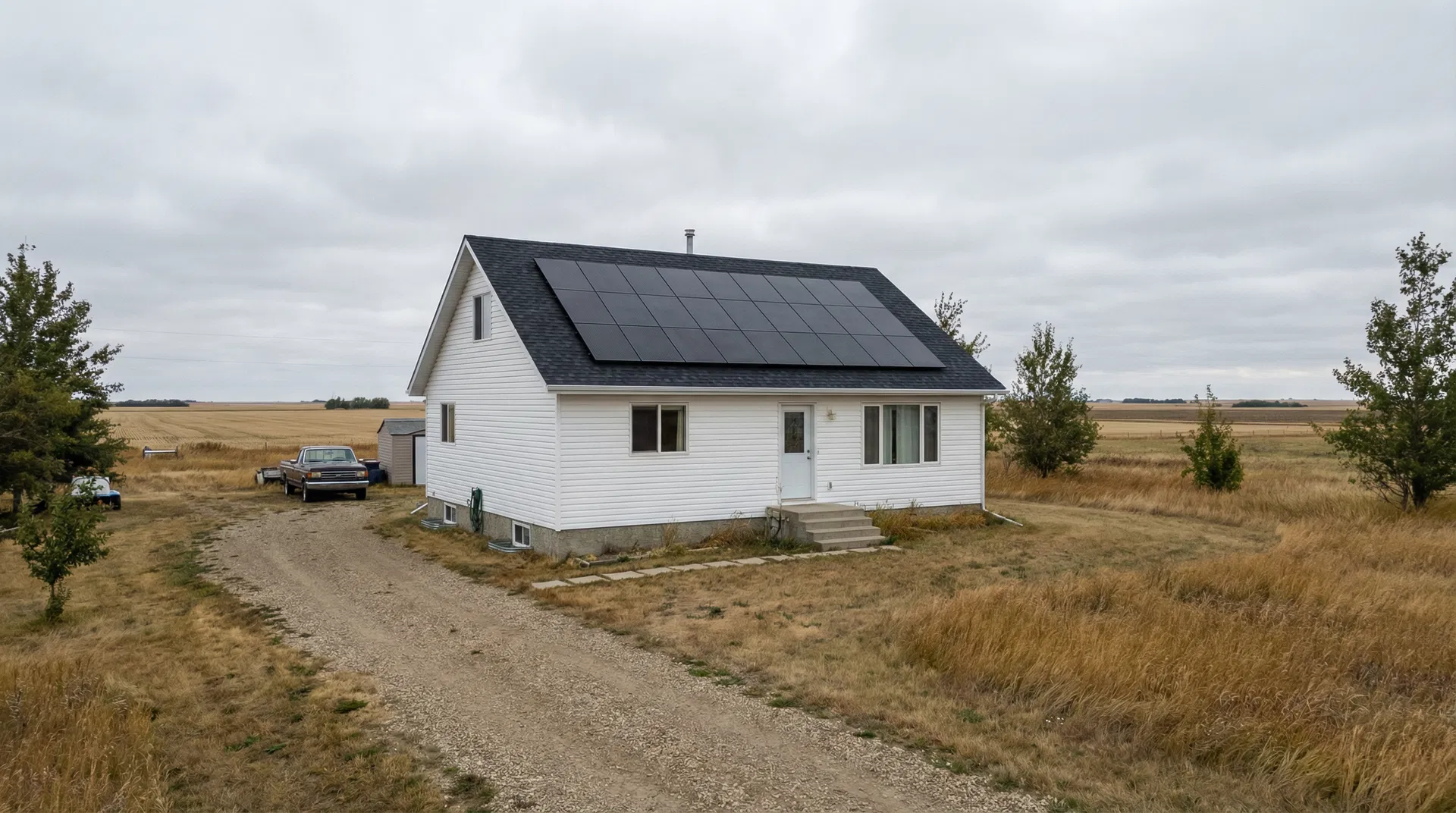
Rural properties typically need a bigger system than a house in town, and it's not because rural electricity use is somehow different. It's because there's more to power. A house alone is one load. A house plus a heated shop, plus a grain bin's auger motor, plus an irrigation pump, plus general outbuilding lighting and outlets, is four or five loads stacked on one service. That's why shop and outbuilding systems here often land well above what a typical house system would need. Roof versus ground mount comes down to what the property actually offers. If the shop roof faces the wrong direction, sits under a tree line, or has a pitch that doesn't work for panels, ground mount is usually the better call, especially when there's open yard space that isn't doing anything else. We don't size a system off a rule of thumb like watts per square foot of roof or a flat multiplier. We pull the 12-month usage graph off your most recent power bill, which shows exactly how your usage moves through the year, including seasonal spikes from heating a shop or running equipment. Combined with a walk-through of your site, that usage graph and your current bill are what actually set the system size, not a generic estimate.
Typical Load Profiles We Design For Near Cremona
Home + Heated Shop
This is the most common profile we see: a house plus a detached shop that's heated through the winter, often with a wood stove backup or electric heat on its own circuit. We size around the combined draw of both buildings, which your most recent power bill already shows as one meter history. The heated shop's seasonal swing is usually the biggest factor in whether the system lands near the smaller or larger end of the range.
Shop + Grain Handling
Grain handling equipment like an auger, grain vac, or bin fan draws hard but only during a short window at harvest, which shows up as a sharp seasonal spike on the usage graph rather than a steady year-round load. We design for that spike specifically, rather than averaging it away, so the system doesn't undersize for the weeks it matters most. This profile tends to push toward a larger system within the 8 to 20 kW range.
Workshop with Welding and Compressor Load
A workshop running a welder, air compressor, and power tools draws in short, heavy bursts rather than a continuous load, which is a different pattern than a heated shop or grain handling setup. We look at how those bursts line up with the rest of the property's usage on your most recent power bill before settling on inverter and system capacity. Microinverter sizing matters here because a few circuits doing hard, intermittent work behave differently than one steady draw.
FortisAlberta Interconnection in Cremona
FortisAlberta is the wire service for properties in and around Cremona, Alberta, including shops and outbuildings tied into the same electrical service as the main residence. Any grid-tied solar system here has to go through FortisAlberta's micro-generation interconnection process before it's energized. Range Road Solar handles that application on your behalf: the single-line diagram, the equipment specifications for the LONGi panels and APsystems microinverters, and the paperwork FortisAlberta requires to review a shop or outbuilding system tied to their distribution network. We coordinate directly with FortisAlberta so you're not the one chasing down forms or translating technical requirements. What we don't do is promise a specific approval timeline, a credit structure, or a payout rate up front, because those details come from FortisAlberta's current rules at the time your application is filed, not from us. We confirm what applies to your specific project once we're into the design and application stage, and we walk you through what FortisAlberta comes back with at each step.
Project Economics and Design Review
| System Size | Annual Production | Year 1 Savings | Payback Period |
|---|---|---|---|
| 8-20 kW range, 12 kW typical |
Actual production, savings, and payback for your property require a site-specific design review and your most recent power bill, not a generic estimate.
How We Work in Cremona
Bill and Load Review
We review your power bill to understand your energy use in Cremona and size the system to your actual consumption, not a generic estimate.
Site Assessment
We assess your roof or ground area, south-facing exposure, electrical service, and utility interconnection requirements specific to your property.
Design and Utility Application
We produce a system layout, production estimate, and cost summary, then submit your micro-generation application to your utility on your behalf.
Installation and Commissioning
Our crew installs racking, panels, inverter, and electrical connections. All work is performed by licensed electricians. We commission and test before handoff.
Current Program and Interconnection Review
Utility connection review
FortisAlberta reviews every grid-tied micro-generation application before a system gets energized, and that review applies to shop and outbuilding systems the same way it applies to a house. Range Road Solar prepares and submits the full design package on your behalf, including equipment specifications for the LONGi panels and APsystems microinverters we're installing. We don't control FortisAlberta's review process, but we make sure the application they receive is complete and accurate.
Current program review
Eligibility for commercial, farm, and residential solar varies by property type and changes as rules get updated, so we check your specific situation against whatever's current at the time we design your system. That review happens before we finalize a quote, not after. We'd rather tell you what actually applies to your shop or outbuilding than guess.
Frequently Asked Questions
Get a Solar Assessment for Cremona
Submit a recent power bill and we will review your consumption and provide an honest assessment for your Cremona property. No obligation.
(587) 330-7502 Book a CallRelated Resources