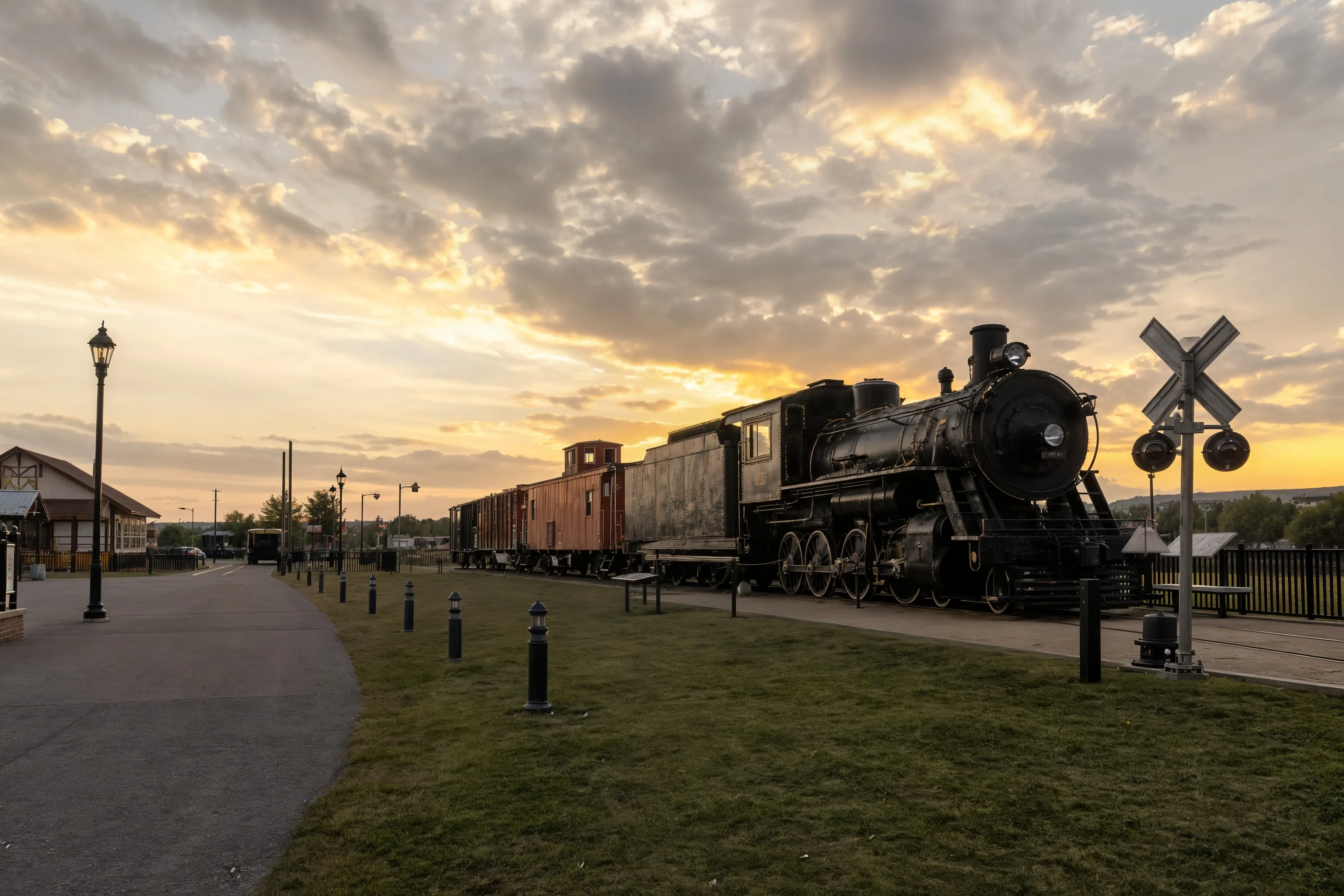
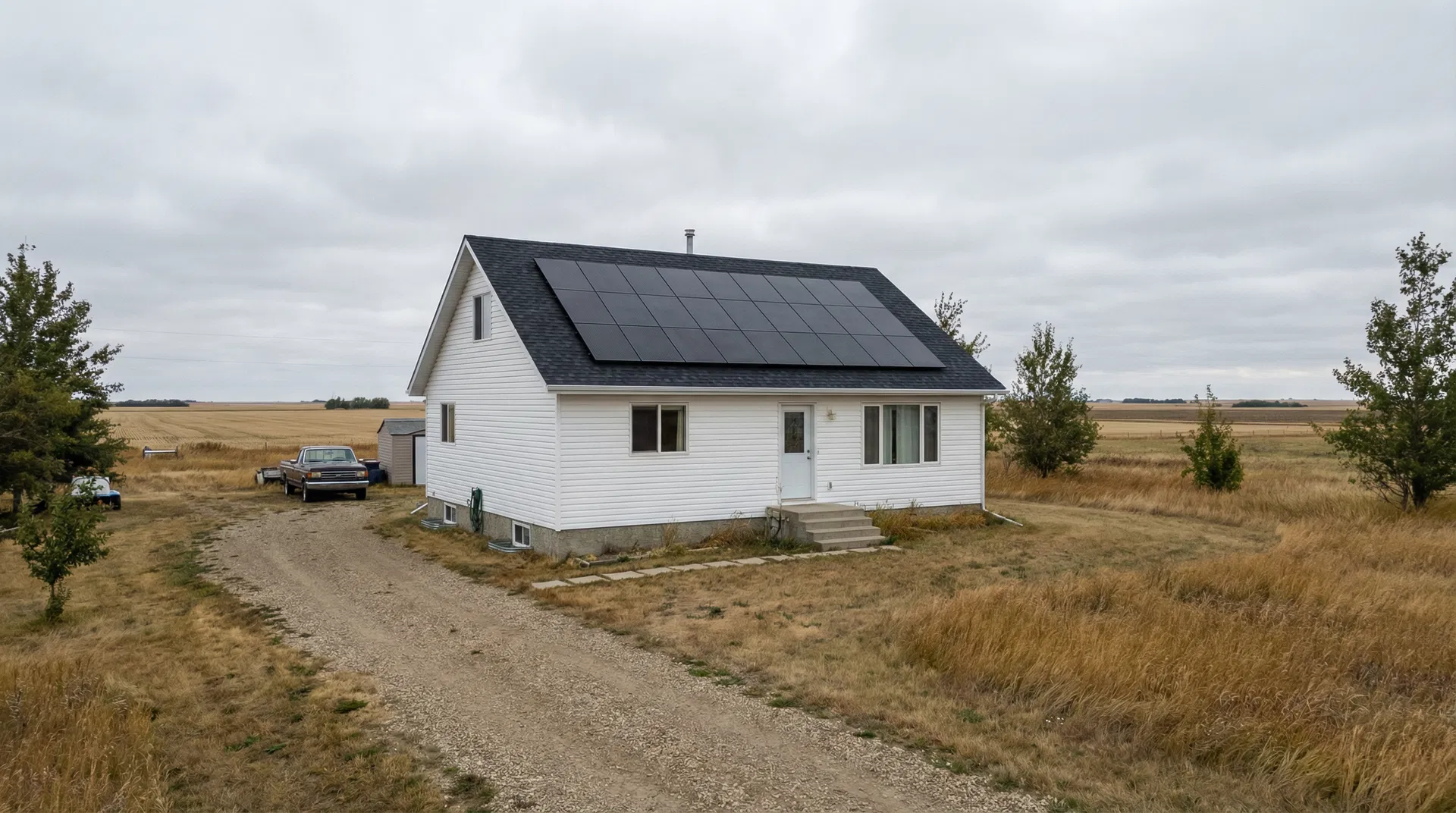
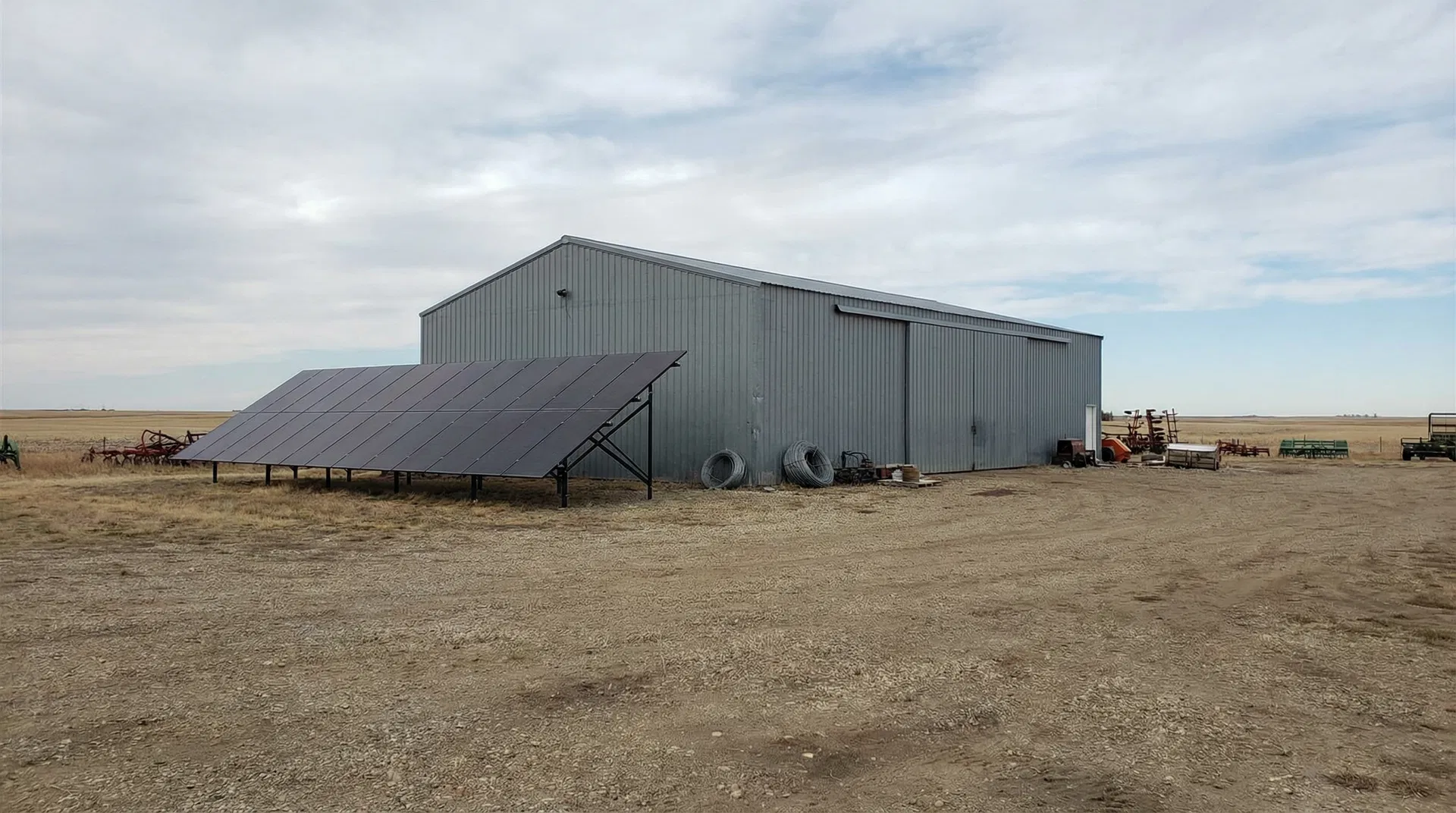
Shop solar Airdrie Alberta projects usually start with the same question: can the shop carry its own array, or does it tie into the house system? Both work. A standalone system on a detached shop or barn can run its own microinverter string and feed the building's own panel, while a grid-tied system across the whole property lets a single array offset the house, shop, and any outbuildings under one interconnection. We install LONGi panels with APsystems microinverters on both configurations, in rooftop or ground-mount layouts depending on the building. Metal shop roofs with a decent pitch and southern exposure are often a straightforward rooftop mount. Older barns, low-pitch pole sheds, or buildings shaded by shelterbelts usually point us toward a ground-mount array instead, especially on properties with the open yard space to support one. Microinverters matter more on outbuildings than on houses, because a shop roof is more likely to get partial shade from an attached lean-to, a grain bin, or a neighboring structure, and a microinverter keeps one shaded panel from dragging down the whole string's output. We size every system, whether it's a single shop or a shop-plus-house combined array, off the 12-month usage graph on your most recent power bill and a site walk that checks roof condition, panel capacity, and service type before we finalize a design.
Solar Planning for Airdrie Properties
Airdrie has grown from 61,581 residents to 74,100 in the last census count, and a lot of that growth sits on acreage and rural-flavored properties where a home shares the meter with a shop, a barn, or a heated outbuilding. That's a different planning problem than a subdivision rooftop. A shop with a welder, block heaters, or grain-handling equipment pulls differently than a house, and the panel layout has to account for it. We start with your most recent power bill, since Alberta utility bills carry a 12-month usage graph that shows us the real load pattern, not a guess. From there we look at roof orientation, shading from trees or neighboring buildings, and whether ground mount makes more sense for a spread-out yard. Alberta's annual bright sunshine normal at the nearby Calgary International Airport station runs 2,396.3 hours a year per Environment Canada, and NRCan's photovoltaic potential maps put the specific yield for this region around 1,292 kWh per kW of installed capacity. We don't quote off those regional averages. We confirm actual output for your roof or ground-mount array through site design and your own bill.
Electrical Site Review for Airdrie Properties
Voltage Rise
Voltage rise happens when the distance and wire gauge between a solar array and the point of connection let voltage climb higher than the grid expects. On a shop or outbuilding that sits some distance from the main panel, distribution conditions can push that rise up further, which is one reason inverters throttle output. We check the run length and wire sizing during the site review and factor it into how we size the array and pick the inverter configuration, so clipping doesn't quietly eat into what the system can produce.
Single-Phase vs Three-Phase
Rural Alberta properties show up with both single-phase and three-phase service, and a shop wired for a big compressor, welder, or grain auger is more likely to run three-phase than the house next to it. Which one you have changes which inverter models fit and how much capacity the service can carry before an upgrade is needed. We confirm phase type on-site rather than assuming it from the building type, since a shop's service can differ from the house even on the same property.
Panel Infrastructure
A lot of shops and outbuildings on established rural properties are still running older breaker panels that were sized for the building's original loads, not for a solar interconnection on top of them. We check panel age, busbar rating, and available breaker space during the site visit to see whether the existing panel can take the new circuit. If it can't, an upgrade means a larger panel or a supplemental load center sized to the new system before we move forward.
Service Entrance Review
We check the condition of the service entrance and meter base as part of every site visit, since a worn or undersized meter base can hold up the micro-generation application to FortisAlberta even after the panel itself checks out. This matters because FortisAlberta reviews the whole service, not just the new solar circuit, when it processes the interconnection paperwork. If the meter base needs an upgrade, we scope that work into the project before we submit the application, so it doesn't surface as a delay partway through.
Right-Sizing Solar for Airdrie Properties
A rural Alberta system is usually bigger than a comparable urban rooftop, and it's rarely serving one building. A property might run a house, a heated shop, and a grain bin or two off the same service, and each of those adds a load the system has to account for. That's why we don't size off a rule-of-thumb number per square foot or per occupant. We pull the 12-month usage graph off your most recent power bill, which shows the property's actual monthly draw across a full year, including the months a shop's block heater or a grain dryer spikes usage. Roof versus ground mount comes down to what the site gives us. A shop with a clean southern-facing roof and no nearby shade is often a straightforward rooftop install. A property with trees or other buildings casting shade across the best roof space, a low-pitch or metal-clad roof that isn't ideal for mounting hardware, or simply a wide-open yard with room to spare often points toward ground mount instead. We walk the site, check what the roof and yard actually offer, and combine that with the usage graph from your bill to land on a system size and configuration that matches the property, not a template.
Typical Load Profiles We Design For Near Airdrie
Home + Heated Shop
This is a house and a detached shop with a block heater, lighting, and maybe a welder or compressor on the same service. The shop's heating load usually shows up as a clear seasonal bump on the usage graph from your most recent power bill, and that bump is what drives sizing more than the house alone does.
Shop + Grain Handling
Grain bins, augers, and dryers add short bursts of heavy draw during harvest that don't look like the rest of the year on a usage graph. We size around that peak period specifically, using the bill's monthly breakdown rather than an average, so the system isn't undersized for the weeks it matters most.
Standalone Outbuilding
Some outbuildings run their own separate service rather than tying into the house, whether that's a workshop, a rental unit, or a secondary building with its own meter. In that case we design and size the array specifically to that building's own bill and usage pattern, independent of whatever the main house is drawing.
FortisAlberta Interconnection in Airdrie
FortisAlberta is the wire service for properties here, and any grid-tied shop or outbuilding system needs a micro-generation interconnection application filed with them before it can be energized. We handle that application as part of the project, including the technical package that documents your system size, inverter specs, and site details. If your shop or outbuilding sits on a separate service from the house, or if the property has single-phase service where the new load needs three-phase, that gets flagged during our site review so the application reflects the property's actual setup. We don't promise a specific approval timeline or make claims about how credits carry over month to month, since those details come from FortisAlberta's current process, not from us. What we can tell you is that we've filed these applications before, we know what FortisAlberta expects in the package, and we build the timeline into your project schedule so there aren't surprises between design and energization.
Project Economics and Design Review
| System Size | Annual Production | Year 1 Savings | Payback Period |
|---|---|---|---|
| 8-20 kW range, 12 kW typical |
Production, savings, and payback figures require a property-specific design review and your most recent power bill.
How We Work in Airdrie
Bill and Load Review
We review your power bill to understand your energy use in Airdrie and size the system to your actual consumption, not a generic estimate.
Site Assessment
We assess your roof or ground area, south-facing exposure, electrical service, and utility interconnection requirements specific to your property.
Design and Utility Application
We produce a system layout, production estimate, and cost summary, then submit your micro-generation application to your utility on your behalf.
Installation and Commissioning
Our crew installs racking, panels, inverter, and electrical connections. All work is performed by licensed electricians. We commission and test before handoff.
Current Program and Interconnection Review
Utility connection review
FortisAlberta reviews every micro-generation interconnection application against its current technical requirements before a system can be energized. Range Road Solar prepares and submits that application package as part of your project, including the system documentation FortisAlberta asks for.
Current program review
Commercial, farm, and residential eligibility for any applicable program is reviewed against the rules in place at the time we design your system, not against outdated information. We check what applies to your property type before finalizing the project scope.
Frequently Asked Questions
Get a Solar Assessment for Airdrie
Submit a recent power bill and we will review your consumption and provide an honest assessment for your Airdrie property. No obligation.
(587) 330-7502 Book a CallRelated Resources
More Solar Services in Airdrie