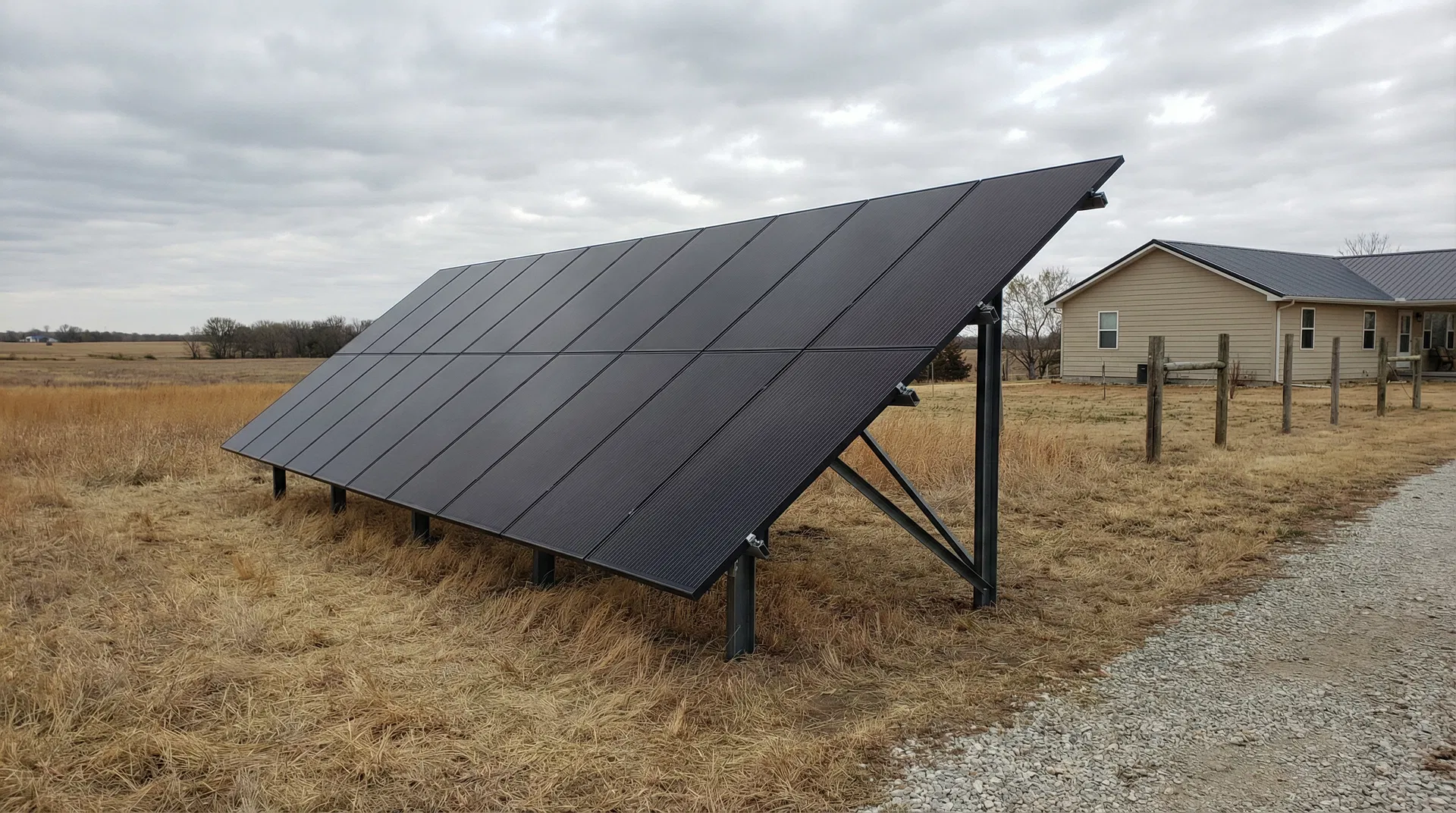
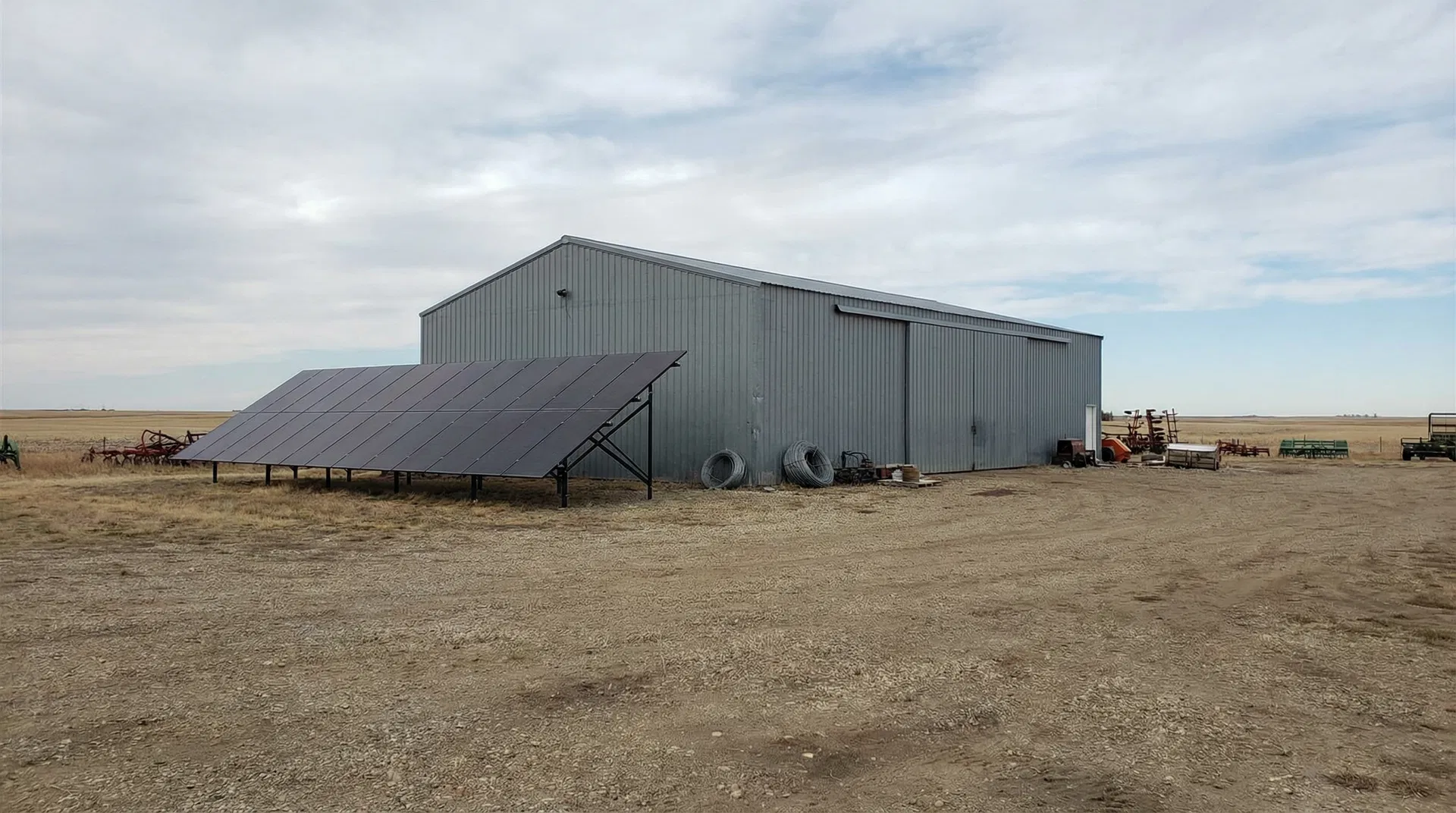
Solar commercial solar Calgary Alberta businesses have options, and the right one depends on your building's load profile, roof condition, and grid connection. Range Road Solar installs commercial systems from 15 kW up to 100 kW, with 30 kW being a common anchor point for small-to-mid commercial properties. For most commercial rooftops, we use LONGi panels. They're reliable, well-documented, and widely supported for warranty service. On smaller commercial systems where roof layout allows for distributed mounting, we pair them with APsystems microinverters, which let each panel operate independently. That matters on roofs with multiple orientations, mechanical equipment shadows, or partial shading from adjacent structures. On larger systems above roughly 30 kW, we shift to string inverter configurations that suit the higher throughput and simplify monitoring at scale. Flat commercial roofs, which are common across Calgary's industrial and retail zones, require ballasted or penetrating racking systems. We assess the roof membrane, age, and load capacity before committing to a mounting approach. Some roofs need a structural review before installation can proceed, and we flag that early. Ground-mount commercial systems are also an option where parking lots, service yards, or adjacent land are available. A ground array gives you full orientation control and keeps the roof clear for HVAC and mechanical access. We design both configurations and can walk you through the tradeoffs for your specific site before you commit to anything.
Solar Planning for Calgary Properties
Commercial buildings in Calgary carry substantial electrical loads. Rooftop HVAC, lighting, refrigeration, process equipment, and EV charging all pull from the same meter, and that meter runs year-round. A solar system sized correctly to that load can offset a meaningful portion of your daytime consumption directly at the source. The case for commercial solar here isn't built on sunshine brochures. It's built on your power bill. Alberta's deregulated electricity market means the rate you pay today isn't the rate you'll pay in five years. Businesses that generate a portion of their own power during peak production hours reduce their exposure to that variability. That's a straightforward operational argument, and it's one we can model specifically for your facility. We work with commercial properties across Calgary including retail plazas, warehouses, light industrial, office buildings, and multi-tenant properties. Each one has a different load shape, a different roof, and a different interconnection situation. We don't apply a standard template. We start with your most recent power bill and your site, and we build the design from there.
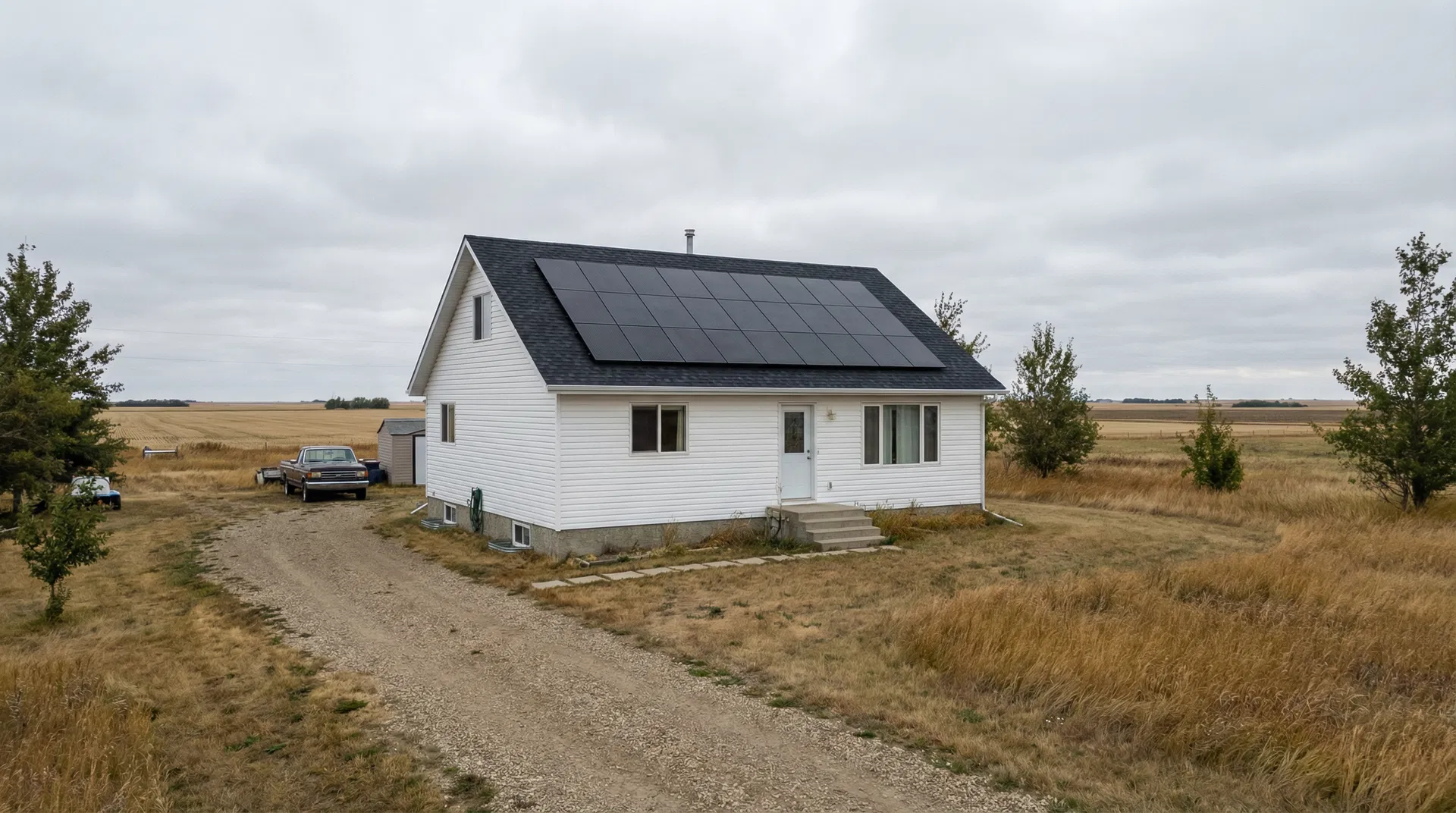
Electrical Site Review for Calgary Properties
Voltage Rise
Voltage rise occurs when a solar system pushes power back onto the distribution line and raises the local voltage above acceptable limits. On commercial systems in the 15-100 kW range, the available fault current and line impedance at the point of connection can create voltage rise conditions that limit how much the system can export. We assess the site's interconnection point during design to identify whether voltage rise will affect inverter clipping or require system derating before the application goes to ENMAX.
Single-Phase vs Three-Phase
Commercial properties in Calgary may be served by single-phase or three-phase electrical service depending on the building type and the distribution infrastructure at the street. Three-phase service is common in light industrial and larger retail properties, and it significantly affects inverter selection, system capacity, and how the array is balanced across phases. We confirm the service configuration during the site review so that the inverter design matches what's actually coming in at the meter.
Panel Infrastructure
Older commercial panels, particularly in buildings constructed before the 1990s, may not have adequate breaker capacity to support a solar backfeed connection without upgrades. We assess the panel age, the main breaker rating, and the available bus capacity during our site review. If the panel can't safely accommodate the system, we identify what an upgrade involves and include that in the design scope before any equipment is ordered.
Service Entrance Review
The service entrance and meter base condition are reviewed as part of the ENMAX interconnection package for any commercial system. ENMAX requires that the meter base meet current standards before a micro-generation agreement can be issued, and an outdated or damaged service entrance will need to be upgraded before the application moves forward. We check the meter base condition during the site review and flag any required work early so it doesn't create a bottleneck at the final inspection stage.
Right-Sizing Solar for Calgary Properties
Commercial solar sizing isn't a rule-of-thumb calculation. It starts with the 12-month usage graph on your most recent power bill, which shows how your load behaves across seasons. A building with heavy summer cooling demand has a different production-to-consumption relationship than one with consistent year-round process loads. We need to see that pattern before we can size a system that actually performs the way you'd expect. For commercial properties in Calgary, the load profile often includes multiple draws running simultaneously: HVAC, lighting, refrigeration, compressors, or EV charging infrastructure. A system sized only against average monthly consumption can underperform during peak demand periods when generation matters most. We design to match your actual load shape, not a simplified average. Roof versus ground-mount is a real decision for many commercial sites. Flat commercial roofs work well when they're in good condition and have adequate structural capacity. But if the roof has shading from mechanical equipment, a poor orientation, or is approaching the end of its service life, a ground-mount array on adjacent land or a parking canopy structure can outperform it. We look at both options during the design review and give you a straight comparison. We won't pad a system size to sell more panels, and we won't undersize to hit a price point. The right size is the one that matches your load, your roof or ground conditions, and the current ENMAX interconnection limits at your service point.
Typical Load Profiles We Design For Near Calgary
Warehouse or Light Industrial
Warehouses and light industrial buildings typically run high-bay lighting, compressors, and loading dock equipment across consistent daytime hours, making them well-suited for solar offset during production hours. A 30 kW system on a flat warehouse roof can cover a substantial portion of daytime base load depending on the building's orientation and shading profile. We size these systems from the 12-month usage graph on the most recent power bill to match the actual consumption pattern, not a generic industrial average.
Retail Strip Mall or Commercial Plaza
Multi-tenant retail properties carry shared-area lighting, HVAC, and common-area loads that run year-round, with peaks driven by occupancy and seasonal cooling. A system in the 20-50 kW range is common for mid-size plazas, though the right size depends on the combined tenant load visible at the master meter. We review the power bill and roof layout together to determine whether a single interconnection point works or whether the building's electrical configuration requires a more detailed design approach.
Office Building with EV Charging
Office buildings that have added or are planning Level 2 EV charging stations are adding a predictable daytime load that solar offsets well, since both charging demand and solar generation peak during business hours. A 15-40 kW array can be sized to cover a meaningful portion of EV load plus base office consumption depending on the number of chargers and daily occupancy patterns. We factor the EV charging draw into the system design so the array isn't undersized once chargers are in regular use.
ENMAX Interconnection in Calgary
Calgary's wire service is ENMAX. Any commercial solar system installed here connects through their distribution network, and the micro-generation application goes through ENMAX's interconnection process. We handle that application on your behalf. That includes preparing the technical design package, the single-line diagram, the equipment specification sheets, and the site plan required for ENMAX's review. You don't need to navigate their portal or figure out what documentation they need. We do that. What we won't do is overstate how the process works. ENMAX reviews applications on their own schedule, and we don't control that timeline. What we can tell you is that a complete, well-prepared application package reduces back-and-forth and keeps the process moving. Incomplete submissions are the most common source of delay, and that's something we can control on our end. For commercial systems, the interconnection review is more involved than a residential application. Larger systems require additional engineering review, and ENMAX may request site-specific information depending on the point of connection. We coordinate that process from design through to permission to operate.
Project Economics and Design Review
| System Size | Annual Production | Year 1 Savings | Payback Period |
|---|---|---|---|
| 15-100 kW range, 30 kW typical |
Production, savings, and payback estimates require a property-specific design review and your most recent power bill before any figures can be confirmed.
How We Work in Calgary
Bill and Load Review
We review your power bill to understand your energy use in Calgary and size the system to your actual consumption, not a generic estimate.
Site Assessment
We assess your roof or ground area, south-facing exposure, electrical service, and utility interconnection requirements specific to your property.
Design and Utility Application
We produce a system layout, production estimate, and cost summary, then submit your micro-generation application to your utility on your behalf.
Installation and Commissioning
Our crew installs racking, panels, inverter, and electrical connections. All work is performed by licensed electricians. We commission and test before handoff.
Current Program and Interconnection Review
Utility connection review
ENMAX reviews grid connection applications for commercial solar systems installed in Calgary. Range Road Solar prepares and submits the full design package required for that review, including the single-line diagram, equipment specifications, and site documentation. We handle the application process so you don't have to coordinate directly with the utility's interconnection team.
Current program review
Commercial properties may be eligible for federal or provincial programs depending on ownership structure, business classification, and system specifications at the time of application. Eligibility is confirmed against current rules during the design review, not assumed from program descriptions that can change. We include a program review as part of the design process so you have an accurate picture before committing to the project.
Frequently Asked Questions
Get a Solar Assessment for Calgary
Submit a recent power bill and we will review your consumption and provide an honest assessment for your Calgary property. No obligation.
(587) 330-7502 Book a Call