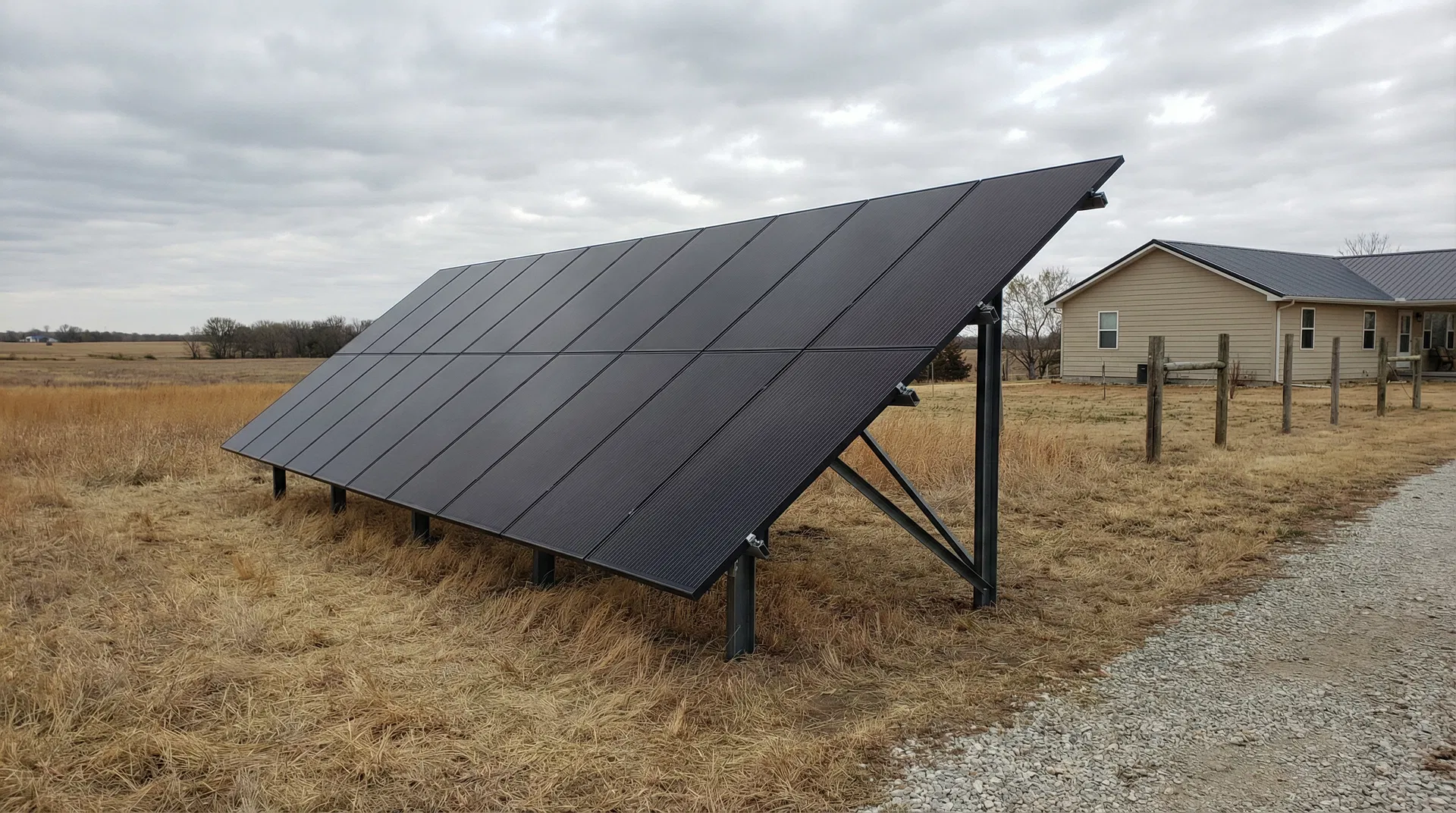
Solar cost in Calgary, Alberta comes down to three things: system size, mounting, and how much of the array your roof or yard can actually take. Our systems run from 8 to 15 kW, and 10 kW is the typical starting point for a home. Every system uses LONGi panels paired with APsystems microinverters, so each panel works on its own rather than dragging the whole array down. That matters on rural properties where a tree line or an outbuilding throws shade across part of the roof at certain hours. On a standard home, the array sits on the roof, and the install cost reflects the panel count, the racking, and the labour to get it up there safely. A steep or complex roof adds time, and we price that in before we quote. For a farm or acreage, the picture shifts. Ground mounts need footings, trenching to the house or shop, and more wire, so the line items look different even when the panel count matches. Shop, barn, and grain-handling roofs each raise their own load and access questions. We quote installed pricing per watt so you can compare bids on equal footing, and we walk through each line item before you sign anything. The quote depends on the site, the equipment, and what your electrical service needs before the system goes live. If the panel or meter base needs an upgrade, that cost shows up on the quote, not as a surprise later. Pricing per watt is a fair way to compare bids, but the number that matters most is what the system does for your bill. That's a property-specific question. We answer it from your most recent power bill and the site design, and we show you the assumptions behind it.
Solar Planning for Calgary Properties
Solar planning in Calgary starts with your power bill, not a roof measurement. Alberta's power market is deregulated, so the charges on your bill come from more than one place, and those line items matter more than any brochure. The 2021 Census counted 1,306,784 residents, up from 1,239,220 in the census before it, which means the properties we look at range from older homes on established lots to newer builds and larger parcels. The local economy leans on the Energy sector (Oil and Gas), and plenty of households here plan their budgets around that kind of income, so we don't sell a system on hope. We look at roof pitch, shading from trees or nearby buildings, and which direction an array would face. We also check your panel and service entrance before we design anything, because a great array doesn't help if the electrical side can't handle it. Range Road Solar confirms the design outcome through site design and your most recent power bill, and that's the one document we ask you to send.

Electrical Site Review for Calgary Properties
Voltage Rise
Voltage rise happens when a solar array pushes power back onto the distribution line, which raises the voltage at the point of connection. How much it rises depends on the condition of the line and the distance to the supply, so it can't be judged from the roof alone. If voltage climbs too high, the inverter cuts output to protect itself, and that clipping is one more reason we size the array against the site rather than the roof.
Single-Phase vs Three-Phase
Some properties run single-phase service and others have three-phase, and the difference shapes which inverters and array sizes make sense. We confirm which one you have before we select equipment, because the service type sets how much capacity we can connect. Getting that wrong means choosing an inverter setup the property can't use well.
Panel Infrastructure
Older panels on rural properties were often sized for a lighter load than a solar system adds. We check the panel's age, its rated capacity, and whether there's room for the new breakers the system needs. If the panel can't support the system, a larger panel is the usual fix, and we quote it as part of the project so you see the full cost up front.
Service Entrance Review
We review the service entrance and meter base as part of every design, because the meter base condition affects the micro-generation application to ENMAX. We check the meter base, the service conductors, and the grounding, and we note anything that needs repair before the connection. If the entrance needs an upgrade, we tell you what's required and what it involves before we submit anything.
Right-Sizing Solar for Calgary Properties
Rural properties around here rarely run on one load. The house is the obvious one, but a heated shop, a well pump, outbuildings with freezers or tools, and an irrigation pivot or grain dryer can all sit on the same meter. That's why a rule-of-thumb system size doesn't work on these properties. We size from the 12-month usage graph on your most recent power bill, which shows how consumption moves across the year, then pair it with the site design to set the array size. Roof or ground mount is the next call. A roof mount is usually the simplest option when the roof faces a workable direction, the pitch suits the racking, and nothing blocks the sun for most of the day. Trees, neighbouring buildings, or a roof that's too steep or too shaded can change that answer. A ground mount makes sense when shading cuts into roof output, the pitch is poor, or the yard has open land you're happy to use. It costs more in footings and trenching, but it lets us place the array where it performs. We don't size from the roof alone. The power bill shows what you use, the site design shows what the property can take, and together they set the recommendation. If the shop draws more than the house, we'll say so. If grain handling only runs at harvest, we'll plan around that.
Typical Load Profiles We Design For Near Calgary
Home + Heated Shop
A house with a heated shop on the same meter is a setup we design for regularly. The shop heater can run hard through the coldest months, so we read the 12-month usage graph on your most recent power bill to see how that winter draw compares with the house. We then size the array to cover both loads.
Home + Irrigation Pump
Irrigation adds a large load for a short season, and a 25 hp pump draws far more than the house does while it runs. We check the summer months on your 12-month usage graph, because the array has to cover the pump's run time, not just the average day. Your most recent power bill and the site design show how much of that load the array can cover.
Farm Yard + Grain Handling
Grain augers and fans run in bursts through harvest, and a 7.5 hp auger motor or a 5 kW grain fan can spike demand far above the house. We design around those harvest-season peaks, not the quiet months. The site design and your most recent power bill show when those loads happen, so the array isn't sized for the wrong season.
ENMAX Interconnection in Calgary
ENMAX is the wire service here, so every grid connection we design runs through ENMAX. Before a system can be energized, the micro-generation application has to be complete and accepted, and that's where most of the paperwork lives. We handle the application package for you, including the single-line diagram, the equipment specifications for the LONGi panels and APsystems microinverters, and the site details ENMAX needs to review the connection. You don't have to work out which forms apply or how to fill them in. The application is only as good as the site information behind it. We confirm the service size, the meter base condition, and whether the panel can support the added generation before anything gets submitted. If something needs attention, we tell you early, while the fix is still simple and the plan still has room to move. We keep you posted at each step. Once the package is with ENMAX, we'll tell you what they've asked for and what happens next. All you need to start is your most recent power bill.
Project Economics and Design Review
| System Size | Annual Production | Year 1 Savings | Payback Period |
|---|---|---|---|
| 8-15 kW range, 10 kW typical |
Production, savings, and payback require a property-specific design and your most recent power bill.
How We Work in Calgary
Bill and Load Review
We review your power bill to understand your energy use in Calgary and size the system to your actual consumption, not a generic estimate.
Site Assessment
We assess your roof or ground area, south-facing exposure, electrical service, and utility interconnection requirements specific to your property.
Design and Utility Application
We produce a system layout, production estimate, and cost summary, then submit your micro-generation application to your utility on your behalf.
Installation and Commissioning
Our crew installs racking, panels, inverter, and electrical connections. All work is performed by licensed electricians. We commission and test before handoff.
Current Program and Interconnection Review
Utility connection review
ENMAX reviews grid connection applications for systems in this service area. Range Road Solar prepares the design package, including the application details ENMAX needs, so you aren't chasing forms on your own. We keep the site information and the application aligned so the review has fewer gaps to fill.
Current program review
Commercial, farm, and residential eligibility is reviewed against current rules at design time. We don't assume a program applies because it did in the past, and we check each project against the rules in force on the day we design it. Nothing gets promised until that check is done.

Frequently Asked Questions
Get a Solar Assessment for Calgary
Submit a recent power bill and we will review your consumption and provide an honest assessment for your Calgary property. No obligation.
(587) 330-7502 Book a Call