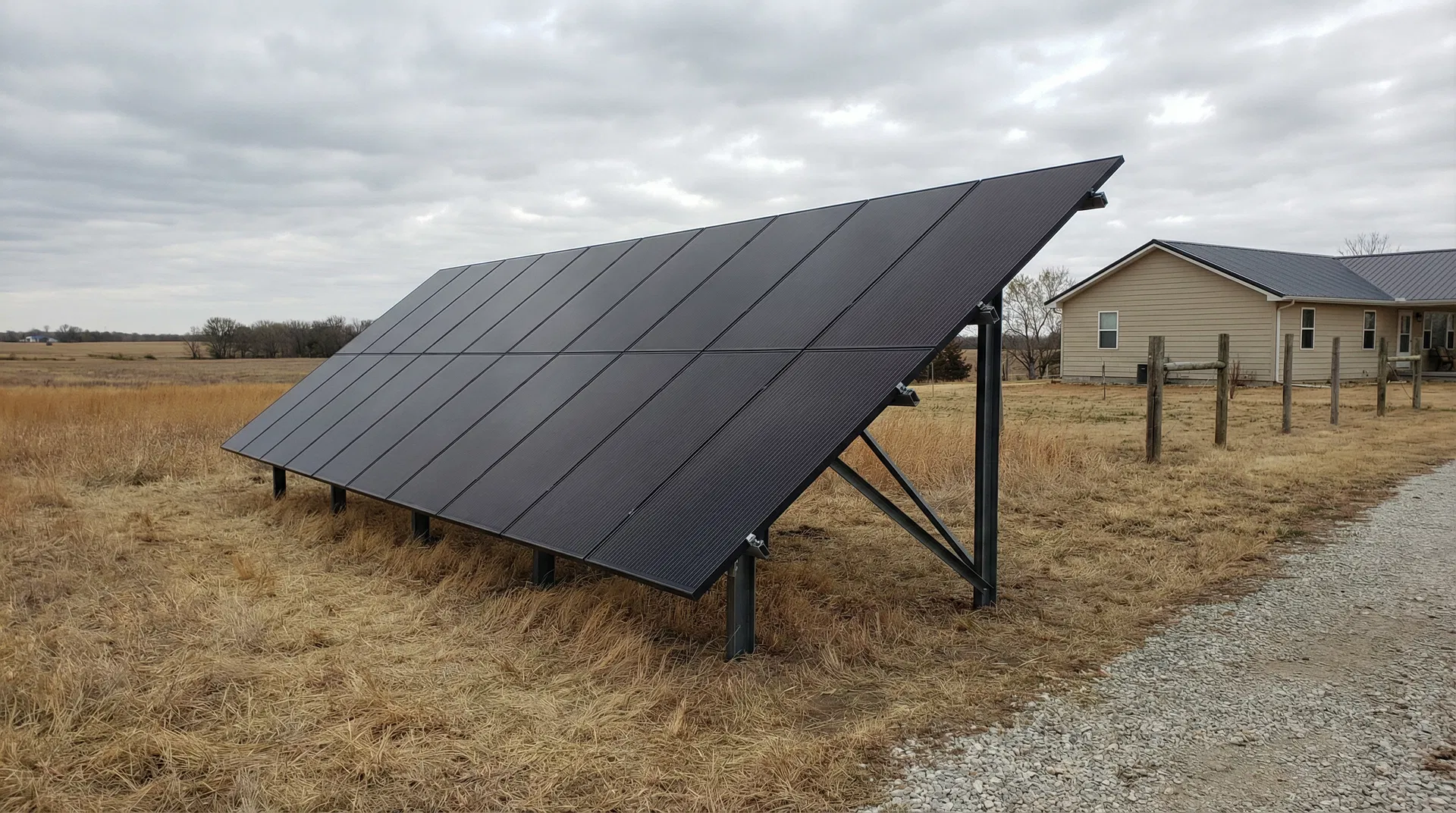
Range Road Solar works as solar installers in Calgary, Alberta, taking residential, acreage, and farm projects from first design through final interconnection. We install LONGi panels with APsystems microinverters, and that pairing matters on a site with partial shade. Each panel's output is handled by its own microinverter, so a chimney shadow or a row of poplars across one part of the array doesn't pull down the rest of the system the way a single string inverter can. The layout also grows with you. Start with a system now and we can plan for a later addition, like a shop or an EV charger, when we design the first phase. Residential roofs are where most of our work starts. A typical home project sits around 10 kW, which is the middle of our 8-15 kW range, and the roof's pitch, age, and orientation decide how much of that fits cleanly. Acreage and farm sites usually run higher in the range, because the load includes more than the house. A quonset with welding gear, a well pump, or a grain auger draws power differently than a bungalow, and the array has to match that. Ground mounts make sense when the roof can't do the job. If a roof is heavily shaded, pitched poorly, or nearing the end of its life, a yard array often wins. Trenching from the array to the service is the item that surprises people on rural sites, so we map that run early and show you the cost on the design. Every project starts with a site visit or a remote design review, your most recent power bill, and a clear look at the roof or yard. You get a layout drawn for your site, not a panel count pulled from a template.
Solar Planning for Calgary Properties
Calgary, Alberta had 1,306,784 residents in the Statistics Canada census count, and the properties inside that number vary a lot. A townhouse, a home within walking distance of Historic City Hall, and an acreage on the outskirts all sit on different roofs, lots, and electrical services. We start planning with the wire service, which for this area is ENMAX, and with the building that's actually on the lot. Roof pitch and age, the direction each roof plane faces, and whether a tree line or neighbouring structure throws shade all change the layout before anything gets specified. A ground mount comes into the conversation when the roof can't carry the array well or when the yard has room to spare. We also check the service entrance, the panel, and the distance from the array to the meter. You don't need to know any of that going in. We walk you through it on the design review and tell you which parts are settled and which still need a site visit.

Electrical Site Review for Calgary Properties
Voltage Rise
Voltage rise happens when an inverter pushes power back onto the distribution line and the voltage at the connection climbs above its normal range. How much it climbs depends on the line conditions at your property, not just on the size of the array, so we look at it during design. When voltage rises past the limit, the inverter cuts its output, which shows up as clipping and changes how large an array makes sense for the site.
Single-Phase vs Three-Phase
Rural Alberta properties can be on single-phase or three-phase service, and the difference shapes which inverter fits and how much capacity the site can handle. Single-phase service limits how much power the building can draw and feed back, so the design has to fit the service you actually have. Three-phase service on a shop or farm building can support a larger system, which is why we confirm the service type before we select equipment.
Panel Infrastructure
Older panels on rural properties often lack the spare breaker space or rated capacity a modern solar connection needs. We check the panel's age, its rated amperage, and whether there's room for a dedicated breaker. If the panel can't support the system, the upgrade means replacing it with a panel sized for the load, and we show you that scope on the design before you commit.
Service Entrance Review
We review the service entrance and the meter base because both are part of the micro-generation application ENMAX reviews. A corroded, damaged, or worn meter base can stall the connection, so we check its condition during the site visit. If an upgrade is required, we spell out the work and the parts before the application is submitted.
Right-Sizing Solar for Calgary Properties
Rural Alberta systems tend to be bigger than urban ones because the load isn't just the house. The same meter can feed a shop, a well pump, a few outbuildings, an electric water heater, or grain handling equipment, and each one has its own draw and schedule. A system sized only for the house misses most of that load. The roof-or-ground question comes down to site conditions. A roof works when it's sound, faces a usable direction, and isn't shaded by trees or a neighbouring building for much of the day. A ground mount makes more sense when the roof is shaded, the pitch is poor, the roof is near the end of its life, or the yard has land you're not using. On acreages the ground mount often wins, because there's room for racking away from trees and outbuildings. We don't size from a rule of thumb like panels per square foot or a number copied from a neighbour's install. We size from the 12-month usage graph on your most recent power bill, which shows how your load moves through the year. A shop that runs hard during harvest and an irrigation pump that runs in summer produce very different graphs, and the array should match the shape, not just the total. Combined with the site design, that graph tells us whether an 8 kW system covers the load or whether the property needs something closer to 15 kW. Your most recent power bill is the only document we need to get started.
Typical Load Profiles We Design For Near Calgary
Home + Heated Shop
A house and a 40 by 60 foot heated shop share one service, and the shop often runs welders, compressors, and a large heater on the same meter. Those loads come and go, so the usage pattern matters as much as the total. We start the sizing conversation with the 12-month usage graph on your most recent power bill and check the shop's panel before we pick an array.
Acreage with Well Pump and Outbuildings
On many acreages, the house, a 2 HP well pump, and two or three outbuildings all draw from one meter. Pumps create short startup surges that the design has to handle, while the house runs steadier through the day. Site design and your most recent power bill together show whether an 8 kW system covers the base load or whether 12 kW is the better fit.
Home with EV Charging and Heat Pump
A Level 2 charger drawing 7.2 kW for an overnight charge adds a large, predictable block of load to a house that already runs a heat pump. That combination often pushes the array toward the upper half of the 8-15 kW range. We confirm the charger's circuit, the heat pump's size, and how those loads appear on the usage graph of your most recent power bill.
ENMAX Interconnection in Calgary
Every grid-connected solar system in this area runs through ENMAX, the wire service here, so it needs an ENMAX interconnection application before it can be switched on. That's a separate step from the install, and it depends on the paperwork being right the first time. Range Road Solar prepares the design package and handles the application for you. The package covers the system layout, the equipment specifications for LONGi panels and APsystems microinverters, and the service details ENMAX needs to review the connection. We keep the application moving and answer the follow-up questions that come back, so you aren't the one chasing the utility. We can't promise a specific approval date. That depends on ENMAX's review and the details of your site, and any date we gave you would be a guess. What we can promise is that you'll hear from us at each step. Your part is small. Send your most recent power bill and tell us what the roof or yard looks like. If the meter base or panel needs work before the application goes in, we'll flag it during the review, not after you've signed. Ask about the interconnection steps when you book your design review.
Project Economics and Design Review
| System Size | Annual Production | Year 1 Savings | Payback Period |
|---|---|---|---|
| 8-15 kW range, 10 kW typical |
Production, savings, and payback require a property-specific design and your most recent power bill.
How We Work in Calgary
Bill and Load Review
We review your power bill to understand your energy use in Calgary and size the system to your actual consumption, not a generic estimate.
Site Assessment
We assess your roof or ground area, south-facing exposure, electrical service, and utility interconnection requirements specific to your property.
Design and Utility Application
We produce a system layout, production estimate, and cost summary, then submit your micro-generation application to your utility on your behalf.
Installation and Commissioning
Our crew installs racking, panels, inverter, and electrical connections. All work is performed by licensed electricians. We commission and test before handoff.
Current Program and Interconnection Review
Utility connection review
ENMAX reviews grid connection applications for solar systems in this area, and every project we design goes through that review before it's switched on. Range Road Solar prepares the design package and handles the application on your behalf. We'll tell you what the utility asks for at each stage.
Current program review
Commercial, farm, and residential eligibility is checked against current rules at design time, not assumed from what applied in the past. We confirm the property type, the system size, and the ownership details that apply to your project. You'll know what applies before you commit to anything.

Frequently Asked Questions
Get a Solar Assessment for Calgary
Submit a recent power bill and we will review your consumption and provide an honest assessment for your Calgary property. No obligation.
(587) 330-7502 Book a Call