
Looking for solar off-grid-solar Cochrane alberta? We design and install stand-alone systems for acreages, cabins, and remote sites that run without a utility connection. Each system is built around LONGi panels, a hybrid inverter, and lithium battery storage, and most designs fall in the 5-15 kW range with 8 kW as the typical starting point. Off-grid properties tend to fall into a few load patterns. A cabin might run a fridge, lights, a water pump, and a few outlets. A working acreage adds a shop with a welder or compressor, and a remote livestock site needs a stock tank pump that runs on its own schedule every day of the year. The hybrid inverter manages panel output, battery charging, and household loads from one place, which matters when there's no grid to fall back on. Storage is what carries the property through the hours the panels aren't producing, so the battery bank gets sized to the loads you run after dark, not just to the array. Starting loads deserve their own look. A well pump or shop compressor pulls a surge well above its running draw, and the inverter has to handle that surge without tripping. We check those loads during design rather than after install, so the system you get is the one that actually runs your property. Battery sizing is confirmed through a site-specific assessment because the answer depends on your loads and how you use the land. Every design starts with the 12-month usage graph on your most recent power bill and a walk through the site itself, and we'll review the layout with you before any equipment is ordered.
Solar Planning for Cochrane Properties
Some properties make more sense without a grid connection at all. The decision comes down to the site: where the house sits, how far a service line would have to run, and what you actually plan to power. That's the starting point for every design we do here. FortisAlberta is the wire service for Cochrane, so any future grid tie or backup connection goes through its review process. A stand-alone build doesn't connect to that grid, which means the planning focuses on your loads, your storage, and the roof or yard space you have to work with. Anyone who has driven past the Men of Vision statue or walked through Historic Downtown Cochrane knows the area keeps its history close. The Cochrane Ranche Historic Site is a good reminder that this land has been worked for generations, and off-grid planning follows the same logic: start with the land and the loads, then build around them. The design review is where it all comes together. You'll see the proposed layout, the load picture, and the storage plan before anything gets ordered.
Electrical Site Review for Cochrane Properties
Voltage Rise
Voltage rise is the increase in voltage at the point where a generating system connects to the distribution line, and it can change with how heavily the line is loaded and how far the property sits from the source. Distribution conditions set how much headroom a system has before voltage pushes the inverter toward its limit. When that happens the inverter can clip output, which is why we factor voltage rise into how large we make the array.
Single-Phase vs Three-Phase
Rural properties can have single-phase or three-phase service, and the difference affects which inverter fits and how much power the system can deliver at one time. Single-phase service sets a lower capacity ceiling, so inverter selection and array size have to match it. Three-phase service adds capacity and more inverter options, so we confirm which one your property has before we size anything.
Panel Infrastructure
Older electrical panels on rural properties were often installed for a much smaller load than a solar system adds, and breaker capacity is the first thing we check. We also look at the panel's age, bus rating, and visible wear like scorching or corrosion. If the panel can't support the system, the upgrade means a new panel with the right rating, and we'll explain what it involves before any work starts.
Service Entrance Review
We check the service entrance and meter base for condition and rating before we finalize the design. The meter base condition matters for the FortisAlberta micro-generation application, because a damaged or undersized base can hold up the application. If an upgrade is required, we'll tell you what it involves and what it adds to the project scope before anything changes.
Right-Sizing Solar for Cochrane Properties
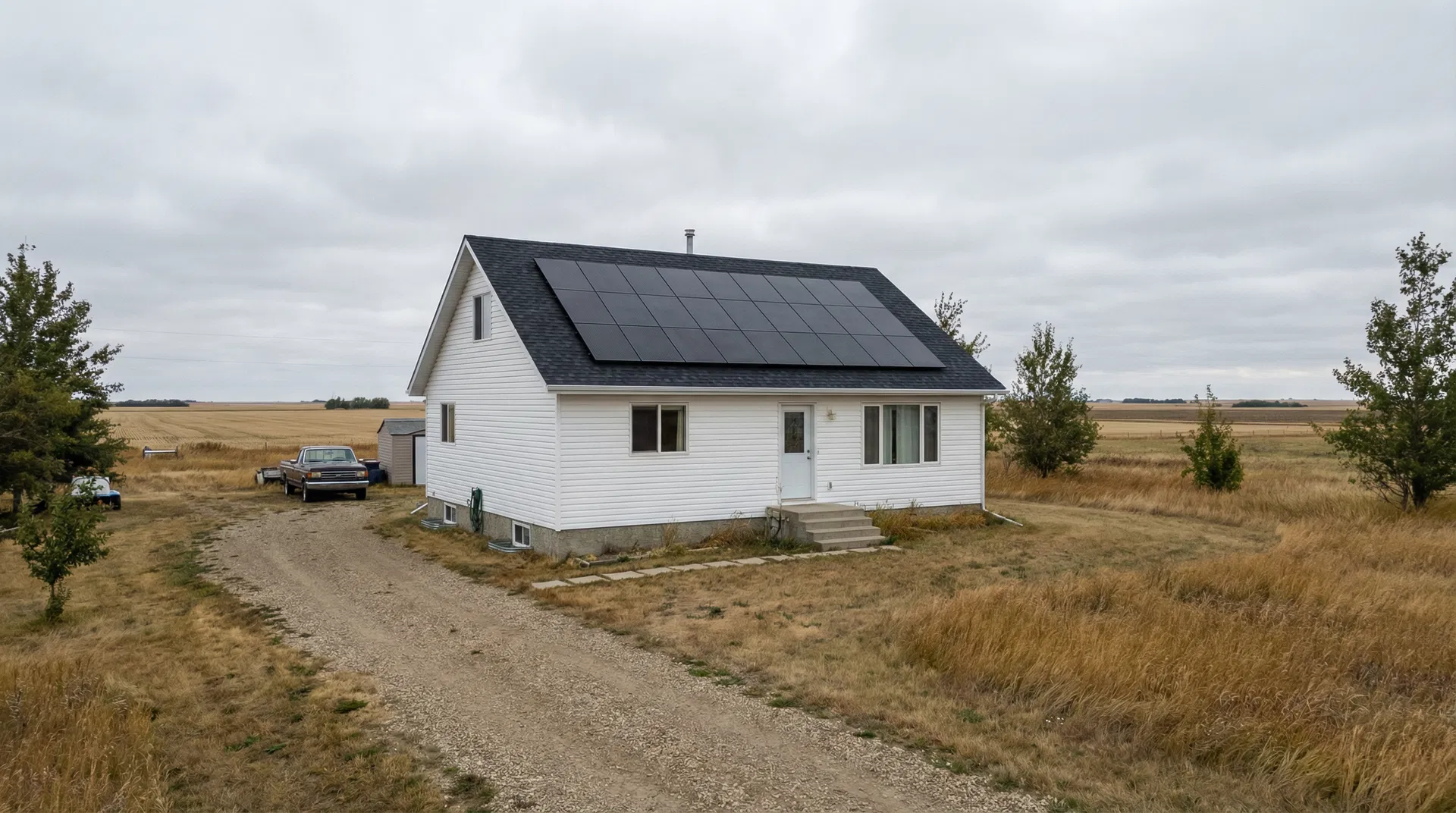
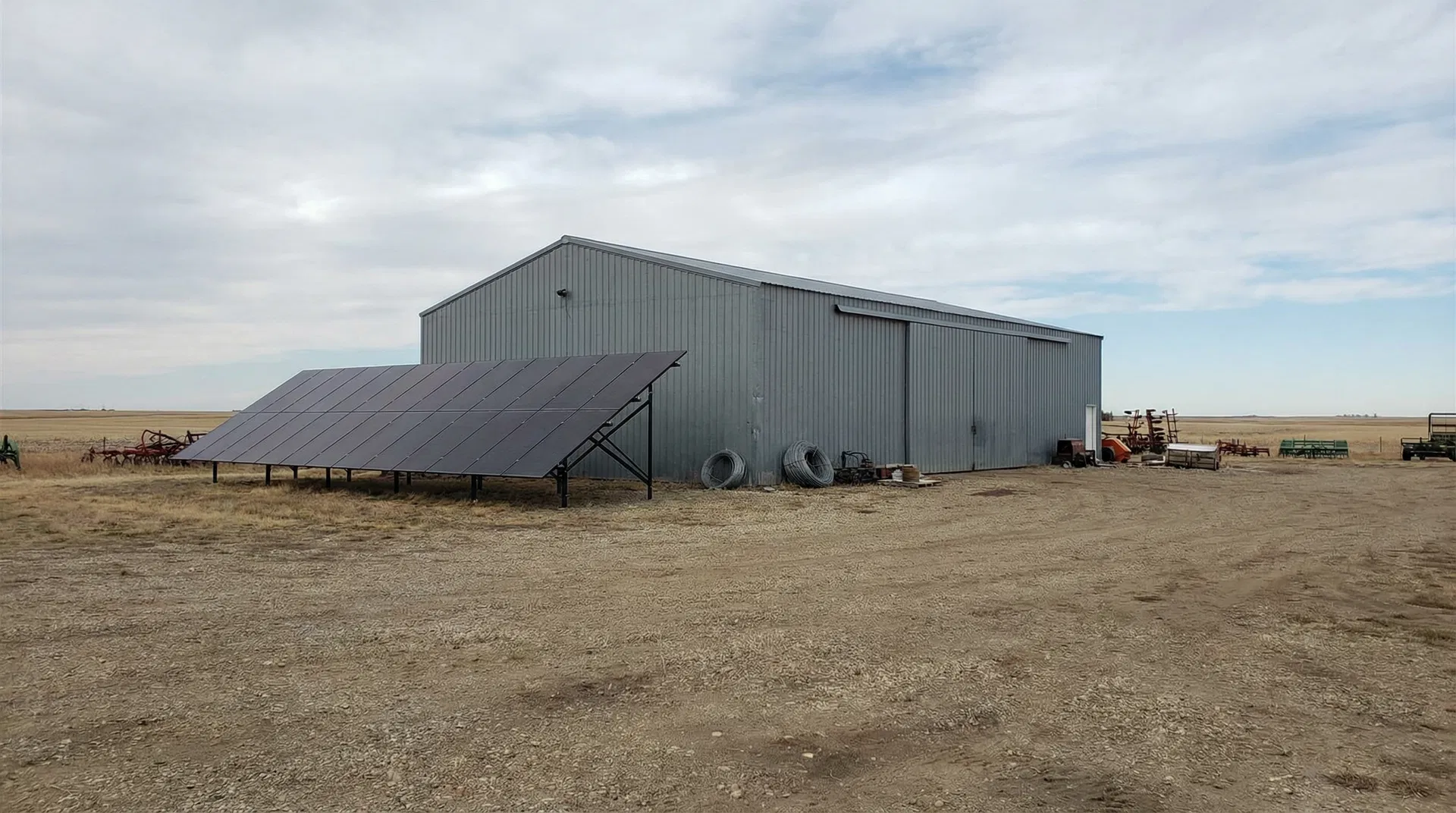
Rural Alberta systems tend to be bigger than urban ones because the property carries more loads. The house is often the smallest of them. Add a shop with a welder and compressor, a few outbuildings with lights and freezers, and an irrigation pump or grain handling equipment, and the total load climbs quickly. The first layout decision is roof or ground mount. A roof works well when it's unshaded, faces a useful direction, and has the pitch and structural capacity for the array. Ground mount makes more sense when trees or buildings shade the roof, the pitch is poor, or the yard has open land that can take a rack without crowding everything else. On a spread-out acreage, a ground array also stays where you can reach it easily for cleaning and service. Sizing starts with the 12-month usage graph on your most recent power bill. That graph shows the rhythm of the property: when the house draws power, when the shop runs, and when seasonal loads kick in. We don't use rule-of-thumb numbers. We work from what your property actually uses, then check that against the site design. Your power bill and the site design together set the system size. The bill shows what you use, and the site shows what the roof or yard can hold, how it's shaded, and how the layout will work. If those two don't line up, we'll say so in the design review and walk through the options with you.
Typical Load Profiles We Design For Near Cochrane
Home + Heated Shop
A house with a heated shop runs two different load patterns: steady household draw and short bursts from a welder, shop heater, or 240 volt compressor. Those bursts need room in the inverter rating, so we size for the peaks and not just the daily average. Your most recent power bill and a site walk-through show which loads matter most.
Seasonal Cabin + Well Pump
A cabin used on weekends or in summer runs a fridge, lights, and a submersible well pump, plus a few outlets for tools and electronics. The pump starts with a surge that can be several times its running draw, so the inverter needs headroom for that start-up load. A light-use cabin typically sits toward the lower end of the 5-15 kW range, and the site design confirms the final size.
Remote Livestock Site
A remote site with a stock tank pump, a barn with lights, and a chest freezer needs power every day, not just when people are on the property. The stock tank pump runs on its own schedule, so the battery bank carries those hours overnight. Our typical starting point is 8 kW, and the final number comes from the site design and your most recent power bill.
FortisAlberta Interconnection in Cochrane
FortisAlberta is the wire service for Cochrane, so it's the utility that reviews any grid-related work at your property. A stand-alone off-grid system doesn't connect to the FortisAlberta grid, which means its interconnection review doesn't apply to that build. If you want a grid tie later, or a grid connection as backup for your battery, the FortisAlberta micro-generation application is the paperwork that comes into play. We handle that application for you. That means preparing the design package and the equipment details the application needs, so you aren't left filling in technical forms on your own. You'll get a plain-language summary of what's been submitted and what FortisAlberta still needs from you. If you're planning a grid-tied system down the road, tell us early so the design package covers both the off-grid and grid-connected scenarios from the start. Your design review covers what the application requires before anything gets submitted, so there are no surprises on paperwork.
Project Economics and Design Review
| System Size | Annual Production | Year 1 Savings | Payback Period |
|---|---|---|---|
| 5-15 kW range, 8 kW typical |
Production, savings, and payback require a property-specific design and your most recent power bill.
How We Work in Cochrane
Bill and Load Review
We review your power bill to understand your energy use in Cochrane and size the system to your actual consumption, not a generic estimate.
Site Assessment
We assess your roof or ground area, south-facing exposure, electrical service, and utility interconnection requirements specific to your property.
Design and Utility Application
We produce a system layout, production estimate, and cost summary, then submit your micro-generation application to your utility on your behalf.
Installation and Commissioning
Our crew installs racking, panels, inverter, and electrical connections. All work is performed by licensed electricians. We commission and test before handoff.
Current Program and Interconnection Review
Utility connection review
FortisAlberta is the wire service for Cochrane, and it reviews grid connection applications for properties that connect to its system. For a stand-alone off-grid build there's no grid connection to review, but a future grid tie or backup connection would go through that process. We handle the design package either way.
Current program review
Commercial, farm, and residential eligibility is reviewed against current rules at design time. We don't assume your property qualifies for anything based on its address or size. Each review checks the rules that apply to your project and tells you what's confirmed and what isn't.
Frequently Asked Questions
Get a Solar Assessment for Cochrane
Submit a recent power bill and we will review your consumption and provide an honest assessment for your Cochrane property. No obligation.
(587) 330-7502 Book a CallMore Solar Services in Cochrane