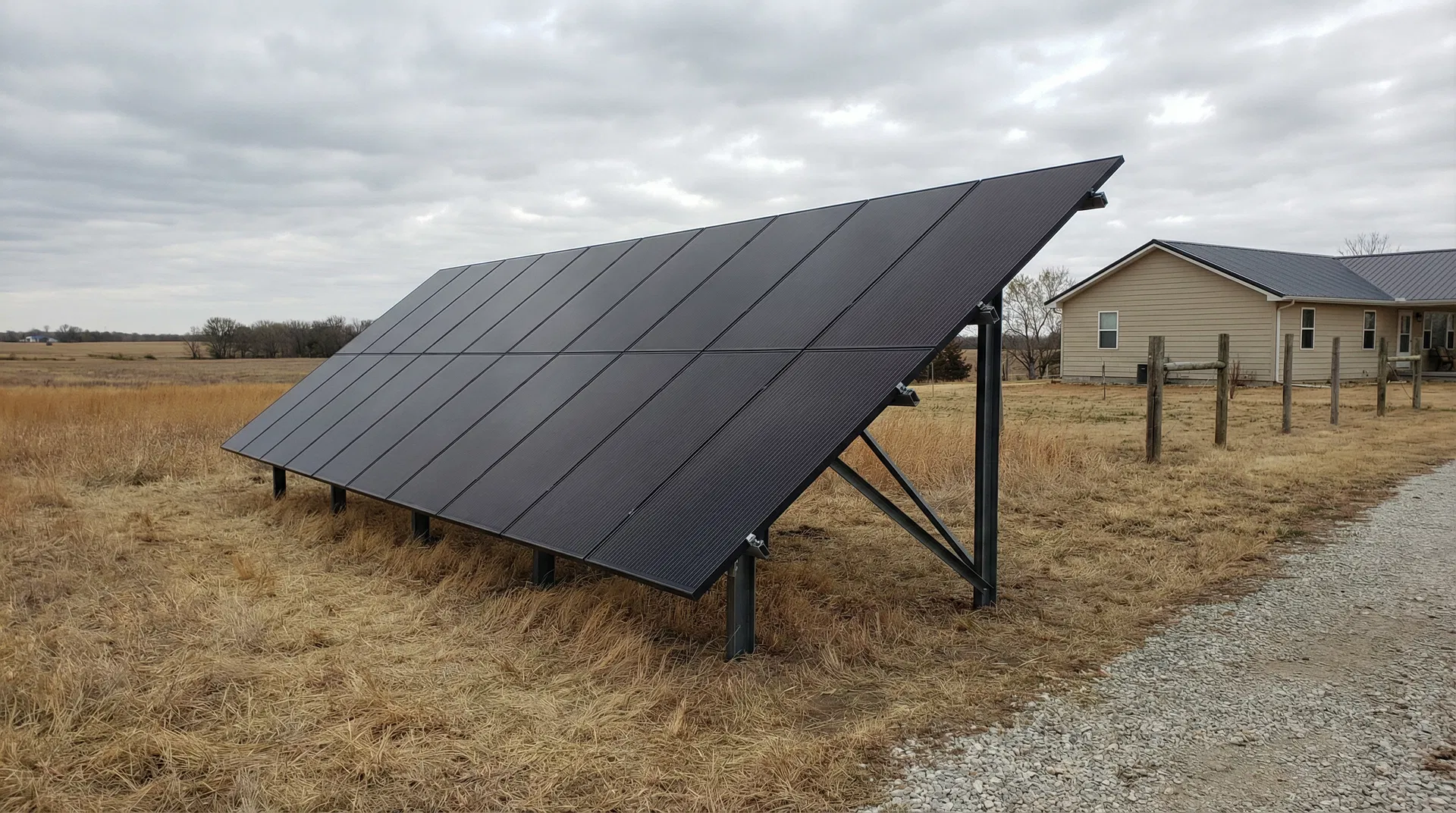
When property owners search for solar rebates in Cochrane, Alberta, the programs available depend on property type. Residential installations connect through FortisAlberta's micro-generation tariff, which credits surplus generation against your bill. Farm and commercial properties may also be eligible for the federal Clean Technology Investment Tax Credit, which applies at a percentage of eligible capital cost. For a commercial or farm installation in the 8 to 15 kW range, that credit represents a real reduction in capital cost, but eligibility depends on equipment type, ownership structure, and how the credit is filed. We use LONGi panels and APsystems microinverters on every installation because both qualify under current eligible equipment lists, and that matters when a tax credit is part of the project economics. The two programs can work together on eligible farm and commercial installations. A property that's generating credits under the micro-generation tariff and claiming the ITC on the capital cost of the system is applying both levers to the project economics. Municipal programs and utility incentives change on different cycles, so current eligibility is confirmed at design time, not from a static page. Exactly what your property qualifies for depends on how it's structured, and we work through that in the design review.
Solar Planning for Cochrane Properties
Properties in and around this area run real electrical loads. A home with an attached shop, an outbuilding or two, and seasonal heating draws a different profile than a city condo, and the programs available to offset that bill reflect it. FortisAlberta handles interconnection for properties in this territory, and the micro-generation tariff is what credits production back against consumption. The federal Clean Technology Investment Tax Credit applies to eligible commercial and farm installations, not residential, and the rules around eligible equipment and ownership structure matter for whether a property qualifies. What doesn't change between properties: we size from your actual usage, not a regional average. Range Road Solar does this work with LONGi panels and APsystems microinverters on every project, and the application process to FortisAlberta is something we manage from design through approval. If you're wondering which programs apply to your setup, that gets confirmed in the design review, not by guessing from a web search.
Electrical Site Review for Cochrane Properties
Voltage Rise
Voltage rise occurs when solar generation pushes voltage above the allowable band on a distribution line. In areas with longer rural service lines, the rise can be more pronounced, and FortisAlberta sets limits on how much a system can contribute. If those limits are tight at your meter point, it affects inverter clipping and may constrain system size, which is why we assess voltage conditions at the design stage.
Single-Phase vs Three-Phase
Rural properties in this territory can arrive on either single-phase or three-phase service, depending on how the distribution line was originally built. Single-phase limits the total inverter capacity you can connect on a given circuit, while three-phase opens up larger system configurations. APsystems microinverters are spec'd to the service type at the property, and that selection gets confirmed during the site assessment.
Panel Infrastructure
Older panels on acreage and farm properties often have limited breaker capacity or use breaker types that aren't compatible with solar backfeed. We check panel age, main breaker rating, and available space during the site assessment. If the panel can't support the system safely, an upgrade is scoped and priced before the installation quote is finalized.
Service Entrance Review
The meter base and service entrance condition are reviewed before we submit the micro-generation application to FortisAlberta. FortisAlberta requires the meter base to meet current specs for interconnection approval, and an older or non-conforming base needs to be upgraded before the application moves forward. If an upgrade is required, we flag it in the site assessment so there are no surprises at permit stage.
Right-Sizing Solar for Cochrane Properties
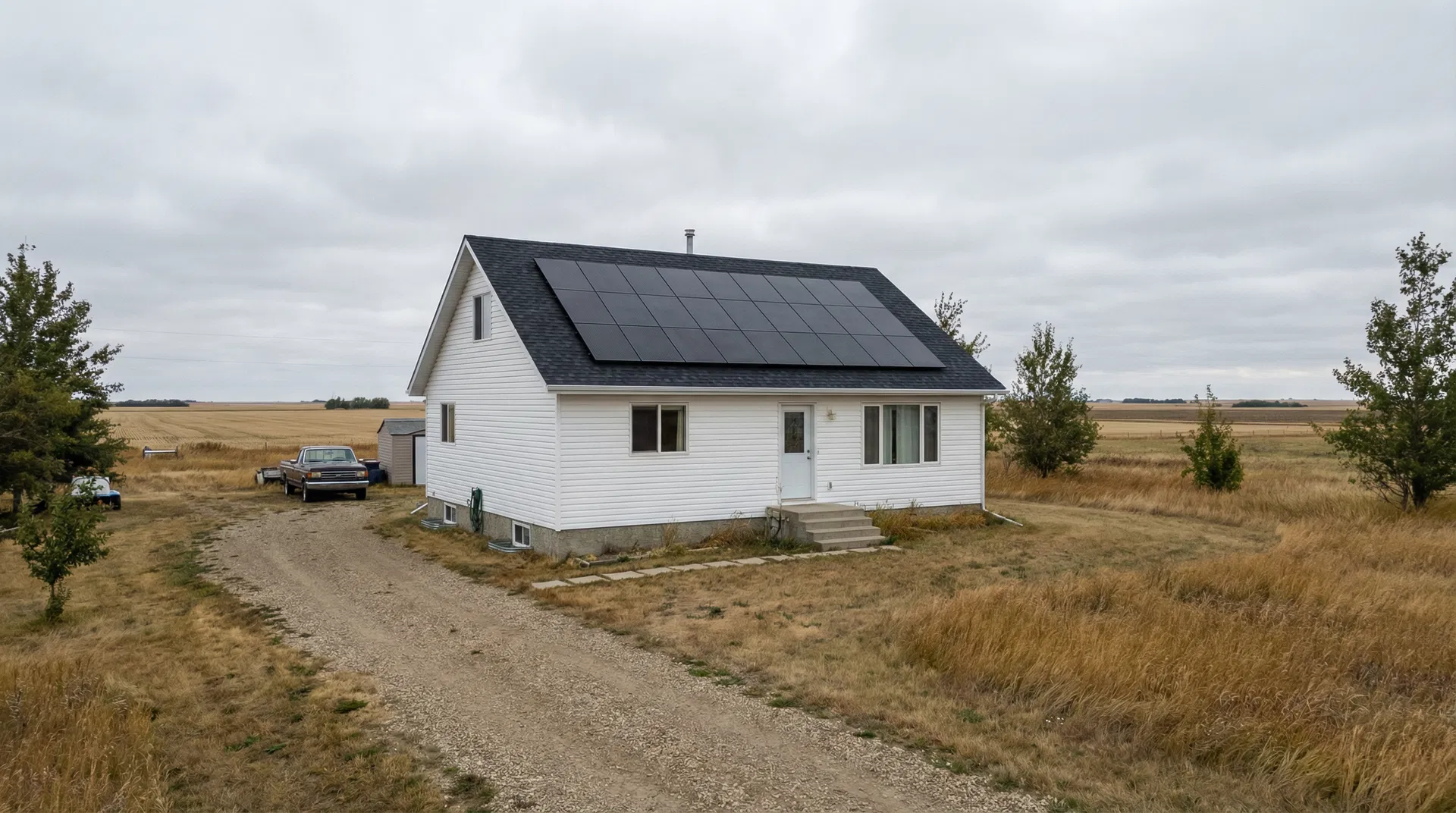
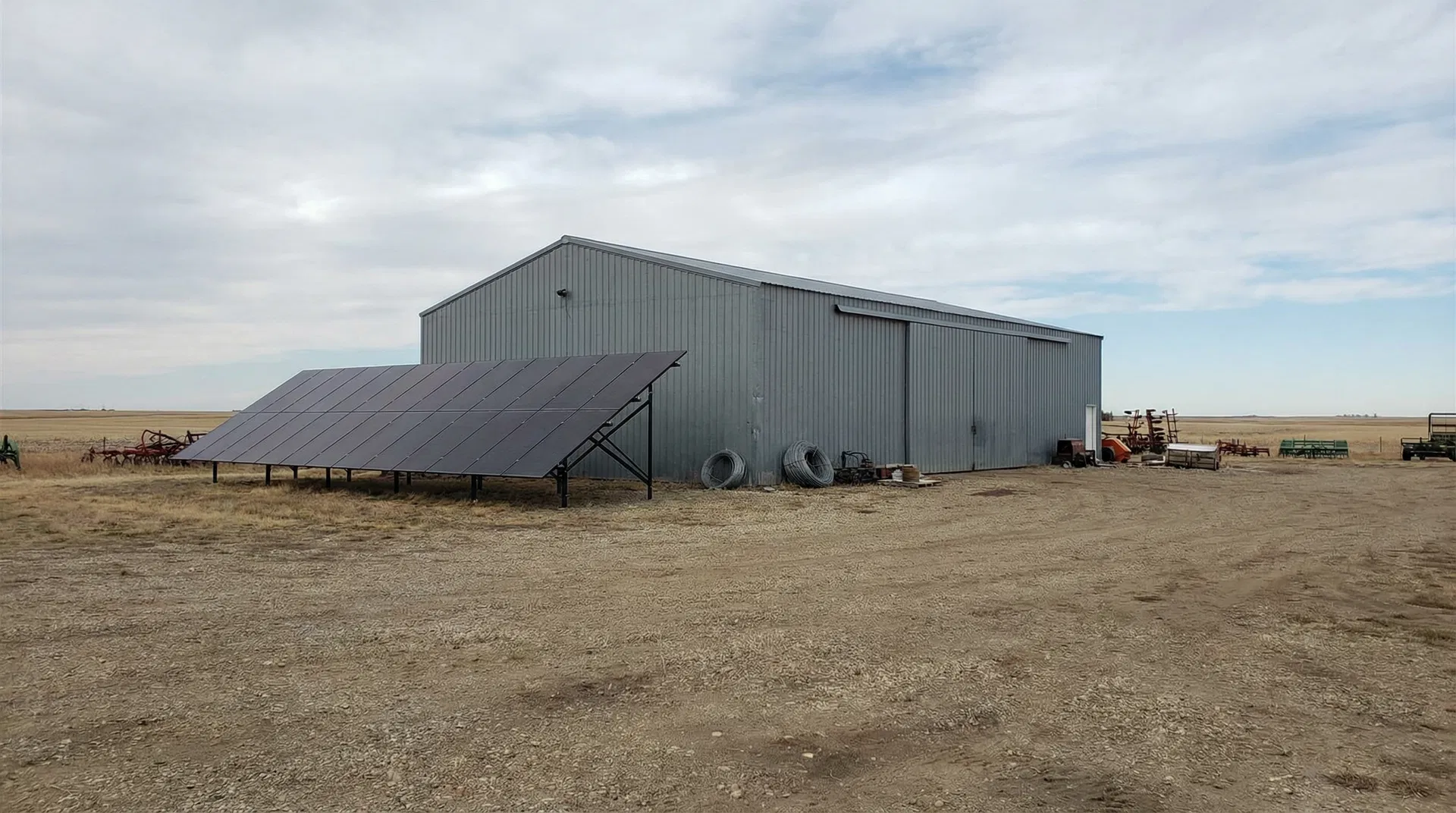
Acreage and rural properties in this area don't size like a city lot. A home with an attached heated shop, a separate outbuilding, a well pump, and any irrigation or grain-handling equipment stacks loads that a single urban meter rarely sees. That's why the 8 to 15 kW range is a starting point, not a recommendation: the actual system size comes from your property's 12-month usage data, not a per-square-foot rule of thumb. The 12-month usage graph on your most recent power bill is the one document we ask for, and it shows whether your load peaks in summer or winter, which month is your highest draw, and how much of that usage a given system size can realistically displace. Roof mount works well when pitch, orientation, and shading are all favorable. Ground mount is worth considering when roof access is limited by tree cover, a low-pitch roof, or when there's a better-oriented open area in the yard. Many acreage layouts end up with ground mount as the cleaner solution, because the roof might face the wrong direction or be broken up by dormers and vents. We don't pick a mounting type without seeing the property. The design comes from the site, not from a catalog recommendation.
Typical Load Profiles We Design For Near Cochrane
Home Plus Heated Shop
A house paired with a 1,200 to 1,500 square foot heated shop adds significant winter electrical draw, often from baseboard heaters or a forced-air furnace with an electric backup. That combined load changes the 12-month usage profile considerably compared to a home-only meter. We size from the actual bill data, which shows whether the shop or the house is driving peak usage.
Acreage with Well Pump and Outbuildings
Well pumps, pressure tanks, and separate outbuilding circuits add recurring loads that don't appear in a standard residential rule-of-thumb estimate. Properties with animals layer in lighting, ventilation, and water heating on top of that. The bill profile for a property like this often looks very different from a comparably sized home without those loads, and system size follows accordingly.
Small Farm or Hobby Operation
Properties with grain bins, yard lighting on timers, or seasonal irrigation tend to have uneven monthly usage that a simple average misses. The 12-month graph reveals that seasonal pattern and informs whether a larger system makes sense or whether a mid-range installation in the 8 to 10 kW window covers the bulk of the load at a reasonable capital cost.
FortisAlberta Interconnection in Cochrane
FortisAlberta is the distribution wire owner for this area, and every grid-tied solar installation goes through their micro-generation interconnection process. That process includes a design package submission, a technical review, and approval before any system goes live. Range Road Solar prepares and submits the application. You don't deal with FortisAlberta directly on the paperwork. The application requires a system design that meets FortisAlberta's specs, including voltage rise limits, protection requirements, and metering configuration. If the meter base or service entrance needs an upgrade to accommodate the application, that's identified during the site assessment before anything is filed. Once interconnection is approved, generation credits appear on your utility bill under the micro-generation tariff. We don't quote timelines for that approval process, because it varies. Some projects move through in a few weeks. Others take longer, depending on FortisAlberta's queue and whether additional technical review is requested. What we can tell you is that the package we submit is complete the first time.
Project Economics and Design Review
| System Size | Annual Production | Year 1 Savings | Payback Period |
|---|---|---|---|
| 8-15 kW range, 10 kW typical |
Production, savings, and payback figures require a property-specific design and your most recent power bill.
How We Work in Cochrane
Bill and Load Review
We review your power bill to understand your energy use in Cochrane and size the system to your actual consumption, not a generic estimate.
Site Assessment
We assess your roof or ground area, south-facing exposure, electrical service, and utility interconnection requirements specific to your property.
Design and Utility Application
We produce a system layout, production estimate, and cost summary, then submit your micro-generation application to your utility on your behalf.
Installation and Commissioning
Our crew installs racking, panels, inverter, and electrical connections. All work is performed by licensed electricians. We commission and test before handoff.
Current Program and Interconnection Review
Utility connection review
FortisAlberta reviews grid connection applications for all new solar installations in their service territory. Range Road Solar prepares the full design package and submits it on your behalf. You don't need to coordinate with FortisAlberta directly on the technical documentation.
Current program review
Commercial, farm, and residential eligibility for available incentive programs is reviewed against the rules in effect at the time of your design. Program rules and eligible equipment lists change, so we confirm what applies to your property type and ownership structure during the design process, not from a static web page.
Frequently Asked Questions
Get a Solar Assessment for Cochrane
Submit a recent power bill and we will review your consumption and provide an honest assessment for your Cochrane property. No obligation.
(587) 330-7502 Book a CallRelated Resources
More Solar Services in Cochrane