
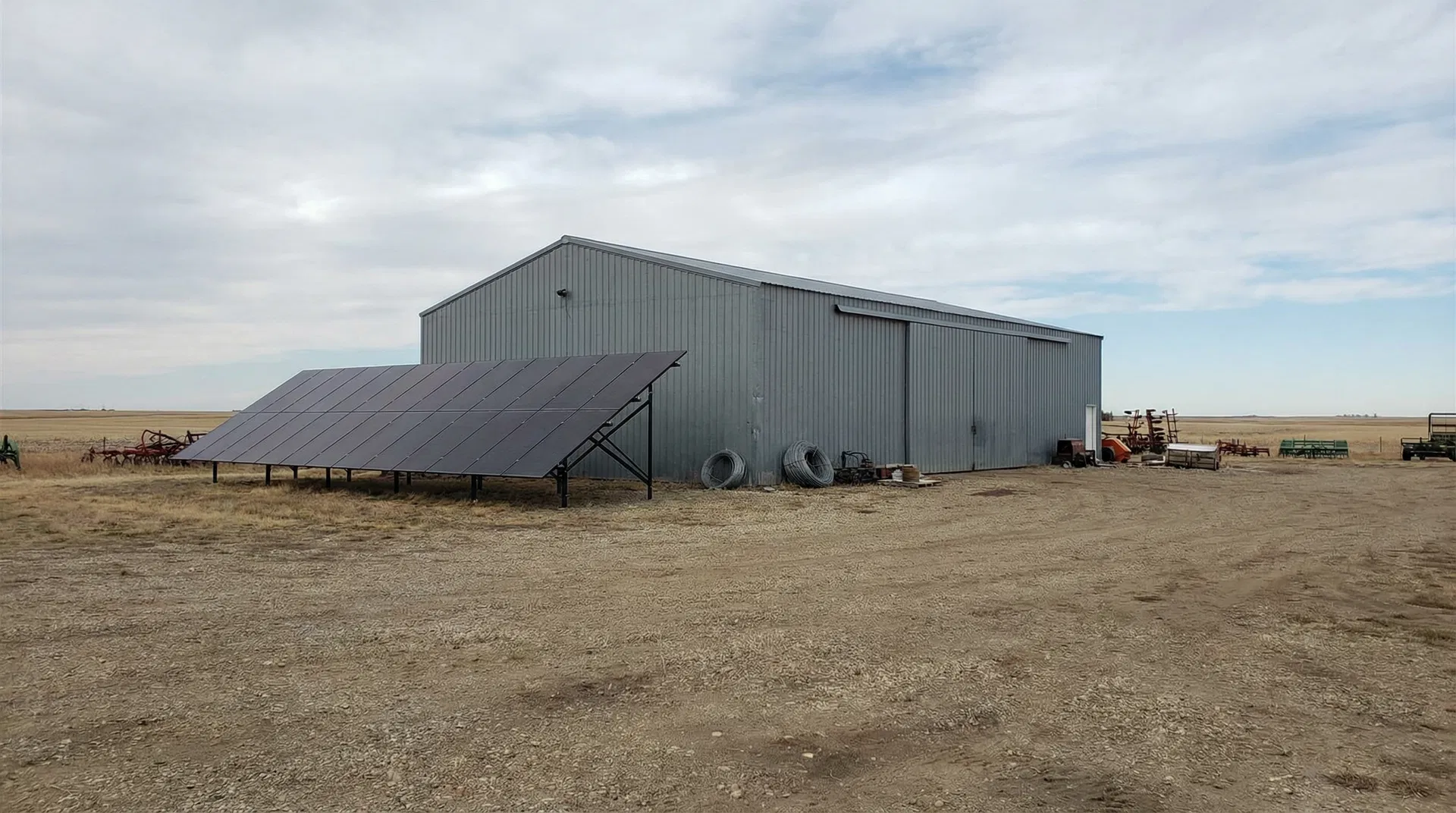
Range Road Solar installs ground-mount solar in Cochrane, Alberta for farms and acreages with the land to support it, sizing most systems in the 10 to 30 kW range depending on the property's loads. A ground-mount system makes sense when a roof can't carry the array you need, when trees or outbuildings shade the house, or when the yard simply has more usable space than the roofline does. We build on engineered ground-mount racking set on driven or helical piles, designed for frost depth and wind load, with the array laid out for snow shedding and ongoing access for mowing or equipment around it. Every system uses LONGi panels paired with APsystems microinverters. The microinverter architecture means each panel operates independently, so partial shading from a tree line or a nearby grain bin doesn't drag down the output of the whole array the way a single string inverter setup can. That matters on acreage properties where the array often sits near other structures rather than up on a clear roof. We also handle the structural and electrical side of the install: footing design for the racking, conduit runs back to the service entrance, and the application to FortisAlberta for interconnection. For properties running a shop, a barn, or irrigation equipment alongside the house, we size the array and the microinverter configuration around that combined load rather than just the home's usage. The result is a system built for the property's actual layout, not a packaged kit resized to fit.
Solar Planning for Cochrane, Alberta Properties
The population here grew from 25,853 to 32,199 between the last two census periods, and a lot of that growth has landed on acreages and farms around the edges of town rather than in the core. Properties in this situation often carry more load than a typical in-town lot: a house, a shop, maybe a barn or an irrigation pump, all drawing off the same FortisAlberta service. When a roof can't carry that load, or the roof pitch and shading don't cooperate, a ground-mount array on open pasture or yard space is often the more practical call. This area was founded in 1881, became a village in 1903, and incorporated as a town in 1971, and the properties we work on reflect that long agricultural history: original homesteads subdivided over generations, newer acreages built out from scratch, and everything in between. We don't guess at system size from a rule of thumb. We start with a site visit, a look at your most recent power bill, and a walk of the property to figure out where a ground-mount system makes sense relative to the house, the shop, and the FortisAlberta service drop. Near the Cochrane Ranche Historic Site and the older sections of downtown, lot shapes and tree cover vary a lot from block to block, which is another reason a generic answer doesn't hold up here. Every design starts from what's actually on the property, not a template.
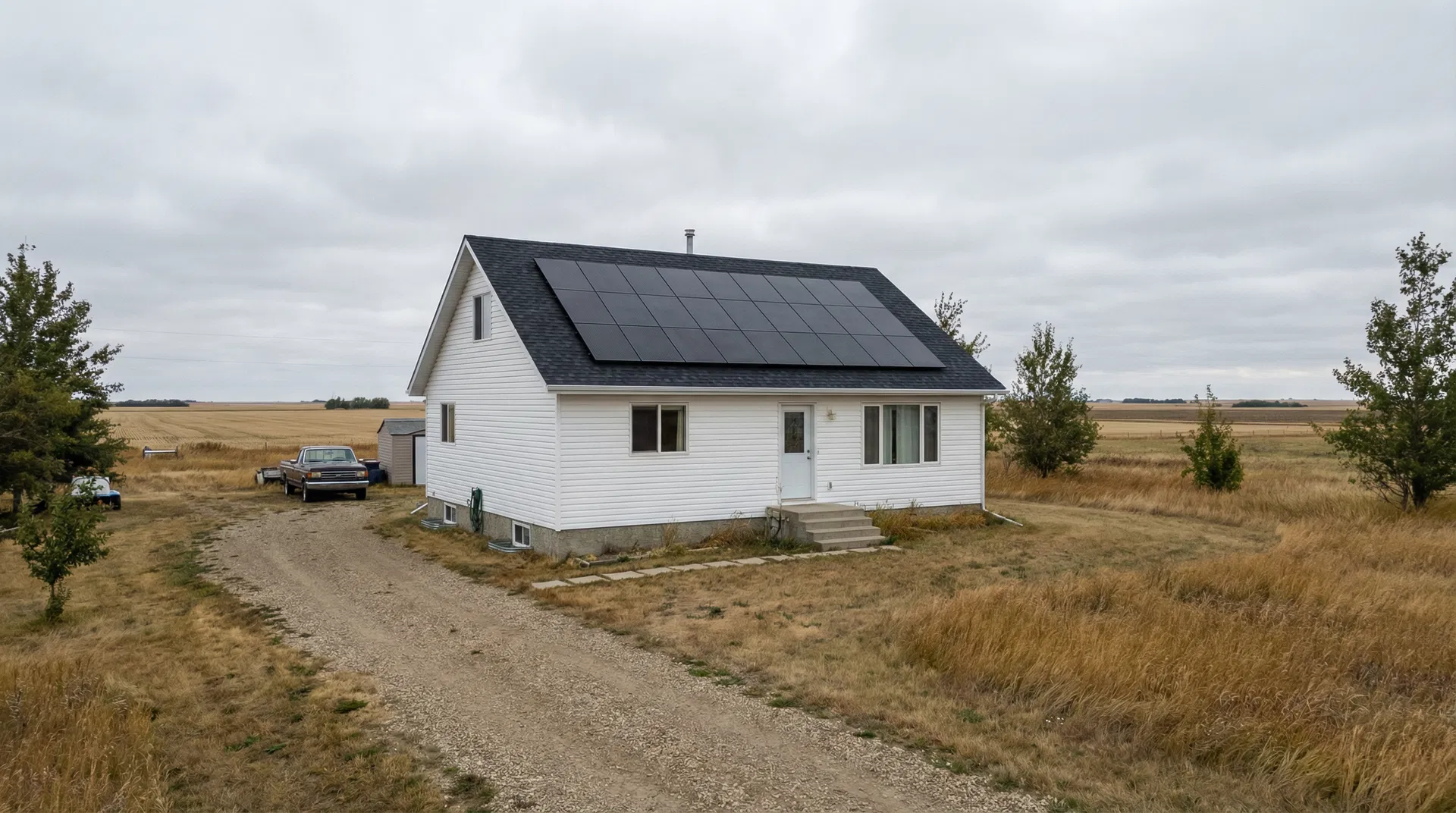
Electrical Site Review for Cochrane Properties
Voltage Rise
Voltage rise happens when power travels a long distance along a distribution line before reaching a property, and rural feeders often run longer than in-town service. On a property where voltage sits toward the high end of the normal range, a grid-tied inverter can clip output or throttle back to stay within its operating window. We check the voltage at your service entrance during the site visit so the system is sized and configured with that condition in mind, not discovered after installation.
Single-Phase vs Three-Phase
Properties in this area can have either single-phase or three-phase electrical service, depending on when the property was built and what it was originally wired to run. Three-phase service, common on properties with larger motors like irrigation pumps or grain handling equipment, changes which inverter models and system capacities are available compared to single-phase. We confirm which service type is in place before finalizing equipment selection, since the wrong assumption here affects both inverter choice and maximum system size.
Panel Infrastructure
Older rural properties sometimes have electrical panels that predate the breaker capacity a solar interconnection needs, or panels simply reaching the end of their service life. We check the panel's age, its rated capacity, and the available breaker space before finalizing a design. If the panel can't support the added interconnection breaker, an upgrade comes first, and we fold that into the project scope rather than surprising you after the fact.
Service Entrance Review
We also look at the condition of the service entrance and the meter base, since FortisAlberta reviews that equipment as part of the micro-generation application. A meter base that's worn, undersized, or not rated for a two-way connection can hold up approval even when the solar array itself is ready to go. If an upgrade is needed, we identify it during the site visit and build it into the project timeline up front.
Right-Sizing Solar for Cochrane Properties
Rural properties typically need a bigger system than an in-town house of the same square footage, because the load isn't just the home. A shop with its own heat and lighting, a barn, a well pump, or irrigation equipment all add to the picture, and a system sized only for the house will fall short once those loads are running. That's one reason acreage and farm systems in this size class often land well above what a typical urban rooftop install would need. Roof versus ground-mount comes down to what the property actually offers. If the roof has good southern exposure, enough unshaded area, and a pitch that works, mounting on the roof can be the simpler and less expensive route. Ground-mount becomes the right call when trees or outbuildings shade the roofline, when the roof pitch or orientation isn't favorable, or when the yard has open space that makes a ground-mount array easier to access and maintain than a rooftop array would be. Either way, we size the system from the 12-month usage graph on your most recent power bill, not a rule-of-thumb multiplier based on square footage or guesswork about what a property should use. That usage graph shows the real seasonal pattern, including shop or irrigation loads that spike at certain times of year, and combined with a site design for shading and orientation, it gives us a system size that actually matches how the property draws power.
Typical Load Profiles We Design For Near Cochrane
Home Plus Heated Shop
This is one of the most common setups we see on local acreages: a house plus a detached shop with its own heat, lighting, and often a welder or compressor. We size the array and microinverter string around the combined draw of both buildings, not just the house meter. Your most recent power bill shows how much the shop adds across the year, which is what actually drives the system size here, not a guess.
Farm Operation with Irrigation or Grain Handling
Properties running irrigation pumps or grain handling equipment see load spike hard during specific stretches of the year rather than staying level like a typical home. Three-phase service is common on this profile, which opens up different inverter and system capacity options than a single-phase home would have. We design around the seasonal pattern shown on the power bill's usage graph so the system is sized for when the load actually happens, not an annual average.
Acreage with a Workshop and Outbuildings
Some properties have a scattered set of smaller loads instead of one big one: a detached garage, a barn with lighting and a water heater, maybe a bunkhouse or guest space. None of those loads is large on its own, but together they add up to more than the house alone would suggest. A ground-mount array often fits better here too, since outbuildings can shade a roof in ways that don't show up until you're standing on the property.
FortisAlberta Interconnection in Cochrane
FortisAlberta is the wire service provider for Cochrane, Alberta, and any grid-connected ground-mount system here has to go through their micro-generation interconnection process before it's energized. Range Road Solar prepares and submits that application package on your behalf: single-line electrical diagrams, equipment specification sheets for the LONGi panels and APsystems microinverters, and the site-specific details FortisAlberta needs to review the connection. Because the array sits apart from the house on a ground-mount, the application also has to document the conduit run and point of connection back to your service entrance, which we account for at the design stage rather than after the racking is in the ground. We don't quote approval timelines or make claims about credit handling or payout structure, because those are set by FortisAlberta and current retailer rules, not by us. What we can tell you is that we've prepared this paperwork before and know what FortisAlberta expects in a submission. Anything specific to your property's rules and timing gets confirmed during the design review, using your most recent power bill and the actual site conditions.
Project Economics and Design Review
| System Size | Annual Production | Year 1 Savings | Payback Period |
|---|---|---|---|
| 10-30 kW range, 15 kW typical |
Production, savings, and payback figures require a property-specific design review and your most recent power bill; we don't publish generic estimates.
How We Work in Cochrane
Bill and Load Review
We review your power bill to understand your energy use in Cochrane and size the system to your actual consumption, not a generic estimate.
Site Assessment
We assess your roof or ground area, south-facing exposure, electrical service, and utility interconnection requirements specific to your property.
Design and Utility Application
We produce a system layout, production estimate, and cost summary, then submit your micro-generation application to your utility on your behalf.
Installation and Commissioning
Our crew installs racking, panels, inverter, and electrical connections. All work is performed by licensed electricians. We commission and test before handoff.
Current Program and Interconnection Review
Utility connection review
FortisAlberta reviews every micro-generation interconnection application against their current technical requirements before a system can be energized. Range Road Solar prepares the full design package, including equipment specifications and electrical diagrams, and submits it on your behalf.
Current program review
Eligibility for commercial, farm, and residential solar varies by property type and changes as rules get updated, so we check current eligibility at the time of your design review rather than relying on what applied last year. This applies whether the property is a working farm, a residential acreage, or a mixed-use operation.
Frequently Asked Questions
Get a Solar Assessment for Cochrane
Submit a recent power bill and we will review your consumption and provide an honest assessment for your Cochrane property. No obligation.
(587) 330-7502 Book a CallRelated Resources
More Solar Services in Cochrane