
Solar net-metering in Cochrane, Alberta starts with a micro-generation system built around LONGi panels and APsystems microinverters, sized to your property's actual load and your most recent power bill. Net metering lets a property generate its own power and send what it doesn't use back through the same connection FortisAlberta already maintains, and we handle the full application that makes that legal and safe. For most properties in the area we install systems in the 8 to 12 kW range, with 10 kW as the typical size, though the right number for your property comes out of a design review, not a standard package. APsystems microinverters convert power at each panel instead of at one central point, which matters on roofs with more than one plane, dormers, or partial shading from trees near the property line: if one panel underperforms, it doesn't drag the rest of the array down with it. That per-panel approach also gives you panel-level production monitoring, so you can see how the system performs section by section. LONGi panels are our standard module for both roof and ground mount installs, and we spec the same equipment whether you're on a standard residential lot or an acreage with a detached shop pulling its own load. Ground mount racking is an option where roof space, pitch, or shading rules out a rooftop array, and it opens up sizing options that a roof footprint can't always support. Every install includes the FortisAlberta interconnection application, meter work coordination, and the documentation package that gets your system registered as an approved micro-generation site, not just wired and left for you to sort out with the utility.
Solar Planning for Cochrane Properties
Cochrane, Alberta is home to 32,199 people, according to Statistics Canada, and that number keeps rural properties, acreages, and in-town lots on the edge of the Calgary Metropolitan Region growing fast. As a Town in Alberta within that region, the area sits on the FortisAlberta grid, which matters because the same utility that delivers your power also reviews your net metering and micro-generation application. Properties range from infill lots near Historic Downtown Cochrane to acreages with sheds, shops, and open yard space, and each one has a different roof orientation, shading pattern, and electrical service capacity. We don't quote a system size off a rule of thumb. Every design starts with a site visit and your most recent power bill, since Alberta utility bills include a 12-month usage graph that shows exactly how your property draws power through the seasons. From there we size the array, whether that's a roof mount on a subdivision home or a ground mount on an acreage with room to spread panels out, and prepare the interconnection paperwork FortisAlberta requires for micro-generation. That review process is the same whether your property sits a few blocks from downtown or out past the edge of town, but the site conditions never are, so the design has to be built around your property, not a template pulled off a shelf.
Electrical Site Review for Cochrane Properties
Voltage Rise
Voltage rise happens when the distribution line voltage at your property sits higher than nominal, which is more common the further a property sits from the local transformer or substation. On rural and semi-rural FortisAlberta lines, that can push inverter output voltage close to its upper limit, causing the inverter to clip or curtail output to stay within safe operating range. We check line voltage conditions during the site review so system sizing accounts for it instead of finding out after installation.
Single-Phase vs Three-Phase
Properties in the area can have either single-phase or three-phase electrical service, and older acreages sometimes still run single-phase even with a workshop or outbuilding pulling significant load. The service type available at your property affects which inverter models and configurations we can use and caps how much generation capacity the connection can support. We confirm phase service during the site visit so the system we design actually matches what's on the pole.
Panel Infrastructure
Rural properties, including older homes and acreages, sometimes still have electrical panels with limited breaker capacity or that predate current code requirements. We check panel age, brand, available breaker space, and busbar rating as part of every site review, since a panel that's maxed out can't safely add a solar breaker. If the existing panel can't support the system, an upgrade means a new panel, and in some cases a service upgrade, before the solar installation can proceed.
Service Entrance Review
We inspect the service entrance and meter base condition at every property, checking for corrosion, outdated equipment, and whether the meter base can physically accept the bidirectional meter micro-generation requires. Meter base condition matters directly for the FortisAlberta application, since FortisAlberta won't approve a micro-generation connection on equipment that doesn't meet current standards. When an upgrade is required, we scope and coordinate it as part of the project instead of leaving it as a surprise mid-install.
Right-Sizing Solar for Cochrane Properties
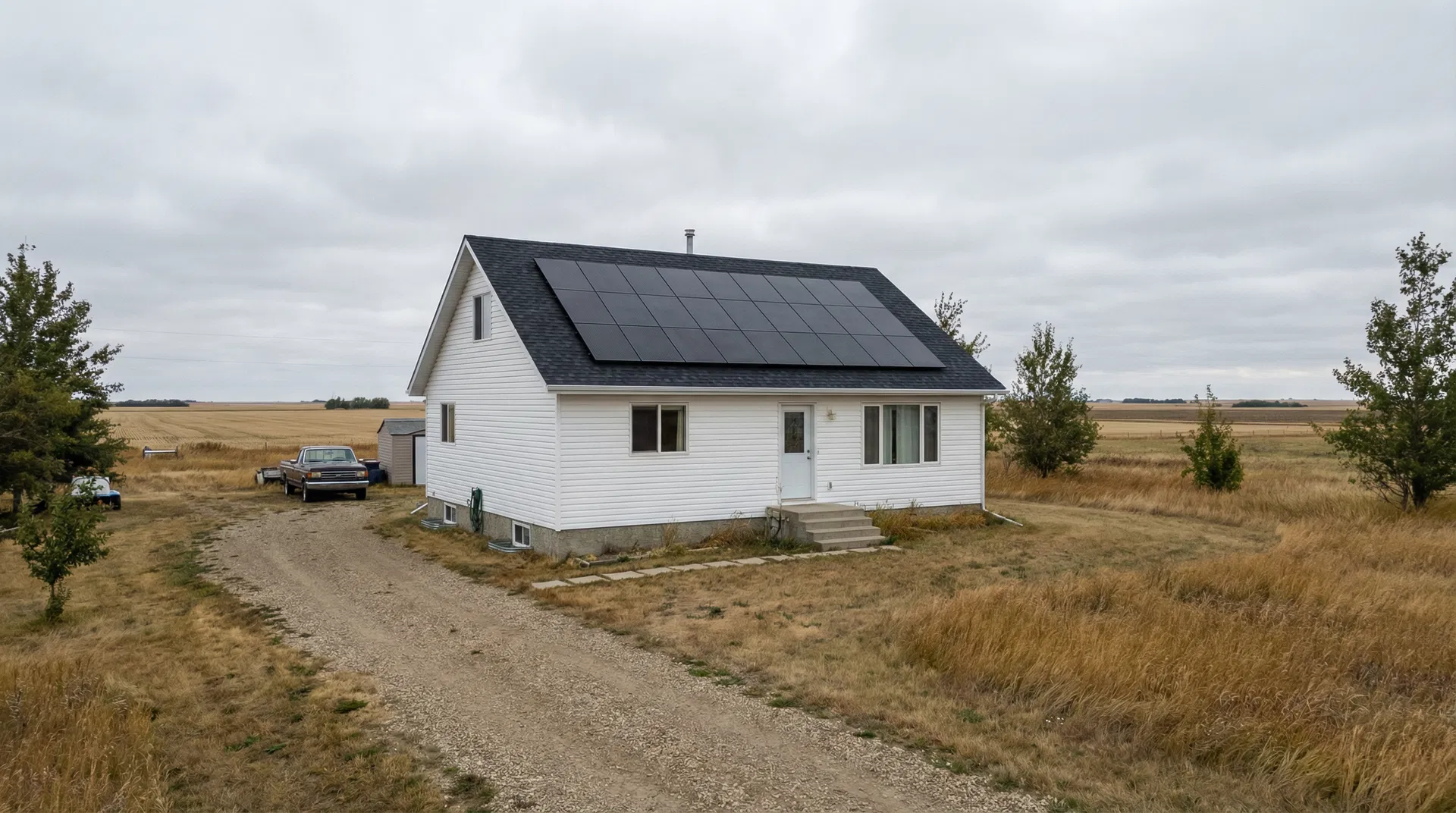
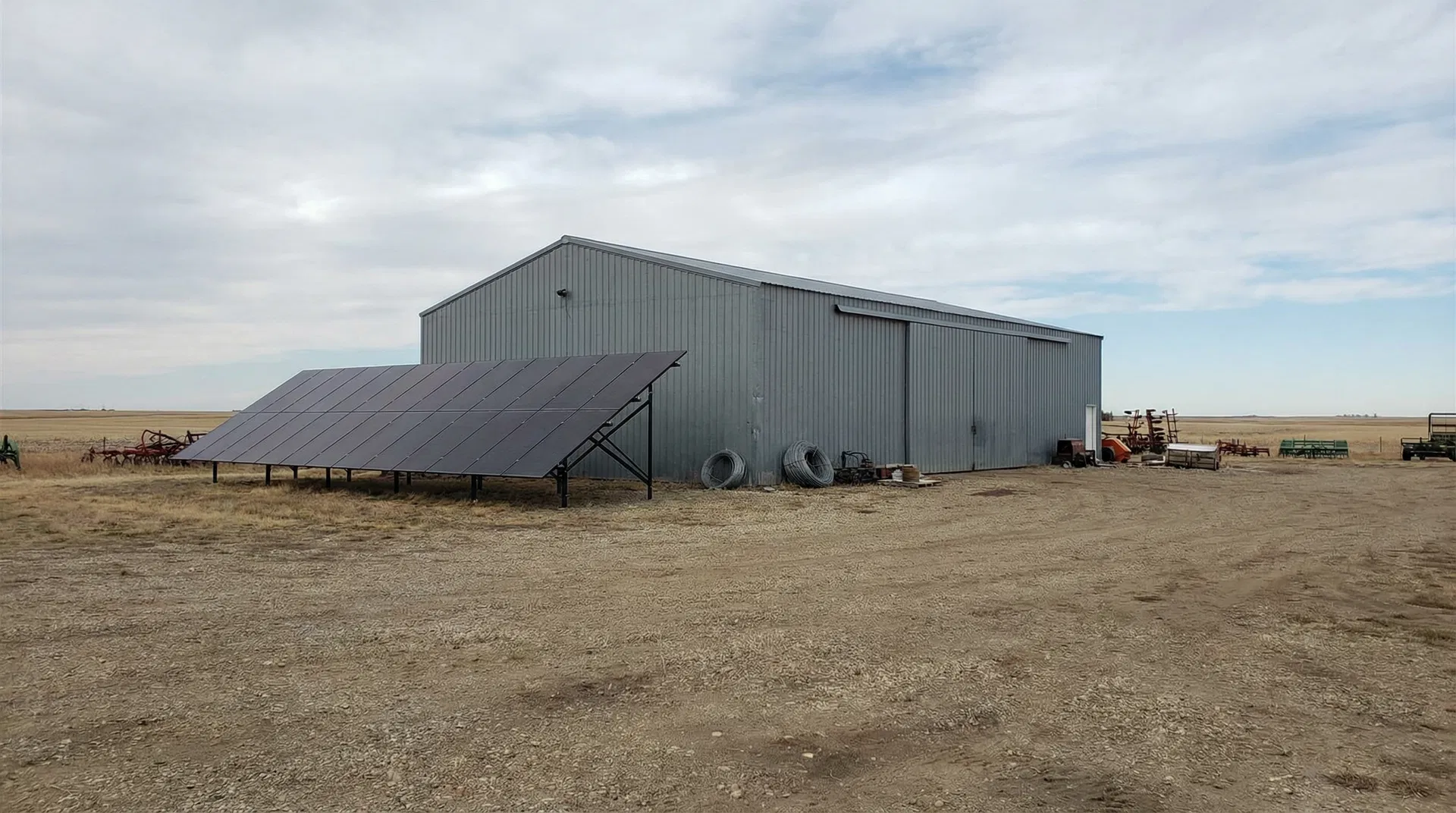
Rural and semi-rural Alberta properties typically need a bigger system than a standard suburban home, because there's more than one load on the meter. A home plus a heated shop plus outbuildings, and sometimes irrigation pumps or grain handling equipment, all draw off the same service, and a system sized only for the house comes up short the moment the shop heater or an auger kicks on. That's one reason systems in this range often land at 8 to 12 kW instead of the smaller arrays common in town. Roof or ground mount is the next decision, and it comes down to what the property actually offers. A roof mount makes sense when the roof has clear south, east, or west exposure without heavy shading from trees or nearby buildings. Ground mount becomes the better call when mature trees or outbuildings shade the roof, when the roof pitch or orientation works against panel output, or when the yard has open space and running conduit to a ground array is simpler than working around roof penetrations and multiple planes. Either way, we don't size a system off a square-footage guess or a rule of thumb. We pull the 12-month usage graph off your most recent power bill, which shows exactly how much power the property draws month to month, including seasonal swings from heating, shop use, or irrigation, and size the array and inverter configuration around that real usage pattern together with the site conditions we find on the visit.
Typical Load Profiles We Design For Near Cochrane
Home + Heated Shop
This is one of the most common profiles we design for outside of town: a house plus a detached shop with electric heat, often a sub-panel feeding welding equipment or power tools. The shop heater alone can be a significant chunk of winter draw, which shows up clearly on the 12-month usage graph on your power bill. We size the array and often lean toward a higher microinverter count per string so the system can handle two structures pulling from one service.
Acreage with Irrigation
Properties with irrigation pumps see a distinct seasonal spike that a house-only system wouldn't account for: heavy draw in the growing months, then a drop-off over winter. We size these systems around that seasonal pattern rather than an average, using the usage graph on your bill to see exactly when and how hard the pump runs. Ground mount is common here since pump sheds and irrigation infrastructure often take up roof-adjacent space anyway.
Grain Handling and Farm Equipment
Grain dryers, augers, and bin fans create short, heavy load spikes rather than steady draw, which is a different profile than a home with a shop. We look at how those spikes show up on the usage graph and size the inverter configuration so the system contributes meaningfully without being built around a peak that only happens a few weeks a year. These properties often end up at the higher end of the 8 to 12 kW range because of the combined base and peak load.
FortisAlberta Interconnection in Cochrane
FortisAlberta is the wire service for Cochrane, Alberta, which means any net metering or micro-generation system installed on your property connects to and is reviewed by FortisAlberta specifically, not a different utility. Properties in town and on the surrounding acreages all fall under the same FortisAlberta distribution territory, so the interconnection process is consistent whether you're on a subdivision lot or a quarter section outside the edge of town. Range Road Solar prepares and submits the full FortisAlberta micro-generation application on your behalf: the single-line electrical diagram, equipment specifications for the LONGi panels and APsystems microinverters, and the site information FortisAlberta requires to review a connection request. We coordinate directly with FortisAlberta through the review process and keep you updated as your application moves through it. Because rules, forms, and review requirements change, we confirm current FortisAlberta requirements at the time of your design, rather than relying on what applied to a different project last year. That way the paperwork you submit reflects what FortisAlberta is actually asking for today, not an outdated version of the process.
Project Economics and Design Review
| System Size | Annual Production | Year 1 Savings | Payback Period |
|---|---|---|---|
| 8-12 kW range, 10 kW typical |
Production, savings, and payback figures require a property-specific design and your most recent power bill, and we won't quote them without both.
How We Work in Cochrane
Bill and Load Review
We review your power bill to understand your energy use in Cochrane and size the system to your actual consumption, not a generic estimate.
Site Assessment
We assess your roof or ground area, south-facing exposure, electrical service, and utility interconnection requirements specific to your property.
Design and Utility Application
We produce a system layout, production estimate, and cost summary, then submit your micro-generation application to your utility on your behalf.
Installation and Commissioning
Our crew installs racking, panels, inverter, and electrical connections. All work is performed by licensed electricians. We commission and test before handoff.
Current Program and Interconnection Review
Utility connection review
FortisAlberta reviews every micro-generation connection application before a system is allowed to interconnect, checking equipment specs, the single-line diagram, and site details against current requirements. Range Road Solar builds and submits that full design package on your behalf, so the application FortisAlberta receives is complete the first time.
Current program review
Commercial, farm, and residential properties can qualify for different programs and rules depending on property type and current provincial or utility policy. We review your property against whatever rules are active at the time of your design, rather than assuming last year's eligibility still applies.
Frequently Asked Questions
Get a Solar Assessment for Cochrane
Submit a recent power bill and we will review your consumption and provide an honest assessment for your Cochrane property. No obligation.
(587) 330-7502 Book a CallRelated Resources
More Solar Services in Cochrane