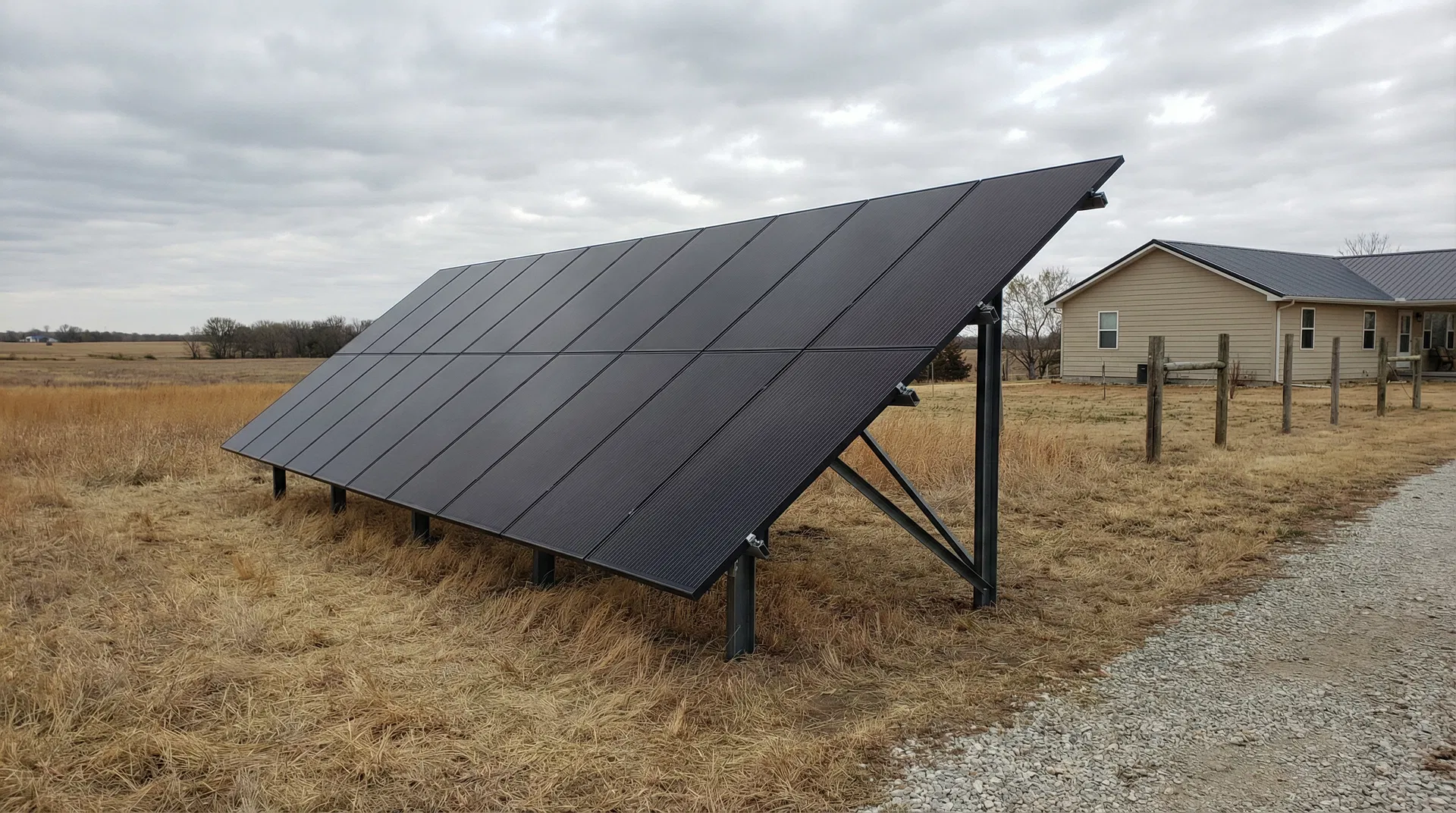
Off-grid solar in Airdrie, Alberta starts with LONGi solar panels, which give us a reliable, well-tested panel from a manufacturer with consistent availability for rural Alberta projects. We pair them with hybrid inverters and lithium battery storage sized to match the load profile of the specific property, not a one-size estimate. The inverter runs the loads directly from solar when production is available, charges the battery bank when there's surplus, and draws from storage when the panels aren't producing enough. A properly sized system handles overnight loads, low-light days, and seasonal variation without requiring a generator as a primary backup. Some properties do keep a generator for extended low-production periods, and a well-designed hybrid setup can integrate that cleanly. Systems in the 5 to 15 kW range cover the majority of off-grid residential and acreage applications near Airdrie, with 8 kW being a common starting point for a full home load. Shops, outbuildings, and additional loads push that number up, which is exactly why we size from your actual usage data rather than a rule-of-thumb figure. Ground-mount arrays are common on acreage lots where roof space is limited, shading is a factor, or the load is spread across multiple structures. We assess both options during the site review and recommend the layout that gives the system the best production window relative to your loads.
Solar Planning for Airdrie Properties
Not every property in the Airdrie area sits close enough to the grid to make a FortisAlberta connection practical. Acreages, secondary structures, and remote sites sometimes face connection quotes that make full grid independence the more sensible path. That's where off-grid solar earns its place. An off-grid system generates power on-site, stores it in lithium batteries, and runs your loads without a utility account at all. There's no monthly distribution charge, no demand to connect, and no waiting on an interconnection application. You own the system and you own the output. The tradeoff is that system sizing matters more than it does on a grid-tied install. You don't have the utility as a backstop on low-production days, so the battery bank and the panel array both need to be sized to cover your actual load, not a rough estimate. Range Road Solar sizes off-grid systems from your most recent power bill and a full site assessment, looking at roof or ground-mount options, shading, orientation, and what loads the system needs to carry. If you're unsure whether off-grid or grid-tied is the right call for your property, that conversation is part of the free design review.
Electrical Site Review for Airdrie Properties
Voltage Rise
Voltage rise occurs when a solar system pushes current back along a distribution line, raising the voltage at the point of connection above the acceptable operating range. On rural properties served by longer distribution runs, the line impedance can be higher, which makes voltage rise a more significant constraint on system output. When voltage rise limits are reached, the inverter clips production to stay within spec, so understanding it early keeps system sizing accurate.
Single-Phase vs Three-Phase
Rural Alberta properties can be served by either single-phase or three-phase electrical service depending on the loads the site was originally built around. Three-phase service is common where large motors, grain handling equipment, or industrial loads are present, while most residential acreages run single-phase. Inverter selection and maximum system capacity both depend on which service type the property has, so we confirm this during the site review before any equipment is specified.
Panel Infrastructure
Older electrical panels on rural acreages sometimes don't have the breaker capacity to accommodate a solar system without an upgrade. We assess the panel age, breaker availability, and overall condition as part of the site review to determine whether the existing infrastructure can support the planned system size. If an upgrade is needed, we identify it before installation so there are no surprises partway through the project.
Service Entrance Review
The service entrance and meter base condition matter for any system that involves a FortisAlberta interconnection application, because the utility reviews both as part of their approval process. We check the meter base for age, compatibility with current standards, and physical condition during the site assessment. If the meter base needs upgrading before FortisAlberta will approve the application, we flag that requirement in the design package so the customer can plan accordingly.
Right-Sizing Solar for Airdrie Properties
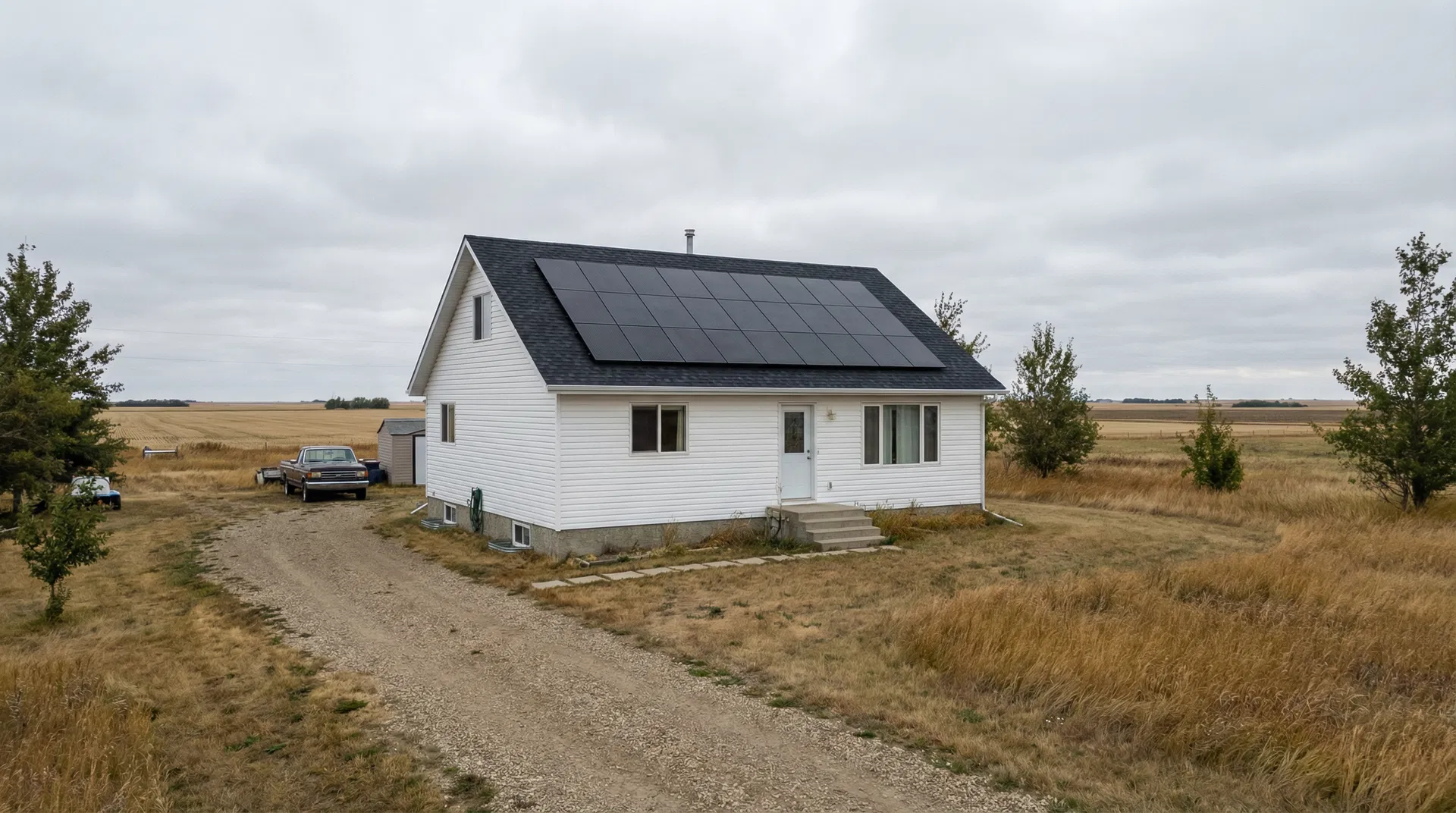
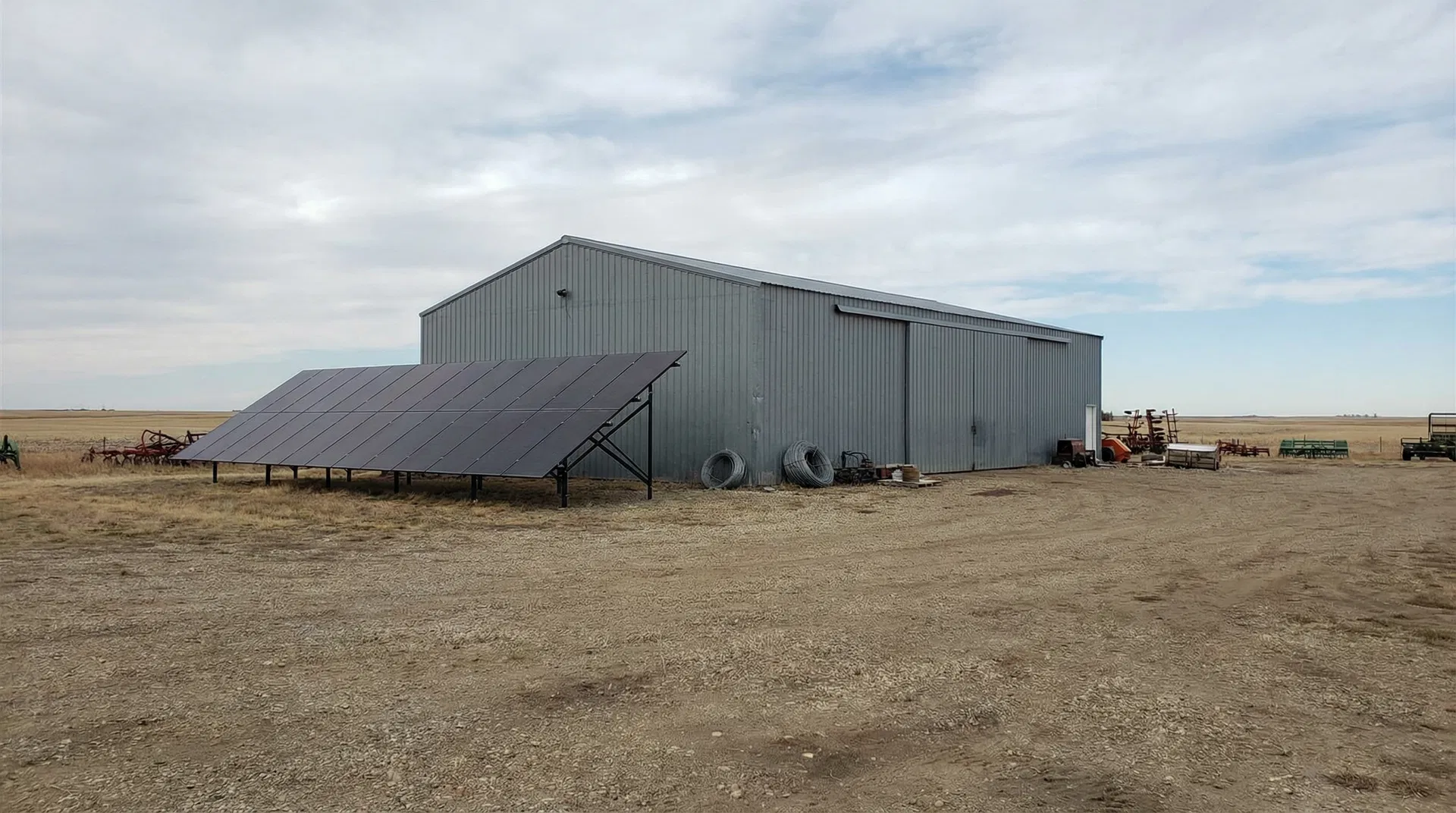
Acreage and rural properties near Airdrie often carry more load than a typical urban home. A house on its own is straightforward enough, but add a heated shop, a second outbuilding, irrigation controls, or grain handling equipment, and the total draw can be two or three times what a residential roof-mount system is designed to cover. Off-grid sizing has to account for all of those loads together, because there's no grid to fill the gaps. That's why we don't use rule-of-thumb numbers. We work from the 12-month usage graph on your most recent power bill, which shows seasonal variation and peak months in a single document. That graph tells us more about how a property actually uses power than any estimate based on square footage or appliance lists. Roof versus ground mount is a separate decision, and it depends on the site. A well-oriented roof with minimal shading is a clean option, but a lot of acreage properties have trees, adjacent buildings, or outbuildings that shade the main roof for part of the day. Ground-mount arrays can be positioned to avoid those obstructions entirely, and on a property with open yard space, they're often the better call. Some larger properties use a combination: roof mount on the house and a ground array near the shop or barn, with the battery and inverter centrally located. We work through the layout options during the site assessment and recommend whatever the design supports, not what's easiest to install.
Typical Load Profiles We Design For Near Airdrie
Home Plus Heated Shop
A heated shop running a welder, compressor, and lighting alongside a full residential load is one of the most common profiles we see on acreage properties. The shop load adds meaningfully to the total draw, and the battery bank needs to be sized to cover overnight and early-morning usage before the panels are producing. We size the system from your most recent power bill and a walkthrough of what the shop runs, so the battery capacity matches what the property actually needs.
Cabin or Secondary Residence
A seasonal or year-round cabin without an existing utility connection is a straightforward off-grid application, typically in the 5 to 8 kW range depending on whether it's running a full kitchen, water pump, and heat, or just lighting and minimal appliances. The load profile for a cabin is usually simpler than a main residence, which can keep the battery bank and panel count lower. We confirm the design from the load list and site layout when a power bill isn't available for a new build.
Acreage With Irrigation and Outbuildings
Properties running irrigation pumps alongside a home and multiple outbuildings have a load profile that peaks seasonally, which affects how the battery and array need to be sized for year-round reliability. A 10 to 15 kW system is common where irrigation adds significant summer demand on top of baseline residential and outbuilding loads. We pull the seasonal variation from the 12-month usage graph on your most recent power bill to make sure the system is sized for peak months, not just average use.
FortisAlberta Interconnection in Airdrie
FortisAlberta is the wire service for Airdrie, and any grid-tied solar system here goes through their interconnection process. For a true off-grid install, there's no FortisAlberta application required because the system operates independently of the distribution network entirely. That said, some properties in the area start as off-grid and later explore a hybrid arrangement that includes a grid connection, and some property owners want to understand both paths before committing. If your situation involves any grid-tied component at all, Range Road Solar handles the design package and the FortisAlberta application process on your behalf. We know what FortisAlberta requires in terms of documentation, single-line drawings, and equipment specifications, and we submit a complete package the first time. For a purely off-grid system, we focus the review on your load profile, site conditions, and battery sizing. The goal is a system that covers your needs without leaning on a utility connection that either doesn't exist or isn't worth the cost to establish.
Project Economics and Design Review
| System Size | Annual Production | Year 1 Savings | Payback Period |
|---|---|---|---|
| 5-15 kW range, 8 kW typical |
Production, savings, and payback estimates require a property-specific design and your most recent power bill before any figures can be confirmed.
How We Work in Airdrie
Bill and Load Review
We review your power bill to understand your energy use in Airdrie and size the system to your actual consumption, not a generic estimate.
Site Assessment
We assess your roof or ground area, south-facing exposure, electrical service, and utility interconnection requirements specific to your property.
Design and Utility Application
We produce a system layout, production estimate, and cost summary, then submit your micro-generation application to your utility on your behalf.
Installation and Commissioning
Our crew installs racking, panels, inverter, and electrical connections. All work is performed by licensed electricians. We commission and test before handoff.
Current Program and Interconnection Review
Utility connection review
FortisAlberta reviews grid connection applications for any system in Airdrie that includes a grid-tied component. Range Road Solar handles the design package, single-line drawings, and equipment documentation required for that process. For a fully off-grid install, there's no FortisAlberta application, but we still review site electrical conditions as part of the install.
Current program review
Eligibility for commercial, farm, and residential programs is reviewed against current rules at the time of your design review, since program terms change. We don't present a program as available until we've confirmed it applies to your specific property type and system configuration. That review is part of the design process, not an afterthought.
Frequently Asked Questions
Get a Solar Assessment for Airdrie
Submit a recent power bill and we will review your consumption and provide an honest assessment for your Airdrie property. No obligation.
(587) 330-7502 Book a CallMore Solar Services in Airdrie