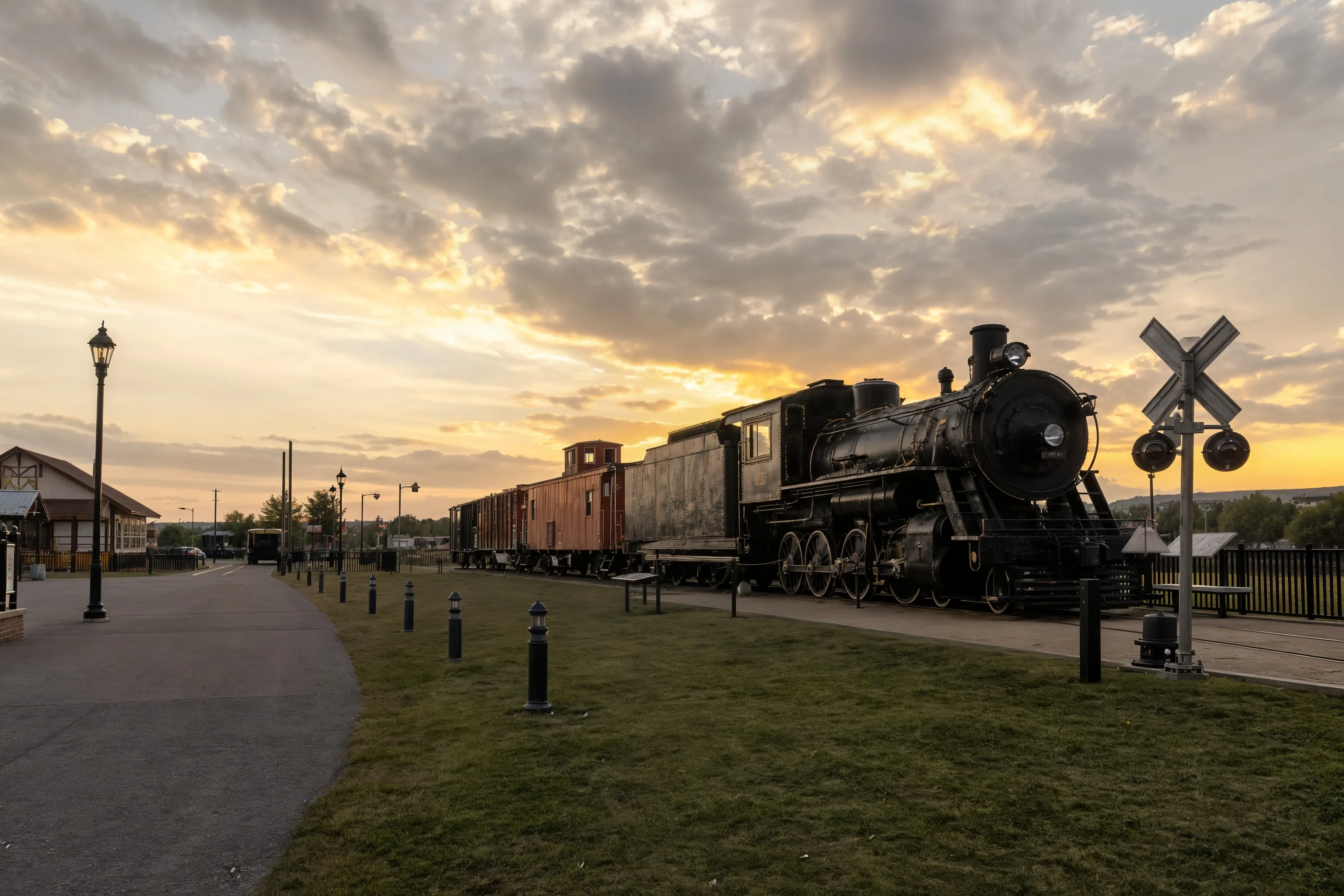
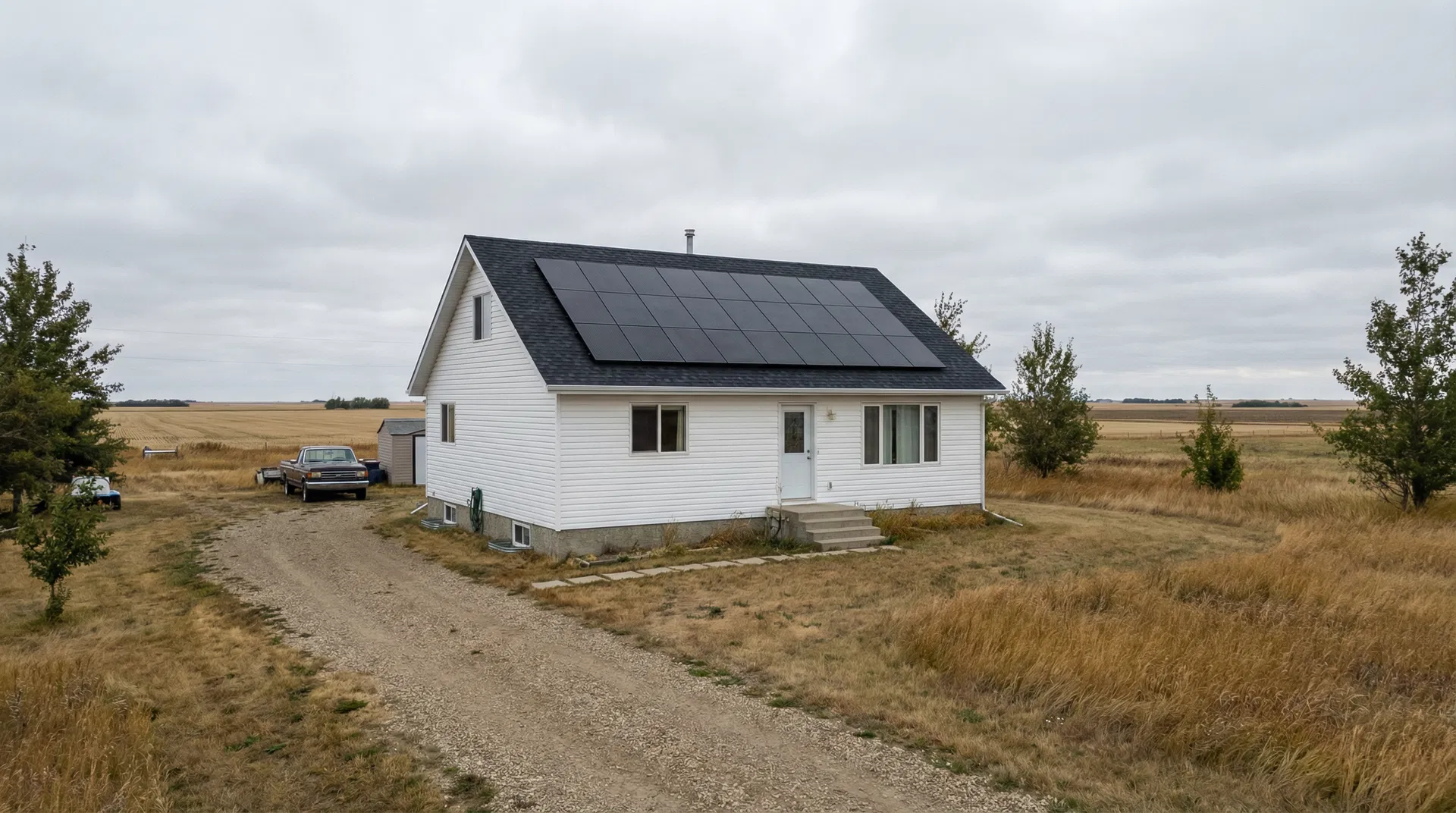
Solar net-metering in Airdrie, Alberta starts with a FortisAlberta micro-generation application that Range Road Solar prepares and files for you. We handle the paperwork, the one-line diagram, and the inspection scheduling so the system goes live without the property owner chasing down forms. For the system itself, we install LONGi panels paired with APsystems microinverters on most net metering projects in this size range. Microinverters make sense on a lot of the roof layouts we see here, especially where a property has two or three roof planes facing different directions, or a detached garage and a house that both need coverage. Instead of one central inverter tied to the whole array, each panel converts power independently, so partial shading from a tree line or a neighboring structure on one section of roof doesn't drag down output from the rest of the system. Systems in this range typically run 8 to 12 kW, with 10 kW as the typical build for a single-family property pulling grid power from FortisAlberta. Acreage and larger residential lots sometimes call for the higher end of that range, or a ground-mount layout instead of a roof array, depending on shading and available space. Whatever the layout, the net metering application itself stays the same: Range Road Solar submits the micro-generation request to FortisAlberta, provides the required electrical documentation, and coordinates the meter work needed once the system is approved and energized.
Solar Planning for Airdrie Properties
Airdrie, Alberta sits on FortisAlberta's distribution network, the utility that reviews every net metering and micro-generation application for properties here. Population in the area grew from 61,581 to 74,100 between the last two census counts (Statistics Canada), and that growth has brought a wider mix of property types onto the same grid: new subdivisions, older acreages on the edges of the area, and commercial sites tied to the Transportation and Logistics sector. Each of those properties puts different demands on a net metering system, which is why Range Road Solar starts with a site visit instead of a generic quote. Environment Canada's climate normals for the nearby Calgary International Airport station list 2,396.3 hours of bright sunshine annually, and Natural Resources Canada's solar resource maps put the specific PV yield for this part of Alberta at 1,292 kWh/kWp. Those are regional reference figures, not a promise of what your roof or ground mount will produce. The real number comes from your most recent power bill and a site design that accounts for shading, orientation, and your service type. Iron Horse Park sits close to the kind of mixed residential and commercial load we see on a lot of net metering applications in the area. We confirm sizing and expected output through that design process, not a rule of thumb.
Electrical Site Review for Airdrie Properties
Voltage Rise
Voltage rise happens when the distance and wiring between a transformer and a property cause voltage to climb as a net metering system pushes power back onto the line. Distribution conditions on a given feeder affect how much headroom is available before that rise becomes a problem. We check for it during the site review because it directly affects inverter clipping and how large a system we can safely size for your service.
Single-Phase vs Three-Phase
Properties in rural Alberta can have either single-phase or three-phase electrical service, depending on the property and when it was connected. That distinction matters for net metering because inverter selection and the maximum system capacity we can design for depend on which phase configuration is already in place. We confirm your service type on site rather than assuming it from the property type alone.
Panel Infrastructure
Older electrical panels don't always have the breaker capacity to support a net metering system sized at 8 to 12 kW, so we check panel age and available breaker space as part of every site visit. We're looking for main breaker rating, available slots, and signs of a panel that wasn't built for added generation. If the panel can't support the system, an upgrade means a new panel and breaker sized to the design, completed before the microinverters go in.
Service Entrance Review
We review the service entrance and meter base condition on every property because FortisAlberta requires a meter base in good working order before it will approve a micro-generation application. That review covers the meter socket, the service conductors, and the grounding setup. If the meter base needs an upgrade to meet FortisAlberta's standards, we handle that work before filing the interconnection application so it doesn't hold up approval.
Right-Sizing Solar for Rural Alberta Properties
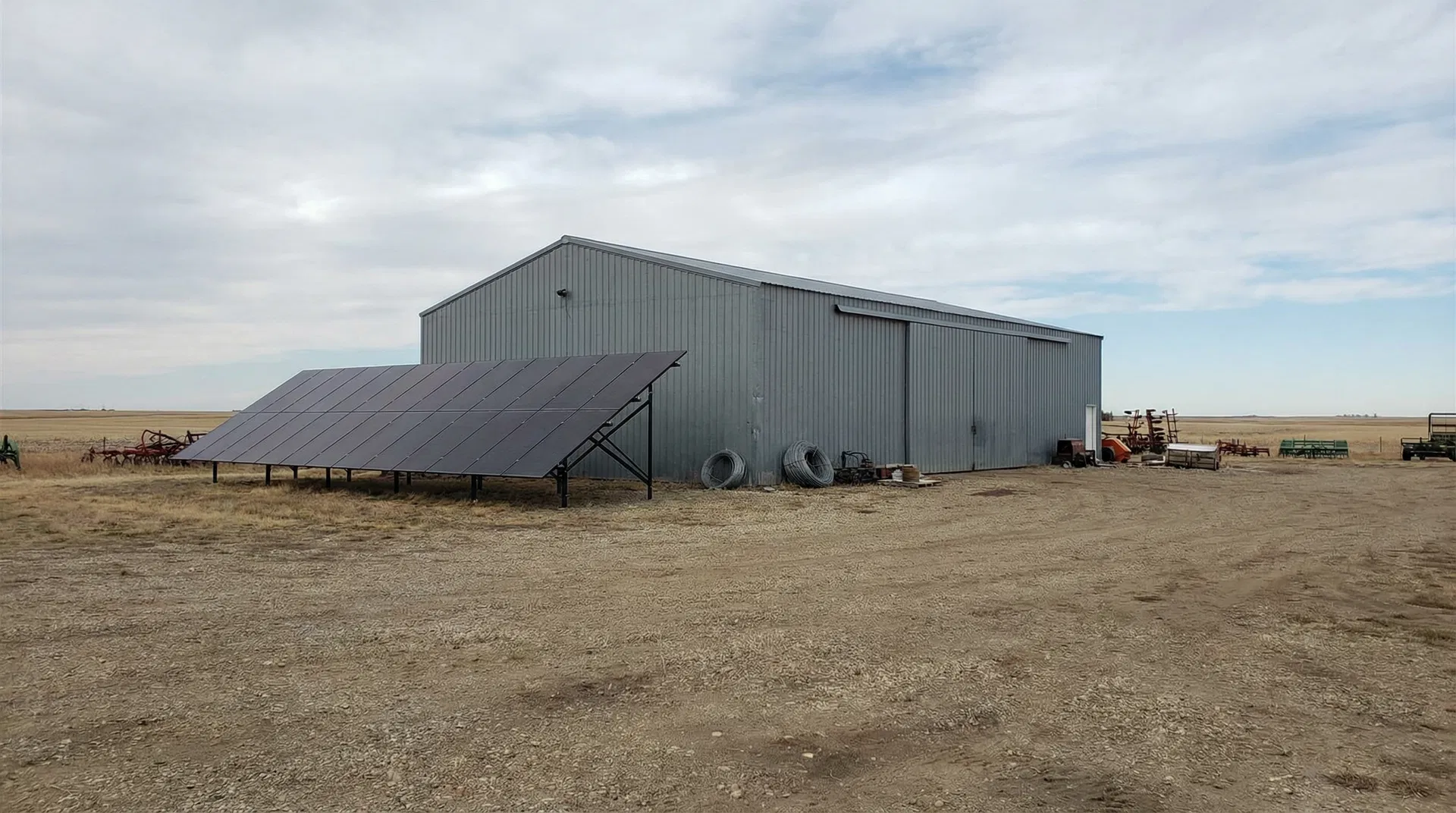
Rural and acreage properties in this area typically need a bigger net metering system than a standalone house in a subdivision, because there's more than one load drawing power. A home with a heated shop, a well pump, or grain handling equipment on the same meter pulls a different load profile than a house alone, and the system has to be sized for all of it together, not just the house. Roof or ground mount is a property-by-property call. A roof array makes sense where there's enough unshaded, well-oriented roof space and the pitch works for the panel layout. Ground mount becomes the better option when mature trees or outbuildings shade the roof, when the roof pitch or orientation doesn't suit a clean array, or when the yard has open space that isn't doing anything else and mounting on the ground gives better access for cleaning and maintenance. Either way, we don't size a system off a rule of thumb like watts per square foot of house. We size it from the 12-month usage graph on your most recent power bill, which shows how your load moves across the seasons; a shop that only runs in winter or an irrigation pump that only runs in summer shows up clearly on that graph. Combined with a site design for shading and orientation, that usage history is what drives the final system size, not a generic formula.
Typical Load Profiles We Design For in the Area
Home Plus Heated Shop
This is one of the most common load profiles we see outside the core subdivisions: a house plus a heated detached shop running power tools, a vehicle heater, or a small compressor through the winter. We size the system from the usage graph on your most recent power bill, which separates the shop's draw from the rest of the house's seasonal pattern. A system in the 8 to 12 kW range often works for this profile, but the exact size comes out of that bill review, not the shop's square footage.
Acreage With Well Pump and Outbuildings
An acreage with a well pump, a detached garage, and maybe a second outbuilding puts a different shape of load on the meter than a single house does, with short bursts of higher draw from the pump alongside the steady baseline from the house. We look at how those loads stack on your most recent power bill before recommending roof or ground mount. Where the yard has open, unshaded space, ground mount often fits this profile better than trying to cover every roof plane.
Commercial or Transportation-Adjacent Property
Properties tied to the area's transportation and logistics work, like a small warehouse, a fleet yard, or an office with attached shop space, often run three-phase service and have load patterns driven by business hours rather than household routines. Net metering and micro-generation for a property like this goes through the same FortisAlberta application, but the design has to account for three-phase equipment and daytime-weighted usage. We build that system size around the commercial usage history on the account, not a residential assumption.
FortisAlberta Interconnection in Airdrie
FortisAlberta is the wire service for every net metering and micro-generation application in Airdrie, Alberta. That means any system we design here gets submitted to FortisAlberta as the distribution utility, not to a municipal office or your electricity retailer. Range Road Solar prepares the full interconnection package: the micro-generation application, the single-line electrical diagram, equipment specification sheets for the LONGi panels and APsystems microinverters, and any site information FortisAlberta requests during review. We stay the point of contact with FortisAlberta through the review process, so the property owner isn't the one tracking down a missing form or re-submitting a document. Once FortisAlberta approves the application and the meter work is scheduled, we coordinate that final step on site. Program rules, approval steps, and net metering mechanics with FortisAlberta can change, so we confirm current requirements directly with FortisAlberta at the time of your application rather than relying on what applied to a different project.
Project Economics and Design Review
| System Size | Annual Production | Year 1 Savings | Payback Period |
|---|---|---|---|
| 8-12 kW range, 10 kW typical |
Production, savings, and payback figures are specific to your property and depend on a design review using your most recent power bill, not a general estimate.
How We Work in Airdrie
Bill and Load Review
We review your power bill to understand your energy use in Airdrie and size the system to your actual consumption, not a generic estimate.
Site Assessment
We assess your roof or ground area, south-facing exposure, electrical service, and utility interconnection requirements specific to your property.
Design and Utility Application
We produce a system layout, production estimate, and cost summary, then submit your micro-generation application to your utility on your behalf.
Installation and Commissioning
Our crew installs racking, panels, inverter, and electrical connections. All work is performed by licensed electricians. We commission and test before handoff.
Current Program and Interconnection Review
Utility connection review
FortisAlberta reviews every micro-generation and net metering application for grid connection before a system is approved, checking the electrical design against its own interconnection standards. Range Road Solar prepares that full design package, including the one-line diagram and equipment specifications, and submits it on your behalf.
Current program review
Eligibility for commercial, farm, and residential net metering is reviewed against the rules in place at the time of your application, since program details can change. We check current eligibility as part of every design review rather than relying on what applied to an earlier project.
Frequently Asked Questions
Get a Solar Assessment for Airdrie
Submit a recent power bill and we will review your consumption and provide an honest assessment for your Airdrie property. No obligation.
(587) 330-7502 Book a CallRelated Resources
More Solar Services in Airdrie