
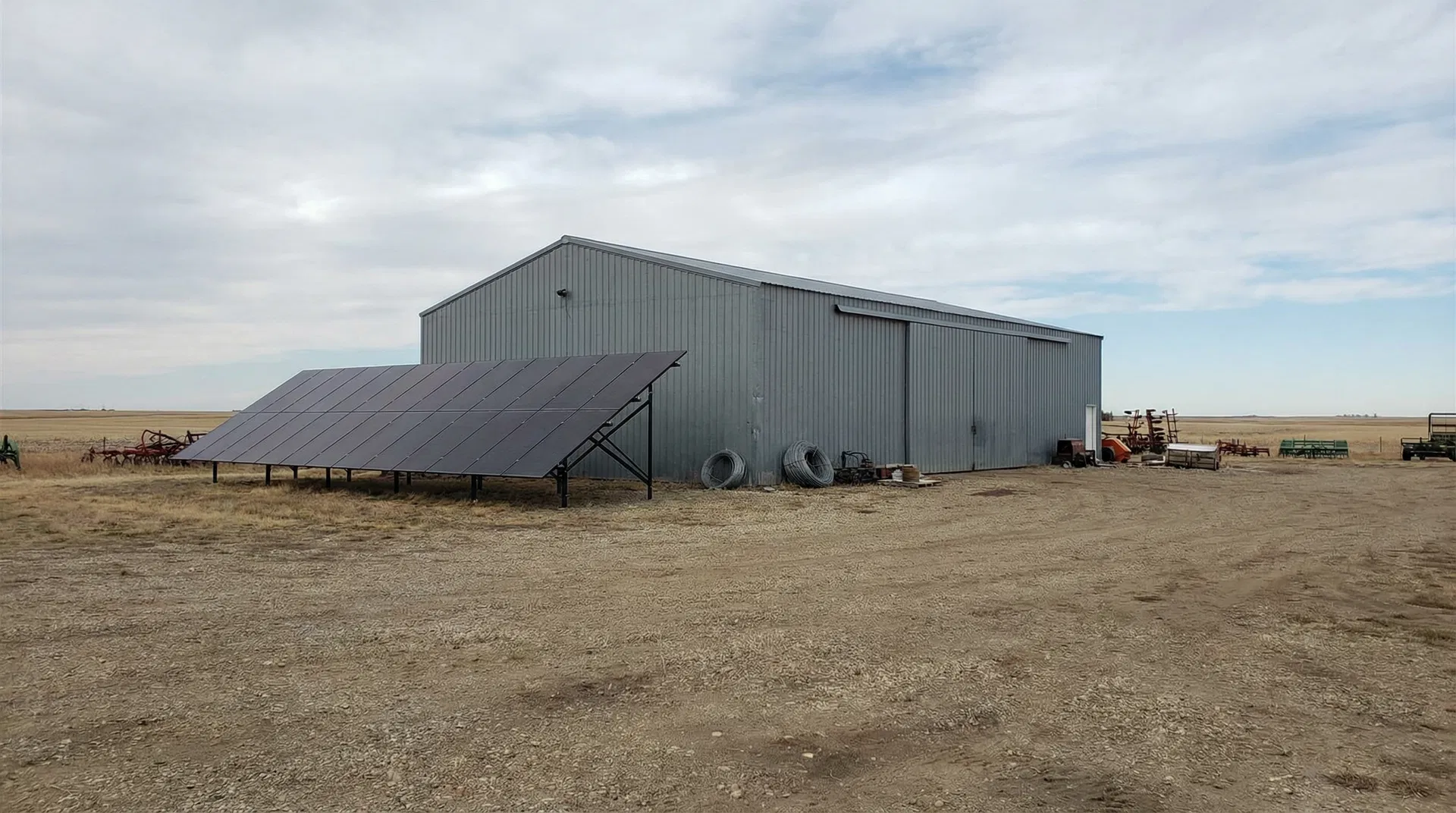
Ground mount solar in Okotoks, Alberta puts panels on engineered racking in the yard instead of the roof, which suits the acreage-style lots and larger residential parcels common around the area. These systems run from 10 to 30 kW, with most properties landing around 15 kW once we've reviewed the site and the most recent power bill. We use LONGi panels paired with APsystems microinverters on every ground mount install, which lets us size and monitor each panel's output independently rather than treating the whole array as one unit. That module-level approach matters more on a ground mount system than a roof mount, since ground arrays can pick up partial shading from fences, outbuildings, or shifting tree lines throughout the day. The racking itself is engineered to the site: footing depth, tilt angle, and row spacing all get worked out from the specific soil and layout on the property, not a standard template. For a property with a house, a heated shop, and maybe a well pump or irrigation system, a ground mount array gives us more flexibility to size for the combined load than a roof ever could, since we're not limited by available roof area or a single orientation. We also build in space for future rows where the yard allows it, so the array can grow if the load on the property grows. Every ground mount proposal includes the racking design, the panel and microinverter layout, and the FortisAlberta interconnection paperwork specific to this property.
Solar Planning for Okotoks Properties
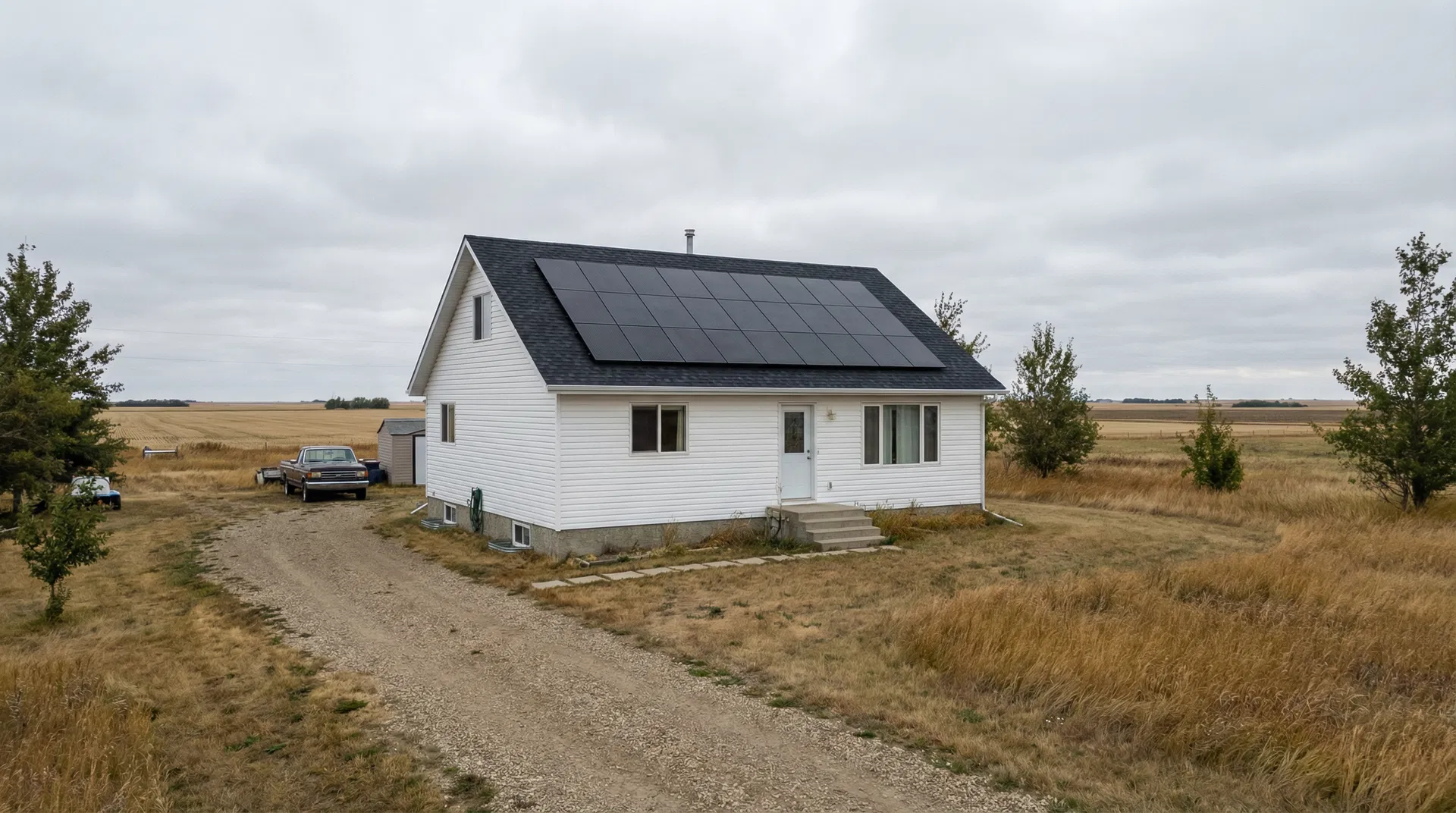
This property sits in Foothills County, which surrounds the town on every side, and the local population has grown from 29,016 to 30,405 between the last two census counts, according to Statistics Canada. That kind of growth means more acreages and larger residential lots going up on the edges of town, many with the open yard space a ground mount array actually needs. A ground mount system makes sense here when a roof has too much shade from mature trees, an awkward pitch, or when the home simply doesn't have enough usable roof area for the load an owner wants to offset. FortisAlberta is the wire service for this property, so any ground mount project starts with a look at the existing electrical service and the interconnection application FortisAlberta requires before anything goes in the ground. We also factor in what else draws power on the property: outbuildings, a shop, an irrigation pump, whatever's running alongside the house day to day. The open, spread-out lots common on the edges of town are often exactly what makes ground mount racking the more practical call over trying to squeeze panels onto a roof that wasn't built with solar in mind. Every design starts with a site visit and your most recent power bill, not a generic assumption about what a property here should look like.
Electrical Site Review for Okotoks Properties
Voltage Rise
Voltage rise happens when the distance and wire gauge between a ground mount array and the main service cause the voltage at the inverter to climb higher than what's at the meter, especially on longer runs common with ground mount installs. If voltage rise pushes too high, the inverter can throttle or clip its output to protect itself, which cuts into the energy the array actually produces. We check the run length and wire sizing during design so the system is sized and wired to avoid that clipping in the first place.
Single-Phase vs Three-Phase
Rural Alberta properties can have either single-phase or three-phase electrical service, and which one a property has changes what inverter equipment and system capacity we can install. Three-phase service generally supports a larger system and more equipment flexibility, while single-phase service puts more constraints on inverter selection and total array size. We confirm which service type is on the property early in the design process, since it shapes the rest of the system plan.
Panel Infrastructure
Older rural properties sometimes still have an electrical panel with limited breaker capacity or outdated components that weren't built for a solar interconnection. We check the panel's age, its rated capacity, and how much room is left for a new breaker before finalizing a system design. If the existing panel can't support the added capacity, an upgrade adds a new panel or subpanel rated for the combined load, which we scope and quote as part of the project.
Service Entrance Review
The service entrance and meter base are where we confirm the physical connection point for the ground mount array ties back into the property's electrical system. Meter base condition matters directly for the micro-generation application to FortisAlberta, since they need to see a connection point that meets their current standards before approving it. If the meter base is outdated or damaged, we scope the upgrade needed so the application isn't held up.
Right-Sizing Solar for Okotoks Properties
Rural properties around the area usually need a bigger system than a comparable house in town, simply because there's more to power. A house alone is one load, but add a heated shop, a well pump, or grain-handling equipment, and the combined draw on the property can be several times what a standard home uses. That's a big part of why ground mount systems tend to land toward the higher end of the 10 to 30 kW range we install. Roof mount and ground mount aren't interchangeable choices; we work through which one fits a given property before settling on a design. If the roof is shaded by mature trees or a neighboring structure, or the pitch and orientation don't line up well with the sun's path, a roof array will underperform no matter how it's engineered. A property with a spread-out yard and no shortage of open ground is often better served by a ground mount system anyway, since it opens up row spacing and tilt options a roof can't offer. Either way, we size the system from the 12-month usage graph on your most recent power bill, not a rule-of-thumb multiplier based on square footage or a rough guess at appliance count. That graph shows us the actual monthly swings in usage, which combined with a site visit and shading assessment gives us a system size that matches how the property actually uses power, not how we'd expect it to.
Typical Load Profiles We Design For Near Okotoks
Home + Heated Shop
This profile covers a house plus a detached shop with heat, which is common on acreage-style properties with a ground mount array. The shop's heater and any tools or equipment running in it add a second, separate load alongside the home, and that combined draw is what we size the array against. We pull the actual monthly numbers from the 12-month usage graph on your most recent power bill rather than assuming what a typical shop adds.
Home + Well Pump + Irrigation
Properties with their own well pump and any irrigation equipment have a load profile that spikes seasonally, heavier in the growing months and lighter over winter. Sizing for this kind of property means looking at the full year of usage on the power bill's graph, not just a single month's snapshot, so the array is sized for the peak draw as well as the quiet stretches. A ground mount system gives us room to size generously for that seasonal swing without needing extra roof space.
Home + Grain Handling / Outbuildings
Farm-style properties with grain handling equipment, bins, or multiple outbuildings often have short bursts of heavy draw during harvest or drying season layered on top of steady household use. We look at how those bursts show up on the usage graph on your most recent power bill to figure out whether the array should be sized toward that peak or toward the steadier baseline load. Ground mount racking works well here since it can go wherever the yard has room, clear of the buildings themselves.
FortisAlberta Interconnection in Okotoks
FortisAlberta is the wire service for this property, and any ground mount system needs an interconnection application filed with them before it goes live. Range Road Solar prepares and submits that application as part of the project, including the single-line diagram and equipment specs FortisAlberta asks for on a micro-generation connection. Because a ground mount array sits outside the home's footprint, the application also needs to document the run from the array back to the main service, which is something we account for in the design and the racking layout. We don't control FortisAlberta's review timeline or their internal approval process, and we're not going to guess at how long it takes on a given property. What we can control is making sure the paperwork is accurate and complete the first time it's submitted, so the property owner isn't stuck waiting on a resubmission. If anything about the electrical service needs attention before FortisAlberta will approve the connection, like an older panel or a service entrance that needs upgrading, we flag that during the site review, well before the application goes in.
Project Economics and Design Review
| System Size | Annual Production | Year 1 Savings | Payback Period |
|---|---|---|---|
| 10-30 kW range, 15 kW typical |
Production, savings, and payback figures require a property-specific design and your most recent power bill; we don't publish general numbers because they don't hold up across different sites.
How We Work in Okotoks
Bill and Load Review
We review your power bill to understand your energy use in Okotoks and size the system to your actual consumption, not a generic estimate.
Site Assessment
We assess your roof or ground area, south-facing exposure, electrical service, and utility interconnection requirements specific to your property.
Design and Utility Application
We produce a system layout, production estimate, and cost summary, then submit your micro-generation application to your utility on your behalf.
Installation and Commissioning
Our crew installs racking, panels, inverter, and electrical connections. All work is performed by licensed electricians. We commission and test before handoff.
Current Program and Interconnection Review
Utility connection review
FortisAlberta reviews every micro-generation interconnection application for a ground mount system before it's approved, checking the equipment specs and the connection design against their current standards. Range Road Solar prepares that full design package, including the single-line diagram and equipment documentation, and handles the submission.
Current program review
Eligibility for any current commercial, farm, or residential program is reviewed against the rules in place at the time of your design, since those rules can change. We check what applies to a given property, whether it's a farm operation, a home, or a small commercial site, as part of the design review rather than assuming a blanket answer.
Frequently Asked Questions
Get a Solar Assessment for Okotoks
Submit a recent power bill and we will review your consumption and provide an honest assessment for your Okotoks property. No obligation.
(587) 330-7502 Book a CallRelated Resources
More Solar Services in Okotoks