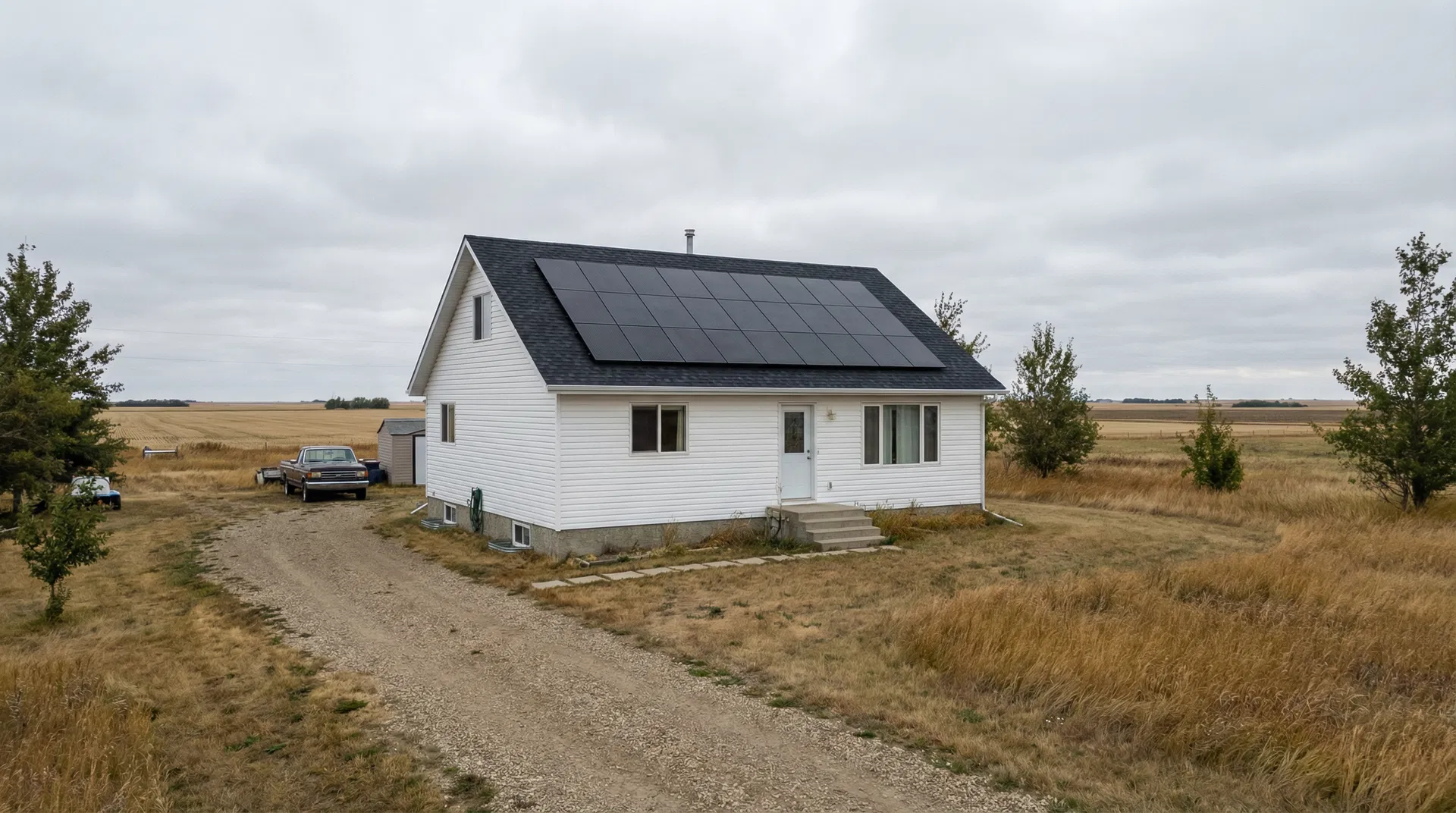
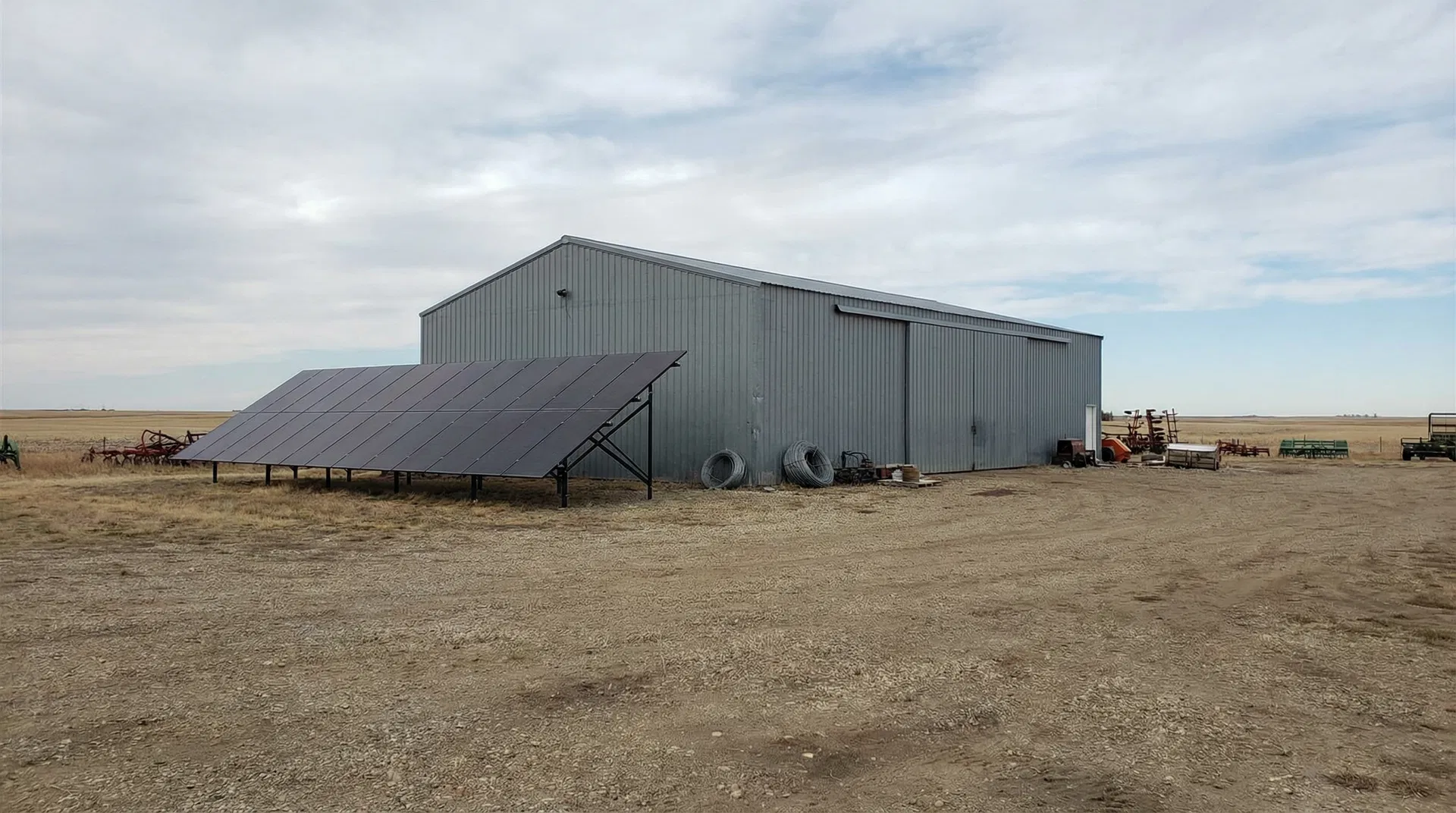
Solar Okotoks acreage owners install looks different from a subdivision rooftop kit: bigger arrays, ground-mount options where the yard allows it, and inverter choices built around a property running more than one load. We use LONGi panels as our standard module, paired with APsystems microinverters, which let us bring separate roof faces, a detached shop, or a ground array onto one monitored system instead of forcing everything through a single inverter that clips whenever one section is shaded. For acreages with a steep or complicated roofline, a mature tree line, or outbuildings that shade part of the yard through the day, a ground-mount array on open land often makes more sense than fighting a rooftop layout. We size the array around the loads actually present on the property, whether that's a heated shop, a barn, a well or irrigation pump, or a grain-handling setup, rather than defaulting to a single average-home number. Every install includes the structural and electrical review needed for a rural property: confirming the roof or ground-mount racking can carry the array, checking what the existing panel and service entrance can handle, and building a wiring plan that accounts for the distances involved on a larger lot. The result is a system sized to the property as it actually operates, not a package deal pulled off a shelf and dropped on the closest available roof.
Solar Planning for Okotoks Properties
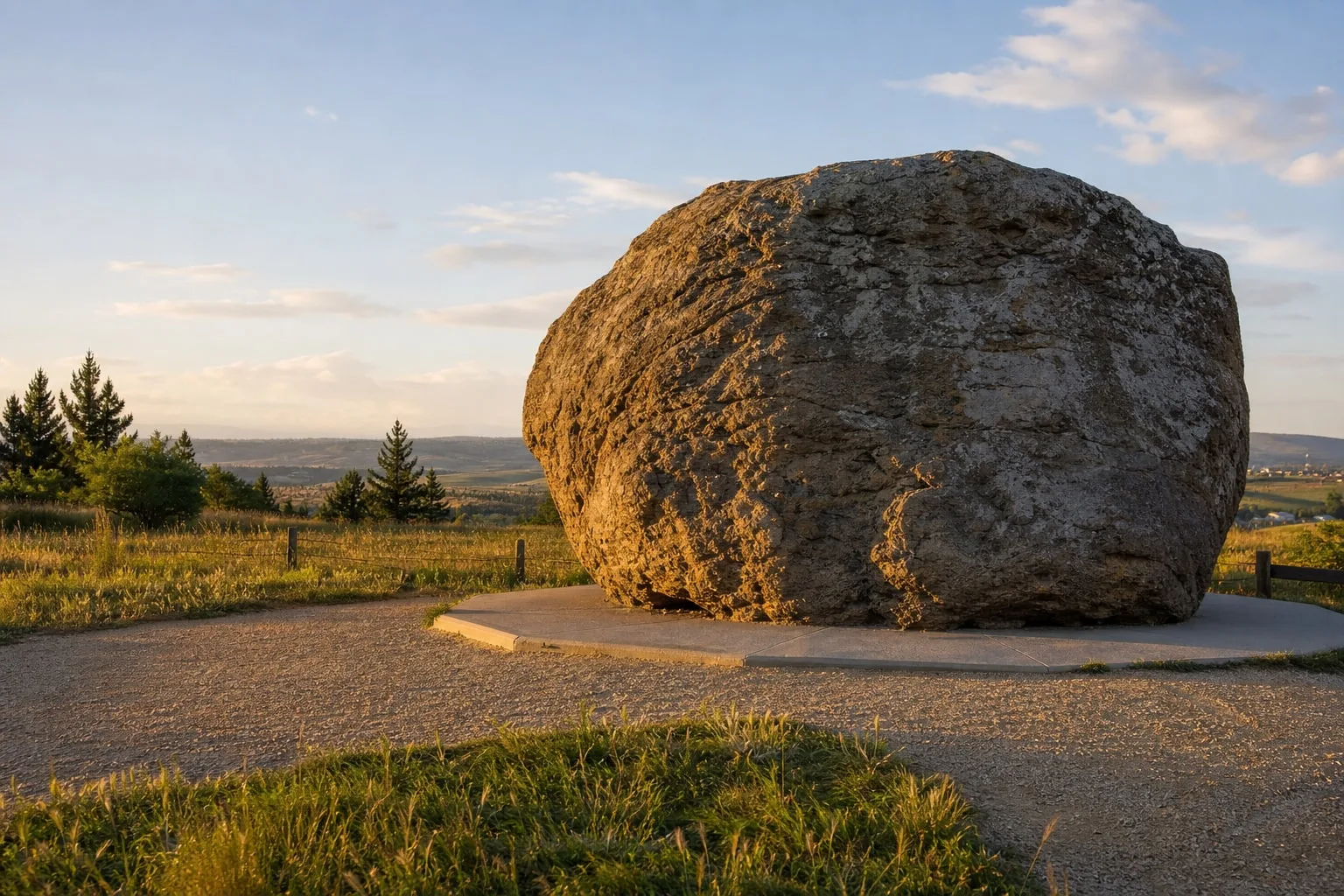
Okotoks, Alberta has grown to 30,405 residents in the most recent census count, and a good share of that growth sits on acreages carrying more electrical load than a standard in-town lot: a home plus a heated shop, a well pump, or outbuildings that need their own circuit. We design for that load, not a generic rooftop average. Environment Canada's climate normals for the Calgary Int'l A station, the nearest long-term monitoring point, log 2,396 hours of bright sunshine a year. That's one input among many, alongside your roof pitch, tree line, and outbuilding layout, that feeds into a design. Landmarks like the Okotoks Erratic (The Big Rock) mark the edge of town, but the acreage properties we work on often sit well past it, out where FortisAlberta's distribution lines run longer and site conditions can look different from a tight subdivision block. We don't hand out a canned system size over the phone. Every design starts with a walk of the property (roof or open ground, shading, and where the meter base sits) paired with the 12-month usage graph on your most recent power bill. That combination, not a population figure or a sunshine table, is what actually tells us whether a 12 kW system or an 18 kW system is the right call for your yard.
Electrical Site Review for Okotoks Properties
Voltage Rise
Voltage rise happens when the voltage at the far end of a circuit runs higher than at the source, and it tends to show up more on longer rural distribution runs than on a short in-town service drop. If voltage at the point of connection is already running high, an inverter can throttle its output or clip production to stay within its operating range. We check the voltage at your service entrance during the site review so the system is sized and configured with that condition in mind, not discovered after installation.
Single-Phase vs Three-Phase
Rural Alberta properties can carry either single-phase or three-phase electrical service, and which one you have affects both inverter selection and the total capacity we can put on the system. A shop with larger motor loads is more likely to run three-phase, while a standalone home is often single-phase. We confirm which service type your property has before finalizing equipment, since not every inverter is rated for both.
Panel Infrastructure
Older rural properties sometimes carry an electrical panel with limited breaker capacity or equipment that's past its practical service life, and either one can limit how much solar the existing panel can safely accept. During the site review, we check the panel's age, its rated capacity, and whether there's room for the breakers a solar system requires. If the panel can't support the system, an upgrade means installing a larger panel with the breaker space and capacity the design calls for, which we scope and quote as part of the project.
Service Entrance Review
We inspect the service entrance and meter base condition as part of every site visit, since a worn or undersized meter base can hold up the micro-generation application FortisAlberta reviews before allowing a grid connection. This includes checking the meter base's rating and physical condition alongside the conductors feeding it. Where an upgrade is required, we build it into the project scope and the FortisAlberta application from the start, rather than surfacing it as a surprise mid-install.
Right-Sizing Solar for Okotoks Properties
Rural systems run bigger than a typical urban rooftop install because rural properties carry more than one load: the house, plus a heated shop, plus outbuildings, plus sometimes a well pump, irrigation setup, or grain-handling equipment. Add those together and the total draw on a working acreage can look nothing like a subdivision home on the same size lot. That's part of why we don't size off a rule of thumb. Roof versus ground mount is a real decision, not a formality: a roof with good southern exposure and no shading is often the simpler and less expensive build, but a steep or complicated roofline, mature trees, or a roof that's already crowded with vents and equipment can tip the decision toward a ground-mount array instead. Ground mount also makes sense on a spread-out yard where there's open land available and the payoff is a cleaner, more serviceable array laid out exactly where the sun and wiring runs work best. Either way, we size the system from the 12-month usage graph on your most recent power bill, which shows us your actual draw across every season, not an estimate based on square footage or a generic per-person average. Combine that usage data with the site design (roof or ground conditions, shading, orientation) and you get a system sized for what the property actually uses, which is the only way we'll put a number on a proposal.
Typical Load Profiles We Design For Near Okotoks
Home Plus Heated Shop
This is the most common acreage pairing we see: a house on the same service as a detached shop that's heated and used year-round for equipment, vehicles, or a home business. The shop's heating and any tools or welding equipment inside it add load beyond what the house alone would need. We read the combined draw off your most recent power bill and design the array and inverter layout to cover both structures from one system.
Home Plus Barn or Livestock Operation
Properties running livestock often add water heaters, waterers, and barn lighting or ventilation that run on a different schedule than a household's daytime use. Those loads can be steady through the day rather than concentrated in the evening, which changes how we think about system size and inverter placement. We map that pattern from your billing history rather than assuming a standard residential usage curve.
Home Plus Irrigation or Grain Handling
Seasonal equipment like irrigation pumps or grain-handling augers and dryers can spike usage hard for part of the year and sit idle the rest of it, which a single annual average would hide completely. We look at the monthly usage graph on your power bill to see those seasonal swings directly, then size the system and inverter configuration to handle the peak months without oversizing for the quiet ones.
FortisAlberta Interconnection in Okotoks
FortisAlberta is the electricity distribution provider for Okotoks, and any grid-connected solar system here goes through their micro-generation interconnection process. Range Road Solar prepares and submits that application as part of the install: the single-line diagram, equipment specifications for the LONGi panels and APsystems microinverters, and the site details FortisAlberta needs to review the connection. We handle the paperwork and the back-and-forth with FortisAlberta directly, so you're not the one tracking down forms or chasing an application status. We don't quote approval timelines, credit terms, or payout rates here: those are set by FortisAlberta and the retailer you're on, and they can change, so we confirm the current rules with you as part of the design review rather than repeating numbers that might be stale by the time your system is ready to connect.
Project Economics and Design Review
| System Size | Annual Production | Year 1 Savings | Payback Period |
|---|---|---|---|
| 12-18 kW range, 15 kW typical |
Production, savings, and payback figures are specific to your property and require a design review paired with your most recent power bill.
How We Work in Okotoks
Bill and Load Review
We review your power bill to understand your energy use in Okotoks and size the system to your actual consumption, not a generic estimate.
Site Assessment
We assess your roof or ground area, south-facing exposure, electrical service, and utility interconnection requirements specific to your property.
Design and Utility Application
We produce a system layout, production estimate, and cost summary, then submit your micro-generation application to your utility on your behalf.
Installation and Commissioning
Our crew installs racking, panels, inverter, and electrical connections. All work is performed by licensed electricians. We commission and test before handoff.
Current Program and Interconnection Review
Utility connection review
FortisAlberta reviews every grid-connected solar system through its micro-generation interconnection process before it can be turned on. Range Road Solar prepares the design package and submits the application on your behalf, so the technical requirements are handled as part of the project rather than left for you to sort out.
Current program review
Eligibility for commercial, farm, and residential solar programs changes as rules are updated, so we check what applies to your property against the current requirements at the time of your design review rather than assuming last year's rules still hold.
Frequently Asked Questions
Get a Solar Assessment for Okotoks
Submit a recent power bill and we will review your consumption and provide an honest assessment for your Okotoks property. No obligation.
(587) 330-7502 Book a CallRelated Resources
More Solar Services in Okotoks