Foothills County · Acreage solar systems
Acreage Solar in Foothills County, AB
Rural acreages carry bigger electrical loads than city homes. We design 12-18 kW rooftop and ground-mount systems sized to what your property actually uses.
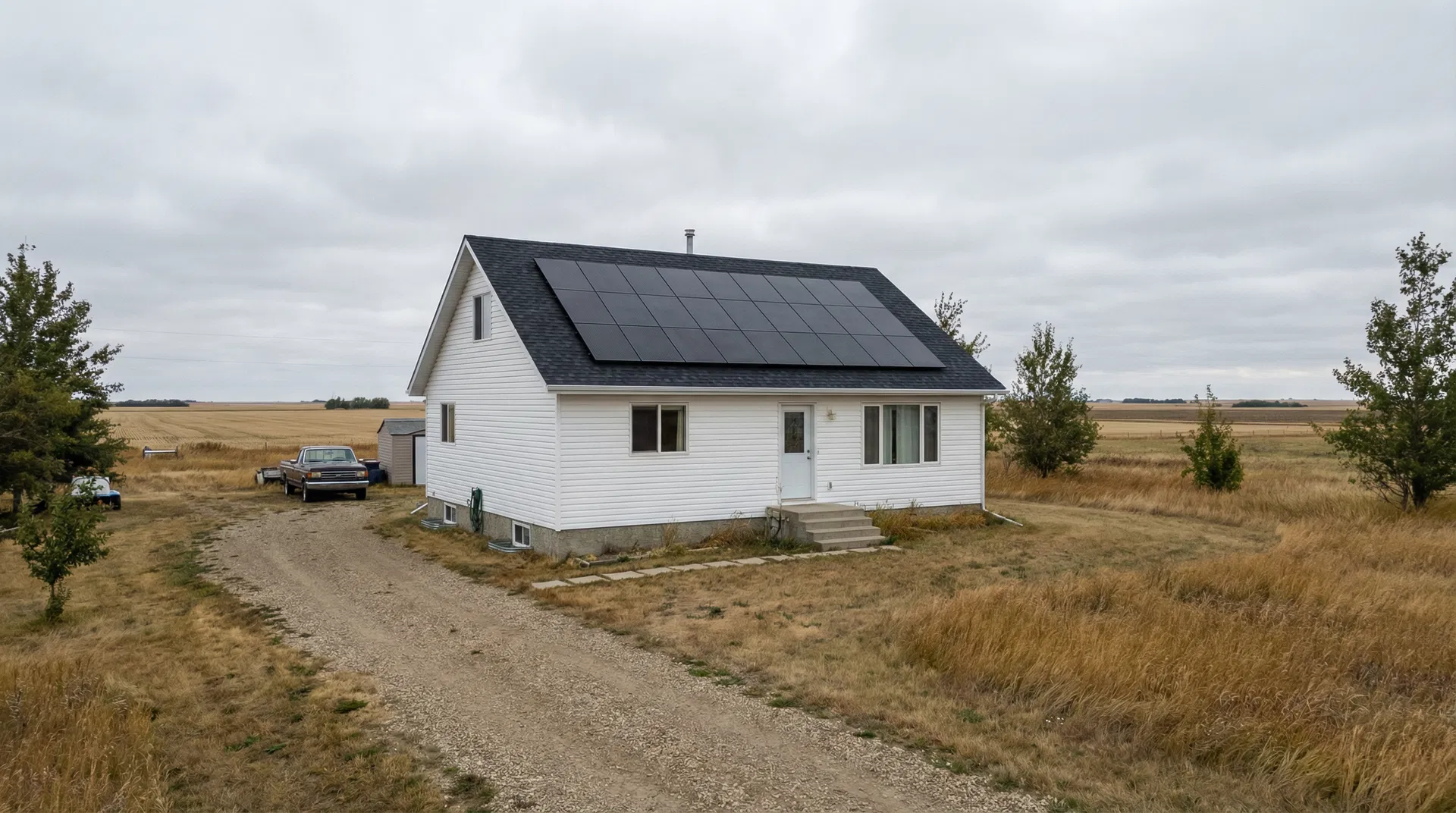
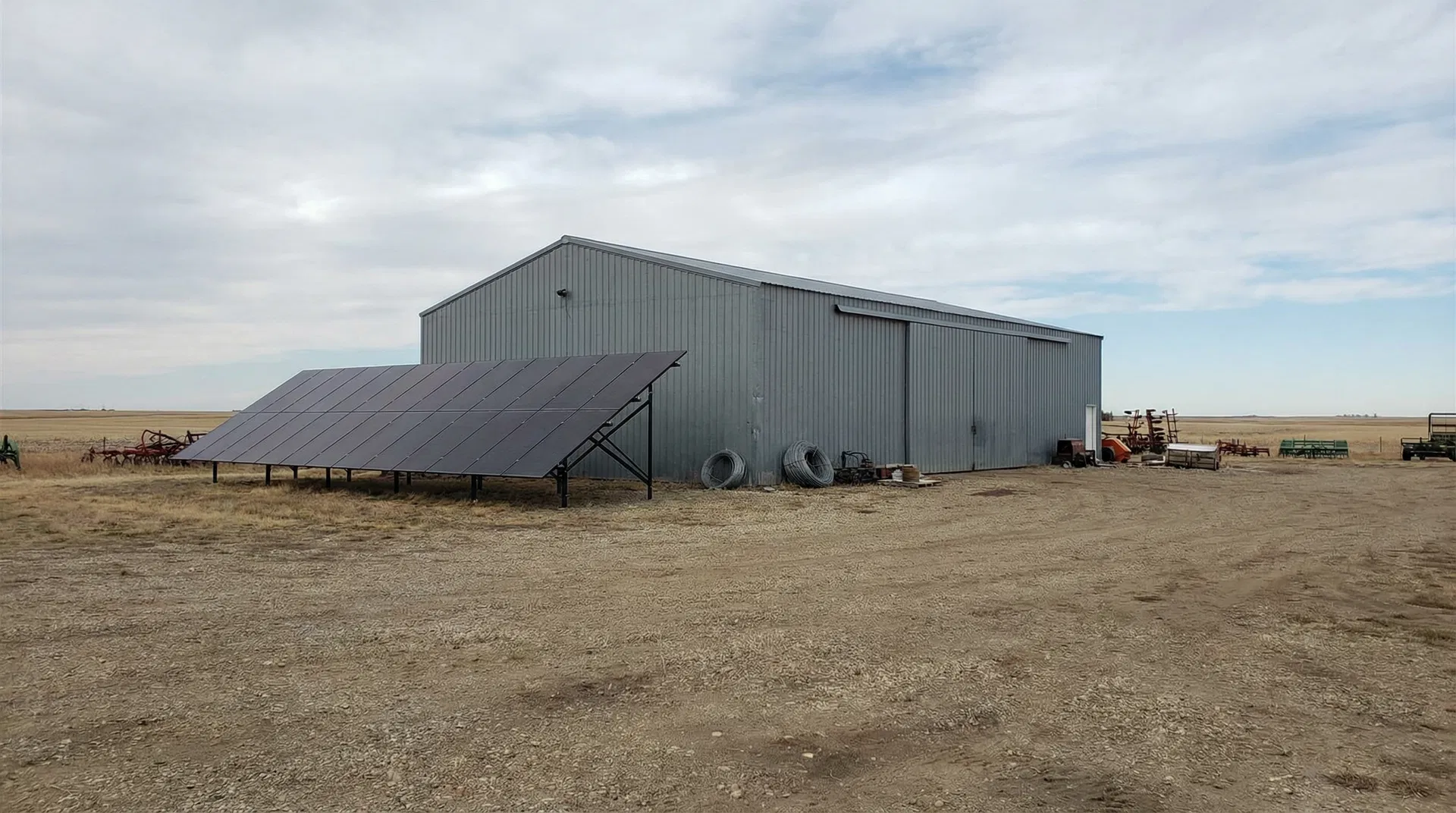
Every acreage solar foothills county project we take on starts with a site assessment before any equipment decision is made. That said, here's what a typical installation looks like. We build in the 12-18 kW range for rural residential properties, with 15 kW being common for a home-plus-shop combination. LONGi panels are our standard panel. They're reliable, well-tested, and hold up in the conditions Alberta throws at a roof year after year. We pair them with APsystems microinverters. The reason we use microinverters on acreages specifically is that rural properties often have complex roof planes, dormers, or partial shading from outbuildings, trees, or grain bins nearby. Microinverters let each panel operate independently, so a shadow on one panel doesn't drag down the output of the entire array. For properties where the roof isn't the right fit, whether that's an older metal roof, a complicated pitch, or simply a yard layout that puts better sun exposure on open ground, we design ground-mount systems instead. Ground mounts give us full control over tilt angle and orientation, and on acreages with available land, they're often the cleaner solution. Both configurations use the same LONGi panels and APsystems microinverters. The difference is where the racking goes and how the conduit runs back to your main panel. We handle both from design through FortisAlberta interconnection application.
Solar Planning for Foothills County Properties
Acreages in this area aren't like subdivision lots. You've got a house, maybe a heated shop, outbuildings, water systems, and potentially livestock or irrigation draws all running through the same meter, or multiple meters on the same property. That changes how you size a solar system entirely. A system built for a 1,400 square foot bungalow won't cut it here. You need a design that accounts for your full load, not just the lights and appliances in the main dwelling. Range Road Solar works with FortisAlberta for interconnection in Foothills County, and we handle the micro-generation application on your behalf. We start every project the same way: your most recent power bill. It includes a 12-month usage graph that tells us exactly what this property has consumed across seasons. That's the baseline. From there, we model a system against your roof or available ground space, your orientation, and any shading from trees or buildings. No rule-of-thumb estimates. No generic kilowatt-per-bedroom math. Just a design built around what your property actually needs.
Electrical Site Review for Foothills County Properties
Voltage Rise
Voltage rise happens when a solar system pushes electricity back onto the local distribution line and raises the line voltage above acceptable limits. On rural distribution lines, which often serve fewer properties across longer spans, the line impedance can be higher than in dense urban areas, making voltage rise more likely to be a design constraint. When voltage rise is a factor, it affects how much power your inverters can export before they clip, which directly influences how we size the system.
Single-Phase vs Three-Phase
Rural Alberta properties can have either single-phase or three-phase electrical service depending on what FortisAlberta has run to the site and what loads the property was built around. Three-phase service is common where heavy equipment or commercial-scale pumping is involved, while most rural homes are served single-phase. The phase configuration at your service entrance affects which inverter configuration we design for and what the total system capacity can practically be.
Panel Infrastructure
Older acreage properties sometimes have electrical panels that weren't sized for a solar backfeed connection, whether that's a panel with limited breaker space, a lower main breaker rating, or components that no longer meet current code requirements. During the site review, we assess your panel's capacity, breaker inventory, and condition before finalizing the system design. If an upgrade is needed, we'll tell you upfront and include it in the project scope so there are no surprises at installation.
Service Entrance Review
The meter base and service entrance are the first things FortisAlberta looks at when reviewing a micro-generation application for a Foothills County property. If the meter base is outdated or doesn't meet current utility requirements for bi-directional metering, the interconnection application won't proceed until it's upgraded. We inspect the service entrance during the design phase so we know exactly what FortisAlberta will see, and we flag any required upgrades before the application goes in.
Right-Sizing Solar for Foothills County Properties
Acreage systems are bigger than urban residential systems for a straightforward reason: the loads are bigger. A typical acreage might be running a heated shop on a dedicated circuit, a well pump, livestock watering systems, and a full residence all through the same service. Some properties add grain handling or irrigation in season. When you stack those loads together, a 6 kW rooftop system that would offset most of a city home's usage won't make a meaningful dent on an acreage. That's why we work in the 12-18 kW range here. The starting point for every sizing conversation is the 12-month usage graph on your most recent power bill. That graph shows us how consumption shifts from month to month, which tells us whether you're running high loads year-round or whether there's a seasonal spike we need to design around. We don't use rule-of-thumb estimates based on square footage or bedroom count. On the roof-versus-ground-mount question: we look at your specific situation. If your main roof has good south-facing exposure, solid structure, and limited shading, a rooftop array is often the most straightforward option. If the roof pitch is awkward, if trees or outbuildings throw shade across the best exposure, or if the yard layout gives you a better open site, a ground mount lets us set the exact tilt and orientation we want without compromising the design. On many acreages, the right answer is obvious once we've walked the property.
Typical Load Profiles We Design For Near Foothills County
Home Plus Heated Shop
A single-family residence combined with a heated and insulated shop is the most common load profile we see on acreages in this area. The shop typically runs 240V heating, compressors, and lighting, which adds substantially to the base residential consumption. We size for both loads together using the 12-month usage graph on your most recent power bill, and the system is usually in the 14-18 kW range depending on how intensively the shop is used.
Home Plus Outbuildings and Water Systems
Properties with multiple outbuildings, a submersible well pump, and livestock watering systems carry a distributed electrical load that doesn't always show up as a single large spike but accumulates significantly over a billing cycle. We look at your full 12-month usage history from your most recent power bill to understand the baseline and the seasonal variation before recommending a system size. Ground-mount arrays are often a better fit for these properties because the load infrastructure is spread across the yard rather than concentrated under a single roof.
Residence with Seasonal Irrigation or Grain Handling
Acreages running irrigation pumps or grain handling equipment in season see sharp consumption spikes in specific months that a flat annual average would completely miss. A system sized only to the quiet months would underperform when it matters most. We use the full 12-month graph on your most recent power bill to capture those seasonal peaks, and we design a system that addresses the high-load periods rather than just averaging them out.
FortisAlberta Interconnection in Foothills County
FortisAlberta is the wire service for Foothills County properties. Any solar system connected to the grid here goes through FortisAlberta's micro-generation application process, and that process has specific technical and documentation requirements that need to be met before your system can operate. We've been through this process with FortisAlberta on rural properties before, and we handle the full interconnection application on your behalf. That means preparing the technical design package, submitting it to FortisAlberta, and following up through the review process so you're not managing back-and-forth with the utility on your own. What we don't do is promise you a timeline or tell you exactly how FortisAlberta will handle credits or billing, because those details are governed by current utility rules that can change. What we can tell you is that your system won't go live until FortisAlberta approves the connection, and we don't schedule your commissioning date until that approval is confirmed.
Project Economics and Design Review
| System Size | Annual Production | Year 1 Savings | Payback Period |
|---|---|---|---|
| 12-18 kW range, 15 kW typical |
Production, savings, and payback estimates require a property-specific design and your most recent power bill.
How We Work in Foothills County
Bill and Load Review
We review your power bill to understand your energy use in Foothills County and size the system to your actual consumption — not a generic estimate.
Site Assessment
We assess your roof or ground area, south-facing exposure, electrical service, and utility interconnection requirements specific to your property.
Design and Utility Application
We produce a system layout, production estimate, and cost summary, then submit your micro-generation application to your utility on your behalf.
Installation and Commissioning
Our crew installs racking, panels, inverter, and electrical connections. All work is performed by licensed electricians. We commission and test before handoff.
Current Program and Interconnection Review
Utility connection review
FortisAlberta reviews all micro-generation interconnection applications for properties in Foothills County. Range Road Solar prepares the full technical design package required for that application and submits it on your behalf. We manage the process through to approval so you're not left navigating utility requirements on your own.
Current program review
Available programs for residential, acreage, and farm solar installations in Alberta are reviewed against current eligibility rules at the time of your design. Rules and program availability change, and what applied to a project last year may not apply today. We confirm current eligibility during the design review rather than making assumptions based on older program details.
Frequently Asked Questions
Get a Solar Assessment for Foothills County
Submit a recent power bill and we will review your consumption and provide an honest assessment for your Foothills County property. No obligation.
(587) 330-7502 Book a CallRelated Resources