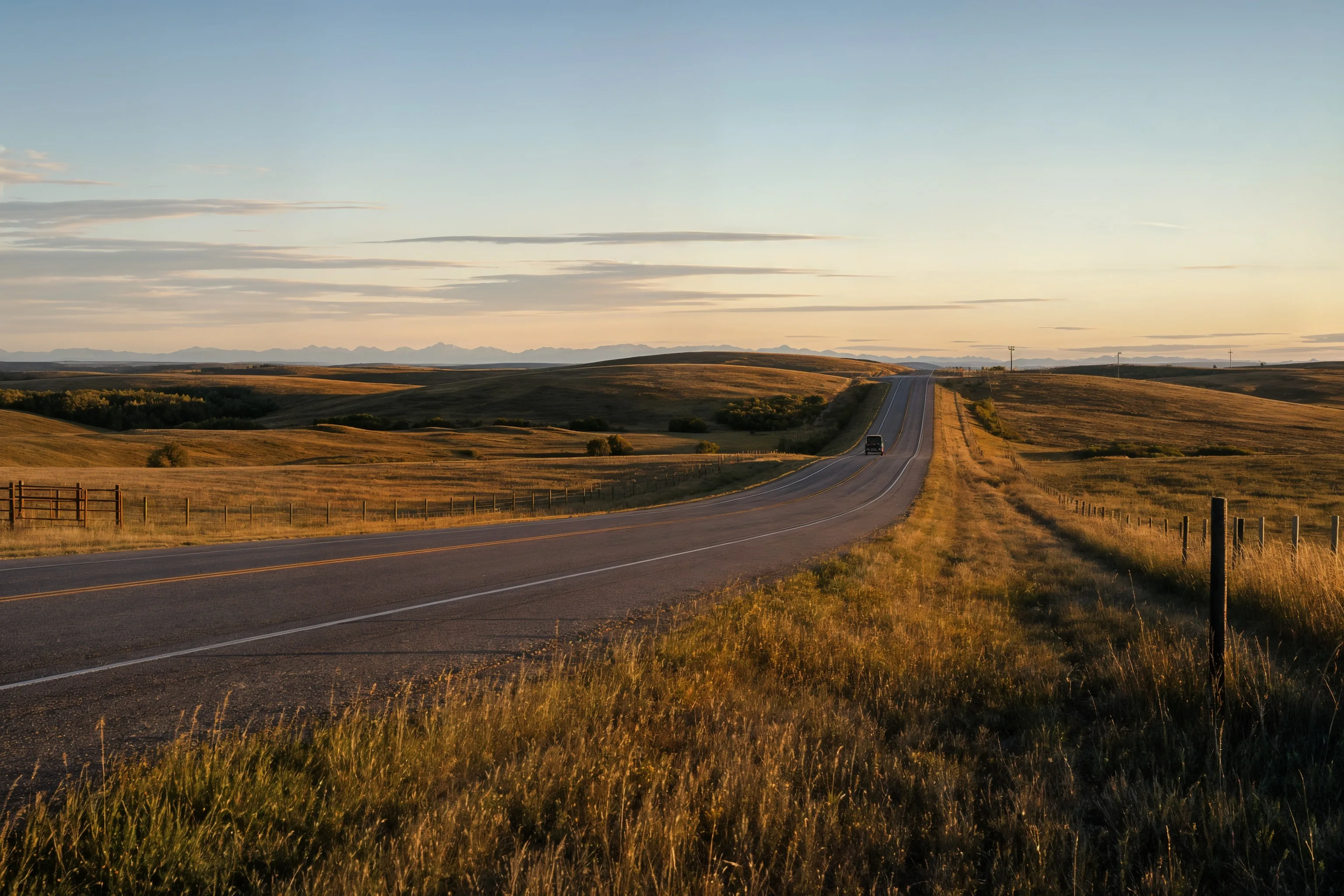
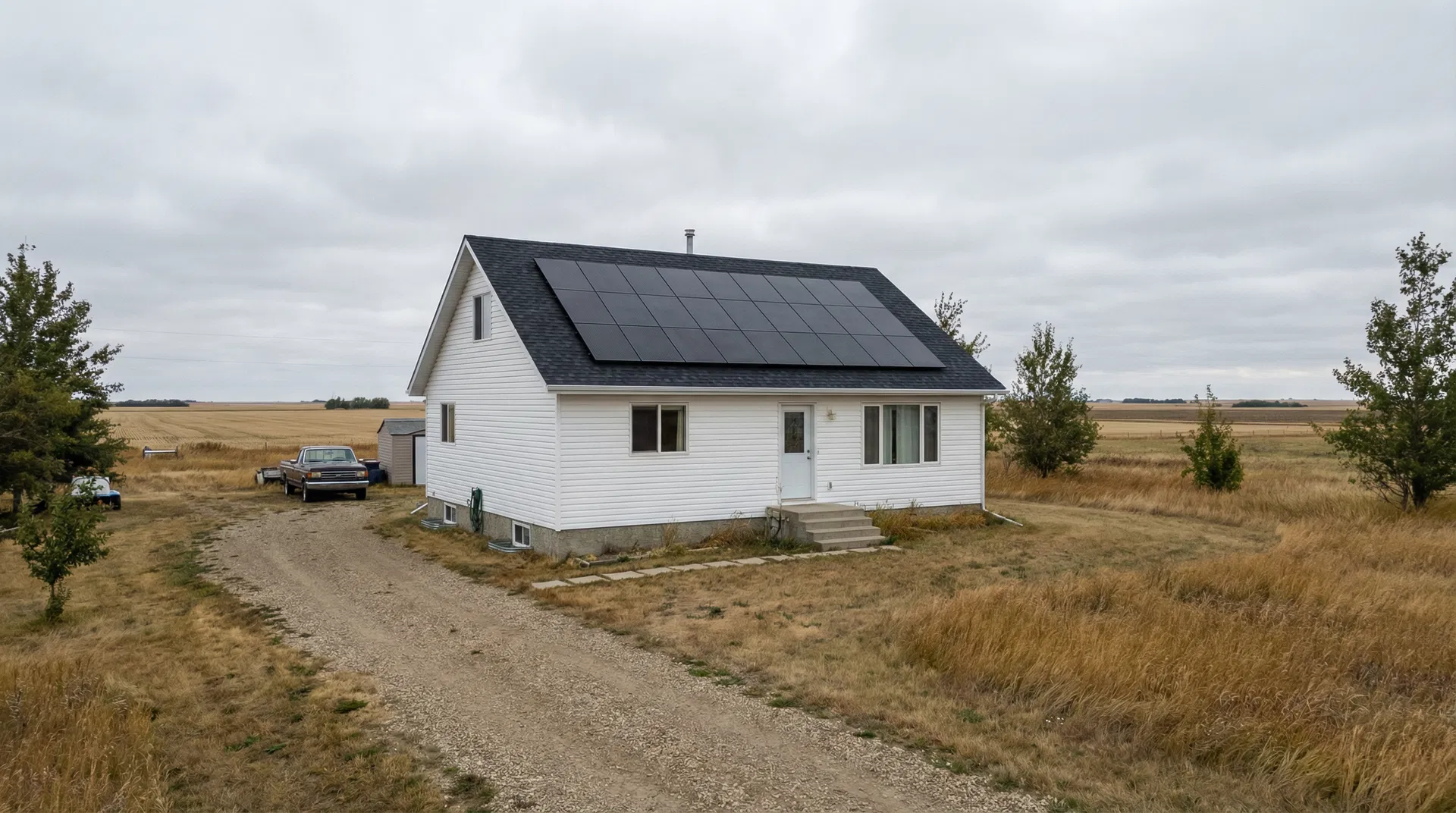
When you search for solar Foothills County installers, you're looking for a team that actually understands rural electrical service, not just panel sales. We design and install systems using LONGi panels and APsystems microinverters, a pairing we rely on because the microinverters let us handle multiple roof orientations, shading from outbuildings, and the panel-by-panel monitoring that matters on a property with more than one structure. Most installs here run in the 8 to 15 kW range, with 10 kW being the typical size for a single home, though farms and acreages with a shop or barn pulling power often land at the higher end. We handle roof-mount installs on standard trusses as well as ground-mount arrays for properties where tree lines, outbuilding placement, or roof pitch make a rooftop system impractical. Every project starts with a site visit where we walk the property, check the electrical panel and service entrance, and review your most recent power bill before drawing up a design. From there we handle the engineering drawings, the structural layout, and the full application package for FortisAlberta interconnection. Whether the property is a quarter section with irrigation equipment or a smaller acreage, the process is the same: confirm the load, confirm the roof or ground conditions, and size the system to match, not the other way around.
Solar Planning for Foothills County Properties
Foothills County stretches across rural land south of Calgary, with properties ranging from acreages along the Cowboy Trail (Highway 22) to working farms and larger rural parcels. As a rural municipality within the Calgary Region, the county is home to roughly 23,199 residents spread across a wide area, which means most properties here run on larger electrical services than a typical town lot, often with a home, a shop, and sometimes irrigation or livestock equipment all drawing from the same connection. That mix of loads is exactly why we don't size a system off a rule of thumb. Environment Canada's climate normals for the nearby Calgary International Airport station list 2,396.8 hours of bright sunshine a year, and Natural Resources Canada's solar resource maps put the specific yield for this part of Alberta at 1,292 kWh per kWp of installed capacity. Those are regional reference numbers, not a promise for any one roof or field. What a system actually produces on your property depends on orientation, shading from shelterbelts or outbuildings, and your service size, and we confirm all of that with a site visit and your most recent power bill before we talk numbers. Properties near landmarks like Spruce Meadows see the same variation in layout and load as anywhere else in the county, so every design starts from scratch.
Electrical Site Review for Foothills County Properties
Voltage Rise
Voltage rise happens when the distance between a property and its nearest transformer causes line voltage to run higher than it would closer to the source, and rural services can run long distances from that source. That matters for solar because an inverter that sees voltage too close to its upper limit will clip output to stay within range. We measure voltage at the panel during the site visit so the system is sized and configured to avoid clipping rather than fighting it after installation.
Single-Phase vs Three-Phase
Rural properties can have either single-phase or three-phase electrical service, and shops or larger farm equipment are more likely to run on three-phase than a standalone house. The service type determines which inverters we can use and how much capacity we can safely connect, since single-phase and three-phase systems are sized differently. We confirm which type of service a property has before finalizing equipment selection, not after.
Panel Infrastructure
Older rural properties sometimes still have electrical panels with limited breaker capacity or outdated ratings that weren't built to handle an added solar connection. We check the panel's age, its rated capacity, and how much room is left for a new breaker as part of every site assessment. If the existing panel can't support the system, an upgrade means replacing or supplementing it before the solar connection goes in, which we scope and quote up front.
Service Entrance Review
The service entrance and meter base are part of what FortisAlberta reviews when we submit the micro-generation application, so we check their condition on every site visit. A meter base that's damaged, undersized, or not rated for a bidirectional meter can hold up approval or require work before FortisAlberta will sign off. When an upgrade is needed, we identify it during the design phase so it's built into the project timeline instead of showing up as a surprise later.
Right-Sizing Solar for Foothills County Properties
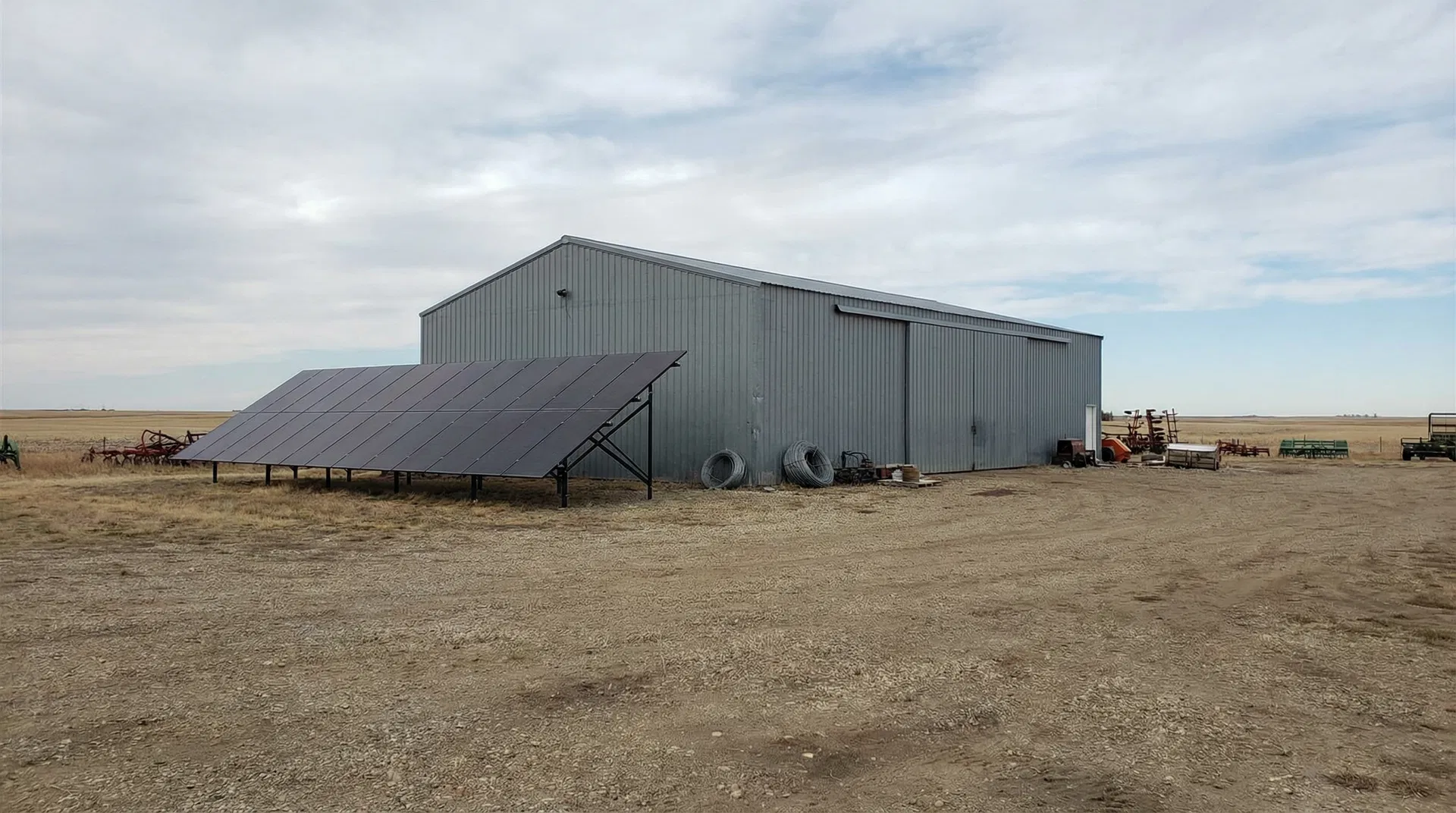
A system sized for a single-family home in a subdivision doesn't work the same way out here. Rural properties often run a house plus a heated shop, a barn, grain handling equipment, or an irrigation pump, all on one service, which is why systems in this area tend to run larger than what you'd see on an urban rooftop. We start by figuring out whether a roof-mount or ground-mount layout makes more sense for the property. Roof-mount works well when the roof has clear southern or western exposure and enough structural capacity for the array. Ground-mount becomes the better option when trees or outbuildings shade the roof, when the roof pitch or orientation isn't ideal, or when the yard has open land and the roof real estate just isn't worth fighting for. Either way, we size the system from the 12-month usage graph on your most recent power bill rather than a rule-of-thumb number like 'ten panels for every house.' That graph shows us your actual monthly draw across the year, including seasonal spikes from heating, irrigation, or shop use, which tells us far more than a single month's bill ever could. Combined with the site design, shading analysis, and your service capacity, that usage data is what determines the final system size, whether that lands at the low end of the 8 to 15 kW range or the high end.
Typical Load Profiles We Design For Near Foothills County
Home + Heated Shop
This is one of the most common load profiles we see in this area: a house plus a detached shop with heat, lighting, and often a welder or compressor. The shop's draw usually shows up as a separate spike on the usage graph from your most recent power bill, especially in winter months. We size the system around both loads together, not just the house, so the shop's draw doesn't get left out of the design.
Acreage with Barn or Livestock Equipment
Acreages running a barn, waterers, or livestock equipment have a steadier baseline draw than a house alone, since much of that equipment runs on a schedule rather than only during peak hours. We look at how that baseline shows up across the usage graph on your bill to understand how much of the day the system needs to cover. That pattern often pushes the system size toward the higher end of the 8 to 15 kW range.
Grain Handling and Irrigation
Grain dryers, augers, and irrigation pumps create short, heavy draws that only show up a few weeks or months a year, which can be easy to miss if you're only looking at an average monthly bill. We look specifically for those seasonal spikes on the usage graph when sizing a system for a working farm. Designing around peak seasonal load, not just average use, is what keeps the system matched to how the property actually operates.
FortisAlberta Interconnection in Foothills County
FortisAlberta is the wire service across this area, which means every grid-tied solar system here goes through FortisAlberta's micro-generation interconnection process before it can be switched on. We handle that application from start to finish: the one-line electrical diagram, the equipment specifications for the LONGi panels and APsystems microinverters, and the paperwork FortisAlberta requires to review the connection. You don't have to track down forms or figure out what FortisAlberta needs. We submit the package, answer any follow-up questions from their engineering review, and coordinate the meter work with your installation schedule. We don't quote a specific approval timeline, a credit carryover policy, or a payout structure here, because those details come from FortisAlberta's current rules and your retailer's current rate plan, not from us. What we can tell you is that the application goes in as part of the standard design package, and we keep you updated as it moves through FortisAlberta's review.
Project Economics and Design Review
| System Size | Annual Production | Year 1 Savings | Payback Period |
|---|---|---|---|
| 8-15 kW range, 10 kW typical |
Production, savings, and payback figures are calculated from a property-specific design and your most recent power bill, not a generic average.
How We Work in Foothills County
Bill and Load Review
We review your power bill to understand your energy use in Foothills County and size the system to your actual consumption, not a generic estimate.
Site Assessment
We assess your roof or ground area, south-facing exposure, electrical service, and utility interconnection requirements specific to your property.
Design and Utility Application
We produce a system layout, production estimate, and cost summary, then submit your micro-generation application to your utility on your behalf.
Installation and Commissioning
Our crew installs racking, panels, inverter, and electrical connections. All work is performed by licensed electricians. We commission and test before handoff.
Current Program and Interconnection Review
Utility connection review
FortisAlberta reviews every grid-tied solar application in its service territory, including properties in this area, before a system can be switched on. Range Road Solar prepares the full design package, including the one-line diagram and equipment specs, and submits it to FortisAlberta on your behalf.
Current program review
Residential, farm, and commercial properties can qualify for different treatment depending on current provincial and utility rules, and those rules change over time. We check eligibility for commercial, farm, and residential projects against whatever rules are in effect at the time of your design review, rather than relying on anything that may be out of date.
Frequently Asked Questions
Get a Solar Assessment for Foothills County
Submit a recent power bill and we will review your consumption and provide an honest assessment for your Foothills County property. No obligation.
(587) 330-7502 Book a CallRelated Resources