
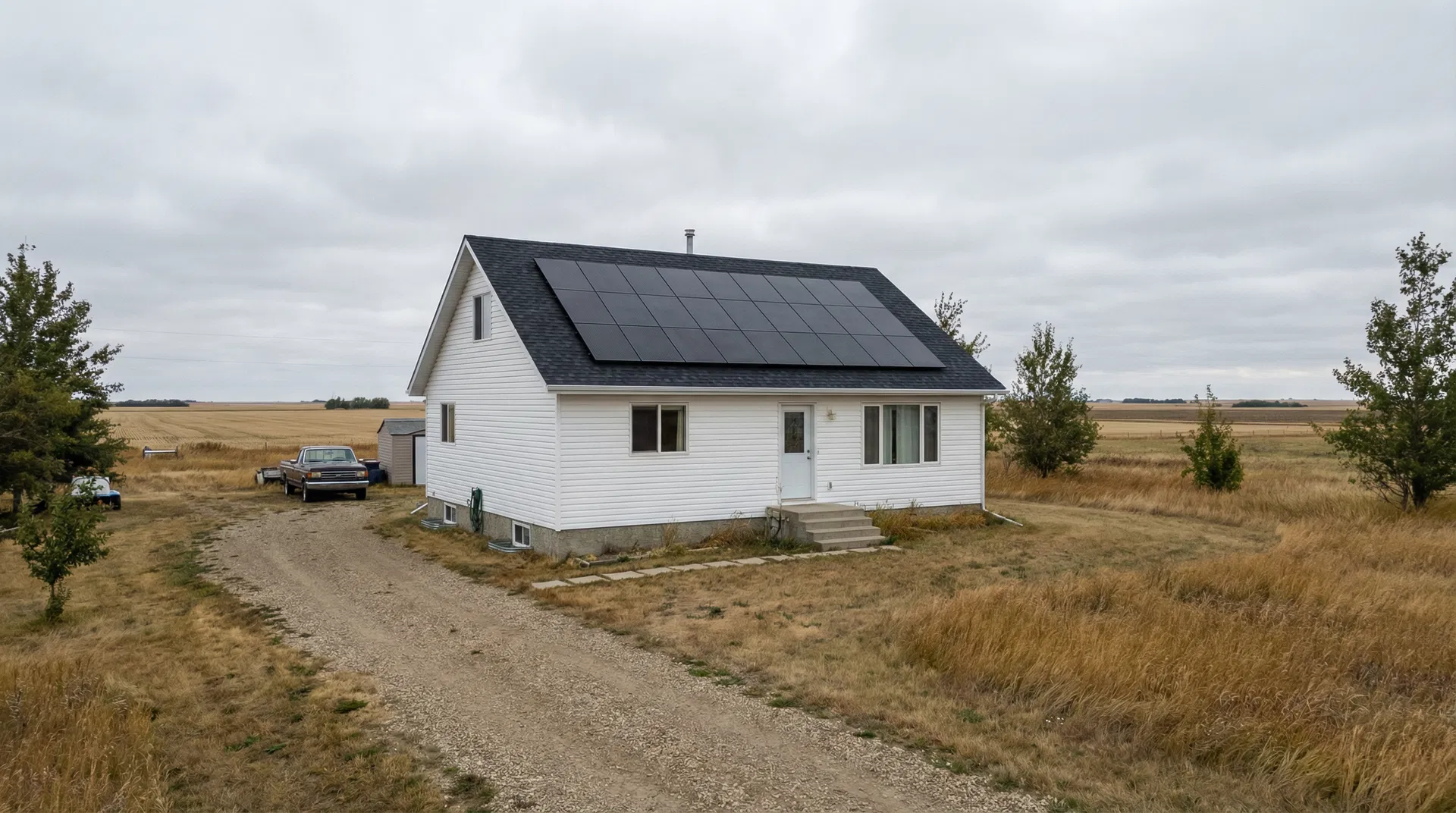
Homeowners searching for solar installation companies in Okotoks, AB are usually comparing equipment as much as price, and that's where the details matter. We install LONGi panels on every project here, paired with APsystems microinverters rather than a single string inverter. On a property with a detached shop, a treeline along one edge of the roof, or a dormer that throws partial shade across a few panels, microinverters keep the rest of the array producing at full capacity instead of dragging the whole string down to match the weakest panel. That's a real difference on the kind of mixed-pitch roofs and outbuilding layouts common in this area, where a garage or shop roof often ends up carrying part of the array alongside the house. Mounting depends on what you've got: asphalt shingle, metal roofing, or a ground mount on acreage-style lots nearby. We spec racking for Alberta's wind and snow load requirements regardless of which surface the panels end up on. Every installation includes the FortisAlberta interconnection application, conduit and wiring run to code, and a final walkthrough of the monitoring app so you can see production by panel, not just by system. We don't offer a one-size system. An 8 kW array suits a smaller home with modest usage; a 15 kW array is more typical for a property running a shop, a well pump, and a house off the same service. The size comes out of your site design and your power bill, not a sales target.
Solar Planning for Okotoks Properties
Okotoks has grown from 29,016 residents at the last census to 30,405 today, and that growth shows up in the mix of properties we see on design calls: infill builds close to downtown, acreages pushing out toward Foothills County, and everything in between. That variety matters for solar, because a steep-roofed two-story near the Okotoks Erratic, the Big Rock that gives this community its name, calls for a different panel layout than a bungalow with a detached garage near Seaman Stadium. We don't start with a generic plan. We start with your roof, your shading, your electrical panel, and your most recent power bill. From there we design an 8 to 15 kW system, sized to what the property actually uses rather than a rule of thumb pulled from a brochure. Some homes need the full 15 kW because they run a shop or a pool pump alongside the house. Others land closer to 8 kW because the load is lighter. Either way, the system gets built around FortisAlberta's interconnection requirements from day one, so there's no redesign scramble after the application goes in. That's the planning process: site-specific, bill-specific, and built to hold up once it's bolted to your roof.
Electrical Site Review for Okotoks Properties
Voltage Rise
Voltage rise happens when the distance and wire gauge between a property's electrical service and the nearest transformer cause voltage to climb as a solar inverter pushes power back onto the line. On rural feeders, where those runs can be longer than on a dense subdivision circuit, that rise can push an inverter into clipping or shutdown if the system isn't sized and tuned to match local line conditions. We measure voltage at the panel during the site visit so the design accounts for it instead of discovering a problem after installation.
Single-Phase vs Three-Phase
Properties in this area can be wired for single-phase or three-phase service, and that distinction shapes which inverter hardware and system capacity we can spec. Three-phase service, more common on larger acreages and properties with heavier shop or well-pump loads, opens up inverter options and capacity that single-phase service doesn't support. We confirm which service type your property has before finalizing equipment, since ordering the wrong inverter class for the panel is a costly mistake to catch late.
Panel Infrastructure
Older electrical panels, especially ones original to a property built decades ago, don't always have the breaker capacity or physical space for a solar backfeed breaker. We check the panel's age, amperage rating, and available bus capacity as part of every site visit. If the panel can't support the added breaker safely, an upgrade to a larger panel or a code-compliant backfeed configuration happens before the solar equipment goes in, not as a surprise afterward.
Service Entrance Review
We inspect the service entrance and meter base for corrosion, loose connections, and overall condition, since FortisAlberta reviews the meter base as part of the micro-generation interconnection application. A meter base that's outdated or damaged can hold up approval even if the solar system itself is installed correctly. When an upgrade is needed, we coordinate it as part of the project scope so it doesn't become a separate delay after the panels are already mounted.
Right-Sizing Solar for Okotoks Properties
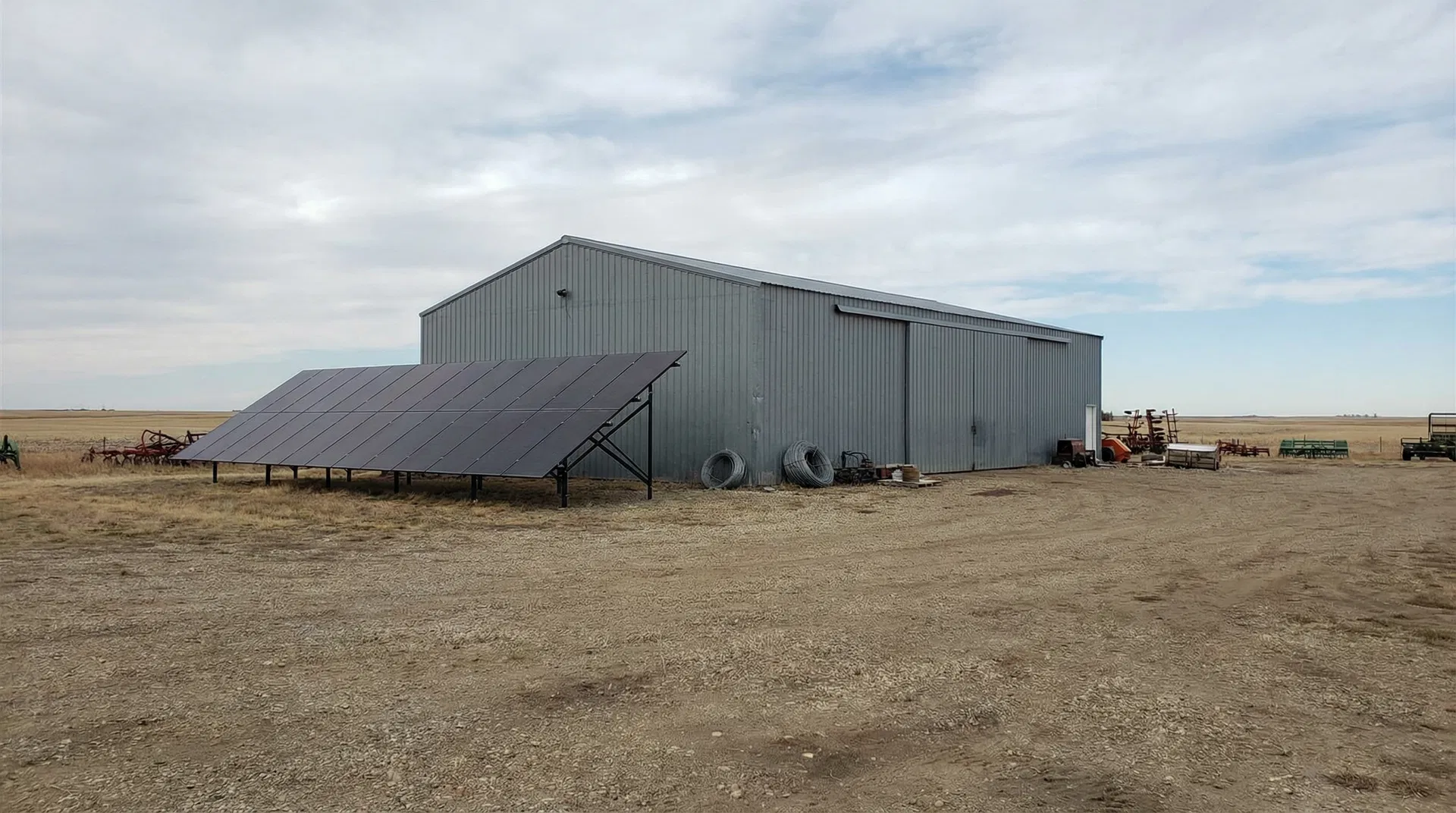
Rural Alberta properties usually need a bigger system than a standard city rooftop, because the load isn't just the house. A property in the area might run a home, a heated shop, a well pump, and grain handling or irrigation equipment, all drawing from the same service. Sizing for one load and ignoring the rest leaves the shop or the pump running on grid power year-round, which defeats the point of going solar. Roof mount works well when there's enough south or west-facing roof area without shading, but it's not automatic. Ground mount becomes the better call when trees or outbuildings shade most of the roof, when the roof pitch or orientation is poor for solar, or when the yard has open, unshaded land that a ground array can use without competing with roof constraints. We don't size a system off a rule-of-thumb number per square foot or per occupant. We size it off the 12-month usage graph printed on your most recent power bill, which shows exactly how the property's draw moves through the seasons: winter heating load, summer irrigation, shop use in calving or harvest season, whatever the pattern actually is. That graph, combined with a site visit covering roof or yard conditions, shading, and electrical service, is what turns into a specific kW recommendation instead of a guess.
Typical Load Profiles We Design For Near Okotoks
Home + Heated Shop
This profile covers a house plus a detached shop that's heated through the winter, often for vehicle storage, welding, or hobby work. The shop's heating load shows up clearly on the usage graph from your most recent power bill, usually as a winter bump distinct from the house's baseline draw. We size the array to offset both loads together rather than treating the shop as an afterthought add-on.
Acreage with Well Pump and Outbuildings
Here the load includes the house, a well pump cycling on demand, and one or more outbuildings like a barn or equipment shed. Well pumps draw in short, sometimes high-amperage bursts that don't always show up in average monthly usage but matter for inverter and breaker sizing. We review the usage graph alongside the pump's nameplate specs to make sure the system and electrical panel can handle both the steady load and the pump's startup draw.
Grain Handling and Seasonal Load
This profile fits a property running grain dryers, augers, or other handling equipment that spikes hard for a few weeks at harvest and sits idle the rest of the year. That kind of seasonal spike needs a different read than a flat year-round load, since sizing purely for the annual average would undersize the system for the weeks it matters most. We factor the seasonal peak from your power bill's usage graph into the design so the system is built for your actual operating pattern, not just the average.
FortisAlberta Interconnection in Okotoks
FortisAlberta is the wire service here, and every grid-tied solar system goes through their micro-generation interconnection process before it's allowed to operate alongside the meter. Range Road Solar prepares and submits that application as part of the installation, including the single-line diagrams and equipment specifications FortisAlberta requires to review the connection. We handle the paperwork end to end so you're not the one tracking down forms or chasing signatures between us and the utility. What we won't do is promise a specific approval timeline, a credit-carryover policy, or a payout structure, because those terms are set by FortisAlberta and your electricity retailer, and they can change. What we can tell you is that the application gets built correctly the first time: right equipment specs, right single-line diagram, right signatures, so it isn't bounced back for corrections. If your service entrance or meter base needs attention before FortisAlberta will approve the connection, we flag that during the site visit, not after the system is already on the roof.
Project Economics and Design Review
| System Size | Annual Production | Year 1 Savings | Payback Period |
|---|---|---|---|
| 8-15 kW range, 10 kW typical |
Production, savings, and payback figures are specific to your property and require a design review along with your most recent power bill before we can quote them.
How We Work in Okotoks
Bill and Load Review
We review your power bill to understand your energy use in Okotoks and size the system to your actual consumption, not a generic estimate.
Site Assessment
We assess your roof or ground area, south-facing exposure, electrical service, and utility interconnection requirements specific to your property.
Design and Utility Application
We produce a system layout, production estimate, and cost summary, then submit your micro-generation application to your utility on your behalf.
Installation and Commissioning
Our crew installs racking, panels, inverter, and electrical connections. All work is performed by licensed electricians. We commission and test before handoff.
Current Program and Interconnection Review
Utility connection review
FortisAlberta reviews every grid-tied solar application for proper equipment specifications, single-line diagrams, and safety compliance before approving the interconnection. Range Road Solar prepares that full design package as part of your installation, so the application reflects exactly what's going on your roof or ground mount.
Current program review
Residential, farm, and commercial solar projects in Okotoks can qualify for different considerations depending on property type and how the system is used. We check your project against current rules at the time of design, since eligibility and requirements can shift from year to year.
Frequently Asked Questions
Get a Solar Assessment for Okotoks
Submit a recent power bill and we will review your consumption and provide an honest assessment for your Okotoks property. No obligation.
(587) 330-7502 Book a CallRelated Resources
More Solar Services in Okotoks