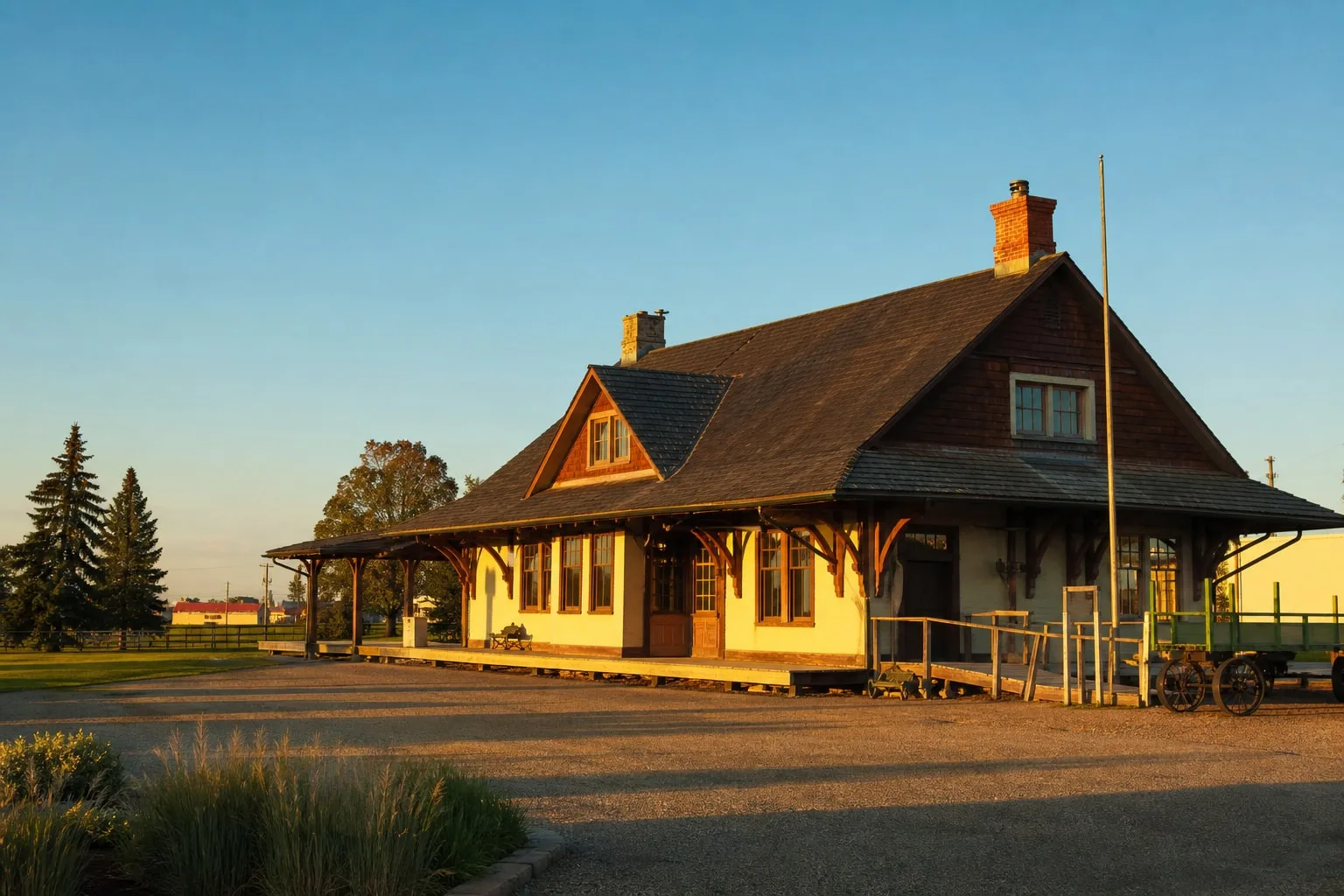
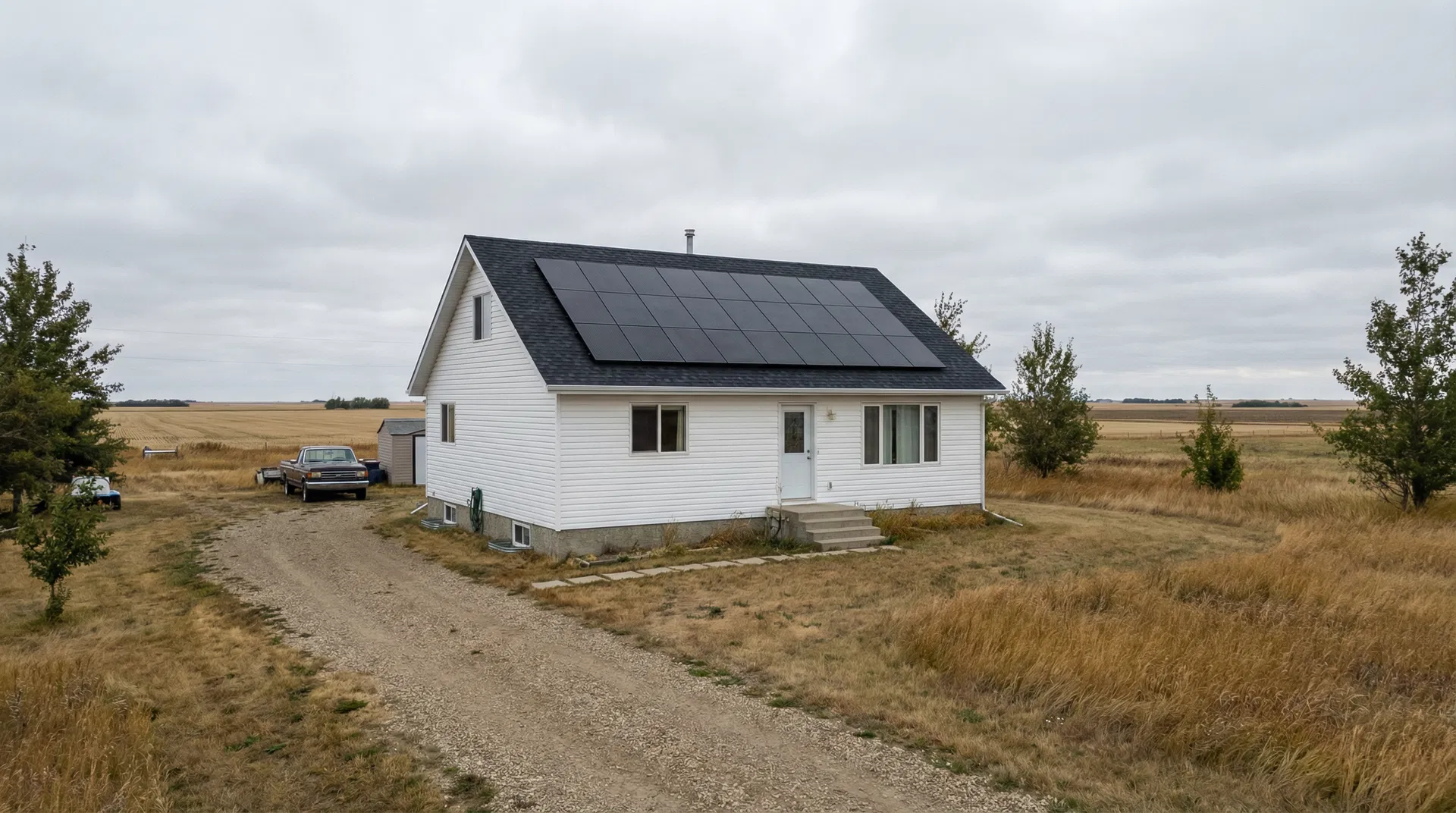
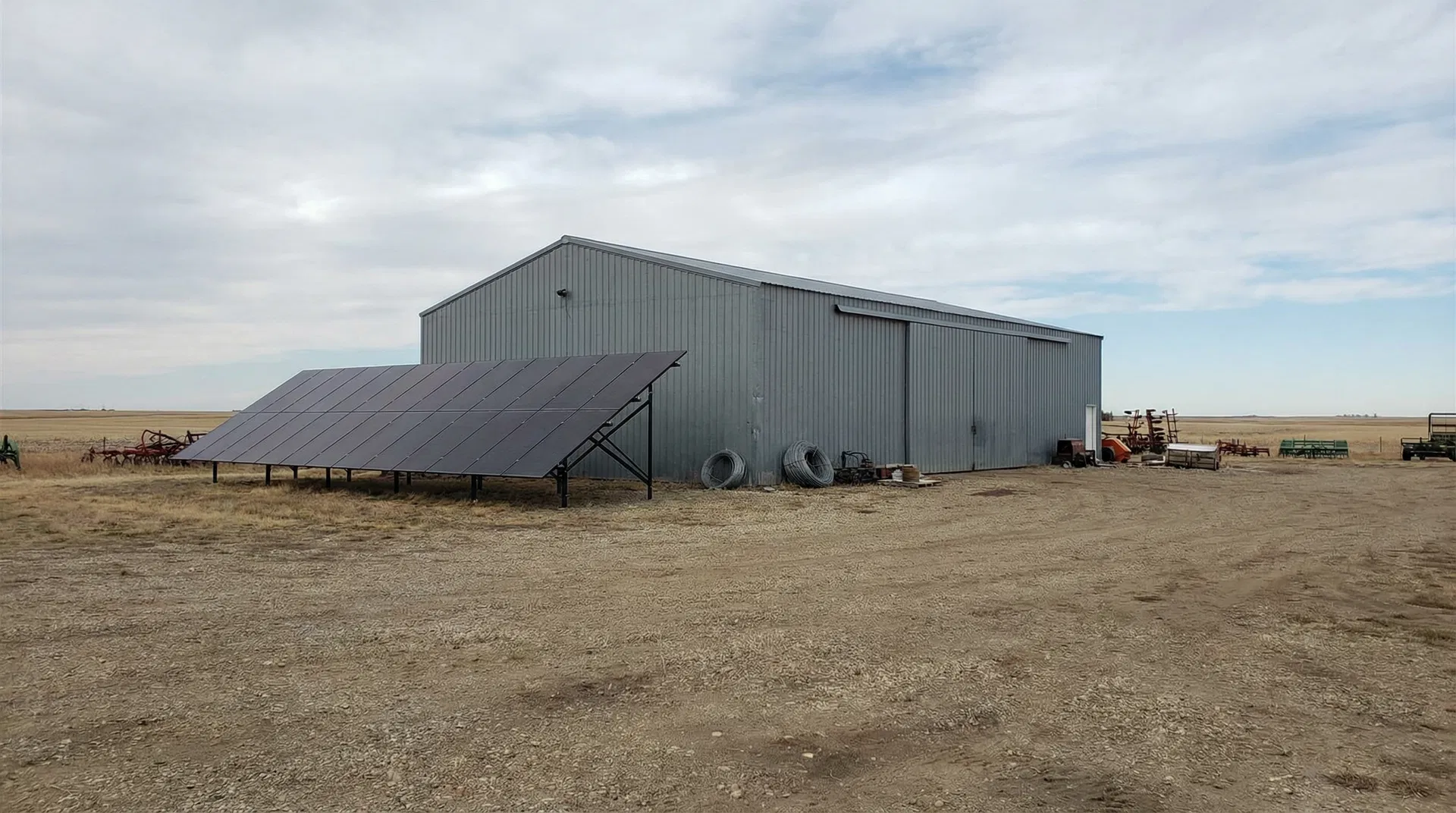
As the solar company High River residents call first for licensed installation work, we put LONGi panels and APsystems microinverters on every project, sized between 8 and 15 kW depending on the roof or ground mount layout, with 10 kW the typical fit for a single-family home. LONGi's panels hold up well under temperature swings and give us flexibility on string layout for roofs with multiple faces, hips, or dormers, which matters on older character homes near downtown as much as newer infill builds. APsystems microinverters let each panel operate independently, so partial shading from a tree line or a neighboring roofline on one string doesn't drag down the whole array. That's a common issue on in-town lots with mature trees. On acreage properties and larger shops, we also look at ground mount racking when the roof pitch, orientation, or available roof area doesn't make sense, especially on Quonset-style outbuildings common on properties outside town. Every install includes a full electrical site review: main panel capacity, service entrance condition, and whether the property runs single-phase or three-phase service. We handle the racking, wiring, inverter commissioning, and the paperwork for the FortisAlberta interconnection application, so you aren't chasing separate contractors for each piece. Licensed electricians do the connection work, and the design comes from your most recent power bill rather than a generic size chart.
Solar Planning for High River Properties
High River has been around since February 12, 1906, and the population has grown to roughly 14,324 people, most of them on FortisAlberta's wire service. That growth means more rooftops in town, more acreages on the edges, and more property owners asking what solar actually takes on their specific site. Environment Canada's climate normals for the nearby Calgary International Airport station list 2,396 hours of bright sunshine a year, and NRCan's photovoltaic potential data puts the specific yield for this part of Alberta at 1,292 kWh per kWp. Those are regional reference numbers, not a promise for your roof. Shading from a shelterbelt, the pitch of a garage, or the orientation of a shop all change what a system actually produces once it's installed. That's why we don't quote a production figure off a map. We walk the property, check the main panel and service entrance, and size the design around the 12-month usage graph on your most recent power bill. Whether you're a few blocks from the Museum of the Highwood or out on acreage, the process is the same: site visit, design, and a FortisAlberta interconnection application we handle on your behalf.
Electrical Site Review for High River Properties
Voltage Rise
Voltage rise happens when power travels a long distance along a distribution line before it reaches a property, and rural feeders tend to run longer than in-town service. On a feeder with higher voltage rise, a solar inverter can sense voltage at the high end of its allowed range and clip output or shut down to protect itself. We measure voltage at the panel during the site visit so the inverter and string sizing account for it instead of guessing.
Single-Phase vs Three-Phase
Properties around here may have single-phase or three-phase electrical service, and older farmyards and acreages are more likely to be single-phase than newer three-phase shops or larger operations. The service type limits which inverters we can use and how much capacity we can put behind a single connection point. We confirm phase configuration during the site visit, before we finalize equipment selection.
Panel Infrastructure
A lot of rural properties are still running an older main panel, sometimes original to the home or farmyard, with limited open breaker space. We check the panel's age, amperage rating, and available capacity before we size a system, because a panel that's maxed out can't safely add solar breakers without an upgrade. If the panel can't support the system, an upgrade to the panel or a subpanel addition gets scoped into the project before installation starts.
Service Entrance Review
We inspect the service entrance and meter base condition on every property, since FortisAlberta's micro-generation application requires equipment that meets current standards. An aging or damaged meter base can hold up the interconnection application even after the solar install itself is done. If the service entrance needs an upgrade, we scope that work up front so it doesn't surprise anyone partway through the project.
Right-Sizing Solar for High River Properties
Rural properties carry more electrical load than a typical in-town house, and that changes how we size a system. A home with an attached garage is one load. A home plus a heated shop, a well pump, and grain handling equipment is several loads stacked on one service, and the system has to account for all of them, not just the house. That's a big part of why rural systems around here tend to land at the larger end of the 8 to 15 kW range rather than the smaller end. Roof versus ground mount is its own decision. If the roof has good south or west exposure, decent pitch, and no shading from trees or outbuildings, roof mount is usually the simpler and more cost-efficient path. If the roof is shaded by a shelterbelt, pitched wrong, chopped up by dormers and vents, or if the yard has open land and the owner would rather keep the roof clear, ground mount racking is the better call. We don't size any of this off a rule of thumb. We pull the 12-month usage graph off your most recent power bill, which shows exactly how your usage moves through the year, and we combine that with the site design, shading study, and available roof or ground space to land on a system size. The power bill and the site visit drive the number. A generic size chart doesn't.
Typical Load Profiles We Design For Near High River
Home Plus Heated Shop
This is the most common setup we see on acreages: the house plus a detached shop with electric or in-floor heat, a compressor, and maybe a welder circuit. The shop's heating and tool loads often rival or exceed the house's own usage, especially in winter months. We size for both loads together, reading how they show up on the 12-month usage graph on the most recent power bill rather than estimating the shop separately.
Home Plus Well Pump and Irrigation
Properties running their own well pump, pressure system, and seasonal irrigation have a load profile that spikes at different times than a typical household. Pump motors draw a hard start current that factors into inverter and breaker sizing, even though the pump itself may not run constantly. We look at how those spikes show up on the power bill's usage graph and size the system so it isn't just built around average daily draw.
Grain Handling and Farm Operation
A working farmyard with grain dryers, augers, or bin aeration fans carries seasonal loads that are heavy for a few weeks a year and light the rest of the time. Sizing a system around a single average month would undersize it for harvest season or oversize it for the rest of the year. We use the full 12-month usage graph from the most recent power bill to capture that seasonal swing before we finalize system size.
FortisAlberta Interconnection in High River
FortisAlberta is the wire service for this area, and every grid-tied solar system here goes through FortisAlberta's micro-generation interconnection process before it can go live. We prepare the full application package: single-line electrical diagrams, equipment specs for the LONGi panels and APsystems microinverters, and the site-specific details FortisAlberta asks for. You don't have to figure out the forms or follow up with the utility yourself. We handle that correspondence and coordinate the inspection and sign-off steps directly with FortisAlberta on your behalf. Every property is reviewed individually: service entrance condition, existing panel capacity, and whether the site is single-phase or three-phase all factor into how we submit the application. We don't quote an approval timeline or make claims about credit handling or payout policy here, since those details come from FortisAlberta and the retailer directly and can change. What we can commit to is managing the paperwork correctly the first time, so the application doesn't bounce back for missing information.
Project Economics and Design Review
| System Size | Annual Production | Year 1 Savings | Payback Period |
|---|---|---|---|
| 8-15 kW range, 10 kW typical |
Production, savings, and payback figures are specific to your property and require a design review along with your most recent power bill.
How We Work in High River
Bill and Load Review
We review your power bill to understand your energy use in High River and size the system to your actual consumption, not a generic estimate.
Site Assessment
We assess your roof or ground area, south-facing exposure, electrical service, and utility interconnection requirements specific to your property.
Design and Utility Application
We produce a system layout, production estimate, and cost summary, then submit your micro-generation application to your utility on your behalf.
Installation and Commissioning
Our crew installs racking, panels, inverter, and electrical connections. All work is performed by licensed electricians. We commission and test before handoff.
Current Program and Interconnection Review
Utility connection review
FortisAlberta reviews every micro-generation interconnection application before a system can connect to the grid, covering equipment specs, single-line diagrams, and site details. Range Road Solar prepares that full design package and submits it on your behalf. We don't make claims here about credit settlement or payout policy, since those details live with FortisAlberta and the retailer and can change.
Current program review
Eligibility for commercial, farm, and residential properties gets checked against whatever rules are active at the time we design your system, not a static list. Programs and qualification rules shift, so we confirm what currently applies during the design review rather than quoting something that might be out of date by the time your project is built.
Frequently Asked Questions
Get a Solar Assessment for High River
Submit a recent power bill and we will review your consumption and provide an honest assessment for your High River property. No obligation.
(587) 330-7502 Book a CallRelated Resources
More Solar Services in High River