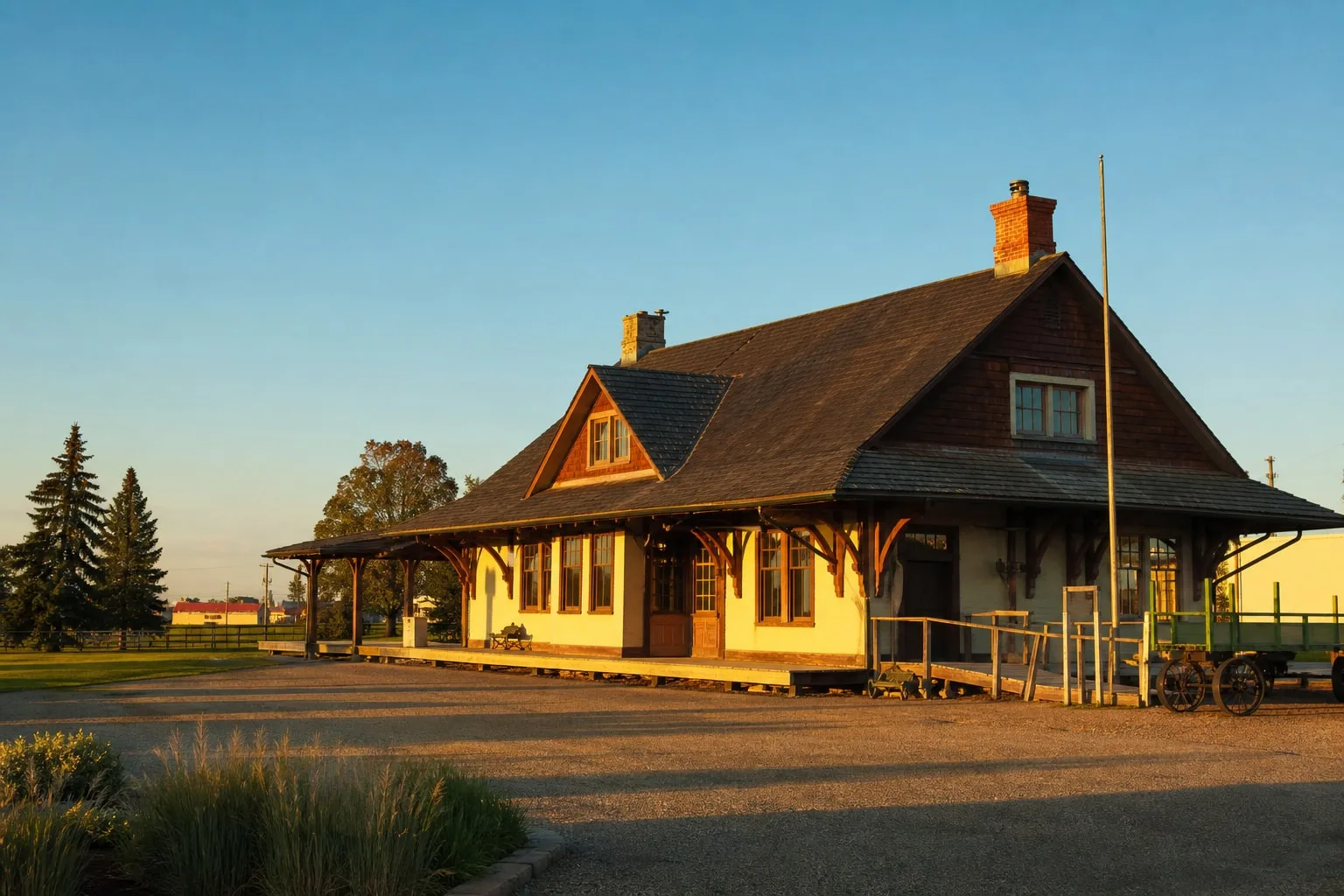
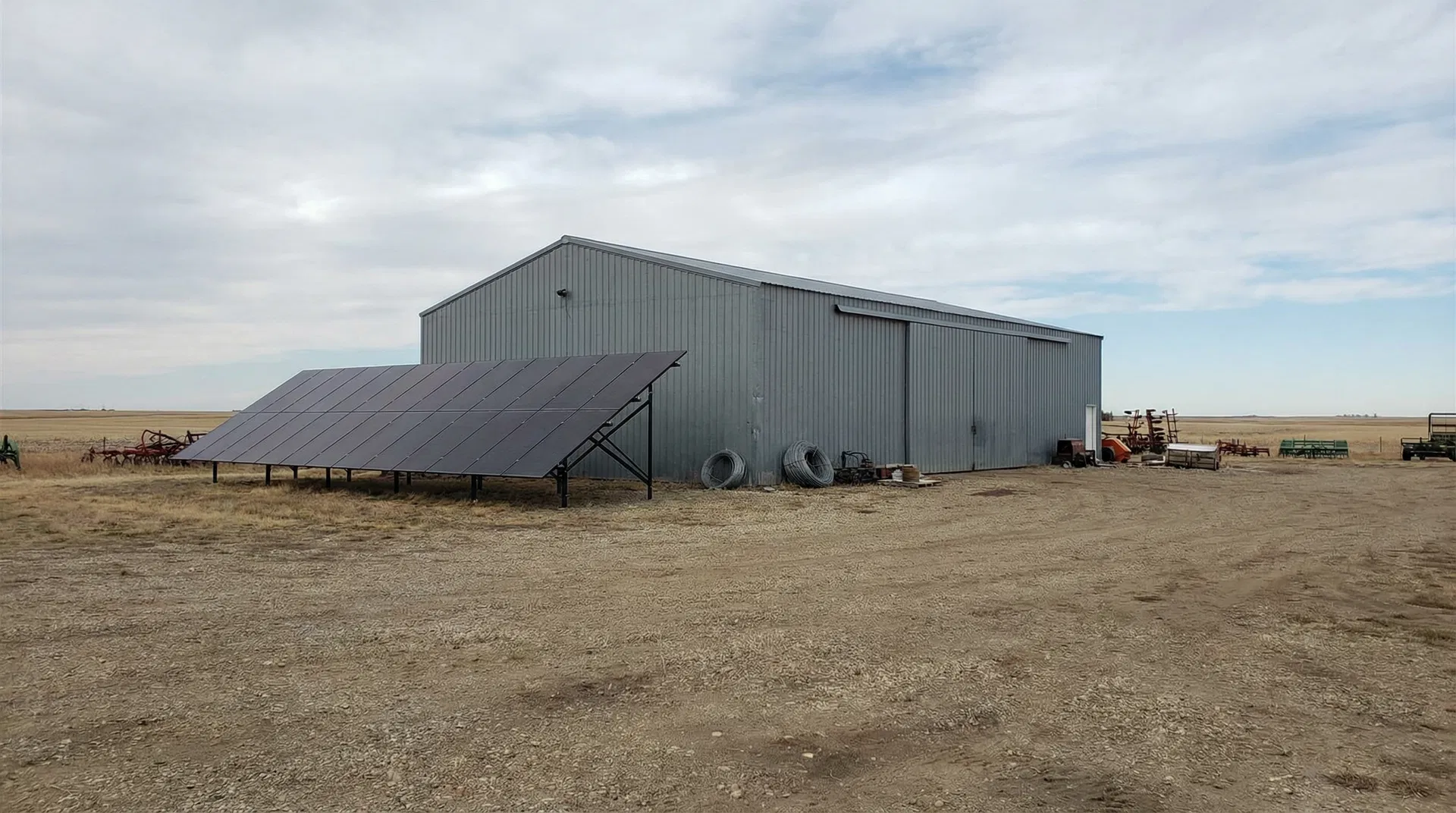
When people search for farm solar High River Alberta options, they're usually trying to size a system for a grain operation, not a house. Range Road Solar installs ground-mount and rooftop systems across the area's agricultural properties, built around LONGi panels and APsystems microinverters. Ground-mount is our default recommendation for larger farm systems: it keeps panels off aging shop roofs, lets us orient the array for the best unshaded angle regardless of building placement, and makes future servicing and snow clearing easier to reach from the yard. Rooftop still makes sense on newer shops or outbuildings with clear south or west exposure and enough structural capacity. APsystems microinverters are a deliberate choice for farm sites. Instead of one central inverter that can take the whole array offline, each panel runs independently, so partial shading from a grain bin, a shelterbelt, or a neighboring structure doesn't drag down the rest of the system. That matters on a working yard where new buildings and equipment show up over the years. We size every system in the 20 to 50 kW range, with 25 kW as a common starting point for a mid-sized grain or mixed livestock operation. The real number comes from your most recent power bill and a site walk, not a rule of thumb. If you're running grain dryers, bin aeration fans, or irrigation pumps on top of a farmhouse, those loads get accounted for individually before we propose a system size.
Solar Planning for High River Properties
High River, Alberta was incorporated on February 12, 1906, and the working farms that ring the area today still define its economy. With a population of 14,324 (up from 13,594 at the last census), growth here hasn't shrunk the agricultural operations outside the core: grain bins, cattle operations, and irrigated acreages that all draw real power. Range Road Solar designs farm solar systems for these properties on a case-by-case basis. We don't start with a generic rooftop kit. We start with your most recent power bill, your yard layout, and the specific loads you're running: grain dryers, shop heat, livestock waterers, irrigation pumps. Properties run on FortisAlberta's distribution network, and that shapes how we size and connect a system before it ever gets to equipment selection. A farm near the Museum of the Highwood might have three-phase service to the shop and single-phase to the house, and that split matters for inverter choice. We confirm all of this with a site visit and a design review, not a template. Every farm we quote here gets its own voltage check, its own load breakdown, and its own system size, somewhere in the 20 to 50 kW range depending on what the operation actually draws.
Electrical Site Review for High River Properties
Voltage Rise
Voltage rise happens when voltage at the end of a long rural distribution line runs higher than what's measured near the transformer, and it's more common on the longer feeders that serve spread-out farm properties. Higher voltage at your service can push a string inverter toward its upper trip point faster, which is one of the reasons we check line conditions before finalizing inverter selection and string sizing. It's a site-specific measurement, not a number we assume.
Single-Phase vs Three-Phase
Farm and acreage properties around this area can have single-phase or three-phase electrical service, depending on when the yard was built out and what kind of equipment it was built to run. Three-phase service, common where there's a grain leg, large shop, or irrigation pump, opens up different inverter and system capacity options than a single-phase farmhouse service. We confirm which one you have before we spec equipment, since it changes what's available.
Panel Infrastructure
A lot of rural electrical panels in this area predate current code and were sized for the loads of decades ago, not a house, shop, and solar system running together. We check breaker capacity, panel age, and busbar rating as part of every site visit, looking for whether there's room for a solar breaker without exceeding the panel's rating. If there isn't, a panel upgrade gets scoped into the project before installation, not discovered partway through.
Service Entrance Review
We inspect the service entrance and meter base condition on every property, since FortisAlberta reviews that same equipment as part of the micro-generation application. An aging or non-standard meter base can hold up approval even after the solar design itself is finalized. When an upgrade is needed, we scope it into the project plan up front so it doesn't surprise you partway through interconnection.
Right-Sizing Solar for High River Properties
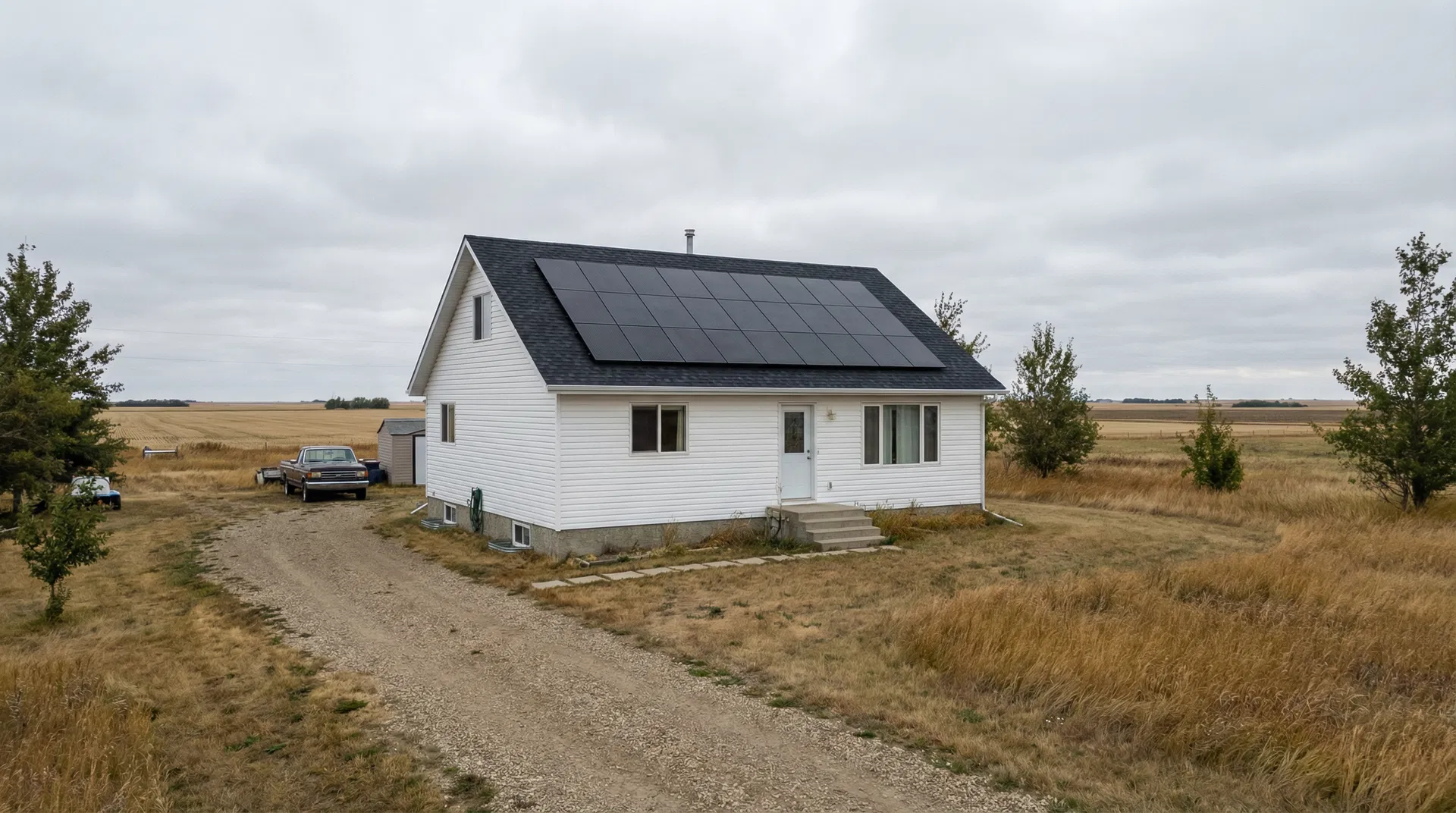
Rural systems in this area are almost always bigger than a comparable urban rooftop, and it's not because rural properties use more power for no reason. It's because one property often means multiple separate loads: a farmhouse, a heated shop, a grain bin or two with aeration fans, maybe an irrigation pump, all running off one service. A system sized like a city house misses most of what's actually drawing power. Roof versus ground-mount comes down to the yard itself. If the shop or house roof has good south or west exposure, decent pitch, and no shade from shelterbelts or grain bins, rooftop can work fine and keeps the array off the ground. But a lot of farm yards have shade from trees, outbuildings in the way, or roofs that just aren't oriented right, and in those cases, ground-mount wins. It also wins when there's open land available and the owner would rather keep the roof clear for future building work. Either way, we size the system from the 12-month usage graph on your most recent power bill, not a rule-of-thumb number per square foot or per building. That graph shows us your actual seasonal load pattern, grain-drying spikes included, and that's what the design gets built around, together with a site walk to confirm roof or ground conditions.
Typical Load Profiles We Design For Near High River
Home + Heated Shop
This is a farmhouse paired with a heated workshop, usually the single biggest load jump on a rural property once block heaters, shop lighting, and tools are running through winter. We pull the 12-month usage graph off your most recent power bill to see how that shop load spikes seasonally, then size the system around the combined pattern, not just the house alone.
Grain Handling + Aeration
Grain bins with aeration fans and a grain dryer create short, heavy load spikes at harvest that a flat average completely hides. Your most recent power bill's usage graph shows us those spikes, and we often recommend ground-mount for these properties so the array isn't competing for roof space near the bins.
Livestock + Irrigation Pump
Livestock operations with waterers, barn ventilation, and an irrigation pump running through summer have a different seasonal shape than grain operations, with the heaviest draw in warmer months instead of at harvest. We size these systems from your actual billing history and a site walk, accounting for the pump's draw specifically rather than folding it into a generic farm average.
FortisAlberta Interconnection in High River
Properties in and around High River are served by FortisAlberta's distribution network, not a municipally owned utility. Any grid-tied solar system here, whether it's a 20 kW rooftop array or a 50 kW ground-mount system for a larger operation, needs a micro-generation application submitted to and approved by FortisAlberta before it can be connected. Range Road Solar handles that application as part of the project, start to finish. We prepare the single-line diagrams, equipment specifications, and site information FortisAlberta requires, and we submit the paperwork on your behalf. We also coordinate the meter base and service entrance review that FortisAlberta expects to see before sign-off, especially on older farm services that haven't been touched in a few decades. We don't quote approval timelines or make promises about how FortisAlberta will handle a specific application, since that's determined case by case on their end. What we can control is making sure your application is complete and accurate the first time it's submitted.
Project Economics and Design Review
| System Size | Annual Production | Year 1 Savings | Payback Period |
|---|---|---|---|
| 20-50 kW range, 25 kW typical |
Actual production, savings, and payback depend on a property-specific design review using your most recent power bill, and we won't quote a number before that's done.
How We Work in High River
Bill and Load Review
We review your power bill to understand your energy use in High River and size the system to your actual consumption, not a generic estimate.
Site Assessment
We assess your roof or ground area, south-facing exposure, electrical service, and utility interconnection requirements specific to your property.
Design and Utility Application
We produce a system layout, production estimate, and cost summary, then submit your micro-generation application to your utility on your behalf.
Installation and Commissioning
Our crew installs racking, panels, inverter, and electrical connections. All work is performed by licensed electricians. We commission and test before handoff.
Current Program and Interconnection Review
Utility connection review
FortisAlberta reviews every micro-generation grid connection application for properties in the area, including the farm and agricultural systems we design. Range Road Solar prepares the full design package, equipment specs, and application paperwork and submits it on your behalf.
Current program review
Eligibility for any current commercial, farm, or residential program is reviewed against the rules in place at the time of your design, since those rules can change. We check what applies to your specific property and system size as part of the design review, rather than assuming last year's rules still hold.
Frequently Asked Questions
Get a Solar Assessment for High River
Submit a recent power bill and we will review your consumption and provide an honest assessment for your High River property. No obligation.
(587) 330-7502 Book a CallRelated Resources
More Solar Services in High River