Foothills County · Commercial solar
Commercial Solar High River Alberta
Range Road Solar designs and installs commercial solar systems from 15 to 100 kW for High River businesses, farms, and agricultural operations connected through FortisAlberta.
When businesses search for commercial solar High River Alberta, they're usually dealing with a specific problem: a power bill that keeps climbing, a new building that needs electrical infrastructure anyway, or an operation large enough that offsetting grid consumption actually moves the needle on overhead. We install LONGi panels across our commercial builds. They're a proven, bankable panel manufacturer with a strong production warranty and a track record that holds up under Alberta conditions. For inverter selection, the system size and service type drive the decision. Smaller commercial systems in the 15-30 kW range often use APsystems microinverters, which perform well on arrays with any shading complexity and simplify panel-level monitoring. Larger systems above 30 kW typically call for string inverters, which are better suited to high-capacity, unshaded commercial arrays and reduce per-panel cost at scale. Roof-mount and ground-mount are both common on commercial and agricultural properties here. A flat commercial roof works well for a ballasted racking system. An industrial building with a south-facing metal roof is often a straightforward install. Yard space or a dedicated field may be a better option if roof orientation is off, shading is a problem, or the building's structural load rating doesn't support a roof-mount system. We assess both options during the design review and recommend the layout that fits your property, not the one that's easiest to install. We also confirm CT ITC eligibility during the design process for qualifying commercial and agricultural properties. That eligibility review is specific to your operation and happens at design time.
Solar Planning for High River Properties
Commercial properties in and around High River carry real electrical loads. Heated shops, cold storage, grain handling, irrigation, and office space all add up on a monthly bill. A system sized to those loads can offset a meaningful portion of what you're drawing from the grid every month. That's not a vague promise. It's a design outcome we confirm through your most recent power bill and a site assessment. FortisAlberta is the wire service here. That means your micro-generation application goes through their interconnection process, and your system has to meet their technical requirements before it goes live. We handle that paperwork, design the system to their specs, and make sure nothing gets held up on the utility side. For commercial properties, system size matters. A 15 kW array might suit a small retail operation with modest daytime load. A 60 or 80 kW system is more typical for a large shop, food processing facility, or farm operation with multiple buildings. We don't size from a rule of thumb. We size from the 12-month usage graph on your most recent power bill and the physical layout of your property.
Electrical Site Review for High River Properties
Voltage Rise
Voltage rise happens when a solar system pushes power back onto the distribution line and raises the local voltage above acceptable limits. On rural FortisAlberta distribution lines, which often serve fewer customers per kilometre than urban feeders, this effect can be more pronounced. When voltage rise is a factor, it can cause inverters to clip output or throttle generation to stay within grid tolerance, which affects how we size and configure the system.
Single-Phase vs Three-Phase
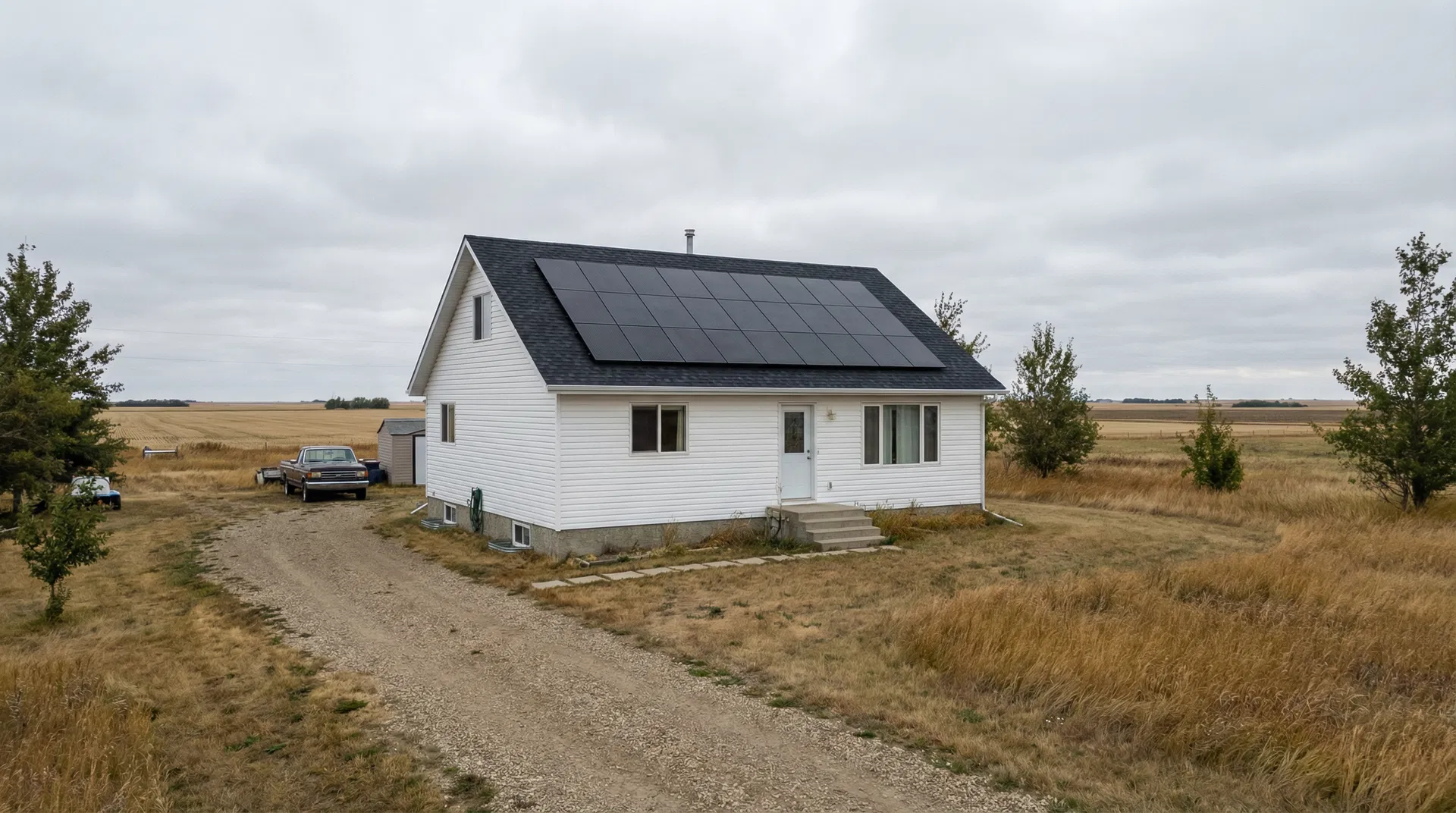
Commercial and agricultural properties in rural Alberta may be served by single-phase or three-phase electrical service, and the difference matters for inverter selection and total system capacity. Three-phase service is common on larger farm operations and commercial facilities and allows for larger, more efficient string inverter configurations. Single-phase properties have different design constraints, and we select equipment accordingly during the site assessment.
Panel Infrastructure
Older commercial and agricultural electrical panels may not have the breaker capacity to support a solar interconnection without an upgrade. We assess the panel age, main breaker rating, and available breaker space as part of every site review. If the existing panel can't support the system, we scope the upgrade as part of the project so there are no surprises after the install begins.
Service Entrance Review
The service entrance and meter base condition are reviewed as part of every commercial site assessment. FortisAlberta's interconnection process requires that the meter base meet their current technical standards, and an outdated or damaged meter base can delay the application. If an upgrade is required, we identify it early and include it in the project scope so the interconnection application isn't held up at the utility review stage.
Right-Sizing Solar for High River Properties
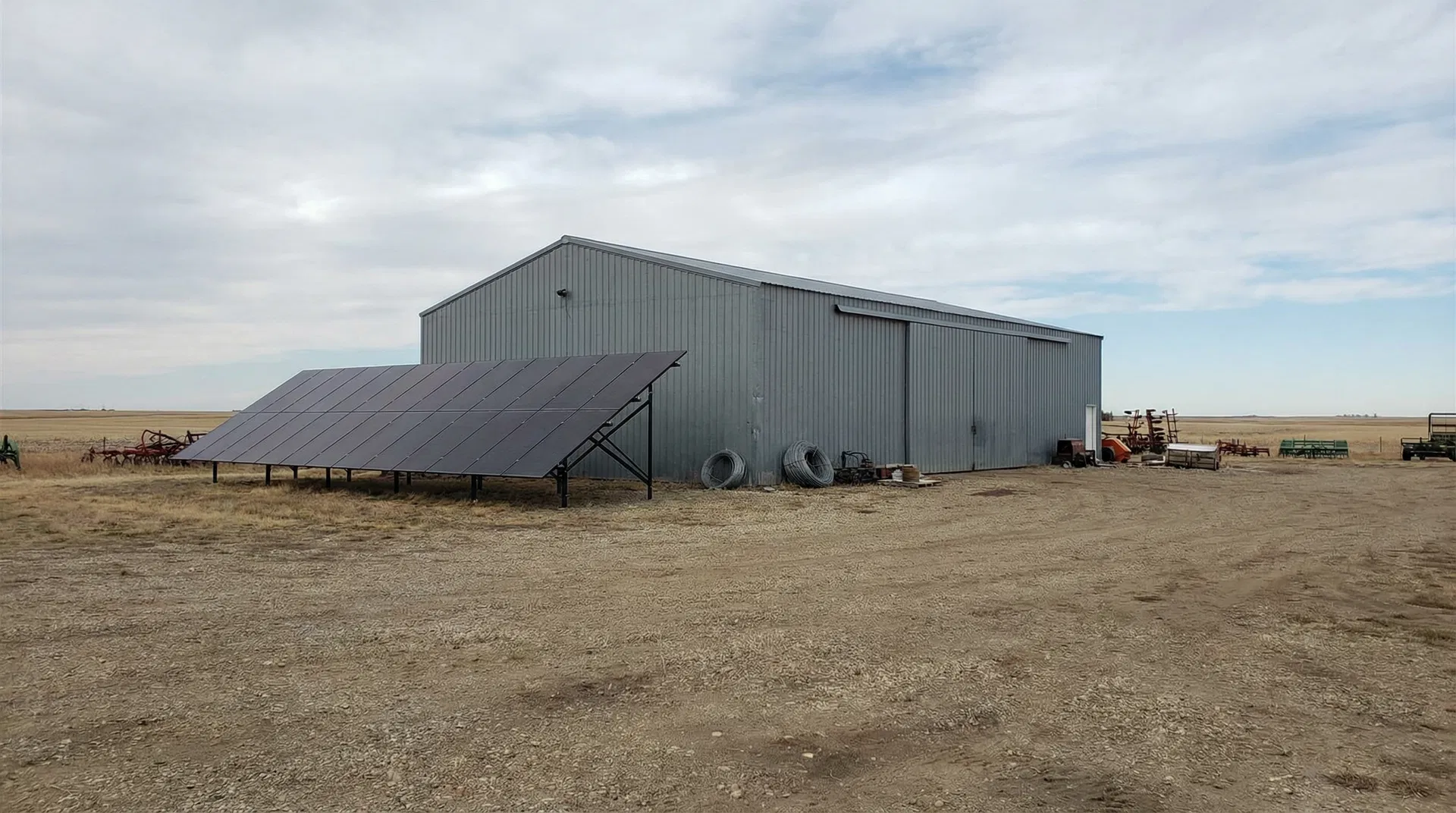
Commercial properties near High River don't carry a single clean load. You've likely got a main building, a heated shop, maybe a second structure or grain handling equipment, plus general lighting, HVAC, and office loads all running on the same account. When we add those up from your most recent power bill, the 12-month usage graph tells us what the property actually consumes month by month, including seasonal swings. That's the number we size to. We don't work from rule-of-thumb estimates like 'X panels per square foot.' That approach misses the reality of how commercial properties actually use power. A facility with heavy winter heating load needs a different array than one with peak summer refrigeration demand. The usage graph shows both. The roof-versus-ground-mount decision comes next. A south-facing commercial roof with clean exposure and adequate structural capacity is often the most cost-effective option. But if the roof has multiple penetrations, poor pitch, shading from adjacent buildings or equipment, or a structural load rating that won't support racking, a ground-mount is worth pricing. Agricultural properties with open yard space or a dedicated field often find ground-mount gives them better orientation control and easier long-term access. For systems in the 15-100 kW range, both options are viable. We run the numbers on your actual property layout, not a generic template, and give you a recommendation you can rely on.
Typical Load Profiles We Design For Near High River
Agricultural Operation with Heated Shop
A farm property with a heated equipment shop, grain drying, and a main residence can carry a combined electrical load that justifies a 40-80 kW system. The shop heating load in winter and grain drying in fall drive the sizing, and the 12-month usage graph on the most recent power bill captures both peaks. We size the array to match the actual annual consumption profile, not just the summer baseline.
Commercial Retail or Light Industrial Building
A commercial building in the 5,000-15,000 square foot range, with HVAC, lighting, and general equipment loads, typically falls in the 20-40 kW system range. Roof orientation and available unshaded roof area are the main constraints. We assess both rooftop and ground-mount options during the site review and build the production model from the property's actual 12-month consumption.
Food Processing or Cold Storage Facility
Cold storage and food processing operations run consistent, high electrical loads across all 12 months. That load profile is well-suited to solar because the production offset is predictable and the grid draw is large enough that a 60-100 kW system can meaningfully reduce monthly consumption. We size these systems from the power bill's usage graph and confirm the inverter configuration against the facility's three-phase service where applicable.
FortisAlberta Interconnection in High River
High River is served by FortisAlberta. Any solar system you install here connects to their distribution network, and your micro-generation application goes through their interconnection process. That process involves a technical review of your proposed system, and the system has to be designed to meet their requirements before FortisAlberta will approve the connection. We handle the interconnection application on your behalf. That includes preparing the design package, specifying equipment that meets FortisAlberta's technical standards, and submitting the documentation. You don't need to navigate their process yourself. For commercial systems in the 15-100 kW range, the interconnection review is more involved than a small residential application. Larger systems may require additional engineering documentation or a more detailed grid impact review. We account for that in our design process and keep you informed about where the application stands. We provide honest production estimates based on your actual power bills and site conditions, not inflated projections.
Project Economics and Design Review
| System Size | Annual Production | Year 1 Savings | Payback Period |
|---|---|---|---|
| 15-100 kW range, 30 kW typical |
Production, savings, and payback projections require a property-specific design review and your most recent power bill.
How We Work in High River
Bill and Load Review
We review your power bill to understand your energy use in High River and size the system to your actual consumption — not a generic estimate.
Site Assessment
We assess your roof or ground area, south-facing exposure, electrical service, and utility interconnection requirements specific to your property.
Design and Utility Application
We produce a system layout, production estimate, and cost summary, then submit your micro-generation application to your utility on your behalf.
Installation and Commissioning
Our crew installs racking, panels, inverter, and electrical connections. All work is performed by licensed electricians. We commission and test before handoff.
Current Program and Interconnection Review
Utility connection review
FortisAlberta reviews grid connection applications for solar systems installed in High River and the surrounding service area. Range Road Solar prepares the full design package, selects equipment that meets FortisAlberta's technical requirements, and submits the interconnection application on your behalf. You don't need to manage the utility process yourself.
Current program review
Commercial, agricultural, and farm solar installations may qualify under current federal and provincial programs depending on the operation type and system configuration. Eligibility is reviewed against the rules in effect at the time of your design, not historical program terms. We confirm what applies to your specific property during the design process.
Frequently Asked Questions
Get a Solar Assessment for High River
Submit a recent power bill and we will review your consumption and provide an honest assessment for your High River property. No obligation.
(587) 330-7502 Book a CallRelated Resources
More Solar Services in High River