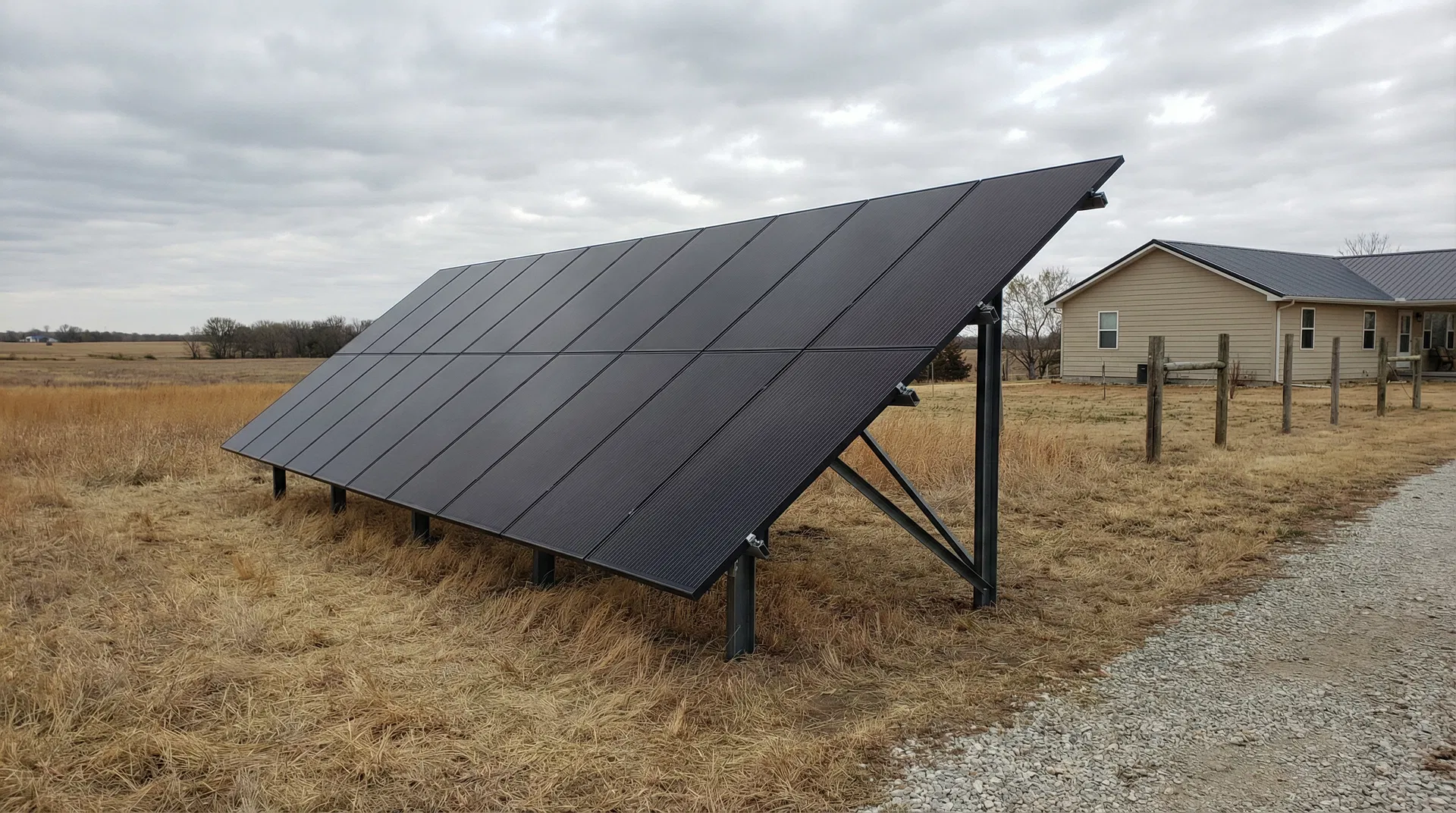
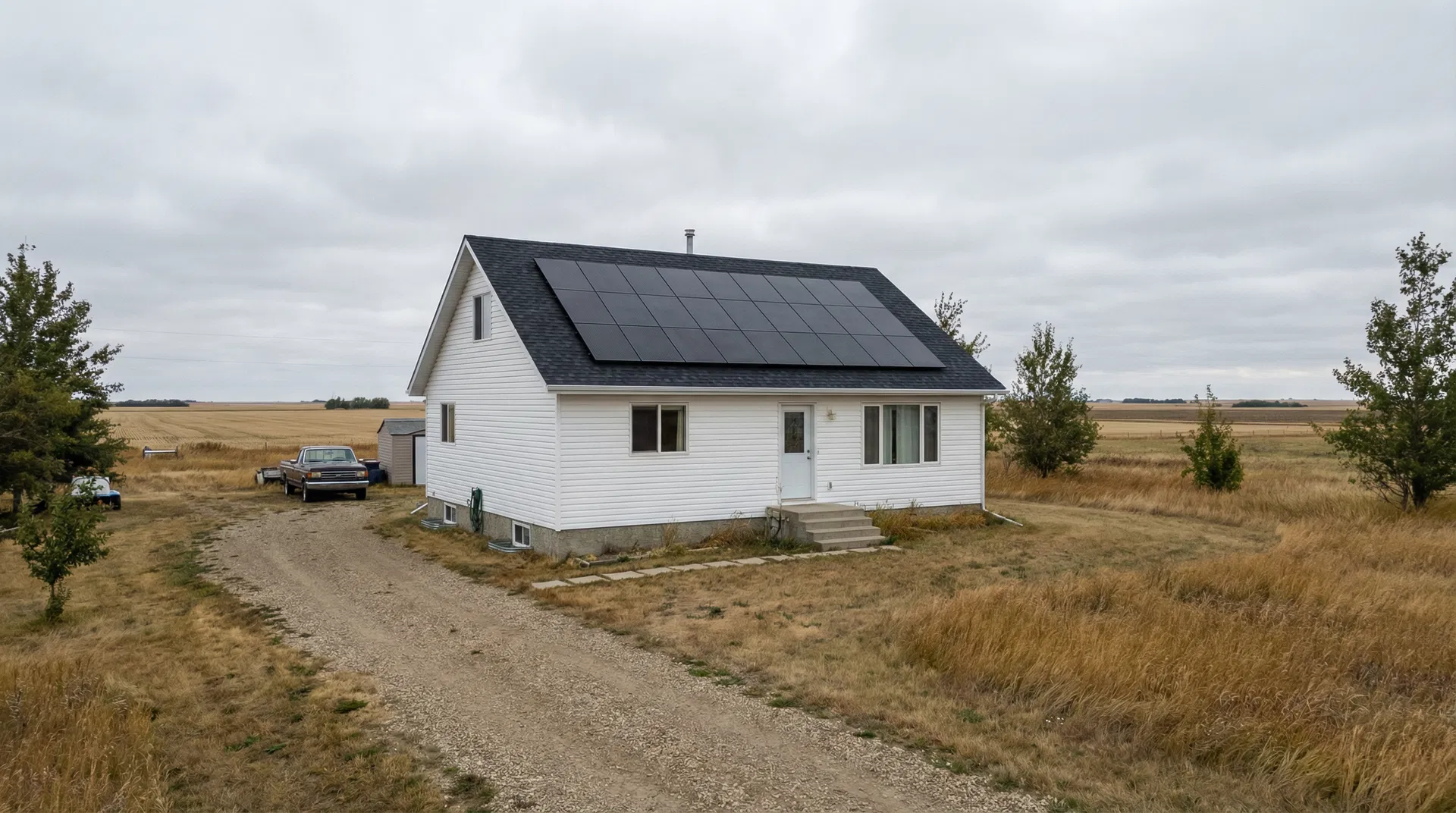
Range Road Solar provides solar quotes in High River, Alberta for residential, acreage, and farm properties connected to FortisAlberta's grid. The quote isn't a rough estimate based on your address. It's a complete design built from your actual power bill, a site assessment, and the technical requirements of FortisAlberta's micro-generation program. We install LONGi panels and APsystems microinverters on every system. LONGi panels perform consistently at residential and farm scale. APsystems microinverters give you panel-level monitoring so you can see how each panel is contributing to total output. If one module underperforms due to shading or a hardware issue, you'll see which one, not just a drop in overall output. For residential properties, a roof mount is usually the starting point. The system size comes from the load profile, not from how much roof is available. Acreage and farm layouts often call for a closer look at ground mount options, especially when a shop roof has a poor pitch, when shading from trees or grain bins limits a roof mount, or when the home roof is simply too small for the system size the load profile requires. The quote process starts with your most recent power bill. We use the 12-month usage graph to build the consumption model and then assess the site: roof dimensions, orientation, shading, available ground space, and existing electrical infrastructure. Systems in this area run from 8 to 15 kW, with 10 kW being the typical landing point for a standard residential property without large secondary loads. One bill is all we need to start. Everything else comes from the site design.
Solar Planning for High River Properties
Properties in this area sit on FortisAlberta's distribution network. That means micro-generation applications go through FortisAlberta's engineering review, and the specifics of your grid connection depend on local distribution infrastructure, not just your roof. Grid conditions vary across the territory, and what works well at one property doesn't automatically translate to the next one down the road. Setups in this part of Alberta cover a real range of loads: acreages with heated shops, working farms with grain handling equipment, and residential lots on the edges of smaller communities. Each one has a different consumption pattern, and that pattern is what drives system size. A home with electric baseboard heat has different needs than a property running irrigation pumps. We start every quote with your most recent power bill. FortisAlberta bills include a 12-month usage graph that shows your seasonal peaks and your annual consumption in one place. From there, we do a proper site design: roof orientation, shading, ground-mount options if the roof doesn't suit the system, and your existing electrical infrastructure. We don't hand out a number until we've actually looked at the property and the bill together. That's what separates a design-based quote from a generic estimate.
Electrical Considerations We Review at Every Site
Voltage Rise
Voltage rise happens when solar generation pushes current back through the distribution line and raises the local voltage above what the inverter's safety limits allow. In rural areas, where properties can sit further from a substation, distribution line conditions vary and affect how much voltage rise a system will see under peak generation. That rise directly affects inverter clipping and, if it's significant enough, constrains how large a system can practically export at full output.
Single-Phase vs Three-Phase
Rural Alberta properties may be served by single-phase or three-phase electrical service, and that distinction matters when we're selecting inverters and sizing the array. A three-phase property can spread solar output across all three legs, which affects inverter configuration and sometimes allows a larger total system capacity. We confirm the service type at the electrical assessment before finalizing the equipment selection.
Panel Infrastructure
Older properties often have electrical panels with breaker capacity or physical space that won't support a solar connection without an upgrade. We assess breaker sizing and panel condition as part of every site review, because an undersized panel creates a safety issue and can result in a failed interconnection application. If an upgrade is needed, we document it clearly in the quote so there are no surprises at installation.
Service Entrance Review
The meter base and service entrance condition are reviewed as part of FortisAlberta's micro-generation application process. A meter base that doesn't meet current standards can require an upgrade before FortisAlberta will approve the interconnection. We inspect the service entrance during the site design phase so any required work is identified before the application is submitted, not after.
Right-Sizing Solar for Rural Properties
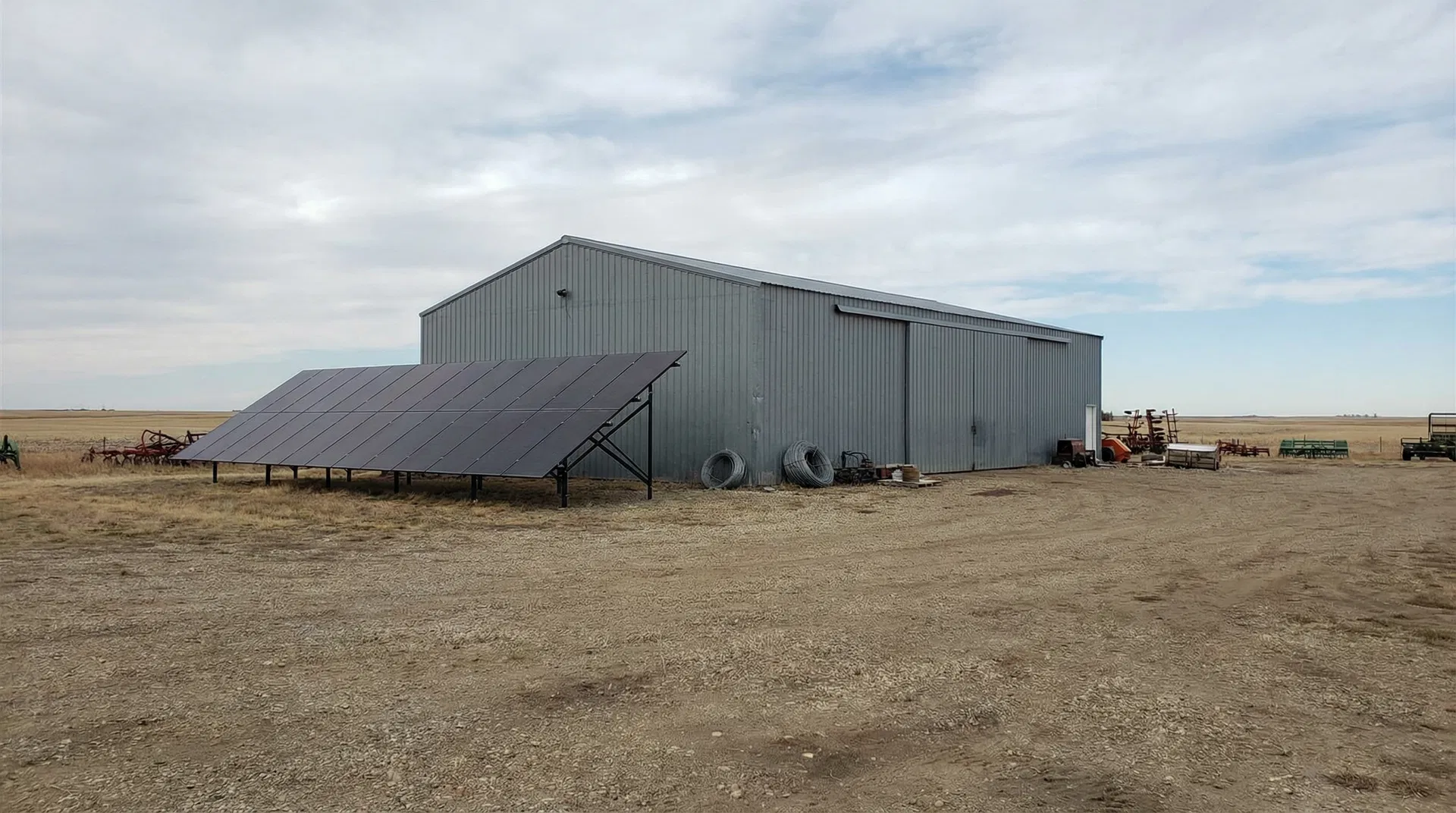
Rural Alberta properties run more electrical load than a standard urban lot. A home with a heated shop, a grain dryer, and irrigation infrastructure can draw several times what a single residential property uses. That's why farm and acreage systems often land in the 12 to 15 kW range rather than the 8 to 10 kW range that's typical for in-town homes without large secondary loads. Roof versus ground mount is a real decision on a rural property. If the main house has decent orientation and clear roof space, a roof mount is usually the simpler path. But if the barn or shop roof has a low pitch, if shading from a grain bin or a row of trees limits the available area, or if the roof is due for replacement soon, a ground-mounted array on open land often makes more sense. We look at both options as part of the site assessment and recommend the one that fits your layout. System sizing starts with the 12-month usage graph on your most recent power bill. That graph shows your seasonal peaks and your total annual consumption in one place. We don't size from rule-of-thumb numbers. We size from what you're actually using and what your site can support, which is the only way to build a system that genuinely offsets your loads rather than just looking right on paper. One bill is all it takes to get started. Everything else follows from the site design.
Typical Load Profiles We Design For Near High River
Home + Heated Shop
A property running a home alongside a 1,500 square foot heated shop carries a significantly higher winter electrical load than the home alone would generate. The shop heating load often doubles peak consumption during cold months, which shows up clearly on the 12-month usage graph from your most recent power bill. Systems for this configuration typically land in the 10 to 13 kW range, depending on insulation, heating type, and available roof or ground space.
Acreage with Well Pump and Outbuildings
Properties with high-draw well pumps, electric water heaters, and multiple outbuildings often carry a higher base load than a comparable in-town home, even without a dedicated heated shop. The annual usage pattern on your most recent power bill captures these loads across all seasons, including months when the well pump runs harder for irrigation or livestock watering. This configuration often sizes to 10 to 12 kW, with the final number driven by actual annual consumption rather than property size.
Working Farm with Grain Handling
Grain dryers, auger motors, and aeration fans are large, intermittent loads that appear as sharp usage spikes on the fall portion of a 12-month usage graph. A farm running a grain dryer alongside a home and shop load often needs a 13 to 15 kW system to offset peak-period consumption meaningfully. Ground mount is frequently the better option for these properties because the electrical loads are spread across multiple buildings and open land typically allows a larger array footprint than any single roof.
FortisAlberta Interconnection in High River
FortisAlberta is the distribution wire service for this area. When you install solar here, the micro-generation connection request goes to FortisAlberta's engineering team, not to your electricity retailer. The wire service reviews the grid connection design, confirms the system won't create issues on the local distribution network, and issues the interconnection approval before the system can be energized. Range Road Solar handles the complete application package. That includes the single-line diagram, equipment specifications, site layout, and any technical documentation FortisAlberta requires. You don't need to figure out their process or submit anything yourself. We know what their engineering team looks for and build the package to those standards from the start. What matters is that the design meets FortisAlberta's technical requirements. An application that comes back for revision adds time to the process. We build the package to meet those requirements the first time. The interconnection approval links to your retailer account for billing purposes. But it's the wire service that controls the physical grid connection, and getting the application right is what we focus on.
Project Economics and Design Review
| System Size | Annual Production | Year 1 Savings | Payback Period |
|---|---|---|---|
| 8-15 kW range, 10 kW typical |
Production, savings, and payback estimates require a property-specific design and your most recent power bill.
How We Work in High River
Bill and Load Review
We review your power bill to understand your energy use in High River and size the system to your actual consumption, not a generic estimate.
Site Assessment
We assess your roof or ground area, south-facing exposure, electrical service, and utility interconnection requirements specific to your property.
Design and Utility Application
We produce a system layout, production estimate, and cost summary, then submit your micro-generation application to your utility on your behalf.
Installation and Commissioning
Our crew installs racking, panels, inverter, and electrical connections. All work is performed by licensed electricians. We commission and test before handoff.
Current Program and Interconnection Review
Utility connection review
FortisAlberta reviews all micro-generation connection applications for properties on its distribution network. Range Road Solar prepares the complete application package, including the single-line diagram and equipment documentation, to meet FortisAlberta's technical standards. We submit the application and follow up with the utility on your behalf.
Current program review
Commercial, farm, and residential properties may qualify for federal or provincial programs depending on property classification, system type, and the rules in effect at design time. We review applicable programs against the current rules when we build your design, not against descriptions that may have changed since they were written. If a program applies to your property and system size, we identify it during the design review.
Frequently Asked Questions
Get a Solar Assessment for High River
Submit a recent power bill and we will review your consumption and provide an honest assessment for your High River property. No obligation.
(587) 330-7502 Book a CallMore Solar Services in High River