Foothills County · Shop and outbuilding solar
Shop Solar High River Alberta: Outbuilding and Farm Installations
Range Road Solar installs grid-tied solar on shops, barns, and outbuildings near High River. Systems sized from 8 to 20 kW, designed around your actual loads.
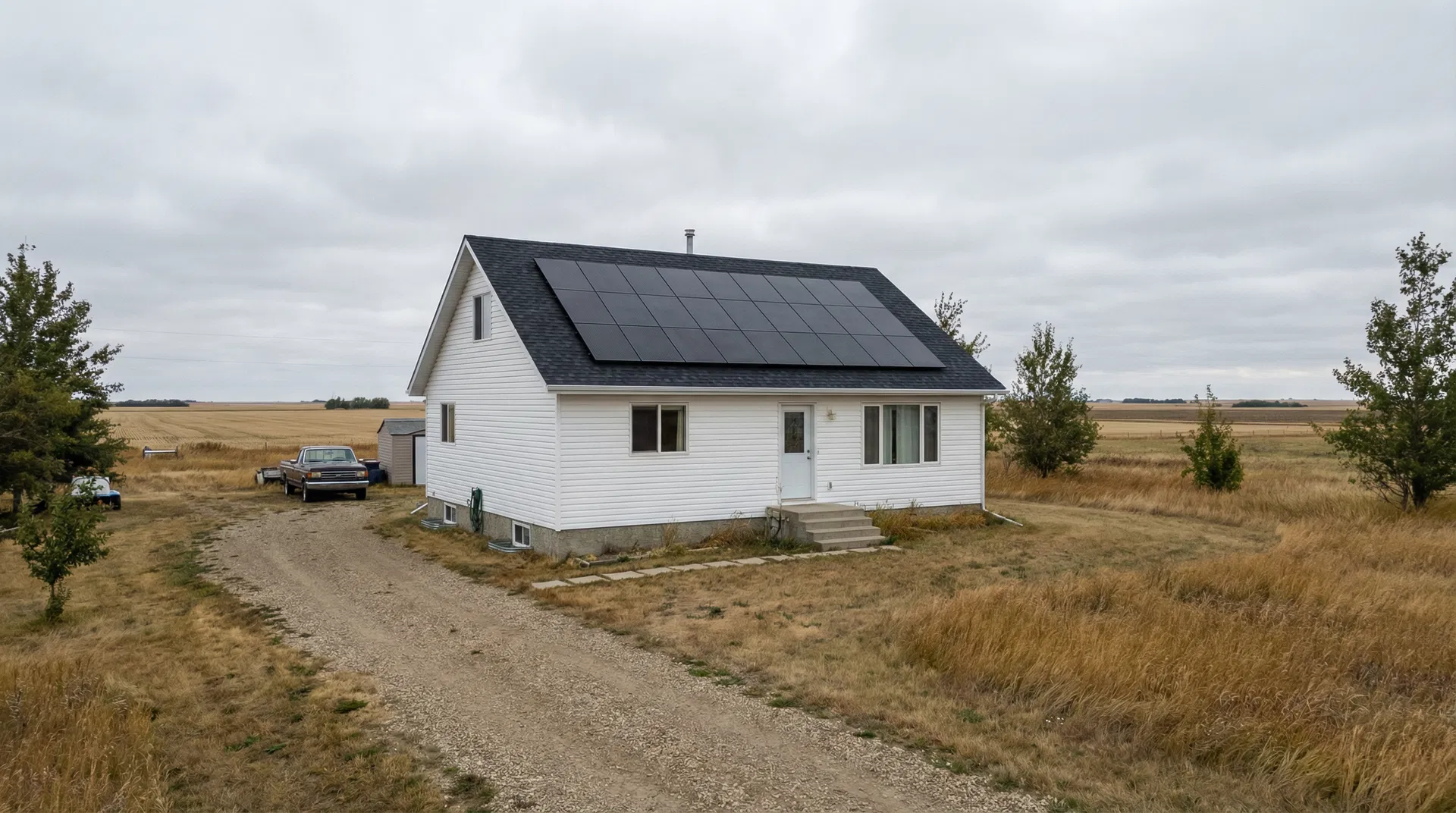
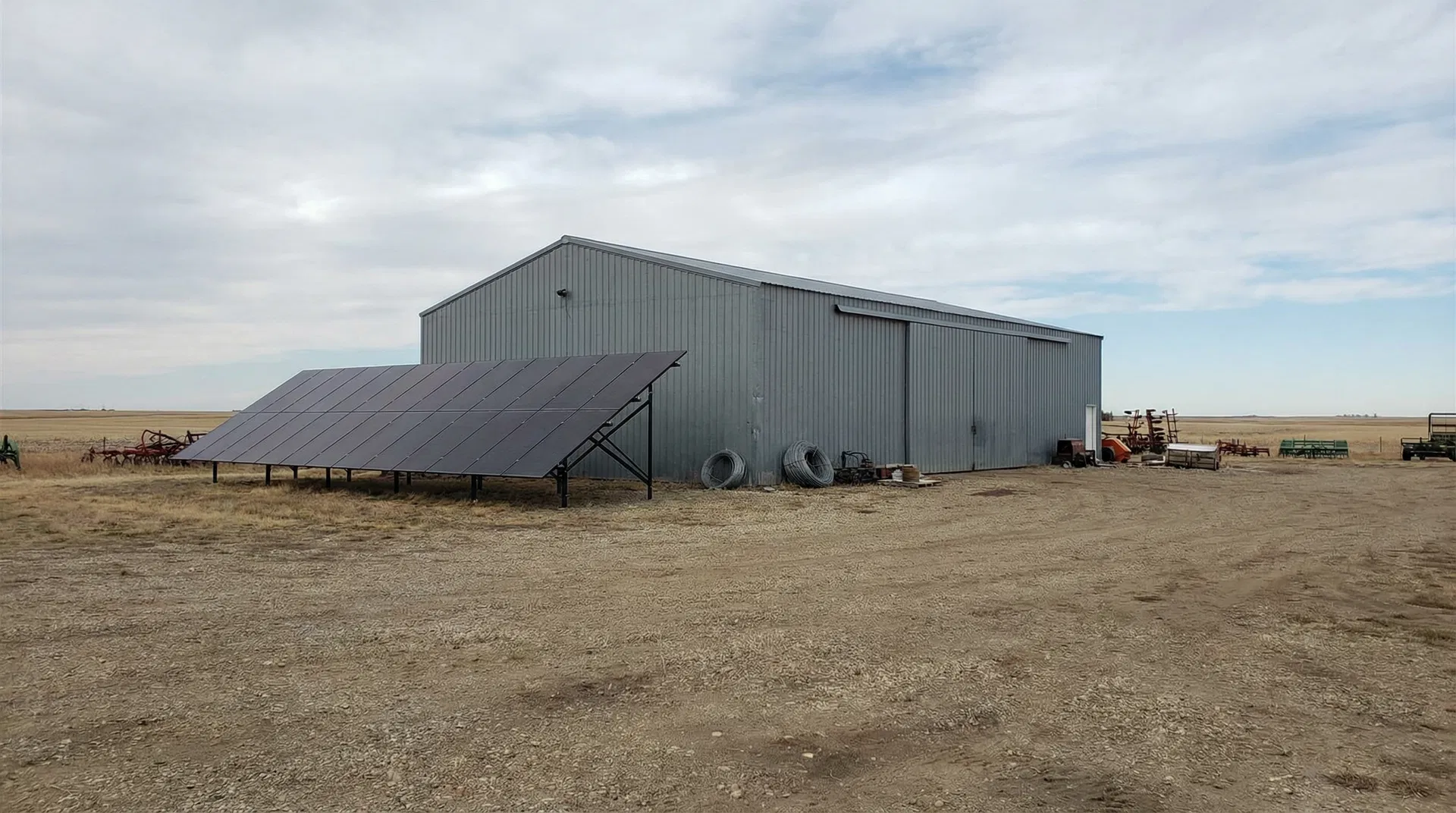
Shop solar high river alberta inquiries almost always involve more than one structure. A typical property might have a house, a heated shop, a barn, and one or two smaller outbuildings, each on its own subpanel or served from a shared meter. The first thing we sort out is where the solar system connects, because that determines what loads it can offset and how the FortisAlberta micro-generation application gets structured. For roof-mounted systems, we use LONGi solar panels paired with APsystems microinverters. Microinverters work well on shop roofs because outbuildings often have partial shading from trees, yard lights, or adjacent structures. Each panel operates independently, so a shadow on one section of the roof doesn't drag down output from the rest of the array. On larger shops with good south or southwest-facing roof planes and solid structural integrity, a rooftop configuration is usually the most straightforward approach. Ground mounts are common on rural acreages around here, particularly when the shop roof faces the wrong direction, has ventilation stacks in the way, or simply isn't large enough to fit the array the load profile requires. We engineer ground-mount frames to Alberta wind and snow-load requirements and size the array based on available land and orientation rather than being constrained by roofline. System sizes for this service typically run 8 to 20 kW, with 12 kW being a common starting point for a shop with moderate year-round use. Properties with larger combined loads often land in the 15 to 20 kW range. We confirm the right size through the design review, not before it.
Solar Planning for High River Properties
Properties around High River tend to carry real electrical loads. Heated shops, well pumps, grain handling equipment, and outbuildings all pull power independently of the house, and that cumulative draw adds up across a billing year. A solar system designed around those loads looks different from a standard residential install, and the design process has to reflect that. FortisAlberta is the wire service here, and micro-generation interconnection goes through their application process. Range Road Solar handles that paperwork, but understanding how the grid connection works at your specific service point matters before we size anything. We don't quote systems from rule-of-thumb numbers. Your most recent power bill includes a 12-month usage graph, and that graph tells us what actually happened on your property over a full year, including seasonal swings from irrigation, heat tape, or shop use. We build the design from that. If the numbers don't make sense for your property after a proper review, we'll tell you that too. We provide honest production estimates based on your actual power bills and site conditions, not inflated projections.
Electrical Site Review for High River Properties
Voltage Rise
Voltage rise occurs when solar generation pushes voltage at the point of interconnection above the acceptable range on the distribution line. Rural distribution lines near High River can run long distances with fewer customers sharing the line, which affects local voltage conditions. If voltage rise margins are tight at a given service point, it can influence inverter clipping behavior and may require system sizing adjustments to stay within FortisAlberta's interconnection requirements.
Single-Phase vs Three-Phase
Rural properties around High River may be served by single-phase or three-phase power, depending on what FortisAlberta installed at that location and what loads the property has historically required. Three-phase service is common where grain handling, large compressors, or irrigation equipment is running. The phase configuration at your service entrance affects which inverter models are appropriate and what the practical upper limit on system capacity looks like for your site.
Panel Infrastructure
Older shops and outbuildings often have electrical panels that were sized for a lighter load than the property carries today. Before we finalize a system design, we assess breaker capacity, panel age, and whether the existing infrastructure can support a solar backfeed breaker at the required size. If the panel can't accommodate the system safely, an upgrade is part of the project scope, and we factor that into the design review.
Service Entrance Review
The meter base and service entrance condition is something FortisAlberta reviews as part of the micro-generation application process. We inspect the meter base during the site visit to confirm it meets current requirements before the application is submitted. If an upgrade is required, it's better to identify that early so it doesn't delay interconnection approval after the panels are already on the roof.
Right-Sizing Solar for High River Properties
Rural properties around High River often carry a stack of loads that urban installs don't deal with. There's the house, the heated shop, maybe a barn or equipment shed, a well pump, and depending on the operation, irrigation or grain handling equipment that draws significant power during peak season. When you add those loads together across a billing year, you're often looking at a system size that's well above what a typical suburban roof-mount needs. That's why the 12-month usage graph on your most recent power bill is the starting point for every design we do. That graph shows us the actual monthly consumption pattern on your property, including which months your shop heater was running hard and which months usage dropped. We don't apply a flat kWh-per-square-foot estimate. We work from what your meter actually recorded. The roof versus ground-mount decision depends on what's available and practical. A shop with a clean south-facing roof plane, good pitch, and no significant shading from trees or adjacent buildings is often the easiest place to put an array. But if the shop roof faces the wrong direction, has HVAC stacks or ridge vents in the way, or simply isn't large enough for the system the load profile requires, a ground mount on the yard is usually the better call. Many rural properties have the land for it, and a ground-mounted array can be oriented and tilted for better output than a fixed roofline allows. For shops and outbuildings, systems typically run 8 to 20 kW. We confirm where yours lands after the site design and bill review, not before.
Typical Load Profiles We Design For Near High River
Heated Shop Plus Residence
A natural gas or propane shop with electric baseboard backup, power tools, compressors, and a separate house on the same meter is one of the most common profiles we see. The shop's electric draw spikes in shoulder seasons when the primary heat source can't keep up on its own, and that seasonal variation shows clearly on the 12-month usage graph. A system sized for this combined load typically lands in the 12 to 16 kW range, confirmed through site design and your most recent power bill.
Agricultural Operation with Grain Handling
Properties running augers, grain dryers, or bin aeration fans carry a load profile that peaks hard in fall and runs lighter through winter. That seasonal shape affects how we size the array relative to annual consumption, because oversizing for harvest season doesn't necessarily make sense across the full year. We use the 12-month usage graph to understand the actual peak-to-trough pattern before recommending a system size, which on grain operations often falls in the 15 to 20 kW range.
Acreage Shop with Well and Outbuildings
A property with a residential well pump, a detached shop used for hobbies or light commercial work, and one or two smaller outbuildings creates a distributed load spread across multiple structures. The well pump alone can add meaningful consumption, particularly if it's a higher-draw submersible on a deep well. We review the subpanel configuration during the site visit to determine the best interconnection point, and we size the system from the full-property consumption record rather than estimating individual loads separately.
FortisAlberta Interconnection in High River
FortisAlberta is the distribution wire service for High River. Any grid-tied solar system installed here connects to their network, and micro-generation applications go through FortisAlberta's review process before a system can be commissioned. Range Road Solar prepares and submits the full interconnection package on your behalf. That includes the single-line diagram, equipment specifications, and the completed micro-generation application. We've been through this process with FortisAlberta properties before, and we know what their reviewers look for. For shop and outbuilding systems, the application needs to correctly identify the service point, the metering configuration, and whether the solar system connects at the shop panel or at the main service entrance. Getting that detail right the first time avoids back-and-forth that can slow the process down. We won't commission a system until interconnection approval is confirmed. What happens after that, including how net billing credits are applied under current FortisAlberta rules, is something we walk through during the design review so you understand what to expect on your bill.
Project Economics and Design Review
| System Size | Annual Production | Year 1 Savings | Payback Period |
|---|---|---|---|
| 8-20 kW range, 12 kW typical |
Production, savings, and payback estimates require a property-specific design review and your most recent power bill before any figures can be confirmed.
How We Work in High River
Bill and Load Review
We review your power bill to understand your energy use in High River and size the system to your actual consumption — not a generic estimate.
Site Assessment
We assess your roof or ground area, south-facing exposure, electrical service, and utility interconnection requirements specific to your property.
Design and Utility Application
We produce a system layout, production estimate, and cost summary, then submit your micro-generation application to your utility on your behalf.
Installation and Commissioning
Our crew installs racking, panels, inverter, and electrical connections. All work is performed by licensed electricians. We commission and test before handoff.
Current Program and Interconnection Review
Utility connection review
FortisAlberta reviews micro-generation interconnection applications for grid-tied solar systems installed in High River. Range Road Solar prepares the full design package and submits it on your behalf. We handle the technical documentation so the application reflects your actual system configuration at your specific service point.
Current program review
Eligibility for commercial, agricultural, and residential programs changes as new rules take effect. We review the current program landscape at the time of your design, not based on what was available last year. Shop and farm operations sometimes qualify under different streams than residential installs, and we confirm which categories apply to your property during the design review.
Frequently Asked Questions
Get a Solar Assessment for High River
Submit a recent power bill and we will review your consumption and provide an honest assessment for your High River property. No obligation.
(587) 330-7502 Book a CallRelated Resources
More Solar Services in High River