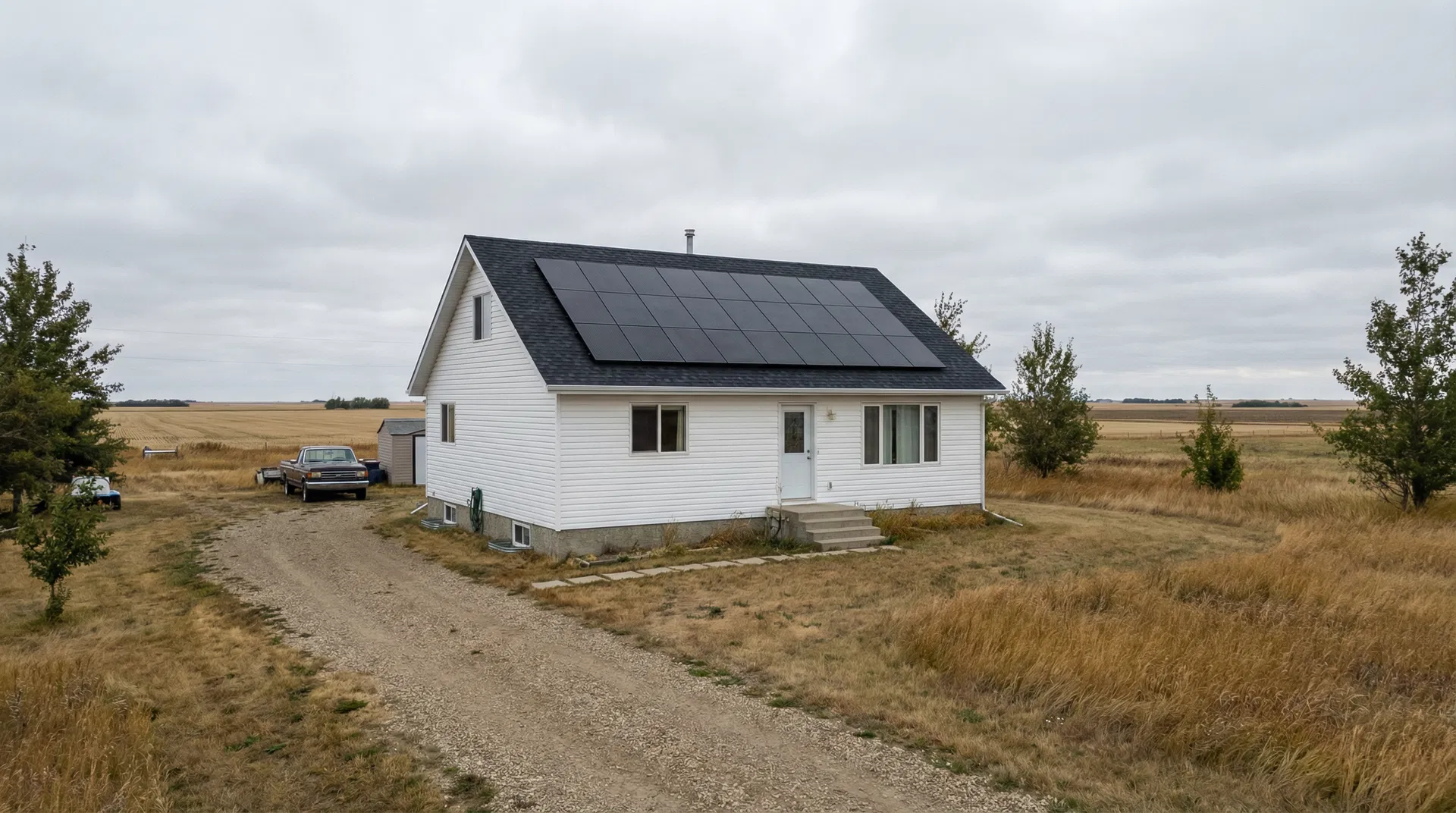
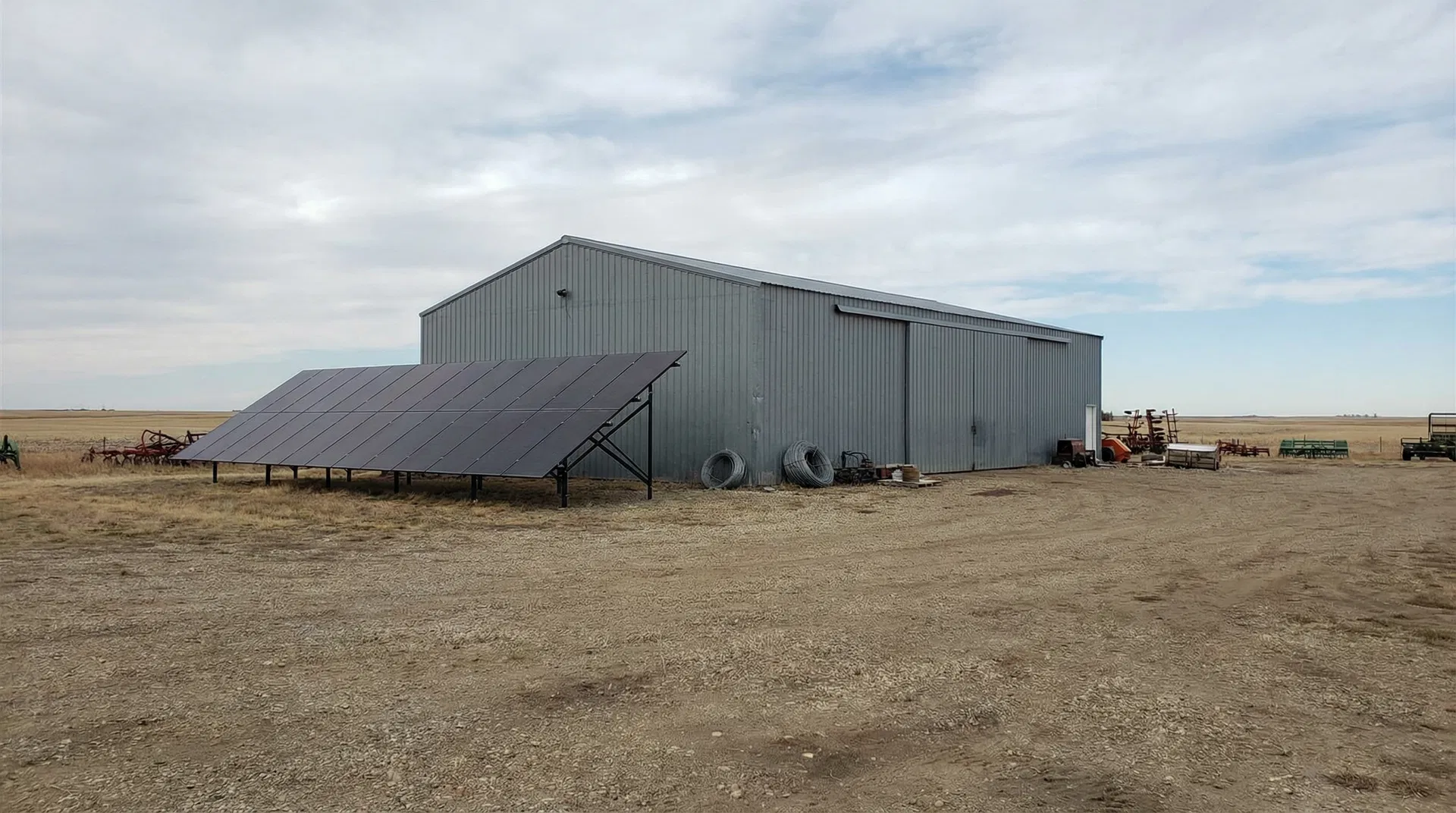
Solar in Foothills County for shops, barns, and outbuildings starts with the building itself, not a template kW number pulled off a postal code. Range Road Solar installs LONGi panels paired with APsystems microinverters, sized in the 8 to 20 kW range for this service, with a 12 kW system typical for a single well-used shop. Ground-mount racking makes sense on properties with open yard space and a shop roof that's shaded, steep-pitched, or already carrying HVAC and vent penetrations. Rooftop mounting works where the shop or outbuilding has a clean south, east, or west-facing plane and enough structural capacity in the roof deck and trusses. APsystems microinverters let us mix panel orientations across a single roofline or split output between a shop roof and a smaller adjacent outbuilding without one shaded panel dragging down the whole string, which matters on properties with multiple structures at different heights and angles. We design standalone shop systems for loads like welders, compressors, and shop heat, as well as grid-tied systems that offset a home and shop combined. Every install includes a site walk to check roof or ground conditions, existing electrical capacity, and shading from trees or neighboring buildings before we finalize a layout. The goal is a system built for how the building actually gets used, whether that's a weekend workshop or a shop running daily equipment.
Solar Planning for Foothills County Properties
This is a rural municipality within the Calgary Region, home to about 23,199 people spread across acreages, working farms, and equestrian operations rather than a single town core. Properties here run the gamut: some sit along The Cowboy Trail (Highway 22) with wide-open yards and multiple outbuildings, others sit closer to landmarks like Spruce Meadows, where land use mixes agriculture, equestrian facilities, and rural commercial buildings. That variety matters for solar planning. A shop with three-phase service next to a grain-handling operation has different loads than a hobby barn and a workshop on ten acres. We don't quote a generic system off a postal code. We look at the building itself, the wire service feeding the property, and how the shop or outbuilding actually gets used before recommending a system in the 8 to 20 kW range. On FortisAlberta-served properties, that also means confirming what the existing service entrance and meter base can support before we size anything. Every recommendation gets confirmed through an on-site design review and your most recent power bill, not a rule-of-thumb estimate based on square footage or a neighbor's system.
Electrical Site Review for Foothills County Properties
Voltage Rise
Voltage rise happens when power travels a long distance from the transformer to your shop or outbuilding, and rural distribution lines on spread-out properties can run longer than a typical in-town service. Higher voltage rise at the end of a line affects how a microinverter reads grid conditions and can trigger inverter clipping or shutdown if it's not accounted for. We measure voltage at the point of interconnection during the site review so the system is sized and configured to work with what's actually on the line, not a textbook assumption.
Single-Phase vs Three-Phase
Properties in the area can have either single-phase or three-phase electrical service, depending on the age of the property and what FortisAlberta has run to that yard. Three-phase service, common on larger ag operations with grain handling or irrigation equipment, changes which APsystems microinverter models are compatible and how much capacity the system can support. We confirm which service type is on the property before finalizing equipment selection, since designing for the wrong phase configuration means a system that doesn't match the building's actual electrical setup.
Panel Infrastructure
Older shops and outbuildings often run on electrical panels installed decades before anyone planned for solar, and we check breaker capacity and panel age as part of every site review. We're looking for available breaker space, the panel's amperage rating, and whether the bus bar can handle the added backfeed from a microinverter system. If the existing panel can't support the system, an upgrade means a new panel with adequate capacity and breaker space, which we scope and quote as part of the design before installation starts.
Service Entrance Review
The service entrance and meter base are where we check the physical connection point between your property and the FortisAlberta grid, including wire size, weatherhead condition, and meter base age. Meter base condition matters directly for the micro-generation application to FortisAlberta, since a damaged or outdated meter base can hold up approval or require replacement before interconnection. If an upgrade is required, we coordinate it as part of the install so the interconnection application isn't delayed by equipment that needed replacing anyway.
Right-Sizing Solar for Foothills County Shops and Outbuildings
Rural properties typically need bigger systems than an in-town house, and it's not because rural people use more power for its own sake. It's because the load list is longer: a home plus a heated shop plus a second outbuilding plus, on some properties, irrigation pumps or grain-handling equipment running seasonally. Sizing a system for all of that means looking at combined usage, not just the house. Roof versus ground-mount comes down to what the property actually offers. If the shop roof faces the wrong direction, has a shallow pitch, or sits in the shade of mature trees or a taller building, ground-mount on open yard space is usually the better call, especially on acreages with room to spare. If the roof is clean, well-oriented, and structurally sound, rooftop keeps ground space free for equipment storage or yard traffic. We don't size systems off a rule of thumb like dollars-per-square-foot or a flat kW-per-outbuilding number. We size from the 12-month usage graph on your most recent power bill, which shows exactly how the property draws power and when. That graph, combined with a site design that accounts for roof or ground conditions, shading, and orientation, is what actually determines whether a shop needs an 8 kW system or a 20 kW system. Nothing about that gets guessed.
Typical Load Profiles We Design For Near Foothills County
Home + Heated Shop
This profile combines household usage with a heated workshop running power tools, a compressor, and shop heat through the winter. We read the combined load off the usage graph on your most recent power bill and design a single system sized to offset both structures, rather than treating the shop as an afterthought.
Standalone Shop or Barn (No House Load)
Some properties want power at the shop or barn without tying the system to household usage at all, often where the residence sits on a separate service or the building stands alone. We size these off the building's own usage pattern and equipment list, whether that's welding gear, block heaters, or livestock equipment, and can configure the system as grid-tied or standalone depending on what's already running to that structure.
Home + Shop + Grain Handling or Irrigation
Ag operations with seasonal equipment like grain augers, aeration fans, or irrigation pumps see usage spike hard for part of the year and sit low the rest of the time. We design for that swing using the full usage graph on your bill rather than an average, since averaging out a seasonal spike would undersize the system for the weeks it matters most.
FortisAlberta Interconnection in Foothills County
FortisAlberta is the wire service for properties in the area, and any grid-tied shop or outbuilding system needs a micro-generation interconnection application submitted to them before it's energized. Range Road Solar handles that application as part of the install, preparing the single-line diagrams, equipment specs, and site details FortisAlberta requires for the LONGi panels and APsystems microinverters we install. If you're running a standalone, off-grid shop system with no interconnection, none of this applies, and we size and wire the system independently of FortisAlberta's process. For grid-tied systems, we coordinate the paperwork and the physical interconnection point at your service entrance or meter base, working around your shop's existing electrical setup rather than a generic checklist. Current FortisAlberta rules and requirements get confirmed at the time of your design review, since interconnection processes can change. We don't guess at approval timelines or credit terms here. Those specifics get worked out directly with FortisAlberta and reviewed with you before your system goes in the ground or on the roof.
Project Economics and Design Review
| System Size | Annual Production | Year 1 Savings | Payback Period |
|---|---|---|---|
| 8-20 kW range, 12 kW typical |
Production, savings, and payback figures are calculated during a property-specific design review using your most recent power bill, not published in advance.
How We Work in Foothills County
Bill and Load Review
We review your power bill to understand your energy use in Foothills County and size the system to your actual consumption, not a generic estimate.
Site Assessment
We assess your roof or ground area, south-facing exposure, electrical service, and utility interconnection requirements specific to your property.
Design and Utility Application
We produce a system layout, production estimate, and cost summary, then submit your micro-generation application to your utility on your behalf.
Installation and Commissioning
Our crew installs racking, panels, inverter, and electrical connections. All work is performed by licensed electricians. We commission and test before handoff.
Current Program and Interconnection Review
Utility connection review
FortisAlberta reviews the micro-generation interconnection application for any grid-tied shop or outbuilding system before it's energized, checking the design against their technical requirements. Range Road Solar prepares and submits that design package, including single-line diagrams and equipment specs for the LONGi and APsystems equipment we're installing, as part of the project.
Current program review
Eligibility for commercial, farm, and residential solar programs changes, and we check what applies to your specific property type against the current rules at the time of your design review. That review covers how the building is used, whether it's classed as farm, commercial, or residential, and what that means under whatever rules are active when we design your system.
Frequently Asked Questions
Get a Solar Assessment for Foothills County
Submit a recent power bill and we will review your consumption and provide an honest assessment for your Foothills County property. No obligation.
(587) 330-7502 Book a CallRelated Resources