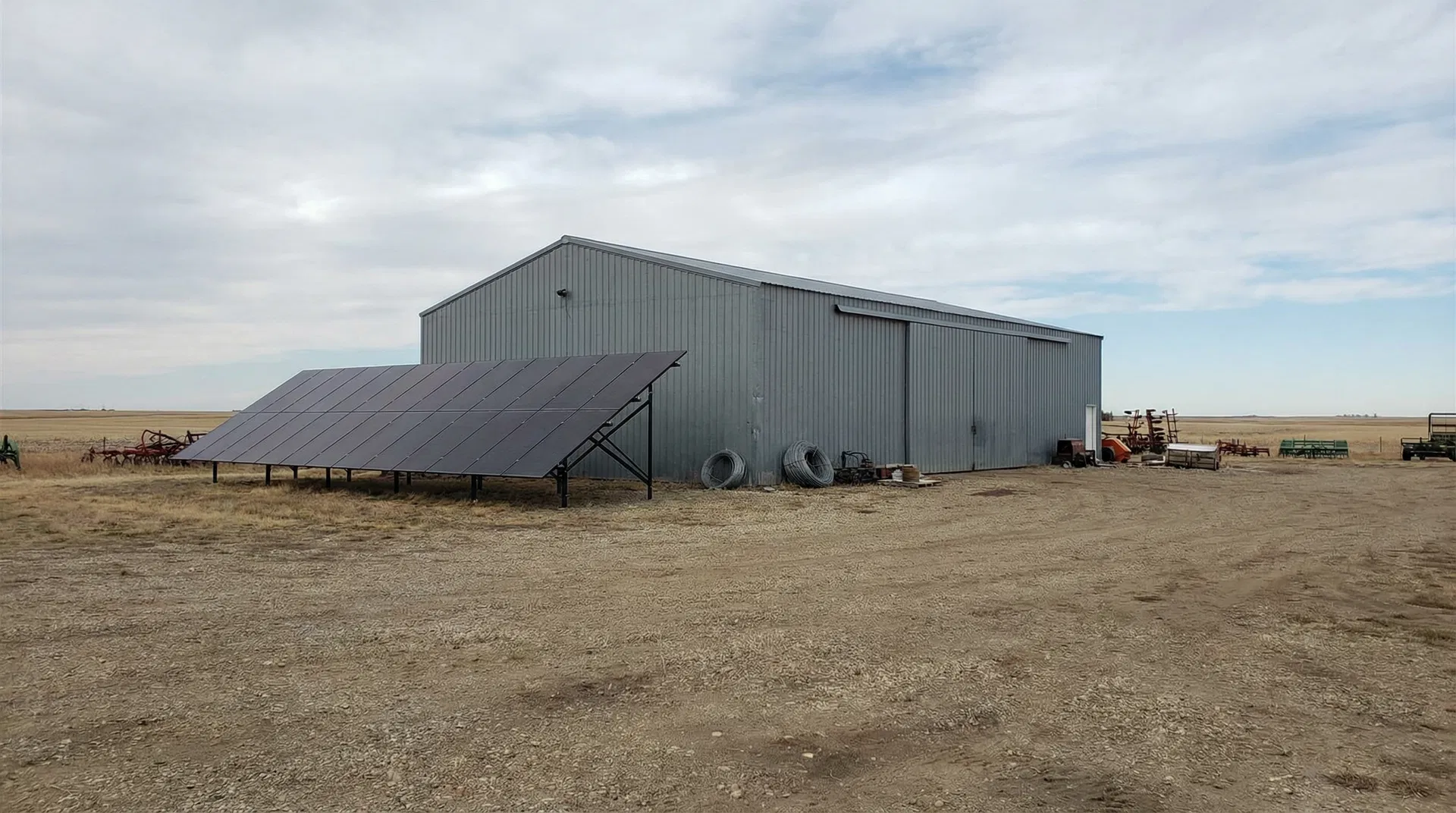
Farm solar in Foothills County means sizing a system for the shop, the bins, and the irrigation setup, not just the house. Most of the farm systems we install here run in the 20 to 50 kW range, with 25 kW being a common landing point once we've added up the house, a heated shop, and a grain-handling load or two. We use LONGi panels on every install, paired with APsystems microinverters, which let us keep individual panel output independent so partial shading from a bin row or a shelterbelt doesn't drag down the whole array. For farm-scale systems, we usually push toward ground-mount rather than rooftop. A lot of Quonsets and machine shops have steep or irregular rooflines, and a ground-mount array gives us control over tilt and orientation that a roof can't. It also keeps the array low and serviceable, which matters when you're already dealing with snow removal and yard equipment moving around the property. Where a shop roof is in good shape, facing the right direction, and not shaded by grain bins or trees, we'll run the numbers on rooftop too. It comes down to what the site actually looks like, not a default answer. Three-phase service is common on working farms with grain dryers or large motors, and that changes which inverter configuration makes sense compared to a single-phase residential hookup. We confirm phase service and panel capacity during the site visit, before we finalize equipment.
Solar Planning for Foothills County Properties
Foothills County stretches along the Cowboy Trail (Highway 22), and most of the properties we quote out here aren't single-load homes. A farmyard typically has a house, a shop, maybe a grain bin aeration fan or two, and in a lot of cases a second meter for an outbuilding. With roughly 23,199 people spread across the area as of the last census, this isn't dense subdivisions, it's acreages and working farms, and that changes how we approach system design from the ground up. We don't size off a national average. We size off your most recent power bill and a site visit that checks roof orientation, shading, and whether a ground-mount array makes more sense than fighting an awkward roofline. Environment Canada's climate normals for the nearby Calgary station put bright sunshine at 2,396.8 hours a year, and Natural Resources Canada's solar maps put the specific PV yield for this part of the province around 1,292 kWh per kW of installed capacity. Those are regional planning inputs, not a promise about your production. We also work near landmarks like The Saskatoon Farm, so we're familiar with the local roads and the kind of rural electrical setups you're dealing with. FortisAlberta runs the wires here, and we handle the micro-generation application as part of the project, not as an afterthought.
Electrical Site Review for Rural Properties
Voltage Rise
Voltage rise happens when the voltage at your farm's connection point climbs higher than what the grid delivers at the transformer, usually because of long rural distribution runs. On properties with longer feeder lines, this can push inverters into a protective shutdown or clipping mode before the system reaches its rated output. We measure voltage conditions at your service during the site visit so the system is sized and configured to avoid nuisance trips.
Single-Phase vs Three-Phase
Rural Alberta properties show up with either single-phase or three-phase electrical service, and which one you have changes what inverter setup actually works. Three-phase service, common on farms running grain dryers or large motors, often allows for a different system configuration than a single-phase residential hookup. We confirm your phase service early, since it affects both equipment selection and maximum system capacity.
Panel Infrastructure
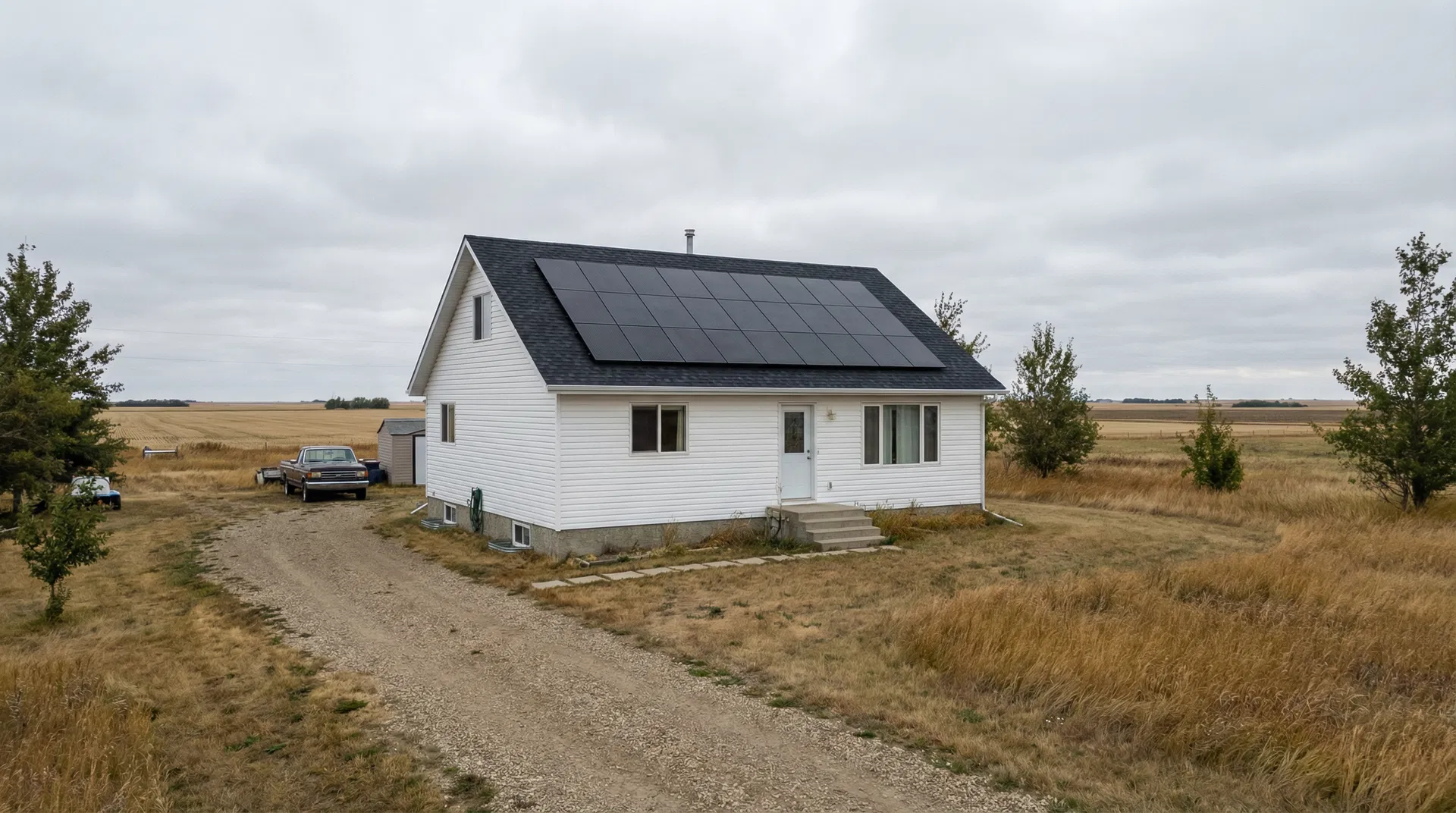
A lot of farm properties are still running on electrical panels installed decades ago, and breaker capacity is one of the first things we check. An older panel rated for a smaller farm load may not have room for a new solar breaker without a change. If the panel can't support the added capacity, an upgrade means a new panel and breaker installation before the solar system goes in, which we'll flag during the design stage, not after.
Service Entrance Review
We inspect the service entrance and meter base condition as part of every site visit, checking for wear, correct rating, and physical space for the metering equipment FortisAlberta requires for micro-generation. A meter base in poor condition or undersized for the added equipment needs to be addressed before FortisAlberta will approve the interconnection application. When an upgrade is required, we include it in the project scope upfront so it's not a surprise mid-install.
Right-Sizing Solar for Acreage and Farm Properties
Rural systems run bigger than a city rooftop install, and it's not because farms use more power per building. It's because there are more buildings. A typical farmyard has a house, a shop that might be heated, maybe a second outbuilding, and sometimes irrigation or grain-handling equipment running seasonally. Add those loads together and a 20 to 50 kW system starts to make sense, compared to a much smaller system that covers a typical city bungalow. Roof or ground-mount comes down to what the property gives us to work with. If the shop roof faces the right direction, has decent pitch, and isn't shaded by a shelterbelt or grain bins, we'll run rooftop numbers. If the roofline is awkward, shaded for part of the day, or the buildings are spread out with open land available, ground-mount usually wins. It gives us control over tilt and orientation that a roof doesn't. Either way, we don't size off a rule of thumb like covering the whole roof or a flat per-building estimate. We pull the 12-month usage graph off your most recent power bill, which shows how your load moves through the year, including any seasonal spikes from irrigation or grain drying. That graph, combined with the site survey, is what sets the final system size.
Typical Load Profiles We Design For Near High River and Cayley
Home Plus Heated Shop
This is the most common setup we see: a farmhouse plus a heated shop used for equipment storage and winter repairs. The shop's heating load often runs through the colder months on a different schedule than the house, which shows up clearly on the 12-month usage graph on your power bill. We size the system around both loads combined, not just the house meter.
Grain Handling and Aeration
Grain bins with aeration fans and a dryer add a seasonal spike to the load profile, concentrated around harvest. Rather than guessing at motor loads, we look at how that spike shows up on your most recent power bill and build the system size around your actual annual pattern, not just the peak month.
Multi-Meter Acreage with Irrigation
Some properties run a second meter for a shop or guest house, plus seasonal irrigation pumping through the summer. These setups often point toward three-phase service and a larger ground-mount array, since the combined load is higher and less predictable than a single-building home. We review all meters on the property before finalizing a design.
FortisAlberta Interconnection in Foothills County
FortisAlberta is the wire service for properties in the area, and every grid-tied solar system here goes through their micro-generation application process before it's switched on. We handle that paperwork as part of your project: the application, the required electrical documentation, and coordination with FortisAlberta on the interconnection itself. You won't need to track down forms or figure out which department to call. What we can't do is promise how long FortisAlberta will take to process an application, how credits get settled on your account, or what their current retailer policies look like. Those details change, and they're confirmed with FortisAlberta directly at the time of application, not estimated in advance. What we can promise is that the interconnection package we submit is complete and accurate the first time, which is the biggest factor in avoiding delays on our end.
Project Economics and Design Review
| System Size | Annual Production | Year 1 Savings | Payback Period |
|---|---|---|---|
| 20-50 kW range, 25 kW typical |
Production, savings, and payback figures are only meaningful once we've done a property-specific design using your most recent power bill and an on-site review.
How We Work in Foothills County
Bill and Load Review
We review your power bill to understand your energy use in Foothills County and size the system to your actual consumption, not a generic estimate.
Site Assessment
We assess your roof or ground area, south-facing exposure, electrical service, and utility interconnection requirements specific to your property.
Design and Utility Application
We produce a system layout, production estimate, and cost summary, then submit your micro-generation application to your utility on your behalf.
Installation and Commissioning
Our crew installs racking, panels, inverter, and electrical connections. All work is performed by licensed electricians. We commission and test before handoff.
Current Program and Interconnection Review
Utility connection review
FortisAlberta reviews every micro-generation interconnection application before a system is switched on, and we prepare that application and the supporting electrical package as part of your project. We don't control their review timeline or internal process, but we make sure the submission is complete the first time.
Current program review
Commercial, farm, and residential eligibility for any current incentive or financing program is reviewed against the rules in place at the time of your design, not assumed in advance. Programs change, and what applied last year may not apply today. We check current eligibility during the design review rather than quoting outdated terms.
Frequently Asked Questions
Get a Solar Assessment for Foothills County
Submit a recent power bill and we will review your consumption and provide an honest assessment for your Foothills County property. No obligation.
(587) 330-7502 Book a CallRelated Resources