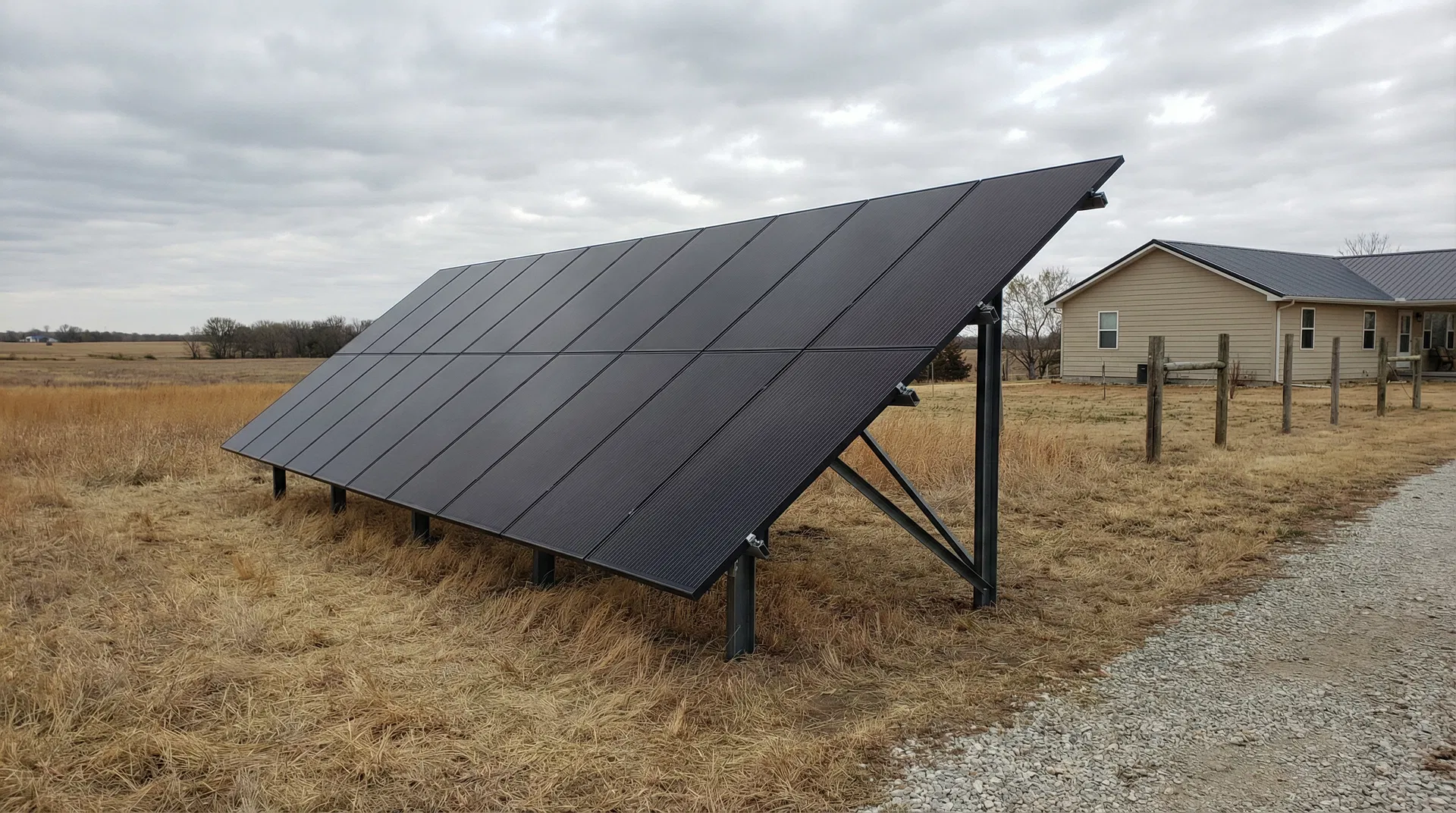
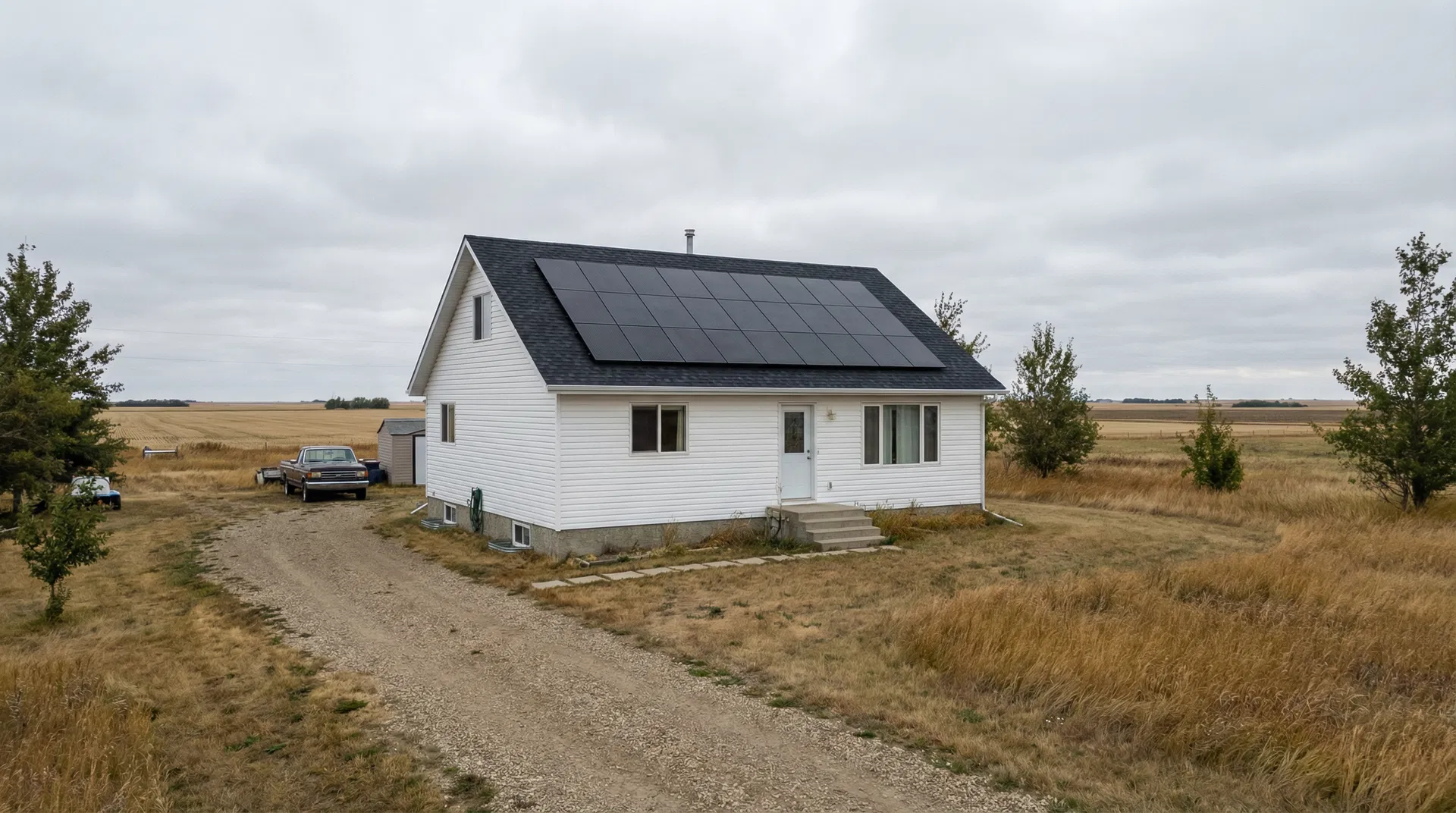
Solar installation in Foothills County starts with a site design, not a sales pitch. Every system we install runs LONGi panels paired with APsystems microinverters. That combination gives you module-level power optimization and monitoring. If one panel underperforms due to shading from a tree or a rooftop obstruction, the rest of the array keeps producing at full capacity. On a rural property where partial shading from outbuildings or tree lines is common, that matters. Systems for residential properties in this area typically fall in the 8-12 kW range, with 10 kW being a common starting point for homes with moderate ancillary loads. Properties running a heated shop, irrigation equipment, or grain-handling motors often push toward the upper end of that range or beyond. We don't guess at that number. We pull it from the 12-month usage graph on your most recent power bill and run it against your site design. Roof-mounted systems work well on newer homes with good southern exposure and adequate pitch. Ground-mount structures are worth considering when the roof is shaded, older, or oriented in a direction that limits production. We build the racking, run the conduit, handle the electrical work, and submit the FortisAlberta interconnection package. When the system is commissioned, we walk you through the monitoring so you know exactly what it's doing. We provide honest production estimates based on your actual power bills and site conditions, not inflated projections.
Solar Planning for Foothills County Properties
Properties in this area carry real electrical loads. A heated shop, a well pump, outbuildings, and a house running simultaneously push monthly consumption well above what a suburban household uses. That load profile is exactly why residential solar makes sense here, and why it needs to be designed properly rather than estimated off a rule of thumb. Foothills County sits in FortisAlberta territory. That means your interconnection application goes through FortisAlberta's micro-generation program, and the design package has to meet their technical requirements. We build that package from your actual site conditions and your most recent power bill, not from generic regional assumptions. Properties on acreages and rural lots have options that urban homeowners don't. Ground-mount systems are common here because yards have the space, and a ground-mount can be oriented and tilted precisely without being constrained by a roof. We assess both options at every site review and recommend what actually fits the property. The goal is a system that offsets the loads you're paying for, sized from your real usage data.
Electrical Site Review for Foothills County Properties
Voltage Rise
Voltage rise happens when a solar system pushes power back into the distribution line and raises the local voltage above allowable limits. In rural areas where service lines run long distances, the distribution conditions can make voltage rise more pronounced than in town. If voltage rise is too high for the line conditions, it forces inverter clipping, which reduces system output and can affect how much capacity FortisAlberta approves.
Single-Phase vs Three-Phase
Rural Alberta properties can be served by either single-phase or three-phase electrical service depending on what was installed when the property was built or updated. The phase configuration affects which inverters can be used and how much total system capacity can be added. We confirm the service type at the electrical assessment so the inverter selection and system design match what's actually on the property.
Panel Infrastructure
Older electrical panels on rural properties sometimes don't have enough breaker capacity to accommodate a solar system without modifications. We check the panel age, main breaker rating, and available breaker slots as part of every site assessment. If the panel can't support the system as-is, we'll tell you what an upgrade involves before the design goes any further.
Service Entrance Review
The meter base and service entrance condition are part of what FortisAlberta reviews during a micro-generation application. We check the meter base before submitting the interconnection package because a deteriorated or non-compliant meter base can hold up approval. If an upgrade is required, we identify it early so it doesn't become a surprise after the application is in.
Right-Sizing Solar for Foothills County Properties
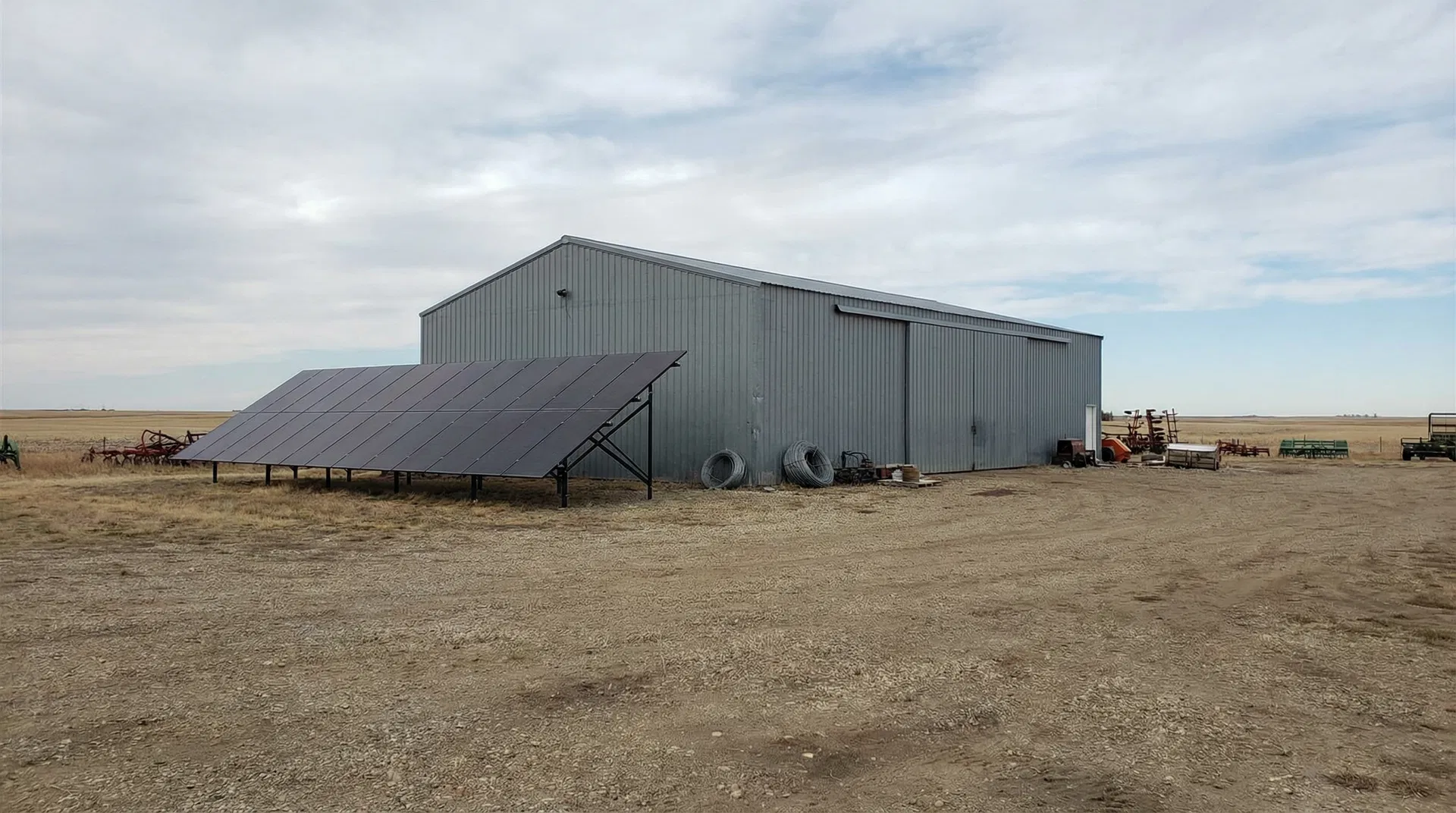
Rural properties carry more electrical load than a house in town. It's not unusual to have a main residence, a heated shop, a well pump, and one or more outbuildings all running off the same service. When you add irrigation or grain-handling equipment into the mix, the annual consumption climbs quickly. A system sized only for the house misses a significant portion of what you're actually paying for. We size for the full load picture. The choice between a roof-mounted system and a ground-mount comes down to what the property offers. If the house has a south-facing roof with good pitch and minimal shading, a rooftop install is straightforward. But on acreage and farm layouts, the best roof doesn't always win. Buildings cast shadows on each other, rooflines run east-west instead of south-facing, and older metal roofs aren't always the right substrate for racking. When that's the case, a ground-mount in an open area of the yard is often the better call. It can be tilted and oriented precisely, and it keeps the roof out of the equation entirely. We size every system from the 12-month usage graph on your most recent power bill. Alberta utility bills include that graph, which shows your consumption month by month across the full year. That seasonal pattern matters. A shop that runs hard in winter and sits quiet in summer has a different load profile than an irrigation setup that peaks in July. We don't apply a per-square-foot estimate or a regional average. Your bill and your site drive the number.
Typical Load Profiles We Design For Near Foothills County
Home Plus Heated Shop
A house paired with an insulated, heated shop is one of the most common setups we see on properties in this area. The shop heating load, lighting, and power tools add meaningfully to annual consumption, and that usage often peaks in winter when heat runs continuously. We pull that full combined load from the 12-month usage graph on your most recent power bill and size the array to cover both structures, not just the house.
Acreage with Well and Outbuildings
Properties with a submersible well pump, a detached garage, and one or two outbuildings have a consumption pattern spread across multiple circuits and seasonal draws. The well pump runs year-round with load spikes during dry stretches. We account for that distributed load in the site design so the system is sized to offset usage across the full property, not just what comes through the kitchen panel.
Home with Irrigation or Seasonal Agriculture
Properties running irrigation or small-scale seasonal agricultural equipment see a pronounced mid-year consumption spike that doesn't show up in a simple monthly average. That peak changes the sizing conversation. A system that looks adequate based on annual averages may underperform during the months when irrigation draws are highest. We use the full 12-month graph from your most recent power bill to account for that seasonal shape in the design.
FortisAlberta Interconnection in Foothills County
FortisAlberta is the wire service for Foothills County. Any grid-tied solar system installed here connects through their micro-generation program, which governs how your system ties to the distribution network and how exported energy is handled. The interconnection application requires a design package that meets FortisAlberta's technical specifications. That includes system diagrams, equipment specs, and a completed application form. We prepare and submit that package on your behalf. You don't need to contact FortisAlberta directly or navigate the paperwork yourself. We don't make claims about how long FortisAlberta's review takes, what credit settlement looks like, or what the current export tariff is. Those details are confirmed directly through the interconnection process and can shift based on program updates. What we can tell you is that we've handled the application side of this process, we know what FortisAlberta needs in a complete submission, and we don't pass that work back to the customer.
Project Economics and Design Review
| System Size | Annual Production | Year 1 Savings | Payback Period |
|---|---|---|---|
| 8-12 kW range, 10 kW typical |
Production, savings, and payback estimates require a property-specific design review and your most recent power bill.
How We Work in Foothills County
Bill and Load Review
We review your power bill to understand your energy use in Foothills County and size the system to your actual consumption, not a generic estimate.
Site Assessment
We assess your roof or ground area, south-facing exposure, electrical service, and utility interconnection requirements specific to your property.
Design and Utility Application
We produce a system layout, production estimate, and cost summary, then submit your micro-generation application to your utility on your behalf.
Installation and Commissioning
Our crew installs racking, panels, inverter, and electrical connections. All work is performed by licensed electricians. We commission and test before handoff.
Current Program and Interconnection Review
Utility connection review
FortisAlberta reviews grid connection applications for all micro-generation systems installed in their service area. Range Road Solar prepares the technical design package and submits it on your behalf. We handle the back-and-forth with FortisAlberta so you don't have to track the application yourself.
Current program review
Residential, farm, and commercial properties may qualify for programs or incentives depending on eligibility rules at the time of installation. We don't list specific programs here because the details change. We review what's current and applicable to your property type during the design process.
Frequently Asked Questions
Get a Solar Assessment for Foothills County
Submit a recent power bill and we will review your consumption and provide an honest assessment for your Foothills County property. No obligation.
(587) 330-7502 Book a CallRelated Resources