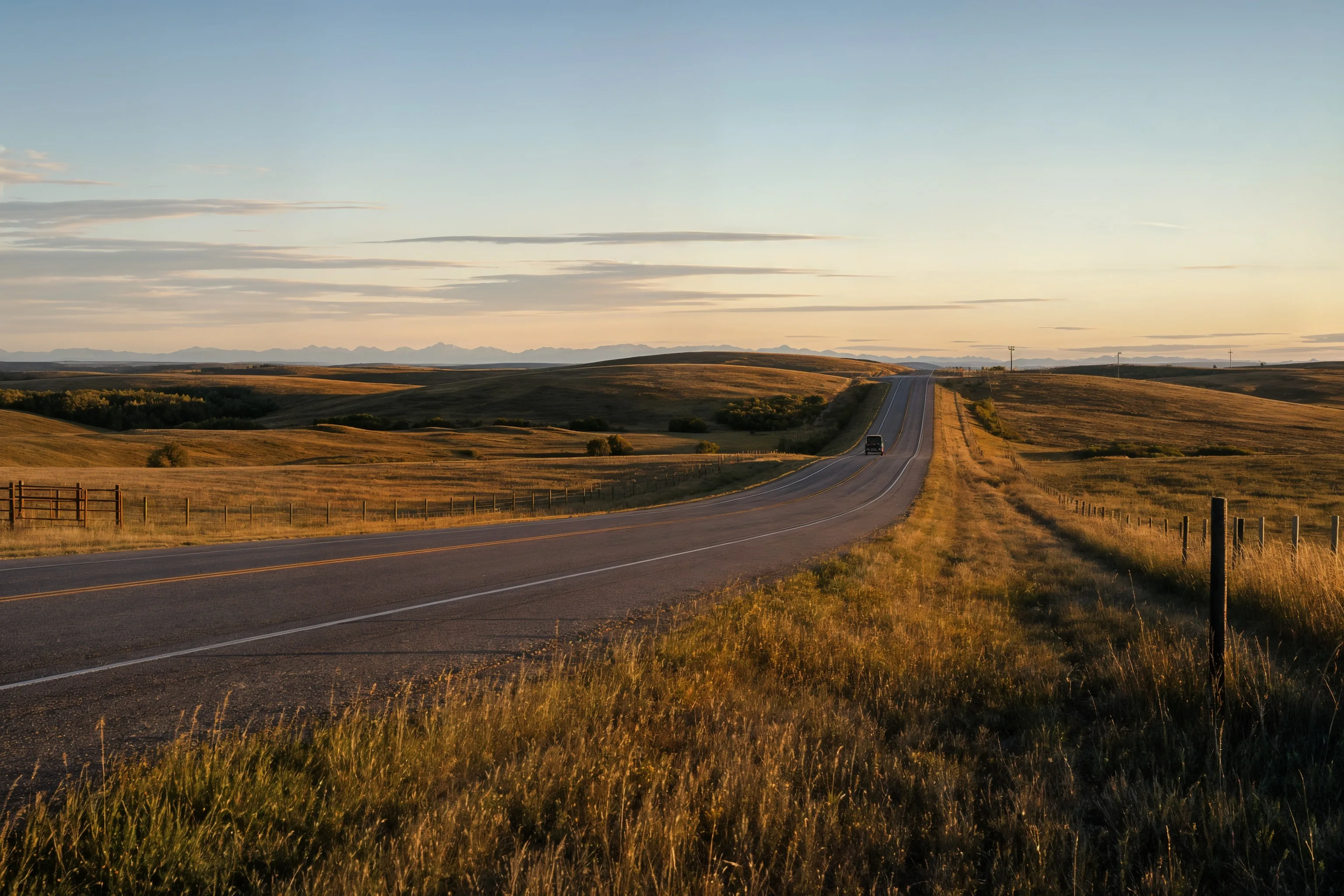
Commercial solar in Foothills County starts with a load review, not a brochure system size. We install in the 15 to 100 kW range, with most commercial projects in the area landing around 30 kW once we've factored in the building's usage graph, roof or ground conditions, and any equipment that runs on a schedule. Every install uses LONGi panels as the standard module. For smaller commercial roofs with straightforward orientation, we pair them with APsystems microinverters, which let us monitor output at the module level and keep the system running even if one panel gets shaded by a nearby structure. For larger commercial arrays, ground-mount installations, or sites with three-phase service, we spec string inverters instead, since they're a better fit for higher-voltage commercial circuits and larger arrays. Properties in this part of the province tend to be spread out: a shop, a main building, and sometimes outbuildings or covered arena space all on one service. That layout often makes ground mount the more practical call, especially where roof pitch or shading from trees and outbuildings limits a rooftop array. We design around whichever mounting option gets the array the most usable space and the cleanest run back to your panel. Every commercial design also gets reviewed for CT ITC eligibility as part of the package, since that federal credit applies to a lot of the equipment we install for businesses and farm operations. We handle the paperwork for the interconnection application to FortisAlberta once the design is locked in, so you're not the one chasing forms.
Solar Planning for Foothills County Properties
Foothills County is a rural municipality within the Calgary Region, and that jurisdiction shapes how a commercial solar project gets designed here. Businesses in the area range from equestrian and event operations near Spruce Meadows to agri-tourism stops like The Saskatoon Farm to shops, yards, and outbuildings spread across acreage properties. None of those load profiles look alike, so we don't start with a stock system size. We start with your building's electrical service, roof or ground conditions, and your most recent power bill. Foothills County's population sits at 23,199, up from 22,616 in the prior census count, and that growth is showing up in more commercial and agricultural operations that need power sized for real equipment, not a rough estimate. A shop with three-phase service and a walk-in cooler draws differently than an event venue with seasonal peaks. Range Road Solar builds the system around what your meter actually shows, then walks through interconnection with FortisAlberta as part of the design package. We don't guess at production numbers before we've seen your usage graph, and we won't quote a system size until we've reviewed your site.
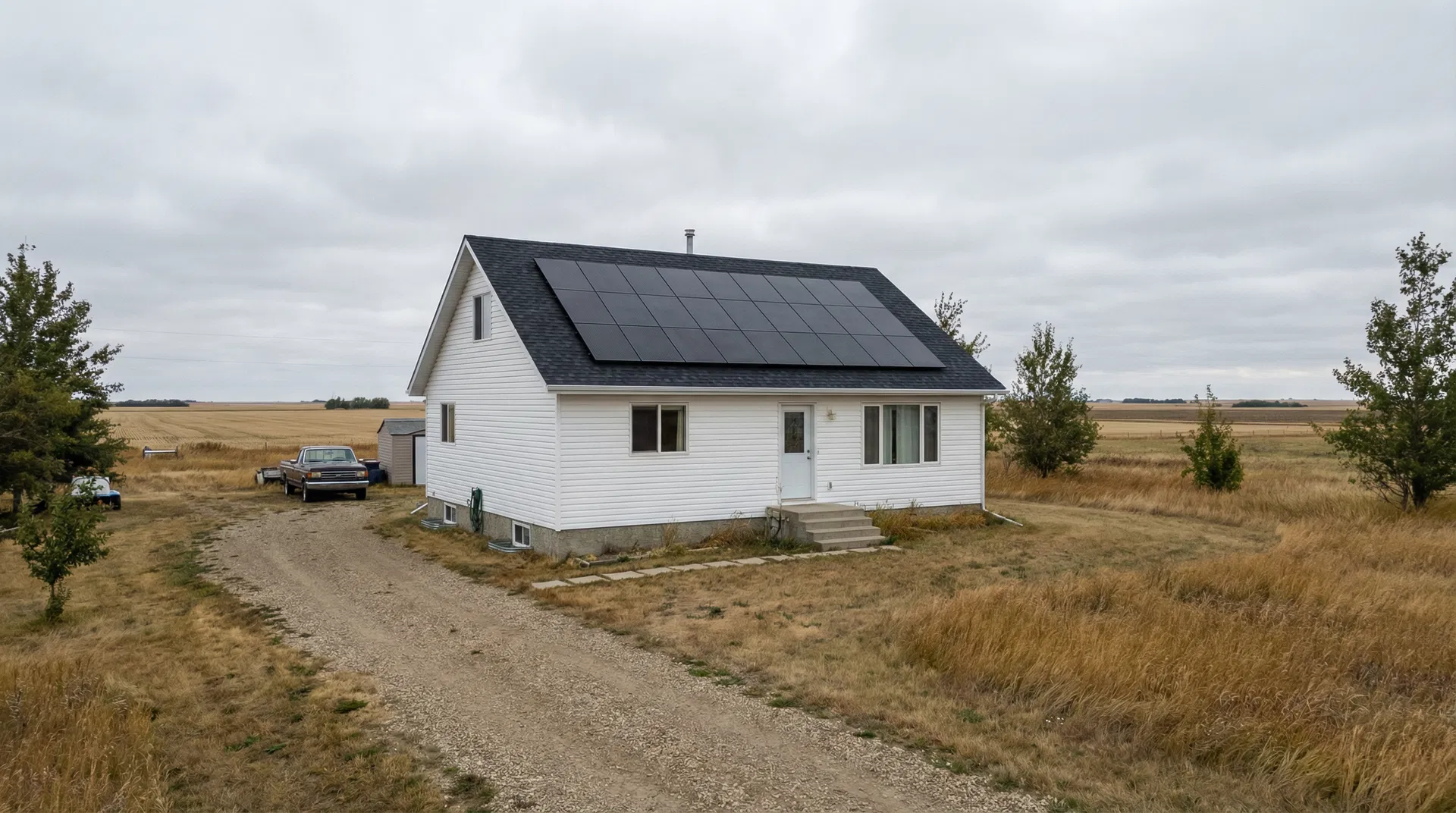
Electrical Site Review for Foothills County Properties
Voltage Rise
Voltage rise happens when the distance and wire gauge between a commercial building and the nearest transformer cause voltage to climb as solar output pushes power back onto the line. Rural distribution runs are often longer than in-town service, so this is something we check on every commercial site before finalizing equipment. It directly affects inverter clipping and how large a system your service can support without tripping voltage protection.
Single-Phase vs Three-Phase
Commercial and acreage properties in Foothills County can carry either single-phase or three-phase electrical service, and which one you have changes what equipment we spec. Three-phase service typically supports larger commercial loads and opens up string inverter options that aren't available on a single-phase panel. We confirm your service type early, since it affects both inverter selection and the maximum system capacity we can design for.
Panel Infrastructure
A lot of commercial buildings and farm shops in the area are running on electrical panels that were sized for the loads of decades ago, not a solar interconnection today. We assess breaker capacity, panel age, and available bus space as part of every site visit. If the existing panel can't support the added solar breaker, an upgrade means a new panel or a supplemental load center sized to the system we're installing.
Service Entrance Review
We check the condition of the service entrance and meter base on every commercial site, since FortisAlberta's micro-generation application requires that infrastructure to meet current standards before it will approve the connection. An aging or undersized meter base can hold up an application. If an upgrade is needed, we scope it as part of the project so it doesn't surprise you partway through.
Right-Sizing Solar for Foothills County Properties
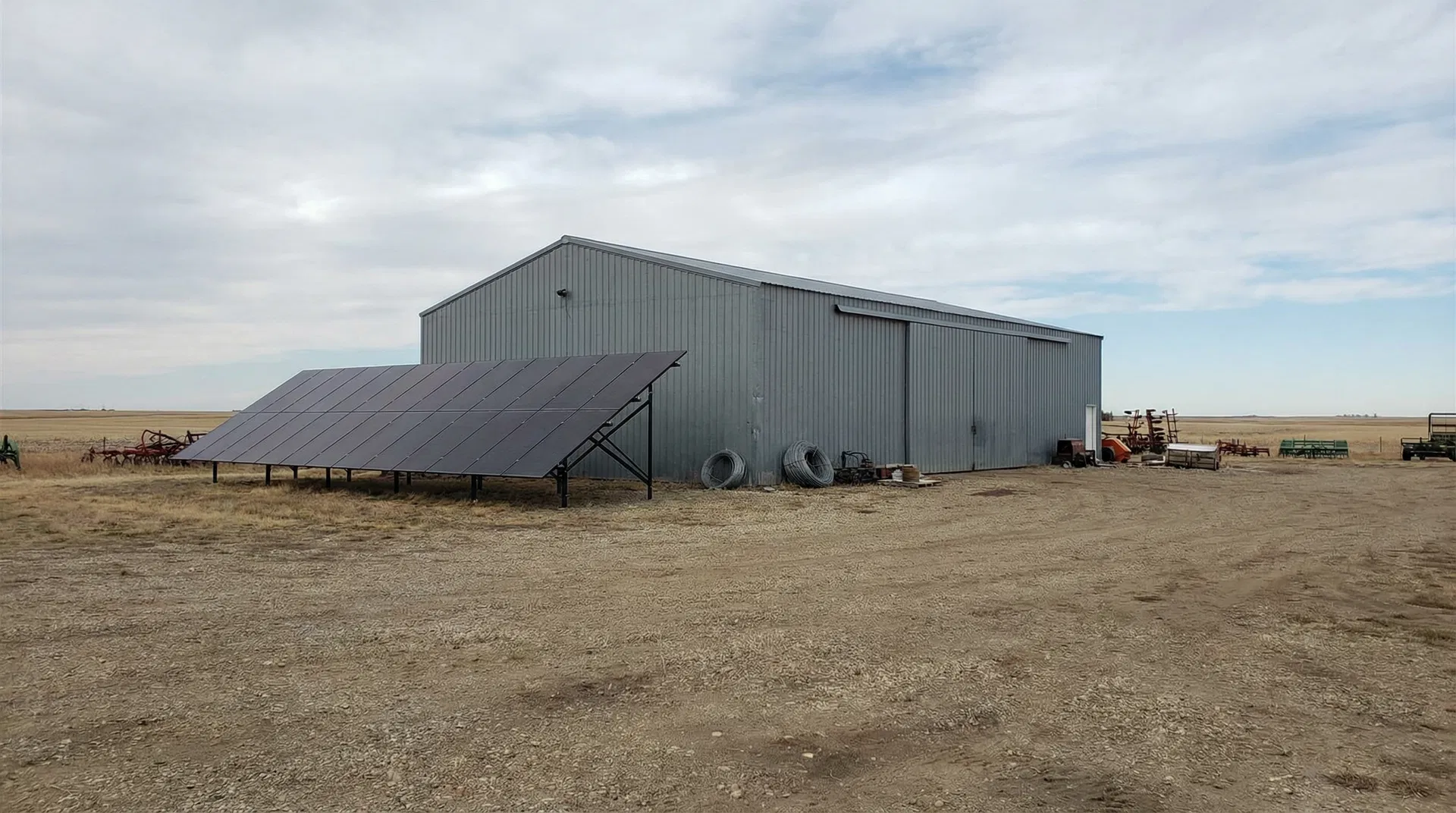
Commercial and acreage properties in Foothills County almost always carry more than one load: a main building plus a shop, cold storage, an arena, or irrigation equipment, sometimes all on the same service. That's why commercial systems here tend to run larger than a typical urban rooftop install. We don't size off a rule of thumb per square foot. We size off the 12-month usage graph on your most recent power bill, which shows us the actual pattern of what your operation draws across the year, including seasonal spikes from equipment that only runs part of the year. Roof versus ground mount comes down to what your site gives us. If the roof has good, unshaded south or west exposure and enough structural clearance, that's often the simplest and least expensive option. If trees or outbuildings shade the roof, the pitch is wrong for solar, or the yard has open land that isn't doing anything else, ground mount usually wins, since we can orient the array for the best exposure regardless of what the building is doing. Some properties end up doing a mix of both. Either way, the starting point is the same: your most recent power bill and a site visit, not a stock number we apply to every commercial property in the area.
Typical Load Profiles We Design For Near Foothills County
Shop Plus Cold Storage
A working shop with a walk-in cooler or freezer running around the clock creates a steady base load on top of whatever the main building draws. We size for that continuous draw using your most recent power bill's usage graph rather than guessing at compressor cycles, since that graph shows the real pattern across a full year.
Multi-Building Yard Operation
Properties with a house, a shop, and one or more outbuildings on a single service often have load spread across several structures instead of concentrated in one. We design the array and any required service upgrades around the combined draw shown on your bill, not just the main building's meter.
Event Venue or Seasonal Operation
Operations with seasonal peaks, like an event venue or agri-tourism site, show usage that swings across the year rather than staying flat. The 12-month usage graph on your most recent power bill captures those swings, which lets us size a system around the real seasonal pattern instead of an average that would undersize it during peak months.
FortisAlberta Interconnection in Foothills County
FortisAlberta is the wire service for Foothills County, and that's the utility your commercial interconnection application goes through. Before your system goes live, FortisAlberta reviews the micro-generation application for the site, and Range Road Solar puts that package together as part of your project, including the electrical drawings and equipment specs they require. Commercial sites often carry different service configurations than a typical farmhouse, single-phase in some yards, three-phase in others, and we confirm which one applies to your property before we size the inverters. We also review your service entrance and meter base condition as part of the design, since FortisAlberta's application depends on that infrastructure being current. We don't quote a specific approval timeline or promise how FortisAlberta will handle credits or payouts on your account. Those are utility decisions reviewed case by case, and we'll walk you through what applies to your property once we've got your most recent power bill and a look at your electrical service in hand.
Project Economics and Design Review
| System Size | Annual Production | Year 1 Savings | Payback Period |
|---|---|---|---|
| 15-100 kW range, 30 kW typical |
Production, savings, and payback figures require a property-specific design review and a look at your most recent power bill before we can quote them.
How We Work in Foothills County
Bill and Load Review
We review your power bill to understand your energy use in Foothills County and size the system to your actual consumption, not a generic estimate.
Site Assessment
We assess your roof or ground area, south-facing exposure, electrical service, and utility interconnection requirements specific to your property.
Design and Utility Application
We produce a system layout, production estimate, and cost summary, then submit your micro-generation application to your utility on your behalf.
Installation and Commissioning
Our crew installs racking, panels, inverter, and electrical connections. All work is performed by licensed electricians. We commission and test before handoff.
Current Program and Interconnection Review
Utility connection review
FortisAlberta reviews the grid connection application for every commercial solar system in Foothills County before it can go live. Range Road Solar puts together the design package, electrical drawings, and equipment specs that application requires, so you're working with one point of contact instead of chasing utility paperwork yourself.
Current program review
Commercial, farm, and residential eligibility for current programs and credits gets reviewed against the rules in place at the time of your design. Rules and eligibility change, so we confirm what applies to your project rather than relying on what applied to a past install.
Frequently Asked Questions
Get a Solar Assessment for Foothills County
Submit a recent power bill and we will review your consumption and provide an honest assessment for your Foothills County property. No obligation.
(587) 330-7502 Book a CallRelated Resources