Foothills County · Commercial solar
Commercial Solar Okotoks Alberta: Systems Built for Business Loads
Range Road Solar designs and installs commercial solar for Okotoks businesses, from 15 kW to 100 kW, sized from your actual usage and site conditions.
Commercial solar okotoks alberta projects run from small owner-operated businesses at 15 kW up to larger industrial and agricultural commercial operations at 100 kW. Most commercial designs we complete for this area land around 30 kW, but that number shifts significantly depending on your load profile and available roof or ground space. We install LONGi panels across our commercial work. They're a reliable, well-tested panel used at scale by commercial and utility installers, and they hold up under the kind of temperature swings Alberta delivers year-round. For inverter selection, we match the technology to the system. APsystems microinverters work well on commercial rooftops where shading from rooftop equipment, parapets, or adjacent structures would clip the output of a string inverter. For larger commercial arrays with unobstructed south-facing exposure, a string inverter configuration is often the more practical and cost-effective choice. We walk through that decision with you during the design review. Commercial installations around Okotoks often involve flat or low-slope commercial rooftops, which require ballasted racking systems designed to the building's structural load rating. Ground mounts are also common on properties with available yard space. Both approaches can produce strong system performance when the orientation and tilt are dialed in correctly. We're also familiar with the Canada Investment Tax Credit for Clean Technology, which applies to eligible commercial systems, and we factor current program eligibility into the design review. Eligibility is confirmed against current rules at the time of your project.
Solar Planning for Okotoks Properties
Commercial properties in and around Okotoks carry load profiles that residential solar doesn't account for. Heated warehouses, refrigeration, processing equipment, commercial HVAC, and large lighting circuits all pull hard on a utility bill, and that usage is where a well-sized solar system does its work. The FortisAlberta distribution network serves Okotoks, and the interconnection process for commercial systems has its own technical requirements that differ from a residential hookup. Getting the design right from the start matters here. A system that's undersized for your peak loads won't deliver the offset you're counting on. One that's oversized without a proper load study can create grid connection friction. We start with your most recent power bill, which includes the 12-month usage graph, and build the design from there. Roof conditions, orientation, available ground space, and your meter base all factor into what we propose. We don't work from rule-of-thumb numbers or generic square-footage assumptions. Every commercial design for this area is built from verified site conditions and actual usage data. That's the only way to give you a production model you can plan around.
Electrical Site Review for Okotoks Properties
Voltage Rise
Voltage rise occurs when solar generation pushes voltage on the distribution line above the acceptable operating range. On some commercial distribution feeders, local line conditions can limit how much generation the system can export before the inverter clips output to stay within voltage limits. We assess voltage rise as part of the design process so that system sizing reflects what the connection point can actually support, not just what the roof or ground area could theoretically hold.
Single-Phase vs Three-Phase
Commercial properties in and around Okotoks may be served by single-phase or three-phase electrical service, and that distinction drives inverter selection and system capacity planning. Three-phase service supports larger inverter configurations and higher export capacity, which matters when you're designing a system in the 30-100 kW range. We confirm your service type during the site assessment before any equipment is specified.
Panel Infrastructure
Older commercial electrical panels may not have the breaker capacity to support a solar interconnection without an upgrade. We assess the existing panel for breaker availability, bus bar rating, and the condition of existing wiring during the site review. If the panel can't support the system without modification, we'll tell you what an upgrade involves and factor that into the project scope before you commit to anything.
Service Entrance Review
The meter base and service entrance condition are reviewed as part of every commercial interconnection package submitted to FortisAlberta. A meter base that doesn't meet current standards for a bi-directional meter installation will need to be upgraded before FortisAlberta can complete the interconnection. We identify this during the site assessment so there are no surprises when the application goes in.
Right-Sizing Solar for Okotoks Properties
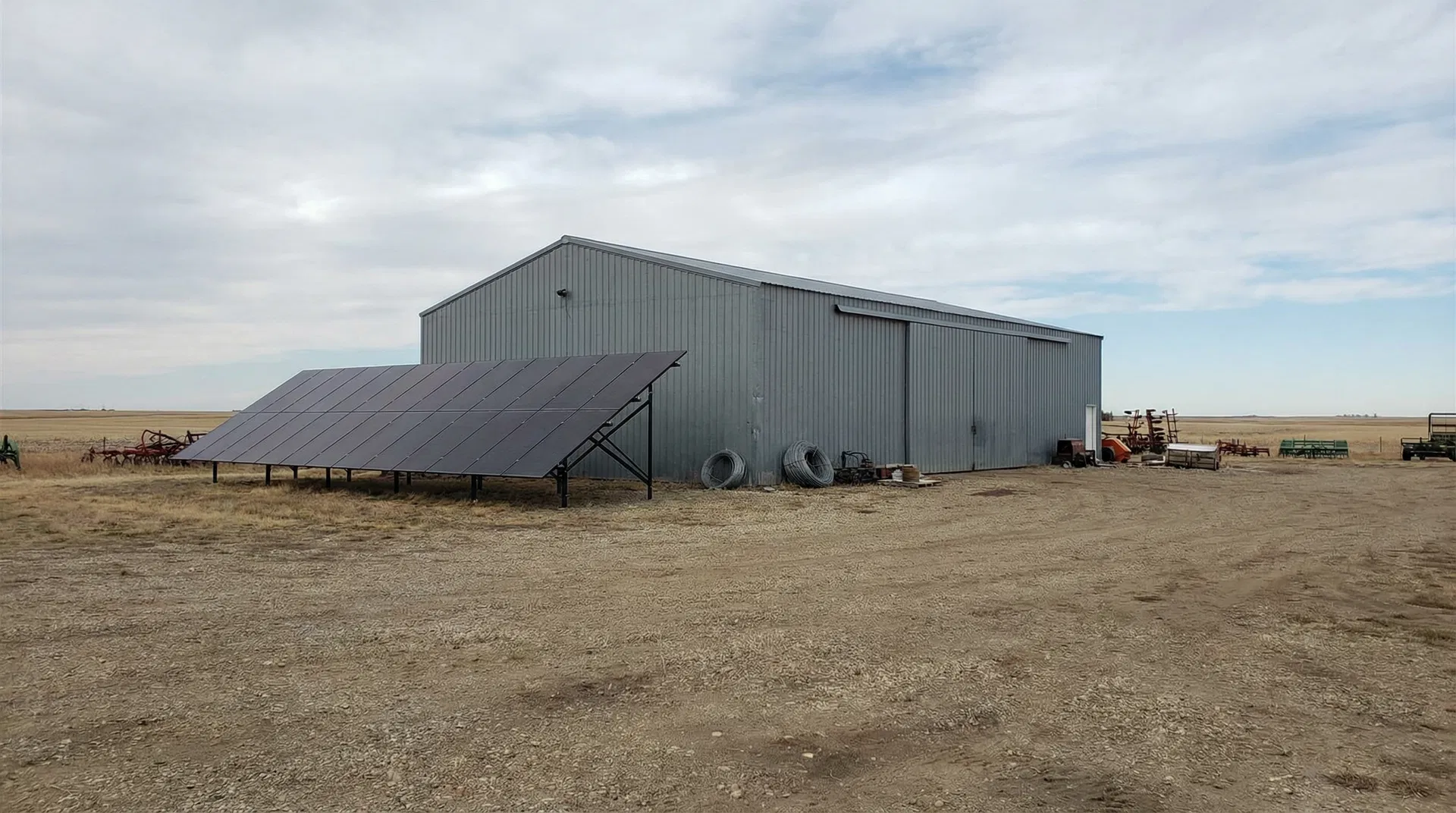
Commercial properties near Okotoks often carry more load than the main building suggests. A retail or warehouse operation might run HVAC, refrigeration, lighting, and office equipment all at once. A business with a heated yard or shop space adds that demand on top of the main building. When those loads stack up, a 15 kW system won't do much work. That's why we don't size from square footage or a rough guess at your bill. We size from the 12-month usage graph on your most recent power bill, which shows your monthly consumption pattern across the full year. That graph tells us when your peak demand hits, how much it drops in shoulder months, and whether your load is relatively flat or heavily seasonal. Those patterns shape what size system makes sense and how we orient it. Roof mounts work well on commercial buildings with clean, unobstructed south or west-facing sections and a structural load rating that supports ballasted racking. When the roof is complicated by HVAC equipment, skylights, parapets, or steep enough shading from adjacent buildings, a ground mount on available yard space is often the cleaner option. Ground mounts also give us more flexibility on tilt and orientation, which can improve production on a property where the building's roof doesn't face the right direction. We walk through both options during the design review and recommend what fits your site, not what's easiest to install.
Typical Load Profiles We Design For Near Okotoks
Commercial Warehouse or Light Industrial
Warehouses and light industrial buildings typically combine lighting, heating, and equipment loads that run on a consistent weekday schedule. A 30-50 kW system is often the right range for this profile, though your most recent power bill and site assessment will confirm the actual sizing. We design for the operational hours that matter most to your bill, not just peak calendar months.
Retail or Office with High HVAC Demand
Retail and office buildings with commercial HVAC systems generate concentrated demand during business hours, which aligns well with solar production windows. A 15-30 kW system on a building with a clear south-facing roof section can offset a meaningful share of that daytime demand. We confirm the alignment between your load profile and production potential through the design review, not a generic estimate.
Agriculture-Adjacent Commercial Operation
Properties near Okotoks that mix commercial activity with agricultural infrastructure, such as a shop, equipment yard, and office under one utility account, often have load profiles that push into the 40-100 kW range. Grain handling, irrigation pumping, and equipment charging can all factor in. We size these systems from the 12-month usage graph on your most recent power bill and a full site walkthrough to account for every load that feeds the meter.
FortisAlberta Interconnection in Okotoks
FortisAlberta is the wire service for Okotoks, and all commercial micro-generation applications for properties here go through FortisAlberta's interconnection review process. Commercial systems in the 15-100 kW range fall under the micro-generation framework, and the application package has more technical detail than a residential submission. It includes single-line diagrams, inverter specifications, protection relay documentation, and site-specific information about your service entrance and meter base. Range Road Solar prepares and submits the full application package on your behalf. We don't hand you a pile of forms and wish you luck. We handle the engineering documentation, coordinate with FortisAlberta's interconnection team, and keep you updated as the review progresses. What we won't do is promise you a specific approval timeline. FortisAlberta's review schedule depends on queue volume and application completeness. Getting the package right the first time is the best way to avoid back-and-forth delays. That's why we put the time into a thorough site assessment before anything gets submitted.
Project Economics and Design Review
| System Size | Annual Production | Year 1 Savings | Payback Period |
|---|---|---|---|
| 15-100 kW range, 30 kW typical |
Production, savings, and payback estimates require a property-specific design and review of your most recent power bill.
How We Work in Okotoks
Bill and Load Review
We review your power bill to understand your energy use in Okotoks and size the system to your actual consumption — not a generic estimate.
Site Assessment
We assess your roof or ground area, south-facing exposure, electrical service, and utility interconnection requirements specific to your property.
Design and Utility Application
We produce a system layout, production estimate, and cost summary, then submit your micro-generation application to your utility on your behalf.
Installation and Commissioning
Our crew installs racking, panels, inverter, and electrical connections. All work is performed by licensed electricians. We commission and test before handoff.
Current Program and Interconnection Review
Utility connection review
FortisAlberta reviews all micro-generation interconnection applications for commercial properties in Okotoks. Range Road Solar prepares the full design and documentation package for submission. We handle the technical requirements so the application goes in complete the first time.
Current program review
Commercial and agricultural solar projects may be eligible for federal tax incentives under current rules. Eligibility depends on your corporate structure, system use, and current program guidelines, all of which we review at the time of your design. We don't apply program assumptions from previous years without checking current rules first.
Frequently Asked Questions
Get a Solar Assessment for Okotoks
Submit a recent power bill and we will review your consumption and provide an honest assessment for your Okotoks property. No obligation.
(587) 330-7502 Book a CallRelated Resources
More Solar Services in Okotoks