
The solar net-metering Okotoks Alberta process starts with a micro-generation application to FortisAlberta, and Range Road Solar prepares and files that paperwork for you from start to finish. Net metering lets a property with an approved solar system send excess generation back to the grid and draw from it when the system isn't producing enough on its own, and the registration process is what makes that connection official with FortisAlberta. We size these systems, typically in the 8 to 12 kW range, using LONGi panels paired with APsystems microinverters. That combination gives us panel-level monitoring, which matters on Okotoks, Alberta properties where roof lines are broken up by dormers, additions, or outbuildings that cast partial shade at different times of day. Microinverters let one shaded panel underperform without dragging down the output of the whole array, which a single central inverter can't do. In-town lots usually mean a roof-mount system tied into an existing panel, while acreages on the edge of town more often call for a mix of roof space on the house and a shop or outbuilding that draws its own load. Either way, the micro-generation application has to match the as-built system, down to the inverter model and panel count, before FortisAlberta will approve it. We handle site design, the FortisAlberta paperwork, and the inspection coordination as one package, so you're not the one tracking down forms or chasing signatures.
Solar Planning for Okotoks, Alberta Properties
Okotoks, Alberta incorporated as a village on October 31, 1899, and became a town on May 31, 1904. That long history shows in the property mix you see today: established in-town lots sit within a few minutes of acreages and small ag operations spread across the edge of Foothills County. That mix matters for net metering, because the size and layout of a property changes what a micro-generation application needs to show FortisAlberta. A shop with a walk-in cooler draws power differently than a bungalow with a heat pump, and the interconnection paperwork has to reflect the property's real electrical service, not a guess. With a population of 30,405 at the last census, up from 29,016 the census before, Okotoks, Alberta has enough variety in rooftop and ground-mount properties that we rarely see two net metering applications that look alike. Some properties sit close enough to the core that FortisAlberta's standard residential process applies cleanly. Others, especially acreages further out near the Okotoks Erratic, the Big Rock landmark this area is known for, have panel or service-entrance quirks that need a closer look before we file anything. We walk every property the same way: a site visit, a review of your most recent power bill, and a system sized to what FortisAlberta will actually approve.
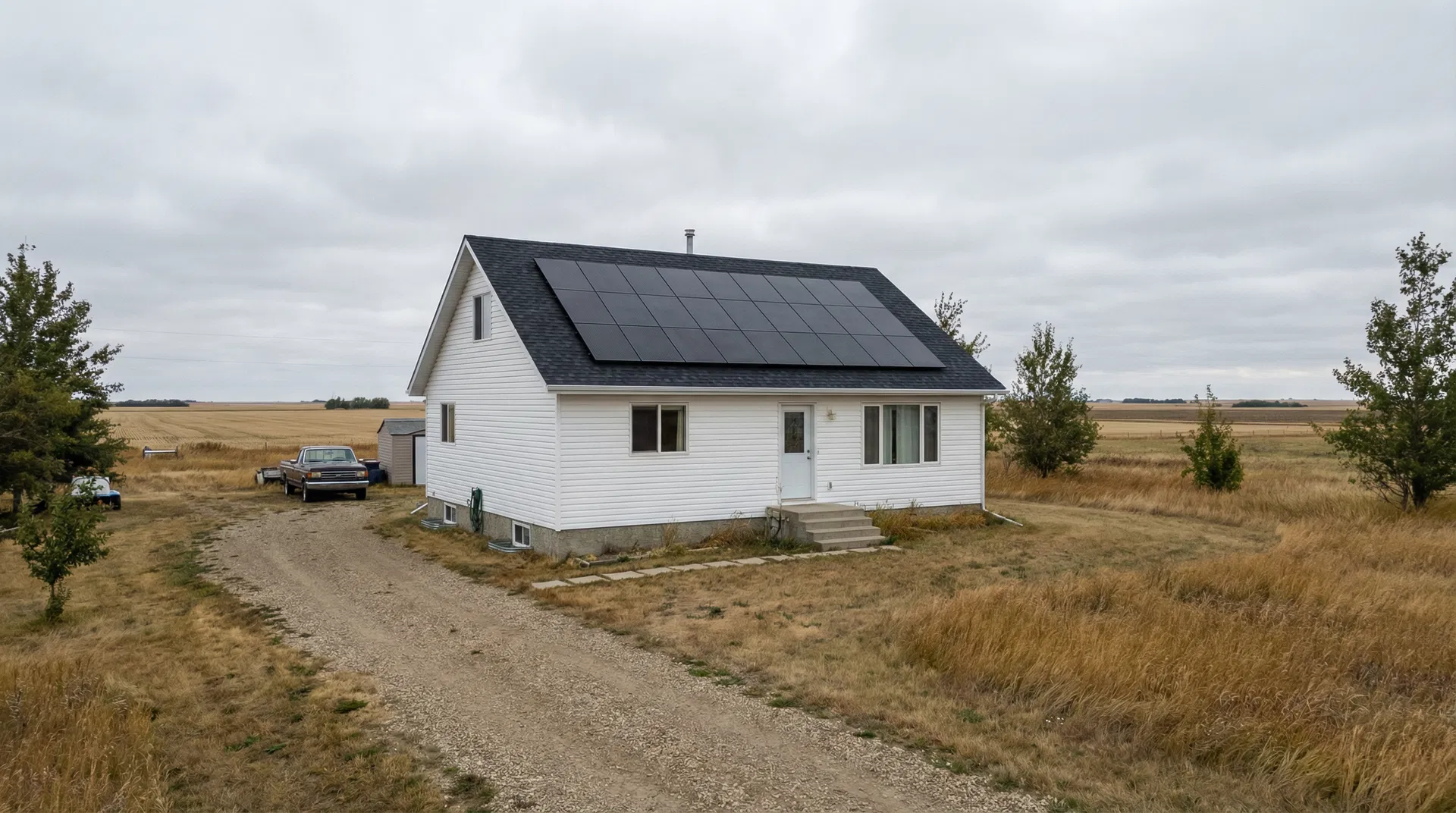
Electrical Site Review for Okotoks, Alberta Properties
Voltage Rise
Voltage rise happens when the distance and wire gauge between a property's service and the FortisAlberta transformer cause voltage to climb as a solar system exports power. On some Okotoks, Alberta properties, especially those further from the transformer, that rise can push voltage close to the inverter's shutoff threshold. We measure this during the site visit and size the system, or adjust inverter placement, so the array doesn't trip offline on a sunny afternoon.
Single-Phase vs Three-Phase
Properties around Okotoks, Alberta can have either single-phase or three-phase electrical service, and that difference changes which APsystems microinverter configuration we can use and how much capacity the service can carry. Three-phase service, more common on some shops and larger outbuildings, opens up higher system capacity than a typical single-phase residential service. We confirm which service type a property has before finalizing the system design, not after.
Panel Infrastructure
Older electrical panels on established Okotoks, Alberta properties sometimes don't have the breaker space or amperage rating a net metering system needs. We check the panel's age, its busbar rating, and existing breaker load during the site visit. If the panel can't support the additional breaker, an upgrade means a new panel sized to both the home's existing loads and the solar system, done before the FortisAlberta application goes in.
Service Entrance Review
The service entrance and meter base are what FortisAlberta inspects before approving a micro-generation connection, so we check the condition of both during the site visit. A corroded or undersized meter base can hold up an application even if the solar system itself is designed correctly. If an upgrade is needed, we coordinate it as part of the project instead of leaving it as a surprise after the application is already filed.
Right-Sizing Solar for Okotoks, Alberta Properties
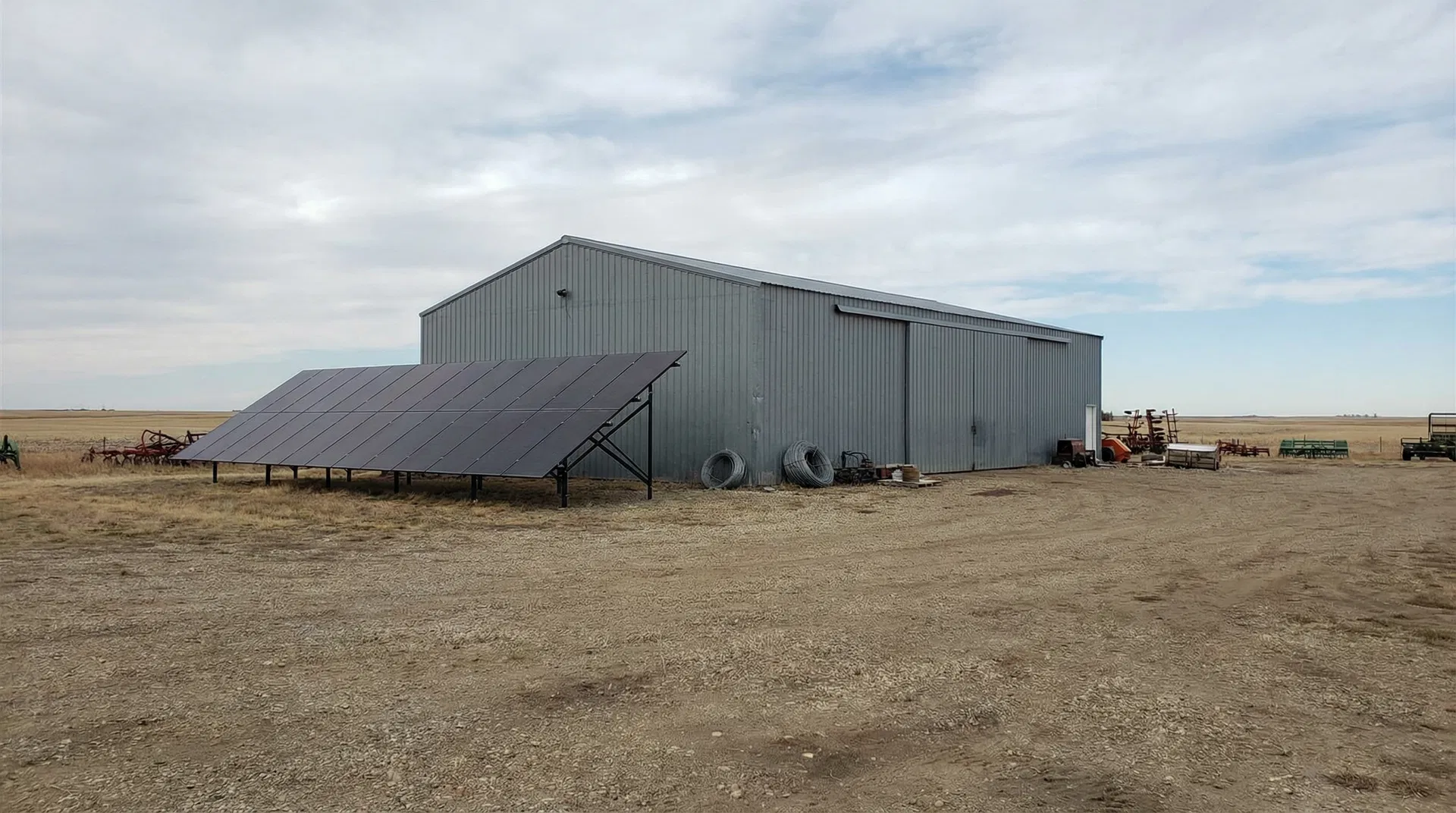
Rural and acreage properties around Okotoks, Alberta usually carry more than one electrical load: a house, plus a shop, plus sometimes a well pump, grain-handling equipment, or irrigation. That's why systems out here tend to run larger than a typical in-town rooftop system built for a single home. Sizing has to account for every load that draws from the same service, not just the house. Roof mount is the default when a home has enough clear, unshaded roof facing a workable direction. Ground mount becomes the better call when trees or outbuildings shade the roof for a meaningful part of the day, when the roof pitch or orientation doesn't work for solar, or when a property has open yard space that makes a ground-mounted array easier to access for maintenance than a roof. Some acreages end up with a mix: panels on the house roof and a second array on the shop or ground-mounted near it. We don't size systems off a rule of thumb like install X kW per household. We size from the 12-month usage graph on your most recent power bill, which shows exactly how much this property draws across a full year, including seasonal swings from heating, a shop, or irrigation. That graph, combined with the site design, is what tells us whether an 8 kW system covers the load or whether the property needs closer to 12 kW.
Typical Load Profiles We Design For Near Okotoks, Alberta
Home Plus Heated Shop
This profile covers a house plus a detached shop with electric heat, common on acreages around Okotoks, Alberta. The shop's heater and any tools or equipment inside add a second, separate load on top of the house, and the 12-month usage graph on your most recent power bill shows how that shop load shifts through the colder months. We size the system, and decide whether it needs a second array on the shop roof or ground mount, from that graph and the site design.
Single-Family Home, In-Town Lot
This is the more straightforward profile: one house, one electrical service, on an in-town Okotoks, Alberta lot. Roof space, orientation, and any shading from neighboring trees or structures usually drive the design more than the load itself. Your most recent power bill still sets the target system size, but the roof itself often limits how close a system can get to fully offsetting that load.
Acreage With Well Pump and Outbuildings
Acreages with a well pump, a second outbuilding, or small-scale equipment like a grain auger have load patterns that spike at specific times rather than staying flat through the day. We look at the 12-month usage graph on your most recent power bill to see those spikes and confirm whether they're big enough to change the system size or push the design toward a ground mount with more room to grow.
FortisAlberta Interconnection in Okotoks, Alberta
FortisAlberta is the wire service for Okotoks, Alberta, which means every net metering and micro-generation application for a property here goes through FortisAlberta's interconnection process, not a separate municipal utility. Range Road Solar prepares the full application package: single-line diagrams, equipment specification sheets for the LONGi panels and APsystems microinverters, and the site-specific documentation FortisAlberta requires before a system can be connected. We submit that package on your behalf and stay the point of contact with FortisAlberta through to final connection, so you're not the one interpreting utility forms or following up on missing paperwork. Because FortisAlberta is the wire service across this part of Alberta, the same interconnection process applies whether your property sits on an in-town lot or an acreage outside Okotoks. We don't guess at what FortisAlberta wants to see. We build the application from your site design and your most recent power bill, then file it the way FortisAlberta's process actually requires.
Project Economics and Design Review
| System Size | Annual Production | Year 1 Savings | Payback Period |
|---|---|---|---|
| 8-12 kW range, 10 kW typical |
Production, savings, and payback figures are specific to your property and require a design review along with your most recent power bill.
How We Work in Okotoks
Bill and Load Review
We review your power bill to understand your energy use in Okotoks and size the system to your actual consumption, not a generic estimate.
Site Assessment
We assess your roof or ground area, south-facing exposure, electrical service, and utility interconnection requirements specific to your property.
Design and Utility Application
We produce a system layout, production estimate, and cost summary, then submit your micro-generation application to your utility on your behalf.
Installation and Commissioning
Our crew installs racking, panels, inverter, and electrical connections. All work is performed by licensed electricians. We commission and test before handoff.
Current Program and Interconnection Review
Utility connection review
FortisAlberta reviews every micro-generation connection application before a system can be tied into the grid, and that review looks at the site design, the equipment specification, and the property's electrical service. Range Road Solar builds and submits that design package on your behalf, so the application reflects what FortisAlberta actually needs to see.
Current program review
Residential, farm, and commercial properties can qualify for different treatment under current rules, and those rules can change. We check a property's eligibility against whatever rules are in effect at the time of the design review, rather than relying on what applied to a different project last year.
Frequently Asked Questions
Get a Solar Assessment for Okotoks
Submit a recent power bill and we will review your consumption and provide an honest assessment for your Okotoks property. No obligation.
(587) 330-7502 Book a CallRelated Resources
More Solar Services in Okotoks