Farm solar in Okotoks, Alberta means designing around real loads, not average ones. A working farm or acreage often runs a house, a shop, a barn, and maybe a grain dryer or irrigation pump, all off the same service. We install LONGi panels paired with APsystems microinverters on nearly every farm system we build, because module-level monitoring lets us see how each string is performing once the array is live, which matters when an array spans multiple roof faces or a mix of roof and ground-mount sections. For farm and agricultural solar specifically, we default to ground-mount whenever a property has the open yard space for it. A ground-mount array lets us orient panels for the property's actual layout instead of working around whatever pitch and orientation the shop roof happens to have, and it keeps the array clear of dust and debris that settle on lower barn or shed roofs. Rooftop arrays still make sense on newer shops and homes with clean south or west exposure and no nearby shading from grain bins, shelterbelts, or machine sheds. System sizes for this service run 20 to 50 kW, with 25 kW being the size we land on most often once we've worked through a property's usage graph. Whether the array ends up ground-mounted or on the roof, the equipment and the interconnection process stay the same: LONGi modules, APsystems microinverters, and a FortisAlberta application that we prepare and submit as part of the project, not something you're left to sort out on your own.
Solar Planning for Okotoks Properties
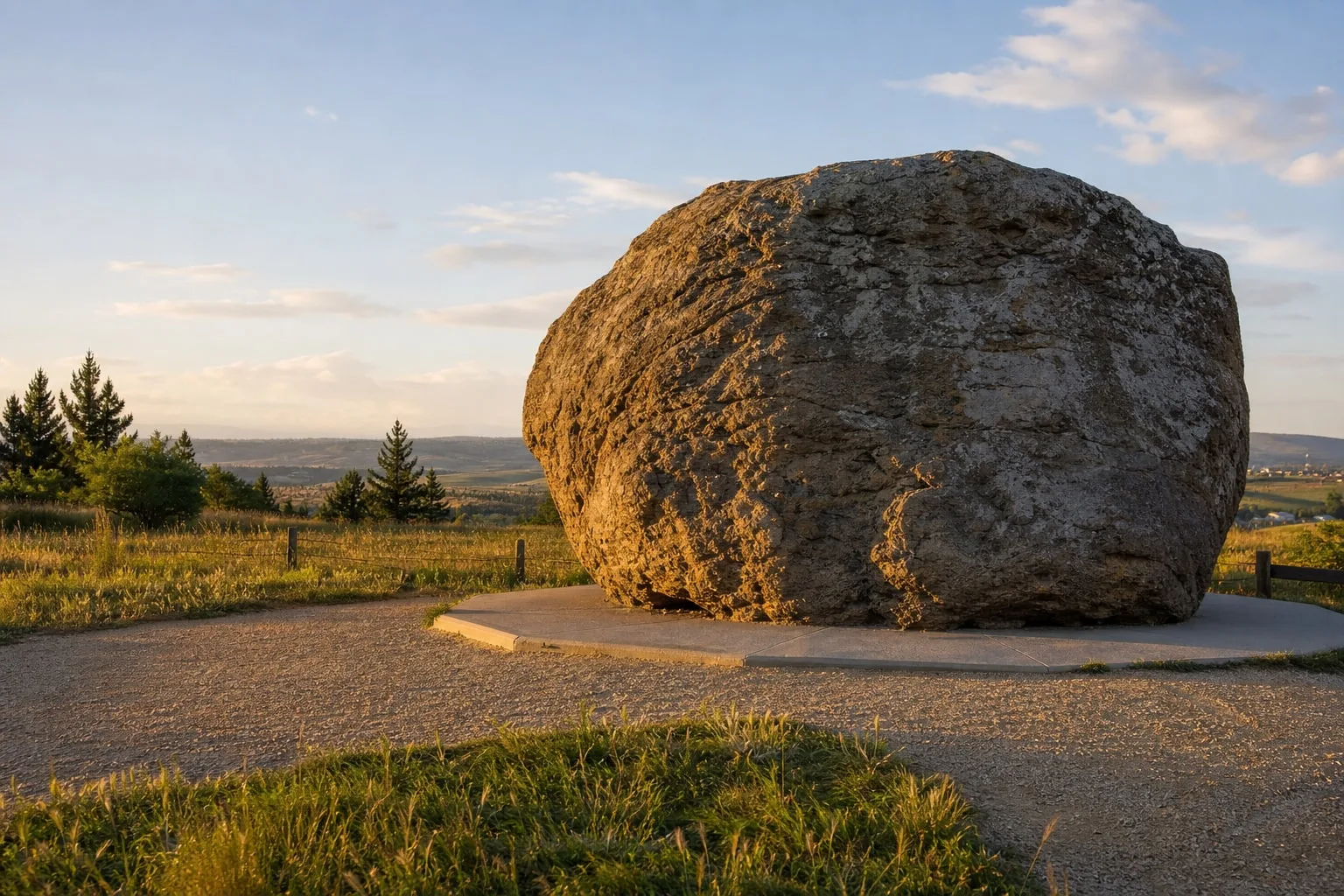
Okotoks, Alberta is home to 30,405 people today, and Foothills County surrounds Okotoks on nearly every side, which means a lot of the farm and agricultural solar work we do sits right on that line between town services and county land. Every property is different: some run a single grain bin and a shop, others run irrigation pumps, livestock waterers, and a heated barn on top of the house load. We don't size a system off a rule of thumb. We start with your most recent power bill, which carries a 12-month usage graph, and we build the design around what that graph actually shows. Farms and acreages near the Okotoks Erratic, the Big Rock landmark that draws visitors from across the region, sit on the same FortisAlberta distribution network as properties further out toward de-winton and heritage-pointe, so interconnection rules stay consistent across the area. What changes is the property itself: roof pitch, shading from shelterbelts or outbuildings, and how much open ground is available for a ground-mount array. We confirm the actual design and any production numbers during a site visit and design review, not before that.

Electrical Site Review for Farm Properties in the Area
Voltage Rise
Voltage rise happens when the distance and load on a rural distribution line push the voltage at your property higher than what's typical closer to the substation. On longer FortisAlberta rural runs, that higher baseline voltage can trigger inverter clipping or shutdowns if a system isn't configured with it in mind. We check voltage conditions at the service entrance and factor that into how we size and configure your inverters.
Single-Phase vs Three-Phase
Rural Alberta properties run either single-phase or three-phase service, and which one you've got changes what inverter equipment fits and how much capacity the system can carry. Three-phase service, common on larger farm operations with grain handling or irrigation motors, generally supports a bigger array than single-phase service built around a house and a shop. We confirm which service type is running to your property before finalizing equipment selection.
Panel Infrastructure
A lot of rural properties are still running electrical panels that are decades old, and an older panel's breaker capacity can limit how much solar it can safely accept. We check the panel's age, its rated capacity, and its available breaker space as part of every site visit. If the existing panel can't support the system, an upgrade means a new panel and breakers sized for both the existing farm loads and the new solar circuit.
Service Entrance Review
The meter base and service entrance are what FortisAlberta reviews as part of a micro-generation application, so we check their condition, rating, and code compliance during the site visit. A meter base that's outdated or undersized for the added solar circuit can hold up the application until it's addressed. When an upgrade's needed, we scope it into the project so it doesn't turn into a surprise after the application is already in.
Right-Sizing Solar for Farm and Acreage Properties
Rural systems run bigger than a typical in-town rooftop job, and that's because there's more going on behind the meter. A house alone is one load. A house plus a heated shop, a barn, a grain dryer, or an irrigation pump is a different math problem entirely, and farm systems in the 20 to 50 kW range reflect that. Roof or ground-mount isn't a style choice, it's a decision driven by the property. If the roof faces the right direction, has clean pitch, and isn't shaded by shelterbelts, machine sheds, or grain bins, a rooftop array can work fine. Once shading, pitch, or a spread-out yard with open land come into play, ground-mount usually wins: it lets us point the array where the sun actually falls instead of wherever the shop happens to be oriented. Either way, we don't size off a rule of thumb like watts per square foot of roof or a flat multiplier on your bill. We size off the 12-month usage graph printed right on your most recent power bill, because that graph shows the real seasonal swing between summer irrigation loads and winter heating in the shop. Combine that graph with a site visit, and we've got what we need to land on a system size and layout that actually matches how the property uses power, not a generic estimate.
Typical Load Profiles We Design for Properties Near Okotoks
Home + Heated Shop
This is the most common profile we see: a farmhouse plus a heated workshop used for equipment repair and storage. The shop's heat and block heaters through winter show up as a separate hump on the usage graph from your most recent power bill, and we size the array to that combined load rather than the house alone.
Grain Handling + Drying
Grain bins, augers, and a dryer running hard for a few weeks at harvest create short, sharp spikes in usage that a flat annual average would completely miss. We look at those spikes on the usage graph and design around them, since a system sized only for the rest of the year's baseline would undersize the array for that operation.
Livestock + Irrigation
Barn ventilation, waterers, and pump loads for irrigation run on a different schedule than a house, often with steady daytime draw through the growing season. We size these systems around that daytime-heavy profile, which can also line up well with when a solar array is producing the most.
FortisAlberta Interconnection in Okotoks
FortisAlberta is the wire service across Okotoks and the surrounding area, including farm and acreage properties out toward de-winton and heritage-pointe. Any farm solar system tied to the grid here goes through a FortisAlberta micro-generation application before it's energized, and that application is part of what Range Road Solar prepares and submits on your behalf. For farm properties, that often means accounting for three-phase service on larger operations or single-phase service on smaller acreages, since the equipment and paperwork can look different depending on what's already run to the property. We handle the technical drawings, the equipment specifications, and the submission itself. We don't quote approval timelines or credit terms here because those are set by FortisAlberta and can shift, and we'd rather confirm current rules with you directly during the design review than print a number that's gone stale by the time you read this.
Project Economics and Design Review
| System Size | Annual Production | Year 1 Savings | Payback Period |
|---|---|---|---|
| 20-50 kW range, 25 kW typical |
Production, savings, and payback figures are only meaningful once we've done a property-specific design review using your most recent power bill.
How We Work in Okotoks
Bill and Load Review
We review your power bill to understand your energy use in Okotoks and size the system to your actual consumption, not a generic estimate.
Site Assessment
We assess your roof or ground area, south-facing exposure, electrical service, and utility interconnection requirements specific to your property.
Design and Utility Application
We produce a system layout, production estimate, and cost summary, then submit your micro-generation application to your utility on your behalf.
Installation and Commissioning
Our crew installs racking, panels, inverter, and electrical connections. All work is performed by licensed electricians. We commission and test before handoff.
Current Program and Interconnection Review
Utility connection review
FortisAlberta reviews every micro-generation grid connection application before a farm solar system is energized, checking the design against its technical requirements. Range Road Solar prepares the full design package, including equipment specs and single-line diagrams, and submits it on your behalf.
Current program review
Commercial, farm, and residential solar projects can be affected differently by current program rules or tax treatment, depending on how the property and system are structured. We review your project against whatever rules are in effect at the time of your design, rather than working off information that may already be outdated.

Frequently Asked Questions
Get a Solar Assessment for Okotoks
Submit a recent power bill and we will review your consumption and provide an honest assessment for your Okotoks property. No obligation.
(587) 330-7502 Book a CallRelated Resources
More Solar Services in Okotoks