
Solar repair Okotoks Alberta work covers three things: troubleshooting inverter faults, replacing damaged panels, and auditing systems that are already running. We service all brands, so you don't need to have bought the original system from us to get a proper look at it. Inverter problems show up most often on existing systems. An inverter that drops offline, throws a fault code, or stops producing on a clear afternoon might have a simple cause, like a loose connection or a tripped breaker, or it might need a component replaced. We pull the logs, check the wiring, and tell you which one it is before any parts get ordered. Panel replacement usually follows a hailstorm, a falling branch, or a cracked module that's been quietly losing output. Where a replacement is needed, we'll specify LONGi panels or APsystems microinverters where they fit the existing system, so the new hardware works with what's already on your roof or ground mount. A system audit is a full walkthrough of the array, mounting hardware, wiring, and monitoring setup. On a farm, that often means checking a ground-mount frame for settling, looking at cable runs to outbuildings, and confirming the monitoring still reports correctly. On a roof, we look closer at penetrations, flashing, and tree growth that has started shading a row of panels. Maintenance is mostly about catching small things early. Dust, debris, and snow buildup can all affect output, and so can a monitoring setup that quietly stopped reporting. We'll tell you what needs attention now and what can wait for the next visit.
Solar Planning for Okotoks Properties
This community gives us a useful mix to plan around. There are in-town lots where neighbours are close, and there are larger acreages where the house, the shop, and the outbuildings each draw power differently. The Okotoks Erratic (The Big Rock) is the landmark people point to first, and the properties we service here are just as varied. Electricity here is delivered by FortisAlberta, so the connection process, the meter, and the service entrance on your property need to be in order before a system goes live. We check those pieces before we talk about panels, since an installation that looks fine from the driveway can still have problems at the meter base. Solar planning here starts with the property, not a catalogue of panels. We look at roof pitch, roof age, tree cover, nearby buildings, and whether there's open ground that makes a ground-mounted array the better call. Your most recent power bill shows how the home or farm actually uses electricity, and that tells us more than any rule of thumb. Seaman Stadium (home of the Okotoks Dawgs) is part of the local sports scene. The properties we service are a mix of homes, shops, and working land, and each one gets the same straight answer about what it can support.
Electrical Site Review for Rural Properties
Voltage Rise
Voltage rise happens when local distribution conditions push the voltage at your service higher as solar output feeds back onto the line. Inverters are set to stay within a voltage window, so when the voltage climbs, they can clip output or back off to stay in range. That's why we factor the site's voltage behaviour into the system size, not just the roof area available.
Single-Phase vs Three-Phase
Rural properties may have single-phase or three-phase service, and the difference shows up in inverter selection and system capacity. A three-phase property has more equipment options than a single-phase one, so we confirm the service type before we spec anything. Knowing which one you have keeps the inverter matched to what the property can actually deliver.
Panel Infrastructure
Older electrical panels on rural properties were often sized for a different load mix than today's. We check the panel's rated capacity, the age and condition of the breakers and bus, and how much room is left for a new breaker. If the panel can't support the system safely, the upgrade is usually a panel replacement or a sub-panel, and we'll price that as part of the design.
Service Entrance Review
We review the service entrance and meter base as part of every design, because their condition affects the micro-generation application to FortisAlberta. We look for corrosion, loose connections, and whether the meter base and service mast are in good working order. If an upgrade is required, we'll explain what it involves and how it fits into the project before any work begins.
Right-Sizing Solar for Rural Properties
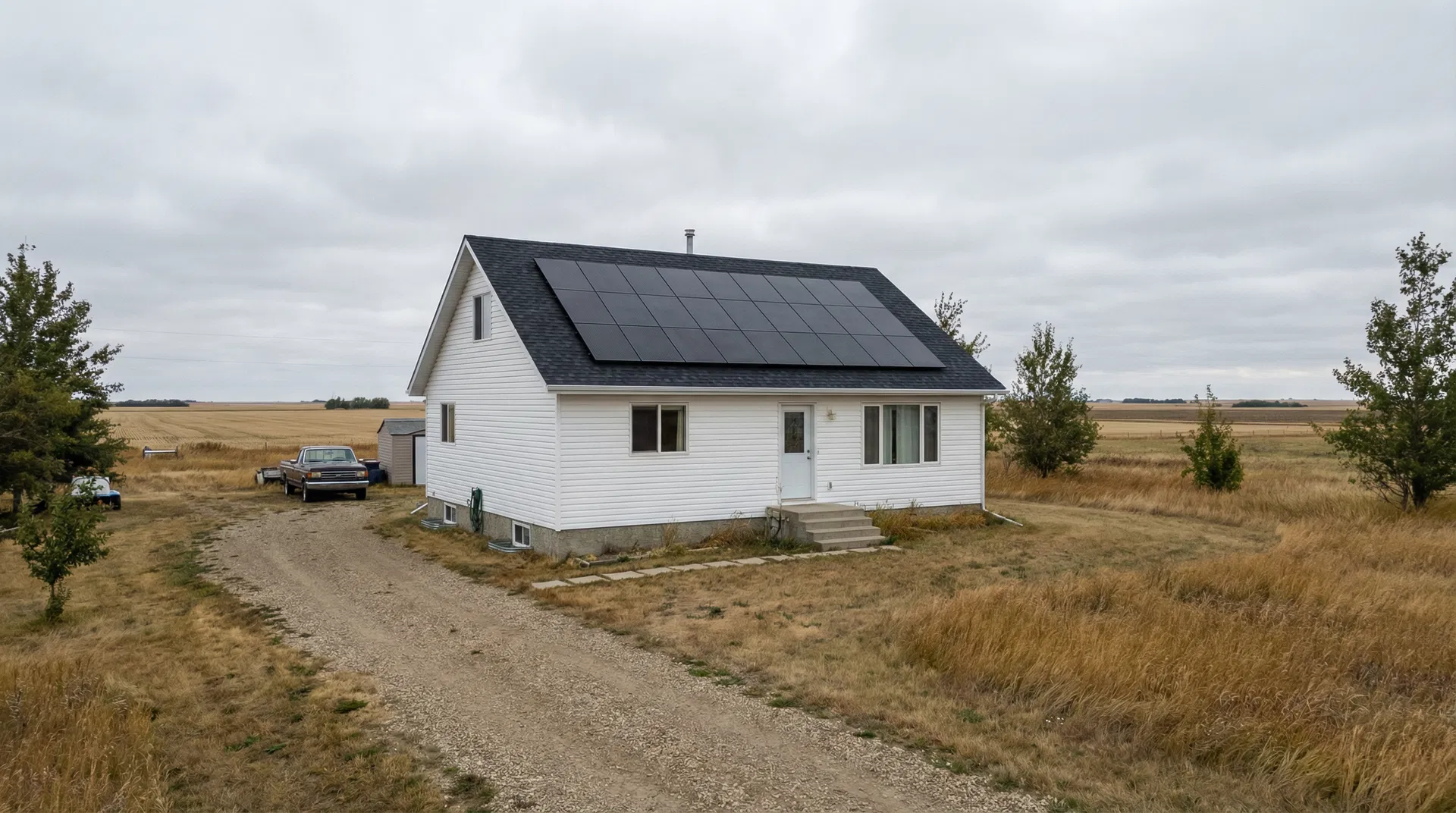
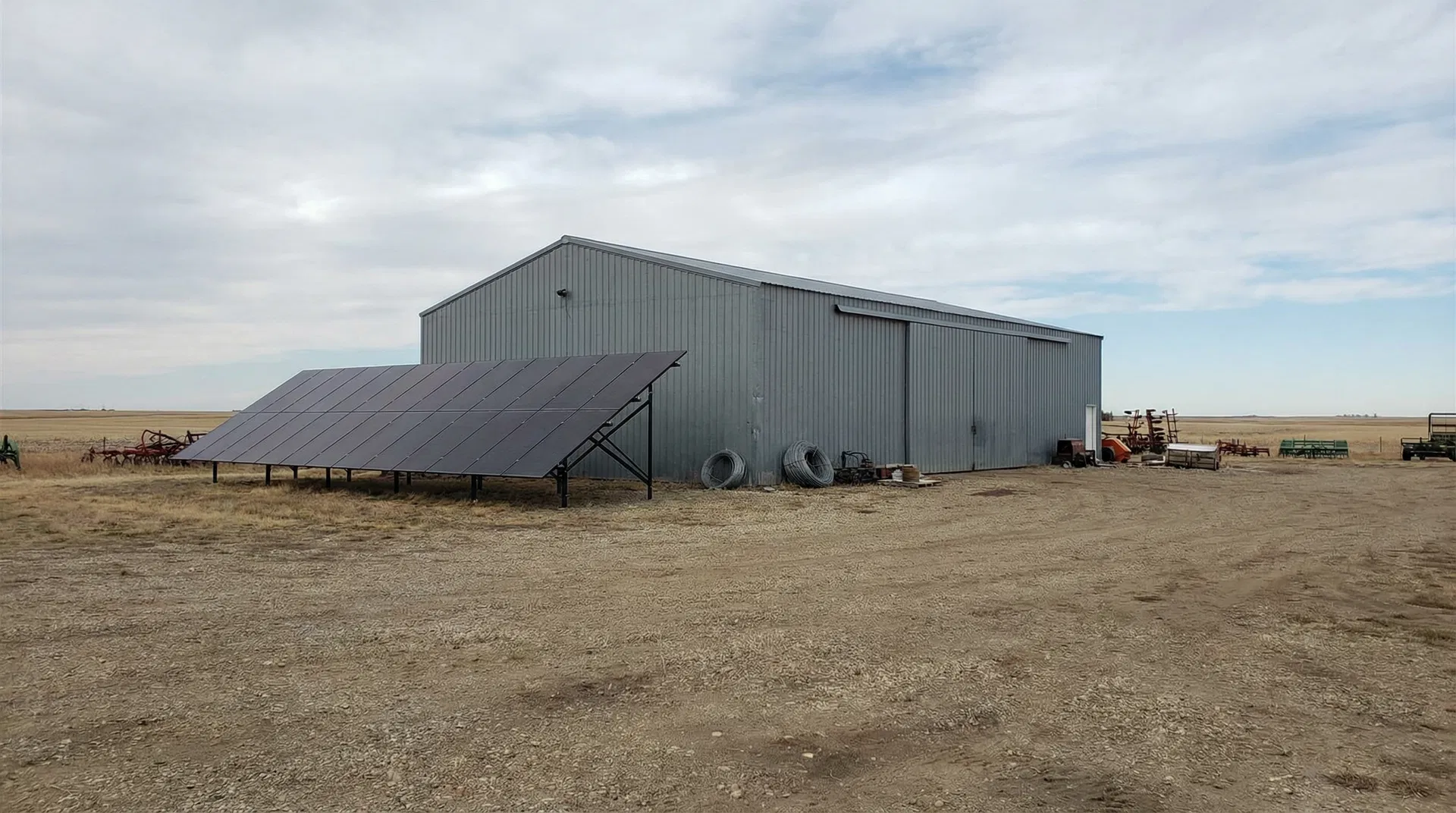
Rural systems are usually bigger than urban ones because the load isn't just a house. A home might share a service with a heated shop, a well pump, a grain auger, livestock waterers, and a couple of outbuildings, and each one runs on its own schedule. We size for the whole property, not only the kitchen and the furnace. Roof or ground mount depends on the layout. A roof works well when the pitch faces a useful direction, the structure is sound, and nothing shades the array for much of the day. A ground mount makes more sense when trees or buildings shade the roof, the pitch is poor, or the yard has open land to spread the array across. On acreages and farms, the ground mount is often the better long-term call because it's easier to service and expand, and it isn't tied to the age of a roof. Sizing starts with the 12-month usage graph on your most recent power bill. That graph shows how the property draws power across the year, including the seasonal peaks a rule-of-thumb number would miss. We combine it with the site design to set the system size, instead of guessing from square footage or the number of people in the house. Your power bill and the site design also tell us whether a system belongs at the low end of the range or closer to the top. A property with a heated shop and irrigation looks very different from a home with a heat pump and a small garage, even on the same acreage. We'll walk you through the design and the reasoning, so you can see where every kilowatt comes from.
Typical Load Profiles We Design For
Home + Heated Shop
This profile covers a house with a detached heated shop, a dryer, an EV charger, and a heat pump. A shop with a welder and compressor on a 60 amp subpanel shows up as weekday daytime peaks on the 12-month usage graph. Your most recent power bill and the site design tell us whether the array should cover the shop's daytime use or the house alone.
Acreage With Irrigation Pump
This profile covers a house plus a 5 HP well or irrigation pump that runs on a seasonal schedule. Summer irrigation creates a clear summer hump on the usage graph that a winter-heavy home won't show. We use that pattern, along with the site design, to decide how much of the summer load the array should carry.
Farm With Grain Handling and Outbuildings
This profile covers a yard with a grain dryer, an auger, a machine shed on 100 amp service, and two or three outbuildings. Harvest-season loads are short but intense, and the design has to handle them without oversizing the array for the rest of the year. Your most recent power bill and a site visit show which loads are worth covering with solar and which should stay on the grid.
FortisAlberta Interconnection in Okotoks
The wire service for this community is FortisAlberta (electricity distribution), and FortisAlberta is the utility that reviews a system before it connects to the grid. For a repair or maintenance job, that matters in two ways. If a system was connected under an earlier design, a change to the array, inverter, or metering may need to be reported to FortisAlberta, and we check that before any work starts. We handle the application package for you. That means gathering the equipment specifications, system details, and site information the wire service asks for, and making sure the paperwork matches what's physically on the property. You don't need to chase forms across the utility or work out which document goes where. The only thing we ask you for is your most recent power bill. If the service entrance or meter base needs work before a system can be connected, we'll tell you before anything gets ordered. You'll know what's required, who does the work, and how it fits into the job.
Project Economics and Design Review
| System Size | Annual Production | Year 1 Savings | Payback Period |
|---|---|---|---|
| 8-20 kW range, 10 kW typical |
Production, savings, and payback require a property-specific design and your most recent power bill.
How We Work in Okotoks
Bill and Load Review
We review your power bill to understand your energy use in Okotoks and size the system to your actual consumption, not a generic estimate.
Site Assessment
We assess your roof or ground area, south-facing exposure, electrical service, and utility interconnection requirements specific to your property.
Design and Utility Application
We produce a system layout, production estimate, and cost summary, then submit your micro-generation application to your utility on your behalf.
Installation and Commissioning
Our crew installs racking, panels, inverter, and electrical connections. All work is performed by licensed electricians. We commission and test before handoff.
Current Program and Interconnection Review
Utility connection review
FortisAlberta (electricity distribution) reviews grid connection applications for systems on the property's service. Range Road Solar prepares the design package and handles the application details, so the paperwork stays with us.
Current program review
Commercial, farm, and residential eligibility is reviewed against current rules at design time, not assumed from the type of property. We check what applies to your property before you commit to anything.
Frequently Asked Questions
Get a Solar Assessment for Okotoks
Submit a recent power bill and we will review your consumption and provide an honest assessment for your Okotoks property. No obligation.
(587) 330-7502 Book a CallMore Solar Services in Okotoks