
Why Okotoks Is One of the Better Solar Towns in Alberta
Okotoks sits at 50.7254 degrees north in the Sheep River valley, surrounded on all sides by Foothills County. It is one of the fastest-growing towns in Alberta: 29,016 residents in 2016, 30,405 in the 2021 census, and roughly 32,000 people today. Growth like that means thousands of newer roofs, and newer roofs are the best candidates for solar.
The sun does its part. Environment Canada climate normals recorded at the Calgary International Airport station, the nearest long-record station, show about 2,396 hours of bright sunshine a year. Natural Resources Canada maps put the PV yield for this area at roughly 1,292 kWh per kilowatt of installed panels. A 7.6 kW system produces about 9,830 kWh a year, enough to cover a large share of a typical Okotoks household.
Okotoks also has unusual solar literacy for a town its size. The Drake Landing Solar Community, a 52-home subdivision that has stored summer heat underground for winter heating since 2007, put the town on the map as a place willing to test energy ideas. Homeowners here tend to arrive with sharper questions, and we like that.
What Okotoks Homes Actually Use: Three Load Profiles
Every design starts with the 12-month usage graph on your FortisAlberta bill. Around Okotoks we see three common profiles, and each points to a different system size.
New-build two-storey in town. Post-2015 construction, gas furnace, sometimes central air. Typical bills run $180 to $300 a month through summer with a shoulder-season dip. Annual use of 8,000 to 11,000 kWh pairs well with a 7 to 9 kW roof system.
Acreage home with a heated shop. The country-residential properties along Highway 7 and 22X often carry a shop heater, a well pump, and sometimes an EV or hot tub. Bills of $350 to $650 a month are common, annual use of 15,000 to 25,000 kWh, and one roof usually cannot hold enough panels. This is where ground mounts earn their keep.
Older bungalow near the Sheep River. Smaller footprint, gas heat, modest draw. Bills of $100 to $180 a month, annual use under 6,000 kWh. A 4 to 6 kW system covers most of it, and the payback math still works because the system is smaller.
Snow, Wind, and Frost: What the Foothills Demand From a Racking Spec
Two zone numbers drive the hardware here. Okotoks falls in snow zone S2 and wind zone R3, both well within the ratings of standard residential modules. The practical questions are more local: how does snow leave the array, and where does wind hit it.
The Sheep River valley sees chinooks most winters, and a warm wind after a snowfall clears panels fast. South-facing arrays at a decent pitch shed snow on their own. Shallow-pitch roofs need a steeper racking tilt, or a ground mount, to shed reliably.
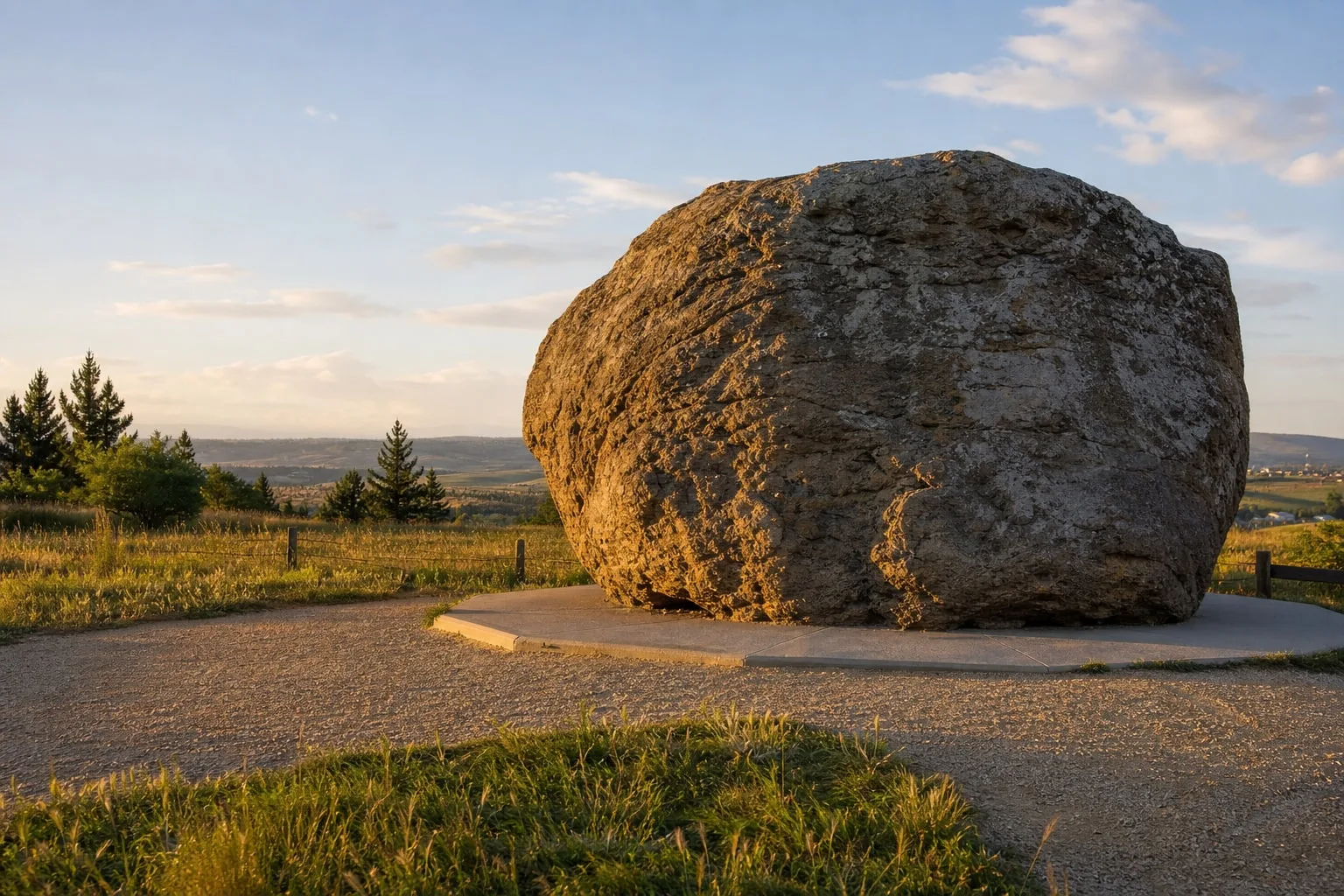
Frost is the bigger number. Design frost depth around Okotoks is about 1.7 metres, so ground-mount posts go to 1.9 metres or deeper to stay below the heave line. Much of the surrounding acreage land is gravelly glacial till, the same ice-age debris field that left the Big Rock sitting west of town. That till often takes helical piles cleanly, which means no excavation and a tidy install on country-residential lots.
What Solar Costs in Okotoks
Roof-mounted residential solar in the Okotoks area runs $2.25 to $2.85 per watt installed. Ground mounts run $2.50 to $3.50 per watt, reflecting posts, deeper foundations, and trenching. Worked examples:
A 6 kW roof system runs roughly $13,500 to $17,100 installed depending on the roof and equipment. A 7.6 kW roof system, the most common size we quote for Okotoks homes, runs roughly $17,100 to $21,700. A 10 kW ground mount on an acreage runs roughly $25,000 to $35,000 depending on soil conditions and trench length.
Those figures include design, permits, the FortisAlberta micro-generation application, equipment, labour, and commissioning. Our usual builds use LONGi panels in 440 to 600 W sizes with APsystems DS3 series microinverters or Solis string inverters, including the Solis 1P 7.6K and the Solis S6 10kW Hybrid.
From signed contract to a working system, plan on two to six weeks for scheduling and installation, plus FortisAlberta approval time on the meter side. Most Okotoks roof jobs are finished on site in one or two days.
The Acreage Fringe: Highway 7 and 22X Country Residential
Outside town limits, Foothills County country-residential land along Highway 7 and 22X is a different job than a town roof. Lots are bigger, loads are bigger, and the electrical service is often a long single-phase line with real voltage-drop history. Shops, welders, well pumps, and EV chargers push annual use well past what one roof can hold, so ground mounts are common out here.
We design acreage systems around the whole service, not just the house. That means checking panel capacity, watching voltage rise on long service runs, and looking at three-phase options for working farms and larger operations. Ground arrays here get room to breathe: row spacing set for snow shedding and open land around the array for future expansion.
What the 60-Minute Drive From Airdrie Means for Your Project
Our shop is in Airdrie, about 70 kilometres and roughly 60 minutes from Okotoks. That drive shapes how we schedule, and it works in your favour. We batch site assessments, so your visit is a real measurement appointment rather than a sales call. Installs are clustered geographically, which keeps crew days efficient and holds travel costs out of your quote.
We also know the permitting path cold. In-town work means Town of Okotoks permits; country residential means Foothills County permits; everything carries a FortisAlberta micro-generation application on top. We file all of it, and if service is ever needed down the road, a one-hour drive means same-week attention.
What a System Earns Back in Okotoks
Production figures below use the NRCan PV potential for this area, about 1,292 kWh per kW per year. Dollar offsets value that power at roughly 15 to 17 cents per kWh all-in, a typical blended FortisAlberta residential bill. Treat these as honest starting points, not promises: your roof, your usage, and future rates decide the real numbers.
| System | Annual production | Installed cost range | Est. annual bill offset | Rough simple payback |
|---|---|---|---|---|
| 6 kW roof | ~7,750 kWh | $13,500 to $17,100 | ~$1,200 to $1,300 | ~11 to 14 years |
| 7.6 kW roof | ~9,830 kWh | $17,100 to $21,700 | ~$1,500 to $1,700 | ~11 to 14 years |
| 10 kW roof | ~12,900 kWh | $22,500 to $28,500 | ~$2,000 to $2,200 | ~11 to 14 years |
| 10 kW ground | ~12,900 kWh | $25,000 to $35,000 | ~$2,000 to $2,200 | ~12 to 16 years |
Payback stretches or shortens with your usage pattern: the more of your own solar you consume directly instead of exporting at off-peak credit rates, the faster the system pays for itself. That is why we start with your bill, not a brochure.
The Process
Power Bill Review
We read the 12-month usage graph on your FortisAlberta bill to understand your consumption pattern and identify the right system size for your Okotoks property.
Site Assessment
We visit the property to measure the roof or ground area, check shading, assess the electrical service, and confirm whether a ground mount or roof mount fits the load.
Design and Utility Approval
You get a system layout, production estimate based on NRCan yield data for this area, and a firm cost summary. We then file the micro-generation application with FortisAlberta.
Installation and Commissioning
Our crew installs racking, panels, inverters, and electrical connections. Work is performed by licensed electricians, inspected, and commissioned before the meter starts spinning backward.
Frequently Asked Questions
Also Serving Nearby Areas
Get a Solar Design for Your Okotoks Property
Submit a recent power bill and we will review your consumption and provide an honest assessment of what solar can do for your property, with production estimates grounded in NRCan data for the Okotoks area. No obligation.
Prefer to see numbers first? run your payback estimate with our solar ROI calculator.
More Solar Services in Okotoks
Also Serving Nearby Communities