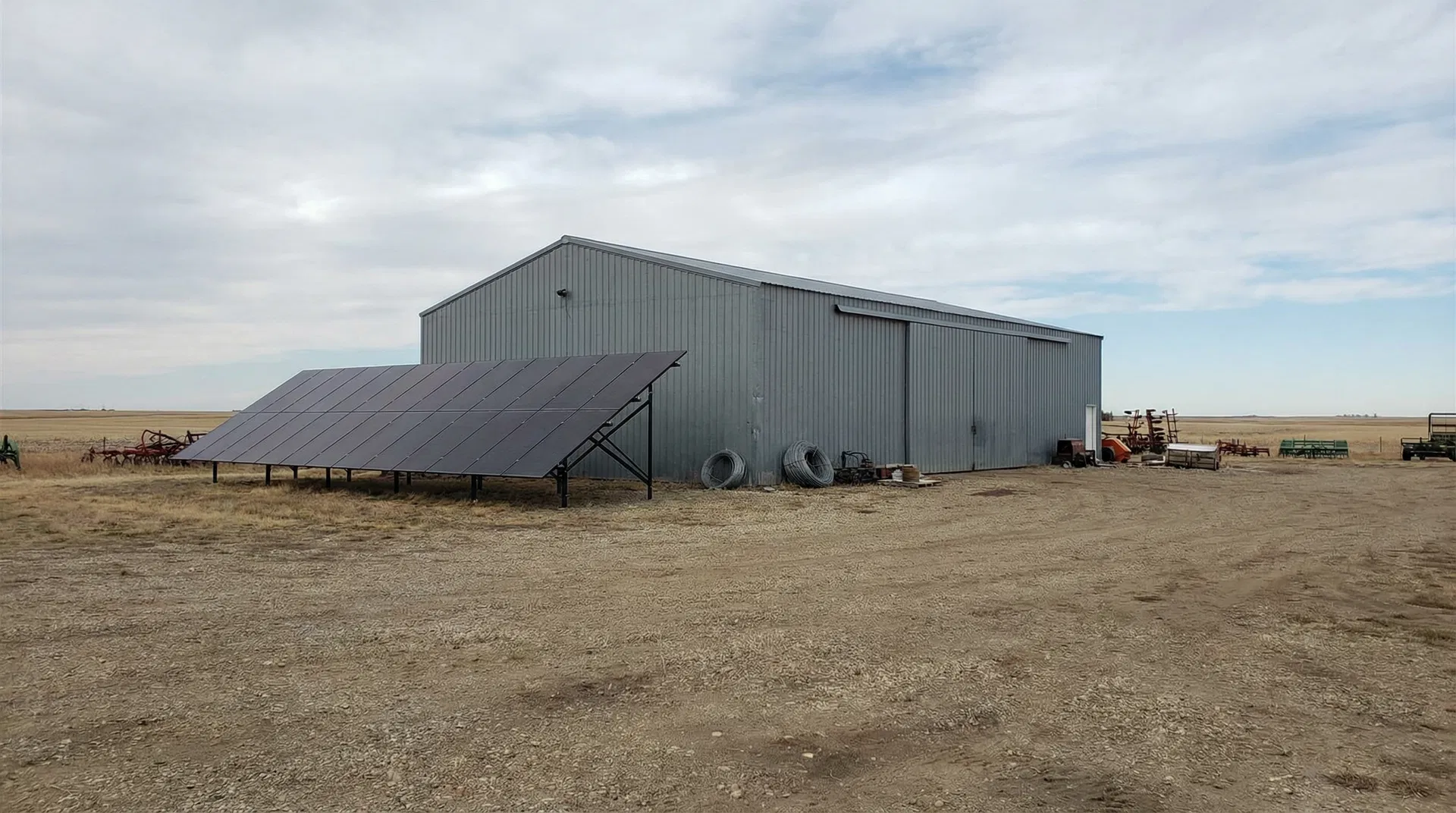
Shop solar in Okotoks, Alberta means sizing the panel array to the building's actual loads, whether that's a heated shop, a grain bin aeration fan, or a barn full of livestock equipment. We install LONGi panels on both roof-mount and ground-mount racking, and we pair them with APsystems microinverters, which let us monitor each panel's output separately rather than losing visibility the moment one panel underperforms. For a detached shop or outbuilding, that panel-level monitoring matters more than it does on a simple house roof, because shop roofs often have multiple pitches, skylights, vent stacks, and overhead doors cutting into usable space. Systems for this service typically run in the 8-20 kW range, with 12 kW being the most common size we design for a single large shop or a shop paired with a smaller outbuilding. We'll walk the property, measure the roof planes or the open ground around the building, and check what the existing electrical service can support before we recommend roof-mount, ground-mount, or a combination of both. Some outbuildings are standalone, off a separate meter from the main residence. Others are tied into the same service as the house. Either way, we design the array and the inverter configuration around how the building is actually wired today, not a generic template. If the shop has three-phase service for compressors or welding equipment, that changes which inverter configuration makes sense. We cover all of that during the site visit, before any panel goes on the roof or the ground.
Solar Planning for Okotoks Properties
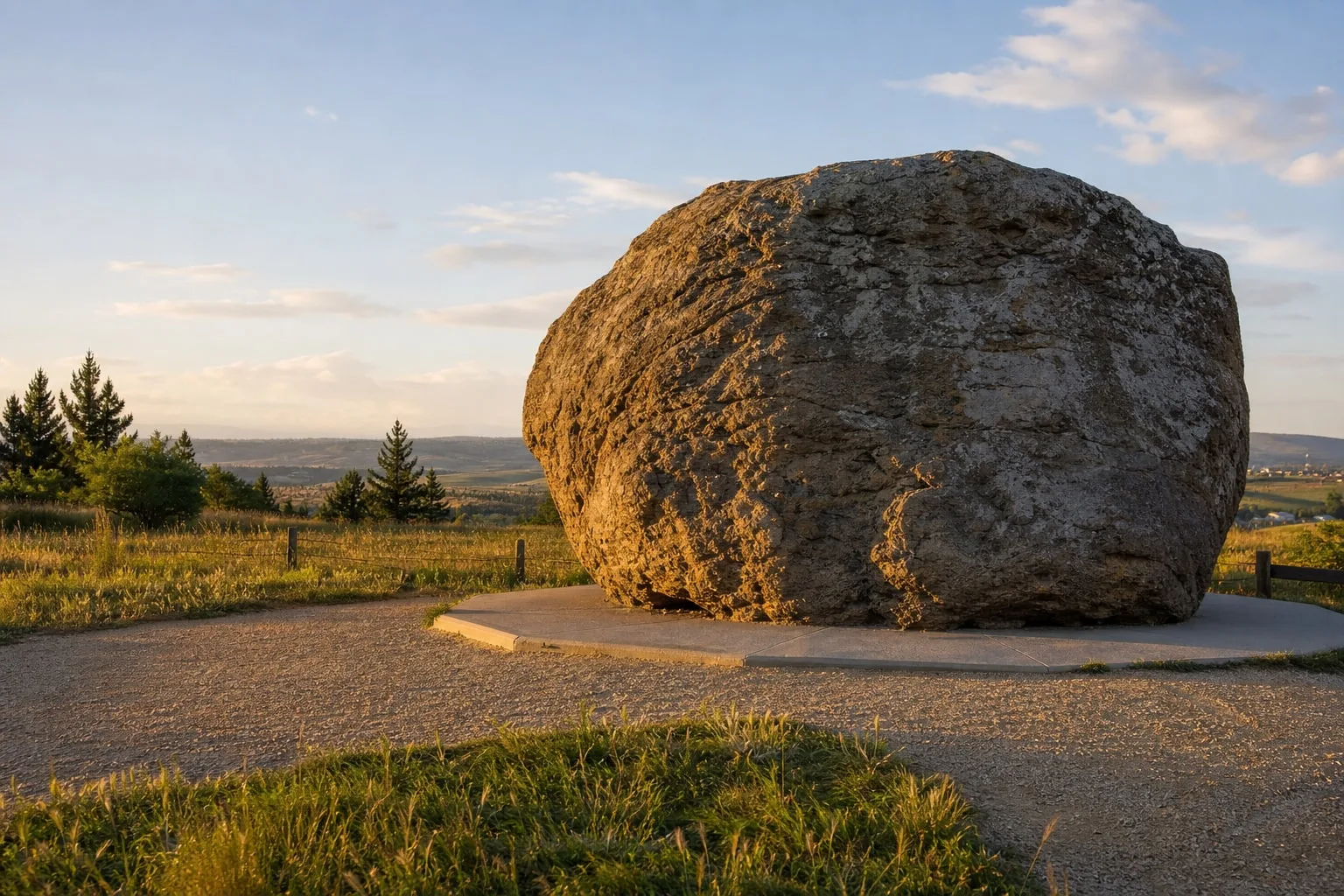
Foothills County surrounds this area, and most of the solar design work we do here involves a mix of house, shop, and sometimes a second outbuilding on the same service. The town's population grew from 29,016 to 30,405 in the last census count, and a good share of that growth has landed on acreages and larger lots where a detached shop or barn carries its own electrical load. We don't start with a sales pitch. We start with your most recent power bill, because the 12-month usage graph on that bill tells us more about your real consumption pattern than any generic estimate could. Natural Resources Canada's solar resource maps put the specific yield for this part of Alberta at 1,292 kWh per kW of installed capacity, and Environment Canada's annual bright sunshine normals record 2,396 hours a year for the region. Those are regional figures, not a promise for your roof or your ground mount. What a system actually produces depends on orientation, shading, and how the array is wired. If you've stood near the Okotoks Erratic, also known as the Big Rock, you already know this stretch of Foothills County has wide open properties with plenty of room for a ground-mounted array when the roof geometry doesn't cooperate. We confirm the real numbers through a site design and that power bill, not a canned calculator.
Electrical Site Review for Okotoks Properties
Voltage Rise
Voltage rise happens when a long or undersized conductor run between your main panel and a detached shop or outbuilding causes a voltage drop under load. On rural services with longer wire runs, that drop can affect how an inverter responds, sometimes causing it to clip output or trip offline under certain conditions. We measure the actual run length and conductor gauge during the site visit so the inverter and system size we recommend account for it, rather than assuming a textbook voltage.
Single-Phase vs Three-Phase
Properties around here can have single-phase or three-phase electrical service, and outbuildings with compressors, welders, or grain-handling motors often run three-phase even when the house doesn't. Inverter selection depends on which service type feeds the building, since a single-phase inverter can't be dropped onto a three-phase panel and expect correct output. We confirm the service type for both the house and the shop before finalizing the inverter configuration.
Panel Infrastructure
Rural properties often have electrical panels that are decades old, with limited breaker capacity for anything beyond what the original house and shop were wired for. We check the panel's age, its rated capacity, and how much headroom is left before adding a solar breaker. If the panel can't support the added capacity, an upgrade means a new panel sized for both current loads and the solar system, which we scope out during the site visit rather than discovering mid-install.
Service Entrance Review
We check the condition of the service entrance and meter base as part of every site visit, since a worn or outdated meter base can hold up the micro-generation application to FortisAlberta. FortisAlberta's review looks at whether the existing service equipment meets current standards before approving an interconnection. If the meter base needs replacing, that's a separate scope item we flag early, so it doesn't surprise you partway through the project.
Right-Sizing Solar for Okotoks Properties
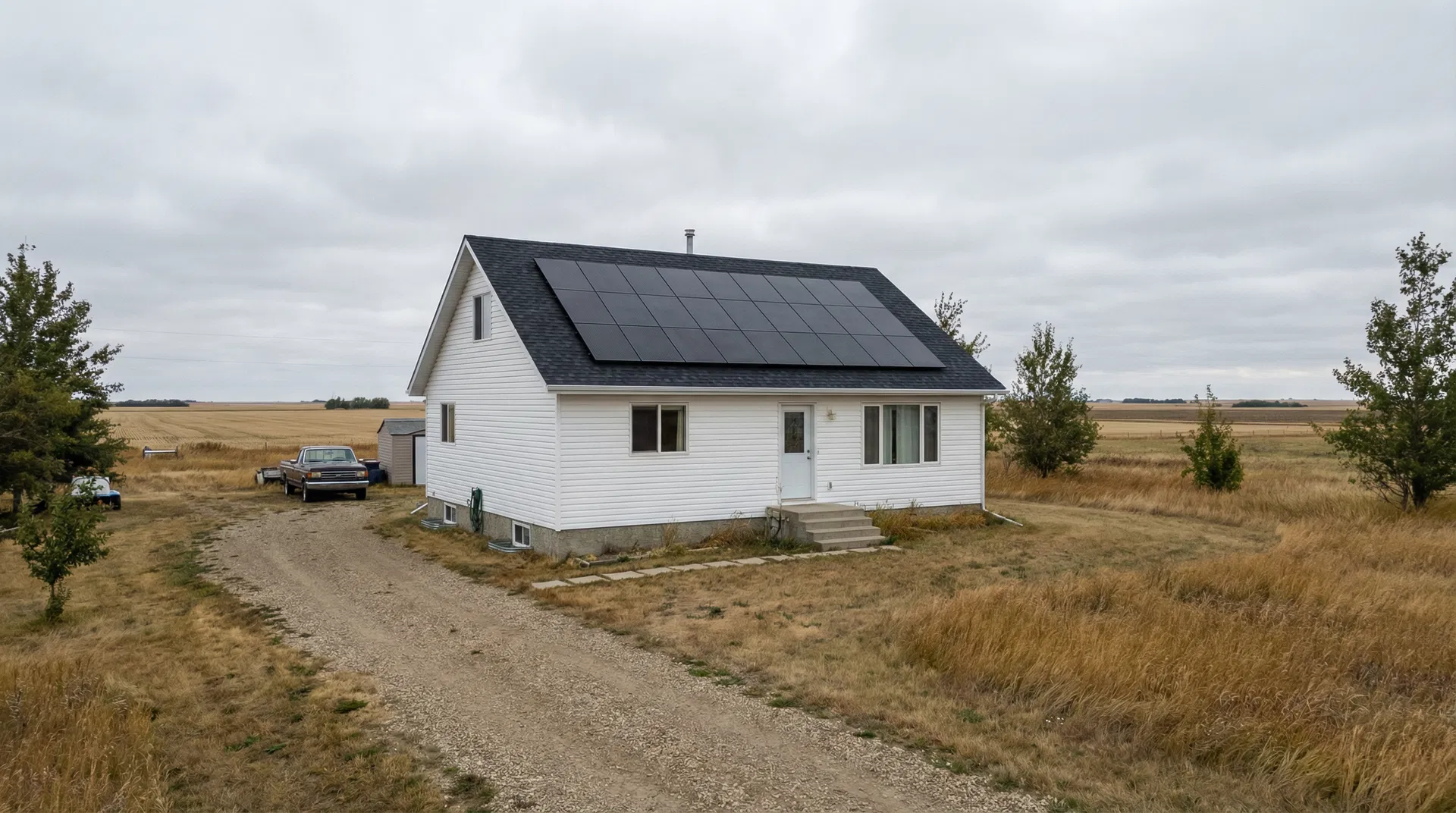
Rural systems usually end up larger than a typical urban rooftop install, and it's rarely because of one big load. It's the house plus a heated shop, plus maybe a well pump, a grain dryer, or an irrigation system, all drawing from the same service. Each of those adds up on the usage graph, which is exactly why we don't size a system off a rule-of-thumb number per square foot. Roof mount works well when the shop or house roof has a clean, unshaded south or west-facing plane and the pitch isn't fighting the panels. Ground mount becomes the better call when trees or a neighboring building shade the roof, when the roof pitch or orientation is poor, or when the yard has open, unused ground that makes a ground-mounted array easier to access for cleaning and future maintenance. A lot of acreage-style properties have exactly that kind of space, which shifts the decision in favor of ground mount even when the roof itself is usable. Either way, sizing starts with the 12-month usage graph on your most recent power bill. That graph shows us seasonal swings, like a grain dryer running hard in fall or a shop heater pulling more in January, that a single month's bill would never show. We combine that graph with the site design, the available roof or ground space, and your electrical service capacity to land on a system size, usually somewhere in the 8-20 kW range for this type of building.
Typical Load Profiles We Design For Near Okotoks
Home Plus Heated Shop
This is the most common profile we see: a house on one meter or sub-panel, and a detached shop with electric or infrared heat, lighting, and a couple of 220-volt circuits for tools. The shop's heating load usually drives the winter spike on the usage graph. We size the array using that graph and the site design, not a flat per-square-foot assumption.
Shop Plus Grain Handling
Grain bins, aeration fans, and a leg or auger add a seasonal load that shows up hard in fall and barely registers the rest of the year. That spiky pattern on the 12-month usage graph tells us how much of the system needs to cover peak harvest draw versus baseline shop use. We design around both, not just the average.
Shop Plus Livestock or Water Systems
Livestock operations often run water heaters, waterers, and ventilation fans around the clock, which creates a steadier baseline load than a grain operation's seasonal spikes. That flatter usage pattern on the power bill changes the sizing math compared to a seasonal profile, and we account for it when we design the system and pick the inverter configuration.
FortisAlberta Interconnection in Okotoks
This area is served by FortisAlberta for electricity distribution, and any grid-tied shop or outbuilding solar system here goes through FortisAlberta's micro-generation application process. Range Road Solar prepares and submits that application as part of your project, including the one-line diagrams and equipment specifications FortisAlberta requires for a system in the 8-20 kW range. We handle the paperwork end of the interconnection so you're not the one chasing down forms or decoding utility language. We don't make claims here about how long FortisAlberta takes to approve an application, how credits carry over, or what a retailer pays for exported power. Those details change and depend on your account and current utility rules. What we can tell you is that we've done this application before, we know what FortisAlberta's engineering review looks for, and we'll flag anything about your service entrance or panel that could slow the review down before we submit.
Project Economics and Design Review
| System Size | Annual Production | Year 1 Savings | Payback Period |
|---|---|---|---|
| 8-20 kW range, 12 kW typical |
Production, savings, and payback figures are only provided after a property-specific design review using your most recent power bill.
How We Work in Okotoks
Bill and Load Review
We review your power bill to understand your energy use in Okotoks and size the system to your actual consumption, not a generic estimate.
Site Assessment
We assess your roof or ground area, south-facing exposure, electrical service, and utility interconnection requirements specific to your property.
Design and Utility Application
We produce a system layout, production estimate, and cost summary, then submit your micro-generation application to your utility on your behalf.
Installation and Commissioning
Our crew installs racking, panels, inverter, and electrical connections. All work is performed by licensed electricians. We commission and test before handoff.
Current Program and Interconnection Review
Utility connection review
FortisAlberta reviews every grid-tied micro-generation application against its current engineering standards before approving an interconnection. Range Road Solar prepares the design package, one-line diagrams, and equipment specifications that FortisAlberta requires, and we submit the application on your behalf.
Current program review
Commercial, farm, and residential properties can be classified differently depending on the system and the building, and those rules change over time. We review your specific situation against whatever rules are current at the time of your design, rather than relying on last year's eligibility list.
Frequently Asked Questions
Get a Solar Assessment for Okotoks
Submit a recent power bill and we will review your consumption and provide an honest assessment for your Okotoks property. No obligation.
(587) 330-7502 Book a CallRelated Resources
More Solar Services in Okotoks